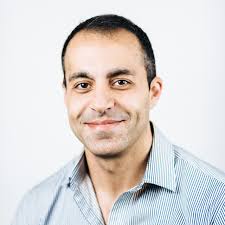
Ali Ghodsi, Co-founder and CEO, Databricks kicks off Data + AI Summit 2026
📅 Jun 23, 2026Databricks57 MIN24 SEGMENTS · 3 SPEAKERS
Databricks Co-founder and CEO Ali Ghodsi opens Data + AI Summit 2026 and outlines how the Databricks platform solves the ...
What Ali Ghodsi said
Written from the verified transcript and checked against it. Every figure links to the moment it was said.
Ali Ghodsi opened the Data+AI Summit 2026, calling it the largest data and AI conference with over 100,000 sign-ups and 3,139 attendees. He argued that AGI is already here by the 2009 AMP Lab definition, but the real challenge is providing context to models. He announced Unity AI Gateway for managing AI spend and governance, and Genie Ontology to build a knowledge graph for agents. He discussed the unification of Delta Lake and Iceberg, with Iceberg v3 GA and v4 expected later this year. He introduced Genie Zero Ops for automated monitoring, and announced the acquisition of Panther Labs and the launch of Customer Lake. He emphasized the shift to an agent system of record, with all data in one open place, unified governance, and cost management.
Key takeaways
AGI is already here by the 2009 AMP Lab definition, but not yet permeating organizations.
Unity AI Gateway provides a single pane of glass to manage and control all agents and AI spend.
Genie Ontology builds a graph of organizational knowledge to feed context to agents.
Iceberg v3 is GA, and v4 unified metadata layer is expected later this year.
Databricks is acquiring Panther Labs, a Python-based SIEM used by Anthropic, Coinbase, and Plaid.
All right, super excited to be here. That was an awesome video showing customer use cases. This is the largest Data+AI Summit we've ever done, with over 100,000 sign-ups, 174 countries represented, and 3,139 attendees, making it the largest data and AI conference in the world. This conference is rooted in open source—we started with Apache Spark, which now has over three billion downloads a year, and we've added Delta Lake, Iceberg, MLflow, Unity catalog, and we've embraced Postgres. My co-founder Matei open-sourced Omniant this weekend. We'll hear from Greg Brockman, Satya Nadella, and many other leaders. Thanks to our partners and customers. Let me highlight three inspirational customers: Insulet's Omnipod helps people with diabetes using data and AI; Tonal personalizes workouts with 100 billion seconds of data; Merck trained Teddy, a transformer model for drug discovery that predicts gene regulatory networks. Now, is AGI here? Only about 5% of you think so, but frontier models can solve problems like computing reduced 12-dimensional spin bordism of the classifying space of Lie group G2—part of Humanity's Last Exam benchmark, where models score 50%. By the definition we used in 2009 at UC Berkeley's AMP Lab, AGI is already here by leaps and bounds. The problem is that AGI is not yet permeating our organizations. We're still using chatbots, not managing hundreds of autonomous agents. The key is to provide context from all your data and processes to these smart models. Getting that context is hard, and we need to solve four problems: context, control, cost, and choice—avoiding lock-in. Today's keynote focuses on these four.
Hey Ryan, how are you? Good. I want to embarrass you with a video from a bunch of years ago. This video actually had a very interesting title. It said...
Talk to you guys about why you shouldn't care about Apache Iceberg. I mean, listen to it. I care deeply about it. And I sincerely mean that. You shouldn't care about Apache Iceberg.
No one should have to care about formats. You should be able to use whatever tools you want with all of your data. Use the right tool for the job, which is why we built both formats in the beginning.
Yeah. In fact, it's super funny. A few years ago, I would go to customer meetings and they would get into the nitty-gritty of how Iceberg was implemented versus Delta, asking about deletion vectors. I told them this is not where the industry should be going. So, how are we doing? Where are we? What's going on with the versions?
Well, we just did the GA release of Iceberg v3 support, managed Iceberg tables in DBR. That is going really well. We're following that up later this year with the unified metadata layer built into Delta 5 and Iceberg v4. So we are very close to the full unification vision.
Ghodsi, A. (2026, June 23). Ali Ghodsi, Co-founder and CEO, Databricks kicks off Data + AI Summit 2026 [Interview transcript]. Databricks. CEOInterviews.AI. https://ceointerviews.ai/interview/1004104/
MLA
Ali Ghodsi. "Ali Ghodsi, Co-founder and CEO, Databricks kicks off Data + AI Summit 2026." Databricks, 23 Jun. 2026. Transcript, CEOInterviews.AI, https://ceointerviews.ai/interview/1004104/.
BibTeX
@misc{ghodsi2026_1004104,
  author       = {Ali Ghodsi},
  title        = {Ali Ghodsi, Co-founder and CEO, Databricks kicks off Data + AI Summit 2026},
  howpublished = {Interview transcript, Databricks. CEOInterviews.AI},
  year         = {2026},
  month        = {jun},
  url          = {https://ceointerviews.ai/interview/1004104/},
  note         = {Speaker-attributed transcript with timestamps}
}