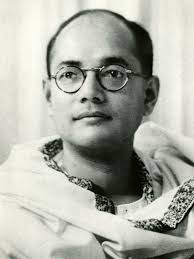
About Subhash Chandra
Subhash Chandra, chairman emeritus of Zee Entertainment, has been hosting the "SACH" talk show series, where he engages with students and young audiences on topics including communication skills, relationships, medical education, and self-coaching. In episodes aired between May and July 2026, Chandra told viewers to become "trust creators" rather than "content creators," stating that in the age of AI, the future belongs to those who can win others' hearts through dialogue. He also discussed the importance of empathy in doctor-patient relationships, arguing that medicine is "the practice of stewardship of human life" and not merely diagnosis and treatment.
At the Zee Short Film Contest finale on June 1, 2026, Chandra announced that Zee TV had returned to the number one position across all other languages. He expressed gratitude to the contest jury and said the network was committed to finding the next generation of filmmakers and storytellers. In other appearances, Chandra spoke about building relationships without transactional expectations, criticized what he described as narrow religious thinking that divides communities, and defended the Char Dham pilgrimage in Uttarakhand, saying it should not be opposed.
Source: AI-verified profile updated from Subhash Chandra's recent appearances.
Browse all interviews →
Transcript (41 segments)
H
Host0:01
Centuries ago, a physician would diagnose a disease without seeing it. Today, AI machines diagnose by looking at data. Times have changed, but has the essence of the medical world also changed? When machines identify disease, who will understand the patient's pain? Will the strength of new India be just the increasing number of doctors, or will it be through excellence, ethics, and empathy that the bright future of India's medical education is built? On this fixed topic, Dr. Subhash Chandra will have a special dialogue with the youth. He will talk not about degrees but responsibilities. He will talk not just about careers but also about care. And he will talk not just about changes in the medical world but about a changing India. Please welcome Dr. Subhash Chandra.
S
Subhash Chandra1:08
Thank you, thank you very much. Thank you, thank you very much. So I am going to today learn a lot from all of you, and that's the reason I am here and I do this show because I always want to be feeling that I am a learner, I am a student all the time. When I was 17 years old, the generation that is my fourth generation in the family took over work. I was 17 years old. I won't tell you my age because I think age is just a number. And someone asked a question yesterday, so my answer was that I think mentally I am still the same 17 years old when I started my business. So this is a subject related to your subject, and I think that if a person keeps himself well and keeps an open mind and positivity, then he does not age mentally. The body may age. What do you expect from today's session? What do you expect? Would anyone like to say something?
S
Student2:41
Sir, I have been watching you since childhood. Every morning at 10:00 on Zee TV your show used to come. Yes. In fact, I was not going to come today. But I just came to know yesterday that you are coming. So I have come with the expectation that I learn from you how to implement life. Whatever we learn from our teachers, that was my purpose of coming here.
S
Subhash Chandra3:10
Thank you. Our purpose is the same. I would like to know how many of you believe this: I believe that medicine is not the science of diagnostic and treatment. It is the practice of stewardship of human life as they move through the times. As human beings move through time, diagnostic and treatment are only part of the work, they are not the end work. So do you agree with that? How many of you are medical students? Can you please raise hands? Oh wow, most of you are medical students. So may I ask you a question? When a patient comes to you for treatment, what do you call them? Patient? What do you call them? Patient means a sufferer. The root word meaning is the one who suffers. And when it comes, so as a doctor it's our duty to end the suffering and more than that to also make their life such that they don't suffer later on with it. So that is the root word from which the word patient has derived. Okay, that's very good. Thank you.
Normally what I have heard that it's termed as a case. A case has come of such and such problem and illness because the hospital also when they bill they bill a case. I am treating a case of pneumonia and I am treating a case of hypertension. How many of you agree that we call it a case? Will you raise hands? Would you like to speak something about it?
S
Student5:02
Like all patients are different, they come with their own problems to the hospital. All patients come with different diseases for different reasons to the hospital. So we look at them as cases. Doctors prepare or we nurses prepare that yes a disease has occurred, for what reason? For what cause? We deal with that cause. That's why we call it case.
S
Subhash Chandra5:32
Now let me ask you another question. When you joined the medical studies, what did you think medicine was and what the medical science is about and what will you do after completing the studies? When you came, when you joined the medical school, you must have thought something in your mind. Must have thought that medicine is the science of finding out what is wrong with a sick person as he said and then making them better. Diagnosis and treatment. Both one and two: find the problem, fix the problem. Isn't that a doctor? And when you started your classes you started learning anatomy, physiology, biochemistry, pathology, pharmacology. All were being taught, isn't it? And the things are being taught to you in greater details how the body works, how it breaks, how to recognize it breaks, how to repair them.
N
Narayan6:40
Hello good afternoon sir, it's me Narayan, BSc Nursing third year student. It's not only about medicine, it's about our care, our holistic care that we give to the patients. Very good. And we see the recovery.
S
Subhash Chandra6:56
I hope Narayan when you go to real life you will continue to care about the patients because I have seen in some hospitals the everything is there, medicine is there, everything is there but the care is missing. Or anyone else wants to explain something?
S
Student7:18
Sir, disease is not only cured by medicine, sir. With our physical support, our emotional support, how we behave in critical situations. I came to know all this after coming to the medical field, sir. Very good. Thank you sir.
S
Subhash Chandra7:34
Thank you. Patients are treated as a subject, as a case. Even the billing in the hospital is done on a case basis. Insurance is treated as a case basis. If some case goes into the courts, courts also take it as a case instead of a human being which has got a journey of a lifetime. It's very seldom we see the doctors and nurses sing and spending some time and trying to take knowledge from the patient that what is his and her life, how did they land into difficulty, what are they going on in their minds. So things of that kind. Yes, anyone else wants to say?
S
Student8:33
Sir, I want to say that as we are doing nursing, sir, until we give comfort to the patient, understand the patient's comfort, sir, we cannot do anything. Sir, if the patient is not comfortable to tell us something, then we cannot do good treatment or anything. And in this, unless the patient tells everything openly, sir, no advice or anything will be useful.
S
Subhash Chandra9:01
Very good, very good. I remember what you have said. I remember very clearly I have seen lots and lots of people. The patient is not treated properly with proper medication because the doctors did not go through their past history. They have not seen their details of before they came to the hospital. How and what happened to them? When did it happen? When did the problem start? And like today, many of you are shy to speak on the camera and on the mic. Patients are generally also not very open to tell their whole story. Because the way doctors ask, the way doctors treat them, when asking is also an art that also probably needs to be learned by the definitely by nurses as well as the doctors. 'What happened, brother?' If you ask such a question to the patient, the patient already becomes defensive. And in another way, a doctor says, 'Yes brother, what is your name? Okay, where have you come from? Who is in the family? How did this problem happen?' And then you ask, 'Since when did it start?' He will open up. The patient will open up. Will tell his and her story properly. He will be on your same wavelength with the doctor. And then the treatment would be good, if the attendants and the nurse also say, 'Oh uncle, you are in great. How did this happen? It's very difficult.' As soon as she says that, that patient becomes half more ill. So I will straightaway invite Dr. Satyendra Singh who is here as a guest on this show.
How can you sharpen skills? That's why linking with visual arts. Visual arts teaches you how to look at an art from the periphery or center. And it tells you about the cues. Ask a doctor. How many people think that communication skills will begin with visual arts?
S
Student22:44
Yes. I think that when we see a patient for the first time, we need to see their visual expression along with effective communication. Because their facial expression tells us a lot about their problem, how we should proceed, which disease treatment and medication to give, and which category to put them in. It is better to first look at their visual and facial expression, then ask them what happened in a normal and effective way and talk politely. How can we do better? Thank you sir.
N
Narayan23:32
Yes sir. Absolutely correct, what the student said sir. I just want to add one thing sir. Like when a patient comes, when he is in pain, it shows directly on his face that he is in pain. If there is tension, suppose sir I am a husband and my wife is pregnant and she is in labor, it will be clearly visible on my face and on my wife's face. So what sir said is absolutely correct that communication starts with the visual. From there, as soon as you see, you know what it is. I just want to add this. Thank you sir.
H
Host23:57
Very good, very good.
S
Student23:59
Sir, as he just said that we are losing empathy in the medical field, so when showing empathy and sympathy, do we get too emotionally connected with the patient? How can we control that? Or is it right or wrong? That was my question. Thank you.
S
Subhash Chandra24:18
A very, very valid question, thank you for that. In the medical system, there is a term called 'detached empathy'. So we expect that our healers – doctors, nurses, and physiotherapists – need to be compassionate and need to understand and demonstrate empathy also. But many times you should not focus too much on that. That's why we say we need to be a little bit detached while showing empathy. Because ultimately it also has effects on your psyche as well. And you will keep on seeing this suffering everywhere in your hospital. But the patient has come to the hospital to you to get relief from these sufferings. And that's why it's important that you are in your senses to make those decisions which would help that particular person and the patient to get rid of his or her own sufferings.
S
Student25:06
Sir, many times it happens that the attendants of a patient in critical condition become more emotional. Even after explaining, they sometimes cannot understand how to handle the emotions. Even the counselors face them being emotional. How to deal with that so that attendants do not become too emotional, especially as the disease progresses during treatment? That is the same thing we discussed.
S
Subhash Chandra25:45
One basic difference between private and public hospitals: we often see that in government hospital emergencies, the residents working there unfortunately face incidents of violence on healthcare professionals. The reason is improper triage. Beating of doctors is common, specifically in government hospital emergencies because the emergency atmosphere is very charged emotionally. Doctors work continuously for 12, 16, even 36 hours, and many times cannot sort out which patient is how serious. It is the prerogative of the doctor to decide whom to see first, because resources are limited – number of beds is limited. You need to decide which patient gets that limited bed. Would you admit an 18-year-old youth or a 90-year-old elderly person who arrived simultaneously? You have only one bed. Some might think based on history whom to take: 18-year-old or 90-year-old? 18-year-old. Why? Because you all are 18, 20, 25. (Laughter)
Okay, I ask you another question. The 18-year-old youth who came to the hospital – you saw his blood sample, it has a high level of alcohol intoxication. He has a tattoo indicating he went to a pub at night and was brought from there. He was involved in a road traffic accident and was driving while intoxicated. And the other 90-year-old elderly person, very old, but he turns out to be a freedom fighter. Would your decision change? (Laughter) So that's an ethical question.
S
Student27:36
So that is an ethical question. Would change your decision? Yes. And no. No.
S
Subhash Chandra27:41
And yes. In our field, we need care, responsibility, patience, everything. But then it happens that we treat the medical field as just treating the disease, not treating the person. But I think the medical field is all about treating the person also.
Very good, very well said. Absolutely, because this is an important point: our medical curriculum earlier was largely disease-focused. The whole function of medicine was to fix the patient. Now we talk about person-centered care. We do not focus too much on science and symptoms – yes they are important – but behind them there is a living human being, and you are caring for that. Symptoms are secondary.
Dr. Singh, I want to ask you: when you had this disability at 9 months of age, how did you gather courage and study MBBS? Did you face any hindrance due to this disability?
C
Co-Panelist28:55
Yes sir, I had polio. I belong to a small place, Rewari in Haryana, and I was the healthiest child in my family – the youngest of four brothers. But at 9 months I got polio. My father, who was in the army, and my parents took me everywhere for treatment. My biggest inspiration was my mother; she was not educated, but her entire focus was on me studying and becoming a good doctor. My elder brother had done MBBS first, so I followed his footsteps. But when I went to medical college for MBBS, let me tell a small story. When I went to get my disability certificate, the medical board examined me thoroughly, and in the proforma you have to attach a photograph showing your disability. Imagine – I was a medical student in my own college, and my doctors examined me and asked me to attach a photograph because that was the government norm at the time. None of the doctors questioned that norm. I also did not question it then because the medical curriculum taught that impairment needs to be corrected – that's the medical model of disability. Nowadays we talk about the human rights model. When I came to Delhi, my understanding grew; I read about human rights and realized that was a violation of my bodily autonomy. I wrote to the government, and that proforma was changed forever – now you only need to attach a photograph showing your face, why showcase your entire body? Yes.
S
Subhash Chandra31:00
But Doctor sahab, we talked to some people about you. Some say you are a very big legal litigant doctor and you fight a lot. So those who may not be happy with you say this.
C
Co-Panelist31:19
Sir, you cannot please everyone. I call myself an accidental activist. I came to become a doctor, and I became one. I never wanted to be an activist. Why did I become one? When I came to Delhi, I got a job as assistant professor at UCMS – a permanent job in a central government university. But when I applied for a UPSC post in the Ministry of Health, they said, 'How can you teach in a medical college?' That question attacked my identity, because I had fulfilled all competency requirements through MBBS and MD. How can a bureaucrat sitting in the ivory tower of Nirman Bhavan question my competence without looking at me and seeing my abilities? So I became that accidental activist after a four-year battle. I realized it wasn't only in physiology; in CHS posts, around 1,634 permanent posts were blocked for doctors with disabilities in all fields. Now they are unlocked. So sometimes you have to be an activist, sir.
H
Host32:33
So friends, who are watching this show at home, you saw that Dr. Singh, despite being a doctor, had to become an activist. Because some old laws of our country – I use the word 'were' – I hope they are corrected. They were attacking his identity. It is rare to see someone take such a courageous step. You should ask some questions to him.
S
Student33:14
Sir, you are a doctor. I want to ask you, what is that skill which can tell whether a nurse is good or not? When we talk about interprofessional education (IPE), if you look at the National Medical Commission's five roles for an Indian medical graduate, one is being a leader of the team. Medical, nursing, and physiotherapy fields are not separate. Who is the most important person in a hospital? We think it's the doctor or the medical student, but I believe hospitals exist because patients come – they are the first. So we have to work together as an interprofessional team without hierarchy. One of the most important skills is teamwork. You talked about empathy in decline – always remember to be a good human first. And to your question about a good doctor or nurse: the famous physician William Osler said, 'A good doctor treats diseases; a great doctor treats the person having that disease.' I would add that a human healer – doctor, nurse, physiotherapist – also considers the environment where that person lives and suffers, because cultural context varies. Patients from rural areas may lack money or transport. The doctor in OPD with 150 patients may not know that. Although we have only 1.5 minutes per patient, even in that time you can give warm assurance with a touch or body language – that is enough.
S
Subhash Chandra36:07
In today's era, there is too much noise about artificial intelligence. I hear many people say AI will enhance life. Across the world, on WhatsApp and TV, the big story is that longevity will increase – people will live 150 years. A Marwari friend told me last year, 'Subhash, we just have to live 101 more years, after that technology won't let us die.' That's what people think. What do you think?
C
Co-Panelist36:57
Definitely sir, AI is a game changer, especially in developing nations like ours where we have fewer doctors and nurses and many patients. There is a huge doctor-patient ratio gap and we are resource-constrained. AI can help with many things not directly related to medical care, like investigations, lab work, records – all that paperwork that doctors waste time on. So AI can easily take care of the technical work of a doctor: diagnostics, record keeping, and many other things.
S
Subhash Chandra37:37
Absolutely. But AI cannot treat an illness. That is at least my conclusion.
C
Co-Panelist38:00
Exactly sir. There was concern that radiologists or psychiatrists might be replaced by AI. But AI can only give a direction; it can never replace a human doctor. It can provide aid, but the empathetic traits – how to give reassurance – AI may not tell you. That is why AI can never replace a good doctor or a great doctor.
S
Subhash Chandra38:38
There is something even medicine cannot do. I come from a different profession – sales and marketing. I recently read a line: if I show kindness towards someone, the person showing kindness, the one receiving it, and the one observing, all three are healed. We also work with waves and aura energy. When you are in a certain aura, you heal. So are we moving towards a non-medicine era? Surgery cannot be replaced, but healing – will we have a device that heals just by listening to it? That is my question.
As a student of Vipassana meditation, I have learned, practiced, and experienced that sending good vibrations is now accepted by science. I can send you good wishes, and they will reach you. With this, can healing of ailments be possible? I have my doubts, but at the same time, stress and tension can be reduced, and stress-related ailments like high blood pressure and diabetes can be managed. Lifestyle diseases can also be cured. But as Lord Buddha said: among the 500 people here, probably not one would say they have no suffering. Every human has some suffering – a cut finger, financial difficulty, fees to pay. He divided suffering into five parts: birth, aging, ailment, losing a loved one, getting what you want and what you don't want. There is hardly any complete solution for suffering. Do you agree? Anyone who disagrees, would you like to say something?
C
Co-Panelist41:46
Absolutely sir. Every person is having a silent battle you may never know. So always treat others as valuable human beings. Our profession has a power difference and hierarchy – in India, doctors are considered gods. We are not gods. To rectify that balance, it is important to involve the patient in arriving at the diagnosis and management. They are experts in their own condition; you are experts in managing that part. You cannot do good shared decision-making without involving them. It takes time, but that is the hallmark of a skilled doctor or nurse.
S
Subhash Chandra42:38
Ultimately, what I would like to say to all of you and my viewers at home is that there are times even a doctor who is called God for a patient, when they are not able to treat you, it is not their fault. I request that if you ever have to go to the hospital, treat doctors, medical professionals, and nurses with respect. Have empathy towards them. Do not ill-treat them. This is my prayer. Thank you very much for having me today. Thank you.