Bloomberg Audio Studios, podcasts, radio, news.
Robust data, retail sales are good. That's a decent week of data for this market. This is the exact kind of disinflationary productivity boom that everybody's been hoping for that can really be the cherry on top and highlights how comforting it is to see that equities are a little bit lower, at least from some people's perspective, just because people aren't taking this and running away with it. This is the euphoria that's been built into the market. Question is, how long can we stay in this good kind of backdrop that can really benefit a lot of different businesses.
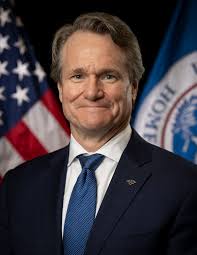
The banks, the financials in prime position to leverage this moment. Bank of America, the stock sitting at record highs after delivering blockbuster results. Equity trading revenue rising 70% in the second quarter. Fixed income trading climbing nearly nine, making a record first half of the year for the sales and trading division. The Bank of America CEO Brian Moynihan saying against the healthy economic backdrop, resilient consumers and businesses are turning to Bank of America to spend, borrow, and invest. Brian, I'm pleased to say, joined us now for more. Brian, good morning.
It's good to see you, sir. What a fantastic start to this year. Now, forgive me. We're journalists. We've got to ask, can this really continue at this rate?
Well, you just saw as well. You just saw two statistics that I watched carefully, which is the activity of the consumer and then ultimately what the unemployment new claims are. People argue it's leading or trailing, but it's actually an indicator of the health of the employment market. A 4.2% unemployment rate with new claims at 1.8 on long-term claims and 28,000. Everybody looks at it and says that's in line with 2019. Remember that the workforce has actually grown a lot since 2019 in terms of size, so you argue about 7,000 on 160 million workers or something like that. So it's a pretty small number. Normally it's a low number, and percentage-wise it's a low number, and that's good news because that means consumer spend. What we see in our data is a consumer spending. The consumer spend in America means the economy is okay, and that probably means the rest of the markets and the construct and the final demand is there.
The weather for the banking industry has been shining brightly. The sun is out, the backdrop's great. The environment has been good. I want to draw a distinction between the environment and execution because fees were up everywhere. What are you proud of after that quarter on execution? Where are you gaining market share? Every single business grew the revenue, grew operating leverage, which is critical because that means your revenue is growing faster than your expenses and increased the returns. Every single business grew the customer bases and all those things. So what you're seeing is the power that the engine of Bank of America is across all the businesses.
So our consumer business made $3 billion after tax this quarter plus. That's half as much as Wells Fargo made, and it's a big number. That's one of our four businesses that we disclose, and the smallest of which made a billion and a half this quarter. So these are big businesses, they're scaled. They're accumulating new clients, accumulating new activity. The markets business had a great quarter, and the investment banking had a great year-over-year comparison. At $2.1 billion for the quarter, we were $2 billion last quarter, $2.1 looks like a huge increase because last year second quarter we all thought the world was coming in, and with Liberation Day this year it's different. But what's really important is the pipeline they have is strong, the deals in discussion are strong, and you're seeing deals announced every day across all the spectrums: M&A, strategy, financing, all of which is important.
Just elaborate on that a little bit more. How strong is this pipeline? Because things just look phenomenal. We've had a record IPO. Alphabet came out with a monster equity capital raise. We saw SK Hynix more recently do something similar. We're going to see more of that in the year ahead.
Yeah, I think if you look at we and all our peers are deploying more balance sheets. Our balance sheet to the markets business went up $100 billion for the quarter over what they thought they were going to be at, just to give you a sense. So we had that capital base and that capability just to meet the moment. But if you look at investment banking, the deals when you talk to CEOs, because if you think about last year this time and the amount of things they had to think about, we've added one with the wars, but at that time it was taxes weren't set yet, immigration policy was people were trying to figure it out, trade and tariff policy, and then deregulation. You come to the fall, they felt that that was sort of working its way through. Whether the tax and tariff policy kind of looked at and said it's sort of 10 to 15% of countries willing to do business with United States and 50 if they're not, I can figure that out. Let me go figure out how to run my business. That got with a court decision all the work that's gone around in circles a little bit. So we added some uncertainty, but on top of that, what you added is a year's worth of growth and a year's worth of belief that this year is going to grow at 2% plus, next year's going to grow at 2% plus. That's convincing people that despite higher energy prices, despite inflation, despite the Fed having to keep rates higher, despite all that, the economy is growing through it. That's the interesting part. And I think CEOs last year got clarity on taxes, got clarity on deregulation, got clarity on immigration, and now are thinking hard about, wait, I can do things. I can see a little more distant future. Does that mean there's a parade of possibilities that change that's out there every day?
Let's talk about the parade of possibilities. Sorry, I'm a journalist, so I have to. There's this question about how market dependent some of this capital markets activity will be for the rest of this year. The idea that a lot of people are borrowing money they don't even need right now because the market is so wide open to them. What are the potential thresholds, whether it's in rates or whether it's a selloff in equities that could potentially stymie some of the pipeline?
So if we were here a year ago, you'd say nobody's ever going to get a mortgage at 6.5%. Just to give you a sense, we were 30% up in production of mortgages this quarter. So as people get used to environments, they start to behave differently. The consumer borrowing is strong, but there's a lot of capacity left. Mortgage production being up 30% is an interesting statistic in a world where if you said rates were going to be this high, they'd be doing mortgage volume. If you go to the commercial side, which is where you were talking about, we're seeing good loan growth, high single digits year-over-year in our core middle market and small business area. We're the largest small business lender in the United States. That's good news because that means back to John's question, if I'm not going to borrow if I don't need the money. I'm not going to borrow if I don't need to do something. Despite what people talk about, you're not going to issue debt and increase interest cost and have it just sit there because the arbitrage if you don't issue below treasuries, which these guys no borrower does. You're going to pay 300 to 400 basis points to let money sit there. It's just not going to work. So people are borrowing because they see opportunity, whether it's equipment buying, hiring, building a plant, inventory buildup. They're going to be more worried about can they get the margin on that. That's the question of inflation coming through the system later on. They're going to be more worried about will the final demand sit, watching the consumer behavior if they're in consumer side driven, or if they're in supply chains, is the demand going to stay there? So I think the markets will stay there if the companies see opportunities, whether small, medium, or large size, and it'll stay there as long as they have something to do with the money. Nobody borrows money just to have it sit around.
Despite what people think about SK Hynix and what just happened. I mean, just say, you know, one could say... They've got to have a view they're going to do something with, else they just aid in their profit margin. So whatever they're going to do with it, they're thinking about something. One thing that you noted, the mortgages is something that Tommy showed mentioned earlier, and he was saying that you've seen a lot of the traditional financial institutions gain market share back from alternative asset managers, and that's one of the reasons why the regulatory pullback has been so beneficial. Has that been your experience as well?
Well, I think also the investor money going into the private capital funds and stuff has slowed, and there's been withdrawals and people getting out, and that then slows down the activity. But I think also the questions were raised around how much leverage is too much. And if you looked at the average leverage of the different deals, it was different inside the banking system and out. So I think we've seen a little bit of pullback, pushback to the system. And I think we also had to come with competitive responses. So we put together pools that we could, we and our peers announced two different pools where we could, when the opportunity was there, hit the bid. The core difference is if we do a $5 billion transaction, we tend to syndicate and get five banks in, that takes time and effort and creates a little bit of uncertainty. The other players are saying I'll give you all $5 billion, I'll bring you equity plus I'll bring all debt. We built a practice where we can do more of that for our good middle market companies. It still will be laid off, it's just when you lay it off up front or behind. So we built a couple things. I think between that and the efforts of the industry and the efforts of our company, we're seeing some of the market share come back in. So there's a lot of factors, but we grew commercial loans at 8%. That's a pretty good growth rate.
Brian, you continuously mention if we were this time last year, Liberation Day, unsure about tax policy, where the deregulation was going, where immigration policy was going. Are you more focused on Washington now than you have been in the past because of how pronounced this administration has been on policy?
Well, I think the company's been around for 242 years. So we've been around through every administration that you can name pretty much. So it affects the economy, and when it affects the economy, it affects CEO views of what they want to do, all that affects us. But I think an interesting question right now is that the say-do paradox is as high as it's ever been. If you read the consumer surveys, it says I'm worried about, and listed out, look what you just saw in retail sales in the month of June. The money moving out of Bank of America customer accounts was 7% high sixes, and into July was the same strength. That's as strong as it was in May, April, and March. That is counterintuitive to what the people are. So people are upset about high gas prices, upset about affordability. That's a fact, and that may change their behavior. Right now, the behavior hasn't changed. And I think that's a parallel to all the things about policy. People talk about it and think about it, but if the underlying business conditions are fine, they just go to work and get through it. So the question is when does it affect their things? When supply chains become uncertain because of pricing because of tariffs, they had to slow down and wait it out. Now they've got it kind of figured out and they can pass it through. When the immigration policy meant they might not get workers, they had to think that through. They're used to that now and a lot less immigration. They've rearranged their work supply. You still hear from our small businesses that workforce availability is a big issue for them, especially with construction and things like that. So I think we've got to get that rational at some point. But right now, there's enough momentum behind it that we're growing through it.
I've always given you credit to really understand where your research team is at with regards to their outlook, to know what they're thinking about with regards to rates. Other banks don't really do that. You do. Their view on interest rates right now, just share that with us and if you can build on that. What does it mean for the business if they're right? That trajectory for interest rates turns out to be right later this year.
Well, number one, they're a great team and that's why I listen to them because they know a hell of a lot more about this than I do. Number two, it's a big investment, so I better take advantage of that investment on an annual basis. They, I have to say, this Friday they re-upped their things. They had three rate rises this year, and I think that was an outlier. With some of these numbers, they may change that. But the principle they're saying is inflation will be here longer. It'll take us into 2028 to squeeze it out. That's probably a year later than they thought six months ago. But they've raised their, if you think about the travel over the last 12 months, 2.5% GDP growth, 2.6 down to 1.5, back up to 2.2, 2.3. That's showing that they're believing that the AI buildout, the consumer spending consistency, the employment consistency overweights this, and that's why rates will stay higher because the economy is strong enough in inflation. And then they've got to wait through the second wave of inflation for gas prices. First it comes to the fast turn stuff, and then it comes to the slow turn stuff. What I mean by that is this keyboard is produced with oil petroleum related products to produce the plastic. It just takes time to get through the supply chain. So we'll see that their view is three rate rises this year. I can't speak for them, but I think the new numbers may change that a little bit. But they're independent, they make their decisions. But the principle was inflation is going to be sticky, and we think it's a year stickier than it was six months ago. AI is a piece of that, and maybe you can speak to what's happening internally at the bank right now. We've seen plenty of examples of certain companies, certain firms maybe backing away on spend.
Telling the staff internally not to do this, maybe to focus on that instead. How have you approached this moment just on a cost basis?
We realized that was a risk from the start. So we built optimization models on top of the models, for lack of better terms. And then we also negotiated, for lack of better terms, sort of fixed base pricing, subscription model pricing. So with your firm, we pay a subscription and inside you have the Bloomberg Ask Bloomberg or whatever the AI capability. With other firms, we did the same thing. Will that hold forever? I don't know. But right now, we're not seeing a big cost increase. We expect to spend more on it, but it's more about implementation. And then if we look across, I think of two big differences in the accelerate. We've had Erica for almost a decade now, and we could talk about that and what we've learned from that. But if you think about the implementation since the ChatGPT moment, you've had one implementation where we're just spending money to get people really used to this, and that was to roll out across 200,000 people the ability to have AI and use it and do things with it. Everything else we have had, and that's a very modest cost when you think about a $72 billion expense base. With Microsoft and Copilot and all that stuff, we already had a big license fee, increased it some, but we said it would be hard to measure the incremental return. Everything else, 110 business cases, 37 are implemented, all have a business case that says here's the cost, here's the benefits, revenue, expense, whatever it is, it makes sense. Let's make the investments. 37 are implemented, we implement about one a week, 110 in the pipeline approved. It's just a matter of getting the work done. And they've had a profound impact on the company. The reality is it's slower than people might think, and it has to be done much more carefully because the $3 billion we spent on data over the last decade allows us to have these models operate in our company. Otherwise, it'd be a problem because they'd be picking up wrong stuff. So you had to have your data right, your infrastructure right, your security right, isolate your data so it isn't taken into the world. So there's a lot of pre-work that the team got right that allows us to go faster once a product, once the idea comes up.
About a year ago, maybe a little bit more, you said that you thought that the effect on the overall employment picture for Bank of America was that you'd be able to do more with the same volume of staff. Is your view the same today? That we effectively just grew the earnings 30% and we have a little less people than we had last year. But meanwhile, in that very subtle exchange, 18,000 programmers using AI coding, we didn't cut the programmers, we just are doing more coding, more activity. Relationship managers picking up agent force, that's going through the system right now. We didn't change the number of relationship managers, we were adding relationship managers at all times. So if you had 100, in an example, 100 we have today could get 10% more efficient, they can do 10% more work. It doesn't mean we're not going to go to 105 because we want to have more production capacity. So it really is a very subtle answer depending on the activity. Our job is to handle it well and redeploy people. Last year we redeployed 14,000 people. We just hired 2,000 kids that will start next week from school. We hired 2,000 summer interns. We agreed to hire 10,000 military veterans. We are hiring a lot of people. We have to hire 1,300 people a month to have neutral headcount. How concerned are you and how much oxygen has been sucked out of the room from Mythos and some of the cyber security concerns from earlier this year? We heard some of your peers talking about that, and anecdotally we hear a lot of fundamental concern about the risk to the financial system.
I think the government, the administration looked at it quickly. The Secretary Treasury and others said wait a second, and so we all got started on this. We've all been working a long time, and it just speeds up the pace of the work you have to do to patch the systems and do the things. So it's a serious concern. The so-called AI industry and industry at large have worked together. But you can't think that we're ever going to be able to control this because there's foreign models that people use. Not everybody's going to have the same thought process that our country has, but our country's tried to handle it and be pretty systematic about it. But it's a big change, and the amount of work that will have to go on and the pace at which these tools will affect your vulnerabilities in your system and how fast you have to take care of that, that's the core work going on. And then you've got proprietary software, open source software, open source supported software, third-party software. We're making sure the third parties are doing the work and working cooperatively with the team. We have a great team there. We have 3,000 plus people that work in that area, a billion dollars plus a year in spending. They do a tremendous job under a fellow named Chris Feder under Har's leadership. They do a tremendous job for us, and they work very cooperatively with their peers. So you should rest assured we're all working hard on it. You should rest assured it's a serious issue.