Back
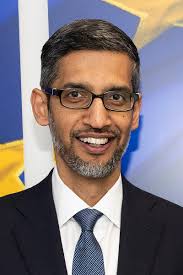
Sundar Pichai
Chief Executive Officer & Director, Google

Sundar Pichai's Warning: Learn AI Agents NOW or Fall Behind in 2027

🎥 Apr 01, 2026 📺 Syed Shoaib Abrar ⏱ 29m 👁 167 views
Google CEO Sundar Pichai believes that learning how to orchestrate AI agents could become one of the most valuable skills of the next decade. "If you don't learn how to orchestrate agents now, you'll spend 2027 catching up to people who started today." In this video, we break down: • What AI agents are • Why agent orchestration matters • How developers can start building AI agent workflows • The future of AI-powered careers • Skills needed to stay ahead in the AI era Whether you're a software developer, startup founder, student, freelancer, or tech enthusiast, understanding AI agents today...
Watch on YouTube

About Sundar Pichai

Sundar Pichai delivered the 2026 commencement address at Stanford University on June 14, where he acknowledged "global conflicts, economic anxiety, a rewiring of technology, information overload" and said that "each generation has faced hardship in their own way." During the speech, approximately 200 students walked out in protest, reportedly over Google's involvement in Project Nimbus, a cloud computing contract with the Israeli government. Pichai continued his address, telling graduates to "choose optimism," "gravitate towards working on hard things," and "do the thing that excites you." Earlier in May, Pichai spoke at Google I/O 2026, where he described the event as laying "the foundation for agentic transformation across our products." In interviews following the conference, he said that Google's models are "at the frontier in some areas" but that the company is "a bit behind" in agentic coding and long-horizon tasks. He also stated that "three years from now, you would look back at what we had today and you will realize they were pretty primitive," comparing current AI to a "flip phone."

Source: AI-verified profile updated from Sundar Pichai's recent appearances. Browse all interviews →

Transcript (55 segments)
S
Sundar Pichai0:00
So, first of all, great to be here. Thanks for doing it, Matt, and I love your content, and I appreciate all of you joining as well.
M
Matt0:06
You have a unique insight and probably very strong opinions about the future of the internet. And so, that's where I want to start. It seems like the internet is being transformed right before our eyes. Agents are being built. They're infiltrating the internet, and I'm wondering, do you see the future as agents being the entry point to the internet for most people?
S
Sundar Pichai0:30
You know, agents are going to be a fundamental part of how we work, because having used them, you know, if you're living, you know, maybe today the people who are on the frontier of how agents work are developers, right? You know, and particularly with coding, you know, 2 years ago most developers started using these tools. They started giving them more and more auto completions, and you were accepting them, etc. But, over the last few months, developers are actually doing agentic workflows, right? The developers on the frontier. And they are actually deploying agents, orchestrating agent. You saw the demo in antigravity for building an OS. You're effectively in an agentic workflow. So, I think once you get the taste of using something like that and the superpower that comes with it, I think so. I think it's They're genuinely adding value in a way. I think people will use them. I think it's important we build it in a way that users feel a sense of control and agency and transparency when they use agents. I think that's important. But, I think yes, I do expect agents to be a core part of how we use the web. But, that doesn't mean it'll take away from People use the web for a lot of reasons, right? You know, you're entertaining yourself. You're trying to do something meaningful at times, and you know, it depends on your shopping what you're shopping for, you know, if it's your weekly groceries versus you're trying to buy your loved one a gift, right? And so, I think it'll allow humans to use the internet in ways that gives them joy and purpose, and not always be forced to deal with I have to fill these 18 form fields to renew a DMV license, right? So, it you know, so that's how agents will separate it out, I think.
M
Matt2:26
Yeah, I mean, I'm particularly excited to have agents actually do real-world tasks. You mentioned the DMV, that use case is incredible. Um but I also think about putting so much trust into agents to really be the arbiter of our information diet. And I'm wondering how do we make sure that we are putting the trust in the right agents, and the agents are deciding correctly what information that we should have.
S
Sundar Pichai2:54
You know, you are doing a version of that if you use Gmail, and there's a spam filter working on your behalf filtering spam. Like, in some ways you're like trusting an agent. It is an agent. You know, I look at it as working on Waymo here to make people trust sitting on the back seat of a Waymo and let the car go. You know, that is an agent in some ways. But people are willing to trust but that's because we've done the work over time to demonstrate to people what with data, with how we have operated it, that it's fundamentally safe, and it's freeing you up to enjoy the ride. I think it's all depends on the value you deliver, right? I think that's why I think the building the agency and trust with users is a shared journey, and we have to get that part right. Part of the reason in Gemini Spark, Gemini Spark is actually very powerful under the hood. But we are taking the deliberate careful step of making it work with your first party surfaces like Gmail, calendar, etc. before we expose third party with MCP and full computer use and browser use. You know, it can do all that. But we want to make sure users are in control and they feel comfortable. We are getting their feedback, improving the product as we give those capabilities.
M
Matt4:19
You know, Sundar, I if I'm crossing the street, you mentioned Waymo, I actually trust walking in front of a Waymo more so than I trust walking in front of a human driver. I don't know if other people agree with that, but there is it was almost an immediate trust that I had for Waymo. So I'm hoping agents are the same way. Um I'm old enough to remember the early days of the internet, which was an absolute wild west, but you got to raw information very quickly. And I think, you know, part of something I'm concerned about is that we're increasing the buffer between us and the raw internet. We saw it, you know, a little bit with the browser, a little bit with apps, and now more so with agents. How do we account for that?
S
Sundar Pichai5:04
People in our experience with search and in YouTube, YouTube is a great example, right? People have the sense of connection with the creators they like and follow, right? And you know, so that's a big part of what they're looking for. So I think people are in different mindsets. I mean, there are times they want to discover content on the web. Like shopping is delightful for a lot of people in a lot of moments, right? And so they're not trying to fully outsource that, right? Like, you know, that's why I try to distinguish between what feels like something which may be a chore at times and what feels like something which is delightful. Similarly, I think you know, it could be in news, it could be people have their trusted sources at least at Google through search and YouTube and through agents we think you know, there will always be an incredible value from the ecosystem which users want to connect to and the agents should be in the job of doing that. Um but you are right. There are times the agents are playing a role in the middle. Sometimes it's very good because you know, it helps improve user satisfaction because users are getting to what they want in a better way. But but there's a layer of abstraction too and that's what you're talking about. But I think it's always been true with technology a bit. Uh but I don't think ultimately you know, it's also make at the same time it's also in the tools with which you can create content are also exploding. So people will also be creating more content. So I think there'll be a new balance which we will find, but yeah, it is an interesting moment of evolution.
M
Matt6:48
Yeah, I like that. I think you're saying there's definitely going to be a strong place for agents to do that curation on our behalf, especially in the era of complete slop domination.
S
Sundar Pichai6:58
Yeah.
M
Matt6:59
Uh but also, you know, that feeling of exploitation can still be there.
S
Sundar Pichai7:02
Yes.
M
Matt7:03
Um it Okay.
S
Sundar Pichai7:04
Because it's a fundamental human need that doesn't go away.
M
Matt7:07
Exactly. Okay, so speaking of the Wild West and I know you're probably feeling this pretty strongly on the at Google. There have been increasing cybersecurity cyber attacks. The models are getting better at cyber. Um obviously Google has been thinking about cybersecurity for decades. Are you seeing cyber attacks, especially AI enhanced cyber attacks ramp up at Google?
S
Sundar Pichai7:37
Look, we've been seeing be very clear like we've deeply cared about cyber you know because we've been working on frontier technologies for a while. Like Google pioneered many of important security frontiers like zero trust and so on, right? Like you know we've worked hard to keep the company at the frontier and also we operate many products and platforms around the world that touch billions of people. I we've been pretty aggressive in deploying agentic workflows. Our internal security teams use agentic workflows to help detect vulnerabilities. And then how do you work to patch them? And we have steadily seen over the last 2 years as the model capabilities have progressed. You know we are able to detect more vulnerabilities and we've been working very hard to patch them. I think Metamorph was a point of inflection of capturing that moment in time. Um you know that they put out a model which is really well built for that particular task and it was frontier there. Right? But what we are excited about it is part of the reason we are sharing maybe one of the under mention announcements today at iOS Code Minder. So Code Minder is a product which we use internally and which we're building to share externally. It not only helps you identify the vulnerabilities generate patches test and verify that they work and deploy them. And it's running 24/7. That's right. Yeah. And like you know and real time. We completed our recent acquisition of Wiz. You know so Wiz is state of the art in being able to do this real time monitoring of vulnerabilities etc. So I think combination of what we have with Wiz and Code Minder I think we are using it internally. To stay at the frontier and I think it's an important moment for the industry. I have to say I'm heartened by the cross industry collaboration. Going on at this moment. I think one of the examples I would call out today be it SynthID or watermarking companies coming together. Coming companies coming together around cyber. That is so important for this industry with this technology. Right? So, I'm encouraged by those trends as well.
M
Matt10:07
So, you mentioned Med-PaLM. So, I want to talk about that for a moment. Obviously, Anthropic decided not to release Med-PaLM publicly. Just a handful of companies. We have OpenAI releasing GPT-5.5 Cyber. Which approach do you think is more appropriate? Which is right for Google? Is it is there some model that is just too good and you're going to hold it back or is the more iterative deployment strategy that OpenAI takes more aligned with what Google believes?
S
Sundar Pichai10:41
Okay. I think it depends on where you feel it depends on the model capability. If it's if it is not fundamentally changing what's out there already in terms of the state of the art. I think it's definitely okay to put it out. But, in the security world, there's a well-established practice. Google has done Project Zero for a long time. Right? And like, you know, we have teams of people who find vulnerabilities. Then, we notify the vendor, give them 90 days to patch it before we acknowledge the vulnerability in the wild. And so, there are well-established practices in the security industry around how to do it. So, I think it makes sense to me if you suddenly have something which dramatically changes the frontier. First of all, I think it's important to work closely with the government on that. And you approach it in a responsible way. So, I think that is consistent with how the security industry works. And but I do think it's important to also make sure enough people get access to it so they can patch their systems and so on. And they go hand in hand. So, I think there's validity to that approach. So,
M
Matt11:58
Is there some threshold by which you would say past that point we can't release it? Or is it more let's look at what the landscape of model capabilities are? Let's look at how cyber is right now, and let's make the determination on a model per model basis.
S
Sundar Pichai12:15
That's what I would say. Like is the next one you're introducing, does it dramatically change the frontier? Is it a 1 to 2% improvement over the current state of the art? Or are you taking these 20% jumps? That's where the judgment comes in, and I think that's how I would change my approach.
M
Matt12:34
So, on the topic of model strategy, something near and dear to my heart is open source. Basically Google and Nvidia are the only companies with a real model open source model strategy nowadays. Um you know, Google's model is smaller, meant to run on edge devices. Why not release a large open source frontier model?
S
Sundar Pichai13:00
Look, we um first of all, Google, we've been big fans of open source. Google was built on a lot of open source systems. We have worked on many big things which are open source. I mean, I personally worked on Chromium and Android and so on. Kubernetes and I can name many projects which Google has contributed pretty strongly to the world in open source. In AI, we've been building Gemma models, and we've been updating them year after year, right? And they're awesome. And uh you know, and I think the recent release of Gemma 4 was a great release and you know, so we are pushing it. I think all of us are trying to make sure the frontier takes a lot of investment to get the frontier done. Right? You've seen our capex dollars, right? And like you know, so you're working You're putting a lot of R&D dollars to generate those incremental frontier models. So I think and you're discovering new techniques as part of doing those models. So we all have to be mindful of that. But I think we're also committed to making sure there's an open-source ecosystem which is able to develop. And so we take a balanced approach there. Approach there and I think we'll continue to take that balanced approach. That's how I see it.
M
Matt14:18
Yeah. And by the way, I do love the Gemma models. I run them locally at home. They are fantastic. So definitely thank you. Um you know, obviously a company of the size and the resources of Google, if you're making that decision of okay, large close source, large open source, we can't do both. Um probably most startups in the US also will struggle with that decision. Like what is your sense of the business model for open source in America? Is it viable right now?
S
Sundar Pichai14:50
Well, first of all, we not only do open source. Part of the reason we invest so much in flashlight and flash models is so that we are giving a range of options, right? And those models are workhorses, too. To support. But your question on open source, it's not that we don't you know, we are we've been moving the open-source frontier, too. There's a lot of very, very good open-source models, like particularly from China, which startups are adopting, too.
M
Matt15:16
Yeah, we're going to talk about that.
S
Sundar Pichai15:17
So, you know, I think it depends, right? You go through moments in technology where the frontier moves so fast maybe sometimes the open source may not be able to fully keep up with it. But then there are moments where open source will take leaps if the technology curve slows down or, you know, takes a break, right? So, it's tough to predict it fully in the future. But I expect there to be a demand for a strong open source ecosystem. And I think we will definitely play a part in it and I hope others do too.
M
Matt15:54
There have been a number of open source ecosystems that have been really successful over many decades in technology, but I think just the upfront costs of baking a model makes it extremely difficult, especially if you're putting out the model and then all of a sudden your competitors are serving inference at a higher margin than you. Um but I am hopeful. I do love open source and we're going to talk about the workhorse models in a moment, but I want to talk about China and they have been putting out incredible open source models. Um it you know, if you can put yourself in the shoes of another enterprise CEO and you're looking at the landscape of which AI model to choose for your business and you're seeing, you know, DeepSeek at a fraction of the cost but still near the frontier, why wouldn't America adopt Chinese open source AI? What's the argument to go with American AI?
S
Sundar Pichai16:52
So, you're saying why wouldn't you just use the best open source models available? Yeah. Look, I think You look, at the end of the day, what are companies trying to do, right? They're trying to solve problems, right? These are and they're trying to solve a problem with the solutions. The question is, what are the solutions available? Remember, they are designed Let's say you're doing something in customer service. You want predictability. You want reliability. Like you want consistency and like, you know, so you want safety, security. So, companies are optimizing for a lot of factors. I think that gives a place for both open source models and there'll be providers who will take the open source models and like build that ecosystem around it. Which makes a lot of sense. There'll be closed source models. And you know, there'll be open marketplace and people will have a lot of choice, I think. I'm more okay if it is open source with the right licenses. It should matter less where it came from. Right? Like, you know, I think over time there are good ways to inspect open source. Not saying that's exactly true, particularly with the how the AI models are developed. But with open source comes a community which is responsible for it, cares about it. So, if something is wrong happening in that software, it's not like it's going to go unnoticed. So, I think that creates a level of trust for people to adopt that technology. I think so. I worry less about are we adopting open source models from China or more that are we doing enough in the US to make sure we are staying at the frontier.
M
Matt18:35
Yeah.
S
Sundar Pichai18:35
That's how I think about it.
M
Matt18:37
Now, I know like Google is big on co-design, full stack, and kind of just continuing on on where the open source model is coming from. I've heard that argument that if it's open source, it doesn't necessarily matter. We're going to fine-tune it or customize it for our needs, but ultimately if we continue to build on top of, you know, China's open source, there's also an argument that they're going to optimize their models for their own chips, and then all of a sudden we're kind of built on another country's technology. Is that an incorrect argument?
S
Sundar Pichai19:12
Look, I think the fundamentals of AI, the way people should be building use cases on top is because the models are changing so fast anyway, you need to build it in a way in which you're able to evolve the models underneath. Right? I think that has got to be the way you know, you're working through this moment, right? And so I think you have to be dynamic enough that you have to be able to adapt because the model frontier, the model ecosystems are changing pretty sharply. And so that's the way I would think about it now, and you know, it's too early to predict if this is a real concern or not.
M
Matt19:50
Yeah. Um okay, talking about model strategy, one of my favorite things is watching the frontier labs and seeing how their model strategies play out. And Anthropic and OpenAI seem almost exclusively focused on the absolute frontier, and Google has that, but you guys also put a lot of emphasis on what I'll call the workhorse class of models, the flash class of models. Talk a little bit about why. Why is that such a big part of Google's strategy?
S
Sundar Pichai20:20
Look, I mean in our mission statement, we have this thing to make technology universally accessible and useful. We've always deeply cared for what is the most important technology in our lifetimes that it diffuses as broadly as possible. And we get really excited driving efficiency and making sure the best models can work in the fastest possible way cheaper. Cuz we need to do it for search, right? Because we have to give it to billions of people.
M
Matt20:52
Yeah.
S
Sundar Pichai20:53
We want to put it in Gemini. And so we want to give it to developers so that they can do powerful things with it. And we've had a lot of success with the strategy, and I think 3.5 flash particularly, I made this point during the keynote, but I've heard anecdotally from a lot of CIOs who are so concerned about how much their companies are blowing through budgets.
M
Matt21:14
Yeah.
S
Sundar Pichai21:15
Right, you can feel it talking to them. And I think the problem is going to get worse as we go through the year. Right? And I think that's where I think the flash model will really shine because particularly in a agentic workflow where you need these things to be repeatedly used and used a lot of times I think it's so important to have a model which is very capable but is fast and efficient. Right? And even accounting for token efficient token use flash is remarkably cost-efficient. Right? And so I'm really excited. We are finding it internally. We are using it as a blend of pro and flash. Right? Internally. And I think most companies should learn to use it that way. To be very clear, we're super committed to being at the frontier on every category. I'm excited for pro which we are working on. But I think flash has a unique role to play in this constrained compute constrained time.
M
Matt22:16
Yeah. No, I agree completely, especially most companies are not, you know, solving math olympiad problems. They're not at the absolute cutting edge of science. They need real work done and that is truly where the flash model shines and not everybody is token maxing and trying to or unconcerned with the budget. So, I definitely appreciate that. Um It like if you think about the future of AI, is it just truly a race to self-improving AI? Is it like maybe just to play the devil's advocate for a second, the flash family of models are great now, but ultimately whoever reaches self-improving AI first wins and then nothing else matters. Do you think about it like that?
S
Sundar Pichai23:08
Look, I think first of all, there's a responsibility that comes with this technology and you know, I think we all need to be careful to avoid this race condition at all costs. And I think we all would tell the humanity to make sure we deploy this technology responsibly. You are right in your question that there is this current moment where people feel like the curve is so steep and like, you know,
M
Matt23:36
Yeah.
S
Sundar Pichai23:36
You know, where you are in the curve matters. But just like you know, a few months ago when we launched 3.0, people are like, 'Oh, we are so in the frontier. No one will ever be able to catch up and you know, I think that at the frontier labs, it's very dynamic. The competition is fierce. We all have our strengths and weaknesses. We all also have different cadences of our pre-training release cycles. So, the peaks don't exactly match. So, all this creates that perception gap which shifts widely in like 4 to 6 weeks. But I think a few labs are really at the frontier and then there's a big gap. Um and I think there are scenarios in which things like recursive self-improvement come into play. But I think if they come into play with that no different from the cyber moment, we all have to handle those moments far more responsibly than today, right? And so, that goes hand in hand. And so, I think the more AI becomes advanced, the more it's a societal conversation versus a single company conversation.
M
Matt24:53
Yeah. Yeah, well said. So, all of you know, we're talking about a lot about models, but all of it is downstream from compute. I'm always both kind of impressed and in awe of Google's ability to serve, you know, you're serving your own models, inference on the API. You're also powering your suite of products with Gemini to literally billions of users. You're also allowing your competitors to use your inference. You're also selling TPUs. I've heard the reason for this is because you mean Thomas told me, he said, 'We planned really well.' Which, you know, makes a lot of sense. You've been at this for 10-plus years. I think I've also heard that Google's revenue is literally constrained by compute. So, I wanted to give you the opportunity, what is the state of compute at Google right now?
S
Sundar Pichai25:51
Look, I all of us are I think we've made a set of you know, bold, right decisions over the last few years to invest in compute and scale it up aggressively. But, having said that, I don't think any of us sit in the chair and say, 'We wish we had you know, you look back and say, I wish I had done a little bit more.' So, we're living in one of those moments in time. And you know, there are costs going up, too. So, like for a given budget, you may be getting less compute than you had previously planned for. You know, memory prices, what have you? You know, so the costs are going up. I think we plan, you know, we are able to plan long-term for cloud separately from our own internal needs, and we do long-range plans, and we plan for it. I think it's good, and some of it is like when you're on Google Cloud and you're supporting customers, your customers may look at something and say, 'Well, I want access to that.' Like they may look at the demo of 3.5 flash on anti-gravity and say, 'How are you exactly running it at 800 tokens per second? And like, could we get access to that?' You know, so you're also supporting customers through those journeys, and hence you're meeting them in what they're asking for. And but it is not an easy balancing act, and you know, we are constantly thinking as far ahead as possible. And we're making trade-offs like every other company right now. So, do you have
M
Matt27:21
Maybe an obvious question, more demand than you have compute to serve it? Absolutely. Like what is the scale of that?
S
Sundar Pichai27:26
And hence the emphasis on something like 3.5 flash even more. Right? And you know, could we have done an even better Omni model? Yes. But like, you know, how can we do an Omni model which we can give to as many people as possible? So, there's constantly you're making trade-offs of trade-offs of like that. Including on, you know, do you build a very large model which you know, like an ultra-size model that will increase the capability frontier, but then who all can you give it to? So, you're constantly all of us are making these trade-offs. And sometimes you make a trade-off it looks like, 'Well, maybe you're done that trade-off a bit differently.' Yeah.
M
Matt28:06
So, we only have a few seconds left. One last question for you. What is the main bottleneck for compute for Google right now? Is it land? Is it political will? What is it?
S
Sundar Pichai28:17
I think I think the way it works is by definition bottlenecks work this way. If you think something is a bottleneck and you solve it, something else becomes a bottleneck. Right? Like, you know, that's the whole definition of bottlenecks. I think at various times I think you're having a few areas. Your ability to physically cons permit and construct data centers, the power they need. And then very quickly you get into the core components for these systems. They're all the bottleneck.
M
Matt28:56
Yeah.
S
Sundar Pichai28:57
And it's like you have you need all of that to work together to get a square set of a chip you need, right? And like, you know, and so I feel like there are a few parallel bottlenecks going through. And it almost doesn't matter that are like a few of them which are bottlenecks. And at various times you may conclude it is memory, but then if everyone concludes it's memory, tomorrow you turn around and say, 'Okay, no, no, no, it's actually this.' And so, you know, but I think there are systemic bottlenecks across all layers of the stack now.
M
Matt29:34
Yeah.
S
Sundar Pichai29:34
Whatever the bottleneck is in the moment, that's the most compute you can have in that moment. Okay, everybody please help me thank Sundar Pichai. Thank you so much. Thank you so much. Appreciate it. Thank you.
M
Matt29:44
Thank you.
S
Sundar Pichai29:45
I see you guys.
M
Matt29:45
All right, I'm all broke up.
S
Sundar Pichai29:46
Awesome.