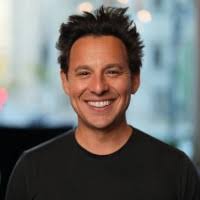
All right, everybody. Welcome to the Unapologetically Jewish podcast. Today's guest, waited a while for this, someone Canadians probably know from the world of business, technology, and entrepreneurship, but that's not really why I wanted to have him here today. Harley Finkelstein is the president of Shopify, one of Canada's most successful technology companies. He's an entrepreneur, investor, lawyer, and co-host of Big Shot, where he helps preserve and tell the stories of remarkable Jewish entrepreneurs and leaders. But Harley is also something that has become increasingly important in Canada today. A successful, influential Jew who is willing to be publicly and unapologetically Jewish. Since October 7th, Harley has spoken openly about anti-semitism, about what is happening to Jewish Canadians, and about the uncomfortable conversations Jewish families are now having about their future in this country. And for me, that raises a much bigger question. What responsibility comes with having a voice when so many others are afraid to use theirs? Today, we're going to be talking about entrepreneurship and success, but more importantly, we're going to talk about Jewish identity. October 7th, anti-semitism, Canada, leadership, courage, and what we Jews actually do next. Harley Finkelstein, welcome to the Unapologetically Jewish podcast.
Matthew, it is so great to be here. I am here, as I told you in sort of the green room, because of your sheer chutzpah and your persistence of getting me on the show. Congratulations. You are a fractal of how the Jews have survived thousands of years. We simply just do not give up. And when we want something, we use all the chutzpah and ambition and energy in the world to get it. And you did that to get me here. So, you know, as I say, I appreciate that. I'm happy to have you here.
So, before we talk about Shopify, October 7th, or anti-semitism, who was Harley Finkelstein before all of this? Where did this drive come from?
Look, I've been an entrepreneur my entire life. I didn't call it that early on, but I grew up the grandchild of Holocaust survivors, the son of immigrants. My father was a refugee, came from Hungary in '56 during the revolution. And so I just grew up around small business owners. My father was in the schmata business. My grandfather sold eggs at a farmers market, which still stands today in Montreal, the Jean-Talon market. He created L'Appetit, a tiny little single table where he sold eggs. My grandmother had a textile business. So I just grew up around these sort of small business owners. And when I was 13 years old, this is now a story that I've told a lot, but when I was 13, the only thing in the world I wanted to be was a DJ. I went to bar mitzvahs. DJs were like magicians to me. And I went home and told my parents, I want to be a DJ. They said, you should apply to DJ companies. Nobody would hire me. And so my dad gave me some great advice and said, why don't you start your own DJ company and hire yourself? And I did. He came home, he made me a business card that said Harley Finkelstein DJ. And I DJed 500 parties or so professionally between the ages of like 13 and 18 years old and that was my first foray into entrepreneurship.
I was born in Canada but I grew up in South Florida in Boca Raton. I moved to Montreal in 2001 to go to McGill. My parents, my father in particular, it was a tough, tough moment for our family. My dad was arrested, went to prison, and I was once again looking to figure out how to solve a problem. When I was 13, the problem was I want to be a DJ. Nobody would hire me. When I was 17, it was my dad's away and I have two much younger sisters and a mom who needs support. And I ended up starting a t-shirt business. When I was at McGill, we made t-shirts for universities across Canada. And through that, I ended up developing this amazing bench of mentors and counselors and role models. And a few of them, one in particular, Philip Rhyne, had suggested that I consider going to law school after undergrad not to become a lawyer, to become a better entrepreneur. This particular mentor, Philip, was teaching law at the University of Ottawa. So I applied to one law school, which was University of Ottawa, got in, moved there in '05 and through an incredible happenance and luck and I don't know, something, I don't know, serendipity I guess, I met Toby, a German immigrant who just moved to Canada. He was selling snowboards on the internet and realized that while the snowboard business was a good idea, the software that he had written to sell those snowboards might be a great idea. And I ended up becoming one of the first people to use that software and that software would become Shopify. And that was about 20 years ago and I've spent the last 20 years or so, basically, I'm 42, so about half my life, shoulder-to-shoulder with Toby building this incredible company which today I think is the second largest company by market cap in Canada. I think only the Royal Bank is larger than Shopify and on a global scale we're one of the largest companies globally as well. And it's been an amazing adventure.
That's amazing. Shopify is great. So before we go there, I got to go back a second. You DJed in Florida, you DJed in Montreal?
Yeah, both. I DJed initially when I was living in Florida, so I DJed all throughout high school. And Boca's got a lot of Jews, so there were a lot of bar mitzvahs. So that was a great, great, you know, the TAM there, the total addressable market there was very large. And then when I moved back to Montreal to go to college, I ended up DJing throughout college too. And but I mean, I've been an entrepreneur since I was a kid. I now realize what the term was. I'm high energy. I still have a bit of ADD maybe. Yeah, maybe not a little bit, maybe a lot of ADD. When I focus on something, I can run through walls. I don't have a lot of hobbies. I have my family, my friends, I have Shopify, I have Big Shot, and that's about it. I don't watch sports on Sundays. Instead, on Sundays, my best friend David Segal and I, founder of David's Tea, we record a podcast with 90-year-old Jewish entrepreneurs who are billionaires, and that's how we spend our Sundays. So, I don't do a lot of things. The things I do do, I go very, very deep on and try to make them world class.
Amazing. All right. So, you answered a lot in there with my next question. So, we're going to go, you know, success and Jewish identity. You know, you could very easily just be Harley, president of Shopify, and leave the Jewish identity out of your public life. You've made a conscious decision to be publicly and visibly Jewish. How did that come about and why did that come about?
I've never been religious, but I've always been a very proud Jew. And I think it was easy to be a proud Jew throughout my entire life. You know, when I was in middle school or high school or college or law school, this is a story that I've told a number of times, but I used to put tefillin on every Friday at law school, not in a small classroom or, you know, in the cafeteria, but literally in the atrium in the middle of everybody. And so, and again, I wasn't religious, but I met this amazing rabbi, Rabbi Chaim Baryski, who runs the Chabad in Ottawa. Amazing man. And he would come to put tefillin on me every Friday. This is before I had any money, before anyone knew who I was. He just wanted to be there to support me. And he had always offered, 'Do you want to go to a classroom to wrap tefillin?' I said, 'No, let's do it here in front of everybody.' I wasn't trying to be obnoxious about it or be in anyone's face. I just, I'm a proud Jew and I'm wrapping tefillin here and no one had a problem with it. It was free. It cost nothing to be a proud Jew in 2005 or 2006 when I was in law school.
I think what happened, and I think this is well told at this point, I think October 7th changed everything for a lot of us and for me in particular. I think a principle is only a principle if it costs you something. I think being a proud Jew as a principle was easy pre-October 7th and it became very difficult, became costly after October 7th, which meant for me that it was even more important. What really shifted for me pre and post October 7th is, so Big Shot, which is for those that don't know is my podcast that I have with David, it is now I think one of, if not the most popular Jewish podcast in the world. I think it's the only Jewish related podcast maybe. I think the other one is Call Me Back. Other than Call Me Back, it's probably, I think it's the only Jewish related podcast in the top 5% of all podcasts in the business category. But Dave and I started that before October 7th. We interviewed Charles Bronfman and we interviewed Izzy Sharp from the Four Seasons and Eddie Sunshine and these amazing people, David Rubenstein. So, it was fun. It was interesting to us. We pray at the altars of entrepreneurs. If David and I always joke that if we would have had posters on our wall when we were kids, it wouldn't have been Michael Jordan or MC Hammer or Venus or Bo Jackson. It would have been Sam Bronfman and Sunshine on your walls. You know, that's who I would have had on my walls. That's who I looked up to and admired when I was a kid, which is weird, but that's the truth. So we started this podcast pre-October 7th and then October 7th happens and we're like, okay, now this podcast has a completely different meaning, different objective. It is no longer simply just a celebration of Jewish entrepreneurship and Jewish chutzpah and Jewish success. It is now a way for us to narrate and create and tell the stories of Jewish entrepreneurship for the world. So there's more understanding, there's more empathy. I think for a lot of people that don't know a lot of Jews or not in our community, they look at these titans of industry, Linda Resnick from Fiji Water or we just filmed Barry Diller from IAC or Jeffrey Katzenberg. They look at Jeffrey Katzenberg and they say, 'Wow, this guy must have, you know, grown up with a silver spoon in his mouth, he must have had it easy.' Or Barry Diller, for example. That's not the case. We've done 36 interviews, 36 submissions to the archive. 13 interviews on Big Shot. All of them had a tough time. Some of them, Eddie Sunshine was born in a displaced persons camp, Bergen-Belsen. I mean, Eddie Sunshine effectively created the modern-day REIT, real estate investment trust, and he ended up in London, Ontario with no money after they came over here after Bergen-Belsen. And his father had like a couple diamonds hidden in the sole of his boot, excuse me. And that's how he was able to afford to send Eddie to school and Eddie went to law school and then eventually created Realcan. So, the importance and the severity and the impact of Big Shot completely changed. And I raise that because that basically is how I feel about all of it. That it was easy. I was a proud Jew then. I'm a proud Jew now. The difference is now it costs me something. Which means that it is really a principle. Meaning I'm okay with it costing me something because I think now more than ever people like me that have, you know, with great power comes great responsibility to quote Spider-Man, I think ultimately this is the time where it matters to be unapologetically Jewish and to actually have some chutzpah in your step if you identify as a Jew. It was easy then. Today it's hard. Therefore, it's more meaningful. I wasn't doing an unapologetic Jewish podcast. I wasn't doing any podcast around Jewish stuff pre-October 7th. I'm doing it now because I think it's important that we talk about these things. And I think it's important that we all realize that this is not anxiety, that this is evidence, that the golden age of Canadian Jewry is over. And what comes next is up to us. I mean, Jews are 1% of Canada's population, and we are the most targeted group in the country. There has been a 327% increase in hate crimes in 10 years. That is not a mood. That isn't a vibe. That is a measure. And the grandchildren of people who fled to Canada like me are now asking whether they should flee from it. And I think what we tolerate, I said this in my op-ed that I wrote for the National Post recently, what we tolerate next will define what it means to be Jewish in Canada.
Yeah. So I've done a few op-eds on that same topic. I wrote one on the front page for Plan B. And it was, they assigned that to me as saying, Rob said to me, you know, I keep crossing the country going to synagogues to speak to you and everyone's talking about a Plan B. And he goes, I'm upset by this. Can you write an article about this? And it was more on this statement. And I got a lot of backlash like you're telling people to leave and I said no, no, no, it's a question on where we are. Like if we're having conversations of do we leave, and I said, you know, one thing we, that our grandparents and our parents came when they came here, Canada was Plan A and Plan B, there was like, that was it. We left Europe to come here, this was all we had. You know, it's so important that we do and what we leave for our children is huge.
So let me sort of tell you the, so one of the best things I think we've done on this particular topic, like on what it's like to be Jewish in Canada, is this Canadian Jewish Barometer that Rhonda Lentin and Robert Brym put together. These are, it was out of the University of Toronto. This came out a couple weeks ago and it's published in the Canadian Jewish Studies. I think I know what the volume is, but it is super important and they talk about, you know, one hate crime for every 366 Jews is happening right now. It talks about 88% of Jewish Canadians feeling less safe. But the most surprising of it all is this 34% of Jews in Canada have stopped wearing visible signs of being Jewish in public. A kippah, a Star of David, like we are now hiding in our own country. Nearly one in six anti-semitic incidents in Ontario schools was initiated or approved by a teacher or a school sanctioned activity. I mean, this is the stat that shocks people who think it is just a playground problem where it's just kids being kids, right? And then if you think about like how does this land? Well, nearly one in 10 Jews has been physically threatened or attacked in the past year for being Jewish. Myself included. I wasn't physically attacked, but I think it's now pretty well documented that anytime I give a talk in Canada around entrepreneurship, someone is going to protest and yell horrible things at me in front of my parents. By the way, the Startup Festival incident was, I could handle it. I'm strong. I have security. I can handle myself. My parents are in their 70s. They are, you know, like these old Jewish parents. They're full of anxiety in general. For me to be sitting on stage at an entrepreneurship conference with a UFC fighter, Georges St-Pierre, one of the most important fighters in the world, talking about entrepreneurship and then for someone to rush the stage and yell that I'm a baby killer in front of my parents. It was heartbreaking. Seven in 10 Jewish parents worry about their children's safety at school. And it doesn't seem to be, you know, getting better. And so we can talk about sort of this, you know, this anti-Zionism versus anti-semitism, where that all comes from, but ultimately we have to be like, right now it is shitty to be Jewish in Canada. Now, two routes to take. Again, going back to your point earlier, our parents and grandparents, my parents and grandparents took the route of Europe is not safe for us anymore. We are leaving Hungary. We're coming to Canada for a new life. I gave the convocation speech this year at McGill and I ended my speech by saying my grandfather came here and wondered sitting, you know, standing behind a broken table with holes and issues at the Jean-Talon market selling eggs 60 years ago wondering if Canada would give his family a chance. And I am evidence that it did. It was the right decision. I think the time is different now. I think it is easy to say I'm going to leave and frankly most of the people that are leaving seems to me are either going to Israel, making aliyah, or they're going to the second, you know, the second Israeli state, which is Florida. Which is arguably, I spent a lot of time in Miami, I grew up near there, I get it. But I'm not leaving. My wife and I are not leaving. We are staying here. We are going to fight for this because I do believe this is different than 1956 in Hungary. This is different than '43 in Eastern Europe. I believe Canada is still the best place for my family long term. And I'm not going to, like, I have way more tools available whether it's security, it's my own platform, it is money, it is my relationships with government. I have all these levers now that my family did not have in Europe then. Therefore, it behooves me to try to make it better here. And that's my plan.
So, I'm going to ask you, so do you, so part of why I started Unapologetically Jewish, not the podcast but the organization, was to fight because I truly believe that with my, I got three children, you know, one on October 7th, so devastated on October 9th he went back to university that weekend and decided to put a kippah on when everybody was taking them off, he put one on and now he's going to Israel to go to yeshiva, so he's gone, he went full force, which I love, I think it's amazing. I can't have an organization called Unapologetically Jewish and not have that product come out of it. But I get a lot of push back on everything you just said. How much push back do you get on, but we're not safe, we have to leave? I have a lot of people, especially people who have the ability to pick up and walk away because let's be honest Canada is also not a financially viable option for a lot of people. But the ones that they're like, we have the money, we're gone. Do you get push back like that going, 'What are you talking about? Why are you staying there? It's a lost cause.'
All the time. But frankly, like, I get push back about, you know, I got push back about like building the presumption that Shopify is going to be a, you know, today we're a $200 billion company. I got push back that Shopify was ever going to be a billion dollar company. I got push back, why are you taking it public? I got push back for why I went to law school. I got push back for why I went to McGill instead of staying in the US where all my friends were going to college. I don't care about the push back and I get it. Not everyone can pick up and move. I can and I'm choosing not to. Right. That's what I love. So I get the push back. That's not my plan. My plan is to stay and to fight. And that really matters to me. I believe that my core thesis is this. Canada's allowed hatred to become normalized under this tiny little veil of advocacy. And that behavior that would be instantly recognized as bigotry against any community somehow gets rationalized when Jews are the target. And so I'm naming it now. I'm saying that is anti-semitism. When the second or third or fourth time that someone stormed the stage where I was standing, where I was giving a speech about something unrelated to Israel or Jews or anything related to what we're talking about here, and they're yelling terrible slurs at me. I named it. I said, 'This isn't advocacy. This isn't a protest. This is bigotry.' And I think naming it is not inflammatory. It is absolutely necessary. You know, the most important, I've said this to, I told this story before, but it's really, really important to me. We opened October 2025. My wife and I opened the Finkelstein Chabad Jewish Center in Ottawa. It was a promise I made to Rabbi Baryski 20 years earlier when I was in law school. This amazing rabbi was hosting everyone at his home every Friday. It was packed with students. And I said a throwaway comment that if I ever have any money at all, I want to build you a beautiful synagogue. And then eventually 2018 happened, post-IPO, I had some money. I wanted to do this. We started to find a building. Context first on the Jewish Center because this was one of those moments in one's life that you kind of never forget. 2006 or '07, I'm a poor student in Ottawa. I meet this amazing rabbi, Rabbi Baryski. Comes to put tefillin on me every Friday and then every holiday, every time there is, you know, a Jewish event, Shabbat, he packs his tiny little house with Jewish students. They're everywhere on the stairs, on the front stoop, on the floors. And I make a throwaway comment that if I ever have any money, I'd love to build him a real Jewish community center, a real synagogue. And fast forward, I don't know, 10 years or so, we have the Shopify IPO. For the first time in my life, I have some money. And I call him and say, 'Rabbi, I'd love to make good on that promise.' So, that in itself was incredibly emotional to me. Lindsay and I were ready to, like, it was just this amazing kind of full circle moment. We find this building, we buy it, it's not big enough. We actually extend the building. It's finally up and running. We renovate it. Looks incredible. And October 2025, we have the grand opening. And I'm thinking about this day in anticipation of this very special moment. I'm going to be on stage with my children next to me, Lindsay on my left, my wife, and Bailey and Zoe on my right, my kids, my parents and grandparents in the crowd. I invite the prime minister who I've known for a long time, Mark Carney. Evan Solomon is there, Minister of AI. Melissa Lantsman's there from the Conservative Party. The mayor of Ottawa is there. And I'm thinking about my speech and I rehearse the speech and I
Talk about the fact that this building behind me with my family's name on it, not only is it remarkable for my father to see, who never thought our family's name would be on any building, but that this building is not a symbol of my success, but rather it's a symbol of Jewish survival. That in two generations, our family went from being poor refugees to building an incredible building at in the nation's capital right by Parliament Hill. And as I began to make this speech, we hear this this abrupt chanting start. And remember, this is not a center for Israel. This is not a center about, you know, politics. This is a Jewish community center for students in Ottawa. The place it has given me and Lindsay so very much. It was our gift to that community and it was our our make good on that promise from a decade earlier. And as I begin to make this incredibly impassioned speech, these chants started happening. And I was fortunate because right next to me was the speaker. And so instead of doing what I think the protesters want, which was me shutting up and sitting down, I raised the volume on the speaker and I continued my speech and and you can see in the video. I mean, I started to cry because it was this amazing moment that I've been dreaming of my whole, you know, for for over 15 years. And there was chance and protest and and this these vile words being thrown at me about a war happening on the other side of the country. And that was the reason why I wrote that initial oped. It was it was like, "Okay, this has gone too far." It first happened when I was on stage doing a live taping of Big Shot um with Heather Reeseman from Indigo
and it was about Jewish entrepreneurship and the Jewish entrepreneurial story and we had protesters and then I opened a Jewish Community Center in Ottawa. protesters and it just felt like this had nothing to do with some sort of protest. You know, I said this in the in in the op-ed, but you know, when Jewish community events are disrupted and Jewish leaders are targeted simply because they're Jewish, or when Jewish students are told they can they can and cannot attend schools safely, we're no longer talking about protest anymore. When the target is always the Jew and never the topic, it's not advocacy. It is hate. And none of these protesters have ever asked me what my views were. They never asked, "What do you think about what's happening in Gaza? What do you think is happening? What do you think of Netanyahu?" They never even asked. Anti-semit anti-semit does not ask that. So I think naming these things, you know, in in the um in the report that came out in Brim's uh study, it talked about how sort of the main message to me that I got from the study was that this is not just anxiety, that there is evidence now that there's a real problem here. And I really do believe that it's great that, you know, I said in the article that at Startup Fest that hate was escorted out and we got right back to building. And that's how I've been handling this. I I'm not going to let this change my ambition. I'm not going to let this destroy these incredibly important events. I didn't want it to that I didn't want the project to ruin my this special moment for our family in in giving this great gift of this Jewish community center. But I also recognize that not everyone has the resources, the security, the funding, the support system that I do. Um, you know, I put this on X a couple weeks ago, but the fact that, you know, Toby, our our CEO and founder, who's been my business partner for almost two decades, is so incredibly supportive of me. He's the first one to say something when when something like this happens. He's the first one to show support. He's the first one to to defend me when when all these attacks are happening. It gives me uh that is a privilege and and I'd best not squander it.
Absolutely. And listen, there's we you have been and I think not just you, you know, anybody I think who who has stepped up to do something and and really risk a lot, right? You you know, your your name, your your legacy, your your family, like everything is being thrown out there and it makes a big difference. But when you talked about the people you had there, I think I really want to go down this road if you're okay with this. you know, because of what we're seeing in Canada, um the hate, the bigotry, the racism, you know, um anti-ionist or Zionist is just filler word for Jew. Like, we know all this stuff. This we all know. Uh but we look at what we what we see from political leaders and this goes from federal all the way down through the municipal. Um you know, you mentioned you had Prime Minister Carney, you had um Vin Solomon, Melissa Lans, which is great that it was bipartisan, right? And now we like we really have to come together on some things. Uh hate's one of them. And I hate saying, you know, when they hear hate has no place here. Hate has taken root and it's a you a giant redwood tree, forest tree in in California. It's massive. When we look at our leadership, we look at government and and how how do you big of a part does that play? And what do we do? What do I what have you been doing? What what can everybody else do to try to make this a difference? Yeah. And and and make a change.
Look, we all have our own skill set. We all have our own set of relationships and and network. Um and I'm using every tool I have available to me. I'm using social media because I have a big following. I'm using my my my own money to build the Jewish center and to help the Jewish General Hospital and to, you know, help. I mean, I love Big Shot. It's a it's it's it's a it's a total, you know, uh passion project, me and David, and and it's so important that we tell these stories of incredible Jewish entrepreneurs and how they got here, by the way, in in so everyone, right? Yeah. Big Shot is is amazing. It's this incred I mean, if you like Jewish entrepreneurship stories and you, you know, we we interviewed Joe Schaefer, 104 years old, a couple of months ago. He created the schmuta industry, not in Montreal. He created the North American schmuta industry. He created Shabanell. um he loved these stories, but it's I I fund it personally. So does David because it is important, right? And I think we should all need to use those relationships. I happen to have a really great relationship with our prime minister and and a number of of MPs. Mark Miller has been amazing. I know that that I have I have received feedback that they're not doing enough. I don't disagree that they can be doing more, but I'm not just going to give up and say, "Well, they're not doing anything. I'm going. No, just the opposite. You know, um that that moment at at Holy Blossom Temple in Toronto where uh you know, the PM said that Canada Civic Compact is failing Jewish Canadians and called this the crisis specific, severe, and and and demanding a targeted response. I said that Canada finally said the quiet part out loud. I'll take the W's where they come. Is it is it all fix? No. Can they be doing more? Of course. But I don't think it is time for us to just get insular and talk to our own. We all have these WhatsApp groups or these iMessage groups where it's our friends and family and community and we're all just complaining. I wish I would have done. Yeah, you can complain all you want. Fetching is part of the Jewish DNA where they've made movies and TV. We like we like to fetch. No doubt about it. However, fetch, but also do something about it. Whatever you can do. If you don't know the prime minister, no problem. Anyone can write him can call his office, can call PMO. If you don't like one of the MPs, no problem. Anyone can call their their their writing and ask for things. The the reaction to dismay with any political party is not just to walk away, it's to fight. That is how we've survived thousands of years over and over again. Um, Jews have been hated. We are fighters. We are scrappy. Back to the entrepreneurship thing. Why do we go to entrepreneurship? Because no one gives us jobs. No one gives us opportunities. So we build our own.
We can't go to university. We create yeshiva university. We don't have hospitals. We create Cedar Sinai. They won't allow Jewish doctors in. We build the Jewish general. This is the way we have survived for a millennia.