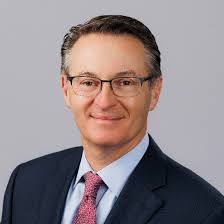
About Steven Oakland
Steven Oakland, President, CEO, and Chairman of TreeHouse Foods, appeared on CNBC's Mad Money in September 2016 and September 2017 to discuss the company's performance and strategy. In 2016, he addressed the acquisition of ConAgra's private label business for $2.7 billion, describing it as a "transformative event" that would double the company's size. He stated that TreeHouse focused solely on customer brands and custom products, and that the acquisition would yield economies of scale, address overengineering in packaging, and simplify operations—citing a reduction from 56 container types to four. He noted that the company was a "favored strategic buyer" in a competitive auction and that retailers had led the emergence of strong private label brands to differentiate themselves from competitors like Walmart and Amazon.
In 2017, Oakland reported a quarterly earnings beat and strong full-year guidance, attributing momentum to a renewed focus after the ConAgra carve-out. He stated that private label penetration in the U.S. was 18%, half that of some Western European countries, indicating a "long runway" for growth. He said 20% of TreeHouse's legacy private label offerings were "better for you, natural or organic," growing at a 30% clip. Oakland argued that millennial consumers are "relatively brand agnostic" and have higher preferences for private label than their parents, driving demand for healthy, convenient products. He emphasized that TreeHouse had shifted its industrial base to anticipate market trends and work closely with retailers to develop brand architecture for younger consumers.
Source: AI-verified profile updated from Steven Oakland's recent appearances.
Browse all interviews →
Transcript (17 segments)
J
Jim Cramer0:06
This morning we learned that Kraft Heinz, the big packaged food company, is selling its private label business where they make the knockoff store brands for various supermarkets to Treehouse Foods for just $2.7 billion in cash. That's a lot less than the $5 billion Kraft originally paid for this business when they bought Backore back in 2012. Now Treehouse is the dominant player in the private label food space. They have a long history of making smart acquisitions. But the company's stock got slammed on the news today, down $4.80, more than 5%. Partly because Treehouse said it was going to do a billion dollar equity offering to help pay for the transaction, but also because the company announced that revenues were a little lighter than expected. Here's the thing, though. I think Treehouse is in a much better position to make this business work than Kraft ever was. And if they can turn it around, then you better believe this stock will go higher, maybe even higher than before the secondary gets priced. Remember, Treehouse has been a real winner over the long term, with the stock up nearly 200% since it was spun off as an independent entity a little more than 10 years ago. The S&P is up 74% during that period. So let's check in with Sam Reed, the veteran chairman and CEO of Treehouse Foods, to find out more about this transformative deal and what it means for his company going forward.
Sam, I remember when you first started, and I know you never dreamed it'd be this big, but this acquisition more than doubles the size of the company. Is this the crowning one?
S
Sam Reed1:19
Well, it's the largest to date. And in context, Jim, we're now 10 times larger in revenues than when we first started the company. It's a transformative event by any definition and in all dimensions.
J
Jim Cramer1:36
All right. Now, Sam, in the conference call, it's interesting. A lot of people are thinking, well, what can you possibly do to fix this dog, so to speak? But you said there had already been a lot of things that occurred in the last few months that Kraft had done that made it so that this business was better.
S
Sam Reed1:50
Yeah. They've established a separate private brands management team in June in preparation for this business, and that team, all of whom will stay with us in the new company, have begun in their first quarter together to show positive revenue and profit trends. And we're very pleased with that.
J
Jim Cramer2:13
All right. So why does this belong in the house of a company that does a lot of other private label rather than in with a company that does both private label and brand?
S
Sam Reed2:25
The key here is to have a dedicated business proposition. And in our case, we focus only on custom products, customer brands and custom products. And we've developed strategies, Jim, that tie together the economics of a particular product category with the brands of a particular retailer and the set of consumers that use those brands. And it's the confluence of those three factors that enable us to find ways to do these things better than if you were doing them on a part-time basis.
J
Jim Cramer3:02
Now, I know it's easy to understand where the synergies would be supply chain. You talked about procurement as being something that you think you can do better. That's typically not what I hear, but is this because of the heft of this new company?
S
Sam Reed3:16
It's for three factors. First, just the simple size. We will double here and get economies of scale. The second matter is that we found that there is a lot in overengineering and packaging that can be addressed. And then the single most important factor is regarding simplification. We had a business that when we acquired it had 56 containers of different sizes and shapes. That business now has virtually doubled in size and we have only options of four containers, dramatically improving the productivity and the cost structure.
J
Jim Cramer4:00
Were there other companies that wanted this or was this really just the logical place was Treehouse?
S
Sam Reed4:05
Well, we were one of the favored strategic buyers, but I understand that Kraft indicated that there were as many as 35. And after doing this for a decade, I know that there is always private equity at the ready when opportunities like this present themselves. It was a well-run competitive auction.
J
Jim Cramer4:31
Now, Sam, when I first met you, I think that the idea that some of us, if we went to a store, we went to a Kroger, we went to a Costco, or of course shopped on Amazon, Whole Foods, we would not be ashamed, but we would say it was maybe not doing that well to buy these. The brands I just mentioned are now brands where we think of the private label as being sometimes superior even without cheaper price. How did this occur in our lifetimes?
S
Sam Reed4:57
Well, the extraordinary thing is that it's been the retailers who have led the emergence of the best brands over the last decade or so. At one time, brick-and-mortar retailers were in effect simply warehouses for national brand merchandising and marketing programs. And they found that they would be undifferentiated except on price. That, coupled with the emergence of Walmart and Amazon, has led brick-and-mortar merchants to make the brands a primary part of their strategies. And it has built consumer loyalty, shopper preferences, repeat trials. And it's moved from a financial instrument to a great strategic tool for the retailing industry. And at the same time, there's no longer a stigma or even much of a correlation between a growing economy or not when it comes to private label.
J
Jim Cramer6:05
That is correct. And the fascinating thing now is as millennial consumers come to the fore, what we see is they're relatively brand agnostic and that their preferences for private label are much higher than their parents. And we've made acquisitions to get ourselves in the snack business among others and more modern product forms to appeal to that consumer group which is clearly on the rise.
Well, it's just going to be another great deal. I hope our investors who watch will be able to participate in that secondary or even take advantage of it before that happens because the stock will not stay down that long. Sam Reed, chairman and CEO of Treehouse. Great to see you again, sir. Thank you for coming on Mad Money.
S
Sam Reed6:49
Thank you, Jim.
J
Jim Cramer6:51
This company knows how to make money and you just heard why. It's pretty simple. We like store brands now. They're high quality and they're less expensive and therefore we like this combination. Stay with Cramer. Booyah. Jim Cramer here from Mad Money. Thanks for watching CNBC on YouTube. Click here to subscribe and get the jump on my exclusives with CEOs plus market news, investing advice, and a whole lot more.