Back
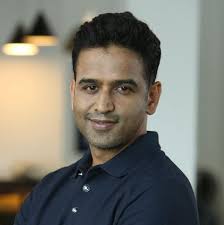
Nithin Kamath
Co-Founder & CEO, Zerodha

How Nithin Kamath Thinks About Money, Business & Success || Rajiv Talreja Firechat || Proficorn 2023

🎥 Dec 02, 2025 📺 Rajiv Talreja ⏱ 61m 👁 2064 views
In this candid Firechat at Proficorn 2023, the annual 2-day business event hosted by Rajiv Talreja exclusively for the Quantum ...
Watch on YouTube

About Nithin Kamath

Nithin Kamath appeared in several videos in mid-2026 discussing business risk, personal routine, and Zerodha's referral program. In a July 2026 interview, Kamath said his primary job as a founder is to think about risk, stating, "If you want to win you have to bet and if you lose all your chips you can't bet." He described a personal tipping point in 2016-17 when he moved enough money out of the business to sustain his lifestyle into a bank fixed deposit, which he said changed how he thinks about risk. Kamath also mentioned that for the last three to four years, he spends the first two hours of his day on workouts, stretching, and yoga, and that he does not have much of a social life outside of work and home. In a June 2026 video, Kamath discussed the history of Zerodha's referral program, noting that referrals were a growth lever from the company's early days and that an estimated 50-60% of customers may have come through referrals. He said the program was paused in 2024 due to SEBI regulations but was being restarted, partly because the business is "plateauing." In a May 2026 episode of a new series called "The Back Office," Kamath mentioned that Zerodha lost 50 crore rupees in one day due to a drop in gold and silver prices, and that half of the margin trading facility book is in non-FNO stocks, which he said he thinks about "quite a bit."

Source: AI-verified profile updated from Nithin Kamath's recent appearances. Browse all interviews →

Transcript (40 segments)
R
Rajiv0:00
What is your definition of true success?
N
Nithin Kamath0:00
Just being happy doing what you're doing is being successful. Yeah. I mean I might end up sounding like a guru here but money is not everything.
R
Rajiv0:13
What do you think can be an approach if Nithin Kamath were to become the finance minister?
N
Nithin Kamath0:13
Majority of India doesn't even make 100 rupees a day. You know, it's not just 1% of India which is growing; we need the majority of India which is growing.
R
Rajiv0:24
Can you walk everybody here through what is a 0 to 10 crore journey like? What is the 10 crore to 100 crore journey like?
N
Nithin Kamath0:29
1997-98 is when I first started trading the markets. I was 17 and a half. I dropped out of my engineering college. Saved some money, blew it up, worked in a call center for 3-4 years. A lot of time people ask me what's the success behind Zerodha? I think younger guys come to me and say, 'Nithin, I want to build a business.' I say business is hard. You know, this whole illusion that hiring more people, throwing more people at problems will somehow solve the problems, I think more people complicate the problems. One of the things I take a lot of pride in as Zerodha is that we haven't ever spent a single rupee on marketing and advertisement.
R
Rajiv1:06
What would be your one key message to this room full of MSME business owners? What would you like to leave them with?
N
Nithin Kamath1:12
I think that one of the big issues for India has been that... A couple of weeks ago, when you shared that tweet about your father-in-law, I reshared it and I said Nithin Kamath is the Ratan Tata of our generation. Today I want to say I think I was wrong. Nithin Kamath is the Nithin Kamath of a generation.
R
Rajiv1:29
Today Zerodha is the largest stock broker in India. There's so much about him written, spoken, but my intention today is to go a little deeper into the soul, into the spirit, and into the values that make him who he is. And help me welcome our business icon for today, Nithin Kamath. Everyone.
N
Nithin Kamath2:00
Now Nithin, like I said, everybody hears about Zerodha, watches the countless number of podcasts that people have invited you on, seen and read so much about Zerodha, but today we want to go a little deeper. Are you okay with that? Yeah, sure. Are you okay with giving me the permission to ask you some awkward questions as well? Yeah, my book is like an open dictionary. So Nithin Kamath unplugged, ladies and gentlemen, only here at Profitcon.
R
Rajiv2:32
Okay, now before that, there's a backstory. So the last time I saw Rajiv on stage, my younger brother and him were trying to do modeling. This was back when I think you guys were in like what, sixth standard? They were 15 years old, and we joined that summer camp only because we saw pretty girls. So it was a summer camp, and I used to go drop my brother, and these two guys were walking around trying to be like models. Just for the record, I was Mr. Teen Bangalore third place. Nithin's younger brother Nikhil was Mr. Teen Bangalore second place. And our good friend Mohammed was Mr. Teen Bangalore. Yeah. By the way, there were five guys in the competition, just so you know. That was the secret between us, but in five, I came number three. Okay, awesome. So firstly, thank you for being here, Nithin. The reason we wanted you here was because there is so much noise around funding startups, and you've been someone who maintained your sanity and always said that raising money is not the solution to your problems—it probably adds to your problems. The reason why we curated Profitcon was because I was sharing with the group back in 2020. I received a call from one of the entrepreneurs here, a successful entrepreneur, 500 crore plus revenue, gives me a call and asks me, 'Sir, funding raise?' and I said, 'Why do you need funding?' and he said, 'No, I'm reading this person is getting this much money, this person is getting this much valuation. Are we doing something wrong?' So I want them to hear from you: are they doing something wrong, or is this sort of thing?
N
Nithin Kamath4:11
Yeah, I mean, firstly, when Rajiv said the event and you said MSMEs, I consider myself as an MSME. I consider myself as a small-time entrepreneur because I believe that today's world is about the fast beating the big, and not the big beating the small. And I want to be intentionally small; I don't want to become big because I know if I become too big, I'll become slower. So yeah, I mean, I haven't really been to an event with so many entrepreneurs. So thanks for inviting me here. And you see, they are in love with you. Now, coming to raising money. Not all businesses can be built without capital. In today's world, a lot of technology businesses, if you're not a technologist and you want to hire tech folks, it costs money. You can't build all businesses bootstrapped. But the thing about valuation—it's been overrated of sorts over the last few years. Raising capital—venture capital is like taking a loan. Do you celebrate just because someone around you took a loan? You don't. I'm always confused why people are celebrating because someone raised so much money as venture capital. When you raise money, we run a fund incubator called Rainmatter, and we have over 100 investments, and we've invested like over 500 crores over the last 2-3 years. Every time we invest, I tell the founder, 'Boss, this comes with liquidity preference.' What is liquidity preference? If you as a founder take 10 crores from me, you have to return this 10 crores first before you see any money. So the more money you raise, the more loan you're raising from the market. Unless you're able to return that money, you can't see any upside from the business. And not all businesses can scale large enough to be able to return the money they're raising. So there was some weird behavior over the last 3-4 years, largely fueled by cheap money in the US. A lot of money came to India from the US when interest rates were zero, but it's already correcting. Venture capital is a glorified loan, if you were to ask me. I don't think people should be celebrated for raising funding; I think people should be celebrated for building a business that customers want. And I'm usually quite vocal about this because very few people openly talk about it. Today, the success that we have had as a business, it's almost like a responsibility for me to come and share some of these things that not everyone shares. So thanks for giving an opportunity to talk about this.
R
Rajiv7:23
Thank you for being here. So before we go into stuff that is unexplored, if there's someone here who's living under a rock and has no idea what Zerodha does and what Zerodha has accomplished over the years, would you like to take us through the early years of Zerodha? Because you know what? Today, when someone reads 294 crore profit, they're like, 'Wow, he's a big guy.' But I know for a fact the start was small. And you've seen through your own days of challenges and struggles. So can you walk everybody here through what is a 0 to 10 crore journey like? What is the 10 crore to 100 crore journey like? What are the challenges? How did you navigate through them?
N
Nithin Kamath8:02
Yeah. You know, when someone says Zerodha started in 2010, in my head, Zerodha actually started in '97. So 1997-98 is when I first started trading the markets. I was 17, 17 and a half. And I dropped out of my engineering college. I saved some money, blew it up, worked in a call center for 3-4 years. Then I came out and became a franchisee for a bigger broker firm. My younger brother joined me, and he was a better trader than I was. But I was building online communities back then itself. So in 2008-09, we took a bet saying, 'Let him continue trading the markets. I will try building the broking business, and if it doesn't work, I'll get back to trading.' And that's how Zerodha started in 2010. I think my life lessons were mostly before Zerodha started. After Zerodha started, a lot of time people ask me what's the success behind Zerodha. I think, among many things, there's a saying: 'Sharpen your axe before you go chopping wood.' I think the 12-13 years that went before Zerodha actually helped significantly build some moat over our competition after Zerodha started. When younger guys come to me and say, 'Nithin, I want to build a business,' I say business is hard. People look at me today and say, 'Dude, you made so much money,' but until 2015-16, we didn't really have any money. From '97 to 2015, that took 20 years to get lucky. Today it seems like it was a quick journey, but it wasn't. I worked in weekenders, I did those 300 rupees a day jobs, standing in a place and giving out pamphlets. I've done all of that. It took a lot of struggle, a lot of mistakes. But that learning that went in before Zerodha is really what has helped significantly after it. When Zerodha started, I was not a very ambitious guy. Even today, I'm not ambitious. I don't get up every day and say, 'I need to make this much money or get to this many customers.' The mental framework is you get up every day and improve on something. I don't know what it is. You get up daily and... be it product, be it support, be it whatever. The small improvements daily compound over time. One of the things we've done well as a business is that the attrition rates are really low. We're probably the only tech company of our scale in Bangalore that has not had attrition. In a sense, two people have left our tech team till lately. And this is from a team of 1100 people. There was a time when Zerodha started. I came from the same traditional sense of building a business, saying more people means a larger business. We've gone from 5 lakh customers to 1.1 crore customers with 1100 people on the team. And my dad is like, 'Dude, why are you not having more people?' And I'm like, 'No, you don't need more people just to build a large business.' Because back in the day, when we started in 2010, I just heard the lady before this talk about the illusion that hiring more people, throwing more people at problems, will somehow solve the problems. I think more people complicate the problems. More people don't really end up solving them. A lot of my thinking and philosophy is also driven by Kailash, who heads our tech. He joined us in 2013-14, and a lot of my thinking has evolved around him. I call him almost my spiritual guru. So the first 3 years of the business—sorry, I digress. Coming back to your question, when we started the business, I was not very ambitious. The idea was that I had built these online communities, and traders in this place were paying very high brokerage costs. The idea was to see if we can lower the cost. And the second thing we were trying to do was to build transparency in the business. The financial services business is very opaque. Pick up a credit card statement and try to find out how much you actually paid—it's really hard. We said we need to simplify this, and the only way we thought we could simplify is by having one deal for all our customers. That decision has been probably the most important decision of my life, completely serendipitous. It was not really thought through. It helped in multiple ways because the only reason today we have profitability is that we have not complicated the business. The business is extremely simple. All the 1.1 crore customers at Zerodha get the same exact product, the same exact deal. In financial services, it's very tempting to customize offerings just because a customer says, 'I'll give you a little more money,' but as soon as you start customizing, it becomes very hard to scale. So the first 1 to 3 years we were trying to do more around pricing and transparency and blogging. 2013 is when the first competitor came around and copy-pasted everything we were trying to say and do. That's when it hit me that this is not a moat. A business needs a moat to be able to grow continuously. That's when Kailash joined, and our product journey started. 2015 is when we launched our in-house products. 2016, we realized that the big problem to solve in India is to actually expand the market. Back then, there were like 60 lakh active Indians who were investing in the markets every year. So out of 120-130 crore, say 7-8 crore people who file income tax, you need to have a lot more people investing in the market. We couldn't do this on our own, and we said we need to collaborate. So we opened APIs to our business and invited startups to come build on top of us. Think of us as Android in the Play Store. Today, a customer at Zerodha not only gets access to what we've built but also to all the products built on top of us. The difference with our collaboration was that we actually gave these startups our customers. Usually, when you partner, you expect business from the partner, but we understood that the partner also has to do well. So I'll make sure I give you business back. It was a very homogeneous kind of relationship, and it's turned out very well. Today we have 25 such partnerships. And yeah, so the business, like I said, we kept improving. 2020 is when COVID happened, and I don't know what happened to the world. I actually sent an email to our entire team saying, 'What hits the fan? We need to get into monk mode.' But the exact opposite happened. Suddenly you had this whole generation of people sitting on the fence deciding to trade and invest. Looking back at my journey, I give a lot of credit to luck. You need to put your hard work, but luck is so important. One of these things that I would want to share with you, which has worked very well for me, is thinking of luck: how do you increase the chance of becoming lucky in life? My mental framework is that there are two ways to do it. One is business is hard; you better be building a business around something that you like or love. If you are doing what you like to do, the chances of you doing it for long enough are higher. If you survive for long enough, the odds of getting lucky also increase. If you're doing something you don't like, you'll potentially drop off before you get lucky. The second framework is that the odds of getting lucky increase the more the number of people want you to get lucky. This starts with your family, your partner, your team, your customers, your vendors. Being a decent human being is underrated. If you're just decent to people, if you're doing what is right for your team, your customer, your vendors, word of mouth is extremely powerful. One of the things I take a lot of pride in as Zerodha is that we haven't ever spent a single rupee on marketing and advertisement to date. All customers come through word of mouth—1.1 crore customers. Someone asked me what is your CAC; I tell them it's minus 200 rupees because we actually make 200 rupees on every account opening. That has happened because of doing what is right for the customer, the team, the vendor, the industry, even for the competitors. Doing it consistently over time helps you build a brand. I think these two things just improve the odds of getting lucky, and luck is really super important in life.
R
Rajiv17:53
Thank you for breaking that down, Nithin. Nithin, I have a question. Recently, I saw an interview of yours where you said the journey of building Zerodha was way more fulfilling than the journey when Zerodha became Zerodha, the brand. And here's a room full of MSMEs, and we are all hustling it out in our own businesses, trying to reach a certain promised land. To the outside world, at least for your accomplishments, you are the guy who's seen the promised land. What about the promised land is a reality? What about it is an illusion? And why did you make that statement that the journey of building Zerodha was more fulfilling than the journey post Zerodha becoming the brand Zerodha?
N
Nithin Kamath18:40
I mean, it's the grass is always greener on the other side. Me and Rajiv were just talking. He's the most eligible bachelor in town, and I'm like, 'Dude, how does it feel like being this way?' And he's like, 'Dude, it sucks.' And I was like, 'Oh, how does it feel like being a family man?' I would love to be a bachelor. So I get a lot of people coming to me and saying, 'Dude, how does it feel to have all this money?' One of the realizations early on was that of course money brings freedom, and that freedom is really the ability to do whatever you want, to be able to take bets. I love investing in startups and entrepreneurs. The freedom that money brings is really fantabulous, but the true freedom I've experienced with money is only when I didn't want to do anything with the money. This whole thing that money will somehow buy us happiness—it's a little cliché for me saying it after making the money, but I don't think it buys you happiness. If you're not happy without it, I don't think you'll be happy with it. The real happiness is really doing what you like to do. Even when I'm thinking about my son right now, my only life goal with him is to figure a way to help him find what he is happy doing, otherwise he'll also try to spend money to find that happiness. I think about money now: money and wealth is one of the biggest problems for the planet—wealth inequality. It's quite ridiculous how easy it is for me to make money today. Once you have so much money and so many contacts, all the deals come to you. Every guy doing any fintech startup will come to me, I'll get to invest at the lowest valuations. It's almost an unfair game. This inequality will only keep extending over time. If I feel this way, think about what Elon Musk feels or Ambani; it'll be so much easier for them to make money. As wealth inequality goes, it's not a good outcome for humanity. The issue of today's capitalism is that wealth is getting more and more concentrated, and the eventual outcome of this is going to be some kind of catastrophe. You're already seeing it in some of the developed world—civil riots and wars. People will start questioning why only these people are so rich. So the way I think about money and wealth is that it brings an obligation. Wherever there is concentration of wealth, more should be done to use that concentration for the betterment of society. If you were to ask me what brings me the most happiness about the money, on the promised land, it's really to be able to back entrepreneurs. We have set up a foundation; we started with a $100 million allocation. We have decided to give most of our financial success back. Even with the entrepreneurs, if you speak to any startup we have partnered, my advice is the same: before they take money, I say, 'Dude, are you really sure you want to take money?' And when they call and say, 'Dude, I want to raise money,' I'm like, 'Why are you doing it?' Because in today's world, every investor is constantly triggering the entrepreneur to raise money at higher valuation so they can mark their investment at a higher rate. The incentive in the ecosystem today is to raise money constantly at higher valuation. So I'm excited to be that sane voice that questions these people, saying, 'Why are you taking money when there is no need?' Because money brings an obligation and is a big distraction. One of the things we have done right as a business is that just because we have the money, we are not doing random things in life. What happens is, once you have the money, you are suddenly triggered to do random things. I haven't just become an insurance company, a credit card company, a bank, or a payment gateway. I can do all that if I really want to, but my framework is that I will do what is core competency for me, what we like to do. Everything else we collaborate and partner on. We don't get distracted from our core business. In today's world, there is no status quo; everyone is going to get disrupted. If you're not sharp, not nimble, not moving fast enough, tomorrow morning you can wake up and someone has come and taken away the business from you.
R
Rajiv23:33
So, I've heard you say this so many times: you're one regulation away from being shut. Yeah. I mean, that's the other thing. The issue of raising money at valuations—to the earlier question, what happens is every entrepreneur is constantly wanting to raise money at the max valuation. But to be able to raise at max valuation, you have to sell a certain story, and that story is really the most optimum outcome possible. No one is going to undersell the story; every entrepreneur almost always oversells it. Now, the problem is once you've oversold it to the investor and raised money, the investor next quarter will ask you, 'You told me this story, what is happening to the business?' Now you're under pressure. Now what you'll do is go to your team and sell the same story. The story you had said—I'll give you an example. In our industry, India has around 8-9 crore Indians who file income tax returns. Out of that, one and a half to two crore Indians actually pay any income tax. So setting the context, I met one of our competitors and saw his deck. It said that by 2027, India will have 40 crore investors. I'm like, 'Dude, what is this guy smoking?' And how the hell can—today India has one and a half crore people who actually pay some tax. How will 40 crore Indians invest in the stock markets? Was he talking about bots investing? I don't know. So for entrepreneurs who want to raise money, I think a good idea is to actually undersell. Because if you undersell to your investor—I give this example—it's like going on a first date with a future partner. You don't want to oversell yourself. You don't want to be married and she thinks you're something else. If I met my wife and told her, 'I get up at 4 a.m. every day and run 10 kilometers every day,' she would spot that I'm lying in no time. An investor is a long-term relationship. Undersell and get into it, because then it's easier to match the expectations you set. Like I said earlier, not every business can grow without raising capital. Some businesses need money. But if you're raising money, don't think of maximizing by overselling, because once you've oversold, you have to stick to that story. It's like being in prison. I've seen so many of my friends sell something, and just because of that one pitch deck, that one oversold story, it's an obligation for the rest of their lives building that business. I've seen some of them raise money for a tech startup and then start a restaurant. That happens as well.
I'm going to draw back to the context over here. This is an MSME audience. So I have a question for you. You're someone who's seeing the markets, seeing India from probably a view that most of us are not seeing because we are still building businesses—micro, small, medium enterprises. How do you think an MSME should look forward to the India story? Everybody's talking about how this is the only country that has the growth sentiment. Everywhere else, there are recessionary emotions. So how should a micro, small, and medium enterprise business owner who's sitting here, probably running a services business, a manufacturing unit, or a dealer or distribution business, look at the India story based on what you have visibility to?
N
Nithin Kamath27:16
Yeah, see, the thing is, I think everyone knows the good side of India. The harder side of India is that the TAM is really small. Your target market, for all of us trying to sell to a certain audience who can pay us money for using our services or products, is really small. I don't think it's more than 20 crore Indians. So when you're building your business, evaluate it from that being the optimum market and not necessarily the population size that everybody's talking about. Through the foundation, we're doing a lot of research work. Majority of India doesn't even make 100 rupees a day. So they're not going to be spending on anything we have to sell. So the TAM is a subset of 20 crores. India is going digital—there's no two ways about it. The thing about the Indian market is that it's a different market. A lot of people have tried to copy-paste what has worked in the US and China, and it has not flown here. With Zerodha, the reason we've—a counterpart of ours doing a similar business in the US is a company called Robinhood. If you compare both our businesses, we're poles apart. They've raised a lot of money, but they're still losing a lot of money. When I look at it, the way we approached the business in India was accidental. It was not planned. We built a business first for power users, and then we said we need to go mass market. When we started Zerodha in 2010, our objective was to reduce trading cost, so we were focusing on traders—the ones who generate the most revenue for us. Once we had predictability in revenue, we said we need to be more ambitious and build a product for the mass market. Today we don't charge any commissions for investors, and the only reason we can do it is because our traders are subsidizing it. If the traders weren't there, this business model wouldn't have worked. I couldn't be zero rupees and make any money at all, which is what Robinhood is in a spot of bother for. So when people think of India, it's okay to look at businesses across the world, but we have to build for India in the Indian context, and that context is very different. The Indian consumer is very different.
R
Rajiv29:51
How are they different? If you can break down behaviors—you've seen businesses across—how is the Indian consumer different?
N
Nithin Kamath29:57
No, I mean, see, they are very price-conscious, of course. Every Indian is constantly looking for a bargain. But there's a weird behavior when it comes to financial services. For my dad, even today, if he wants to buy a tomato in a vegetable shop, he'll bargain. But if his friend calls him up and says, 'Why don't you put this 50,000 rupees in this mutual fund?' in one minute he would buy that mutual fund. It's a lot of dichotomy. I don't know if I can really point out the reason for such irrationality from my dad, but it is not just my dad; it's actually common. 70-80% of the room here, for money decisions, will probably trust someone else very easily. All the new-age businesses in India haven't done well. I can't even pick and choose to say maybe these businesses have found a way to crack it. In all the new-age businesses that have scaled in terms of users, it's on the back of freebies. We know freebies work: you keep throwing freebies, customers will come and use your product. I can't really say what can work in India. It might sound vague, but that answer itself is also contextual to businesses. In our business, for example, in the business of money, credibility is very important because people trust the brand quite a bit before they invest or park some money there. So we've spent a lot of time and effort building credibility. We realize that credibility comes not through advertisement but actually with your friends and family being credible. If Rajiv told me, 'I like that brand,' I'll probably trust it better than if I saw an advertisement saying that brand is good. So what we have done at Zerodha that has worked very well is a referral program. It was there from day one of the business. We share a percentage of revenue every time a customer refers someone to us. We have 25 lakh customers who have referred customers to our business over the last 13 years. It's a very powerful medium. Not every business can build it the way we did, but if I can look at the journey, I think everyone should think about how they can build a sustainable referral program. Our referral program today is exactly the same as it was in 2010, because you don't want to keep tweaking it just to optimize what is right for you. What happens with referral programs is that every time you start tweaking it, people spot that and stop trusting your referral program itself. Just keeping it consistent for a long time is probably a takeaway for some of you.
R
Rajiv33:24
Awesome. Another point that you mentioned: today you're not seeing any business credibly growing, and most of them are offering freebies. I think the victims of the freebies are in this room because here are micro, small, and medium enterprise business owners who don't have deep pockets for cash burning, giving out freebies to their customers and acquiring customers. So if you were to guide or recommend something to an MSME business owner facing this trend in their industry where there is a money-guzzling startup giving out freebies, how should they navigate it? Is it a matter of time? Should they also have this ambition of competing with them and going out there raising money? How would you navigate such a situation?
N
Nithin Kamath34:07
You know, it's happened for us as well. Especially in 2021, a lot of our competitors raised a lot of money, and they would open an account and give you a 1000 rupee free t-shirt or whatever. And we were charging an account opening fee. All entrepreneurs, I think business is about building moats. Business is about building something that's very hard for someone else to copy. You need to say and do something that is not easy for someone else to say and do, because if someone else can really catch up with you very easily, then it becomes a commoditized business. In a commoditized business, the deepest pockets usually win. Unfortunately, the last 2-3 years was a lot of stupidity, but I think that's over for now. I don't think so much money will come, but the culture of giving freebies to get a customer may still be there. My competitor today may not give 1000 rupees plus a free t-shirt, but he's probably still giving a free t-shirt or a movie ticket. The culture of freebies to attract customers will always be there as long as entrepreneurs are trying to go raise capital. So you cannot get away from it. As entrepreneurs, we have to look at our product and offering and say, 'What can we do which is different?' Because eventually, that is the only thing that will help you build a business and continue growing. Otherwise, there is no free money. So much VC money is coming into this country, and all the free money is going to disappear. Any easy money out there, some business will come and take it away. So you just have to be quick on your feet and keep improving your product and offerings.
R
Rajiv35:55
Awesome. So build a differentiator, build something that nobody else can say and do. Yeah.
N
Nithin Kamath36:00
And also take a counterposition. Counterpositioning is like, for example, at Zerodha, one of the reasons we didn't raise venture capital was that it was a business strategy itself. That way, I can say and do stuff that is very hard for my competition to say and do. A simple example: we have a no-spam policy. We never spam a customer with anything. We don't send an email, push notification, or SMS unless a customer wants it. Every competitor of ours does it 10 times a week. While this seems like very low-hanging fruit, every customer who cares about it will trade with us. Why would he go use someone else? I know that our competition will find it very hard to say 'I am no spam' because they promised a certain story to their VC, and they have to do that spam to get activity or new business. So it's contextual to every business. It's about finding your positioning, finding what is very hard for your competition to copy. Like I said earlier, the world is about the fast beating the slow and not the big beating the small. As MSMEs, we all have an edge. I still consider myself an MSME because the day I am slow is when the business will get disrupted.
R
Rajiv00:37:30,00:37:30
Thank you. Now I'm going to go a little into things that business owners talk about but it's not necessarily spoken about in an event like this: taxation. Okay. I think would it be fair to say that we are all proud to contribute to the country, but when we don't see the reciprocative benefits of that reaching down to the grassroots level, it also pinches not just our pockets but also our hearts and minds. You have a voice in the country. What do you think can be an approach if Nithin Kamath were to become the finance minister? Now I'm putting you in another position. We'd love to have someone like that.
N
Nithin Kamath38:17
No, I mean, coincidentally, I was in a room full of ministers last Saturday, and I was asked exactly the same question—not as finance minister, of course, but as a business owner, as a startup. What is the issue, and how would you solve for it? See, the issue with regulations today is the way it's done. Not just today's government, but historically in India, not just the government but even the regulators across banking etc. The issue is that when there are frauds in the system, they come up with a new regulation that affects everyone except the fraud, because the fraud will still find another loophole. Over time, it's ended up complicating life. I think India should make financial violations as severe and strict as possible, increase audits, and make sure bribery doesn't come into play. Set examples of people who commit fraud and scare the frauds. That's a better approach than making regulations so hard that they affect everyone else. India needs more people paying taxes; it's ridiculous the amount of evasion. Everyone is constantly trying to get around it. I was sitting with a bunch of friends after the 7 lakh rupees TCS rule, and they were already talking about using credit cards of their wives to get around it. It's a systemic problem in this country. All of us are constantly trying to figure a way to save or evade taxes. It has to change. We all have to change, because if everyone paid their taxes which are due, the country would do much better, and if the country does well, all our businesses will do well too. So I don't think it's right to blame just the government. The blame lies with all of us. If there's something we can all do, go around and make sure every time you meet someone, tell him to pay whatever taxes are due. Over time, maybe structurally something will change.
R
Rajiv40:43
And another question. This was a question from one of the entrepreneurs here, his name is Dindar Singh Nagpal, and he asked this beautiful question: how do you deal with red-tapism in the country? I have friends who said during the elections, 'I'm traveling through the month of elections so I don't receive calls.' That's the challenge at the topmost level of the pyramid. And then you have businesses who have to deal with bureaucracy, inefficiency. How do you deal with all of this and still keep yourself going?
N
Nithin Kamath41:15
Think of it as your moat. If all of this was so easy, you'd have a lot more competitors. Okay, makes sense. If you're able to get around all of this, it is actually a moat, to be able to operate in a world with bureaucracy and red-tapism is an edge you have as a businessman. So think of it as an edge and not as a burden, because if it wasn't there, there would be 10 Zerodhas. So deal with it, face it.
R
Rajiv41:52
Okay, so I'm going to move now from the MSME side back to the inner success and the psychology aspect of it. I recently saw you tweet something about your father-in-law, with what simplicity he continues to live his life and how you really admire that. So I have a question for you, probably a clichéd question, but I think it's important to bring it out for everyone here. What is your definition of true success? Because at the end of the day, we're all building businesses because we, quote unquote, want to reach that space called success. What's your definition of true success?
N
Nithin Kamath42:33
Just being happy is success. Just being happy doing what you're doing is being successful, because there is no money number that'll get you there. I can tell you after going through that journey. When I was young, my wall had pictures of the cars I wanted, the watches I wanted. First there was a Rolex, then a different Rolex version, then an Audemars Piguet, then Richard Mille, then a customized Richard Mille. There's no end. You want to travel business class, then first class, then a charter, then a jumbo jet. There is really no end. If you define success by a material goal, there will always be someone else who has more than you, and you will think he's successful and you're not. I find my father-in-law extremely successful because he's really happy doing what he's doing. Even in business, we've never started a year with any goal. I find this whole putting a goal post and chasing it down a little counterintuitive, maybe for me saying it in a place like this. When you put a goal post, what happens is that when you go near it, you're going to extend it even further. You will never reach your goal post. If I had a goal of getting to one lakh customers, when I'm at 99,000, I'll send an email saying, 'We'll be at one lakh, but now we need to get to five lakhs.' Then you get to 4,50,000, and you say, 'No, we need 50 lakhs.' There's no end to this. You will keep chasing it, and it's like a hamster wheel—you run constantly and forget that you have a life to lead. So I give a lot of my time to myself. One of the things I've done well in the last 3-4 years is I give a lot more time for myself. I love to pursue a hobby, I take care of my health, I spend time with my family, I travel, I holiday, because this whole 'I need to work 20 hours a day' is overrated. Life and business is like a marathon. You want to be able to maintain the speed and finish it strong, not speed so fast that you get tired midway and feel burnt out. This is something we follow across the businesses. At Zerodha, we kill all work chat at 5:30 p.m. There are no weekend conversations. We have health challenges running in the office. All of this to be able to do all of this and think like this is, for me personally, success. It may be different for different people, so there's no cut and paste, but in my view, just being content is being successful.
R
Rajiv45:28
So before you came here, I reached out to Nikhil and said, 'Nithin's coming here. What do you think I should ask Nithin to talk about?' He just sent me a message: 'He's obsessed with health. So ask him to talk about that.' And something that we talk about in our community as well is that business is only a part of your life, it's not your life. As you said, it's very counterintuitive for a business coaching environment and organization to say that to business owners, but that's something we've stuck to saying: business is just a part of your life, don't make it your life. There's so much more to your life. And I get a lot of entrepreneurs who reach out and say there's so much happening. How do I disconnect from everything and just focus on my health and my relationships? How have you found that balance or that ability to disconnect from everything that's happening?
N
Nithin Kamath46:18
No, I mean, it's not like I was born this way. There have been a lot of mistakes I've done in life. But because I started early—my business journey is almost 25 years old—I was feeling burnt out at some point and I knew I needed to slow down. What was that quote? 'You need to take two steps back to go forward.' Something like that. I think the way I think about health is also a moat. I like getting up early, and I get a workout. I love my music, so I play a little bit of guitar. I spend two and a half hours early in the morning on myself. I realize I am a lot more efficient through the day. Now I compare myself to 4-5 years back, when I'd have slept late, gotten up groggy, and then tried to take decisions. I was not in the best place to take the right decisions. If you think about your life, being healthy, being peaceful, being unaffected improves your chances of running your business. You'll do it for the reasons of business if nothing else. I might end up sounding like a guru here, but money is not everything.
R
Rajiv48:00
No, I think what's very evident, Nithin, is that what's common between the way you've built Zerodha and how you think about everything is more of an inside-out approach rather than an outside-in approach. And I think that's what really has—and I'll tell you the secret for that: not raising venture capital. Because I've got enough material for promoting Profitcon for the rest of my life. If we had ended up raising venture capital, I would have gotten into the same thing: investors asking you to grow fast and compromise everything for growth. I probably would not have been in a position to be able to say it. Now I'm going to go to something that's very close to your heart, and I know for a fact that for a lot of us, it doesn't matter, so I thought I'd ask you this question so you can give us a perspective. I know you're super passionate about climate change. For most of us here as average business owners, when we hear someone talk about climate change, and I'll tell you unfiltered, when you speak about climate change, probably some of us may think, 'It's easy for him to talk about climate change; I'm worried about the change of employees in my team.' So how would you sell the idea of climate change, and why is it important? Why should we care?
N
Nithin Kamath49:20
Yeah, firstly, a disclaimer: when I talk about climate change, I am actually being a hypocrite. The only way to solve for it is to reduce your carbon footprint, which means use as little of anything as possible. So if I come here in a petrol car with a V6 engine, I'm a hypocrite even saying something like this. I do whatever I can, but I can do a lot more. I try to do my conscience check by supporting everyone else working on climate change issues. For example, every time I travel, I'll go buy carbon credits, but does that solve the problem? Not really. Buying carbon credits doesn't really reduce my carbon footprint; it's just a conscience check mark. So I need to do a lot more. There are two causes very close to me that we're supporting through Rainmatter Foundation. One is climate change. I'm a backseat guy; I sit and watch, I don't try to be the face of it because of my personal issues. I still have to get over my carbon footprint. The second thing I'm very passionate about is this whole concept of wealth inequality. I think the only way to solve for this is to have more entrepreneurs out there. One of the big issues for India is that—let me think if this is the right analogy—think of the East India Company. It came to India, built roads, gave us railways and English, but took away all the wealth. Think about the venture capitalists sitting outside—they give you a food delivery app, money transfer, but where is wealth being created? The wealth is really being created outside India. If India has to grow inclusively, if you want more Indians to get wealthy, wealth creation has to happen in India. For wealth creation to happen in India, you need entrepreneurs. A hundred zillion times of these many entrepreneurs need to be in India to create wealth, and then we can grow inclusively as a country. It's not just 1% of India which is growing; we need the majority of India growing. As Zerodha today and with whatever influence I've been able to build, I think we're in a decent position to make it happen. At Zerodha, the reason I am excited to get up every morning is because if more customers of Zerodha do better with their money, can we get more of Zerodha's customers to back Indian entrepreneurs, so Indian wealth is backing Indian entrepreneurs? But life doesn't get easier. I break my head more on all of these things, which is a lot harder. When I was younger, there was only one thing to do: build the business. So I didn't have to question myself on all my other life choices.
R
Rajiv53:51
What you said, Nithin, I somehow feel you belong here to this room because this is what we keep talking about even as a community: as long as each one of us here is able to add value to the lives of our customers, in exchange generate value, and use that abundance to elevate the quality of life of their team members, their team members' families, and their own families—that is our definition of nation building. We've kept it as simple as that. Thank you for voicing that out today: at the end of the day, wealth inequality can be bridged only when more entrepreneurs achieve more success, and it's not concentrated success in the hands of a few. So thank you for voicing that out. I have last two questions. One is as a father. I'm a dad to a nine-month-old. I know you are a dad to an eight-year-old. And this is one thought I wake up with every morning. My daughter is going to grow up in an environment of abundance. And the thought I wake up with every morning is how can I instill moderation as a value even though we've been able to provide abundance? How do you deal with that? My biggest life problem right now.
N
Nithin Kamath55:11
I mean, everyone around our family, they treat him like special. Like I said earlier, I spend a lot of time with him, helping him figure out what he likes to do. I think the first most important thing for me too is to help him find something he's happy doing, so he doesn't go searching for happiness by spending money. As soon as you find happiness in something which is not material, it solves a lot of problems. This is an experience I've had. I've spoken to everyone from Narayana Murthy to Nandan Nilekani, and my question was the same: 'How did your kids turn out okay?' With all this abundance, how did they do? I think these parents did an amazing job in terms of how they instilled values, but a lot of what happens with the kid is also the surroundings, his friend circle. So I put him into a school which is opposite of capitalism—the Jiddu Krishnamurti school. No one really cares who I am there. So I'm trying to put him in those backgrounds, but it's still very hard. Kailash and I were talking; we guys did a holiday recently to Phuket, and somewhere Kanna came and said, 'Why Phuket and not Bali?' So I'm like, 'This is a problem; it shouldn't be happening for a kid.' So it's a struggle; I don't know the answer. Okay, so it feels good to feel that we have the same struggles.
R
Rajiv57:02
Lastly, as we close, Nithin, what would be your one key message to this room full of MSME business owners? What would you like to leave them with?
N
Nithin Kamath57:15
Yeah, I already shared my framework about this whole getting lucky. Also, not every business can become large, so don't constantly compare yourself to someone who is bigger and feel you need to do more. Just be happy where you are. If you're a business making profits, you're in a good place and need to be celebrated. Just because you're making 1 crore and I'm making 2000 crores, it makes no difference. Recently I was at an event where everyone was 10 times our revenue, and I can't think, 'Now I need to make 10 times more, otherwise my life sucks.' The idea is to not keep comparing yourself. The media is constantly feeding us success stories, and instinctively we want to emulate them. You told a story of someone who wanted to raise funds just because he saw it in the newspaper. That's normal human behavior—we get triggered by what people define as success. Not letting these things affect you is a superpower. Business is becoming more and more competitive; there is no easy money out there. Build moats, keep improving your product. The third thing is, when I look back at my life, I don't know if Nikhil has told you, I was the last in every class from third standard. I was the worst kid in school, in college. I dropped out of college. Nikhil outperformed me by dropping out from school itself. But when I look back, I think what I did right was that when I compare myself to many of my friends and peers from that time, once they got a job and started earning money, they stopped being curious. Their curiosity dropped because they thought they had settled down. I've seen that happen in business too. As soon as you reach a certain level, you think you've arrived in life and don't need to learn as much. There's no two ways about it; I still spend every day two to three hours listening to podcasts and reading books. You just have to constantly up your game. Don't let curiosity drop—not just to learn about business, because then you're only improving one facet of your brain. Every time I've learned a new musical instrument, I've intellectually become a better person. So curiosity should be for everything around you. Be curious, because you never know—when you start asking questions, you'll find business opportunities there as well.
R
Rajiv1:00:28
Awesome. Thank you so much, Nithin. I want to say one thing: a couple of weeks ago, when you shared that tweet about your father-in-law, I reshared it and said, 'Nithin Kamath is the Ratan Tata of our generation.' Today, I want to say I think I was wrong. Nithin Kamath is the Nithin Kamath of our generation. Thank you for being here.