Back
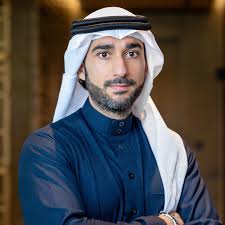
Abdulla Almoayed
CEO & Founder, Tarabut Gateway

The challenges of open banking and how to overcome them | Fintech Forward 2024

🎥 Jul 08, 2025 📺 Fintech Forward ⏱ 29m 👁 16 views
Abdulla Almoayed, Founder and chief executive, Tarabut, Henk Van Hulle, Chief executive, Open Banking Limited, and Joshua ...
Watch on YouTube

About Abdulla Almoayed

Abdulla Almoayed, founder and CEO of Tarabut Gateway, has been speaking about the progress and potential of open banking in the Middle East and North Africa. He has described open banking as an infrastructure that gives consumers control over their financial data and enables more personalized, proactive financial services. Almoayed has stated that the region's 18 jurisdictions, with a population of 550 million and fewer than 350 retail banks, present a significant opportunity for competition and financial inclusion. He noted that Tarabut, which he described as the first licensed open banking platform in the region, has grown to nearly 200 employees across hubs in Bahrain, the UAE, Saudi Arabia, and the UK. Almoayed has discussed the shift in bank attitudes toward open banking, saying that two years ago many banks viewed it as a threat, but that perspective has changed. He has advocated for a unified regulatory framework across the GCC to simplify cross-jurisdictional operations, and has emphasized the importance of aligning interests between banks, regulators, and technology providers through revenue-sharing and profit-sharing models. Almoayed has also highlighted specific use cases enabled by open banking, including shortening microloan application times from six days to under four minutes and providing access to credit for gig-economy workers without traditional salary certificates.

Source: AI-verified profile updated from Abdulla Almoayed's recent appearances. Browse all interviews →

Transcript (31 segments)
M
Moderator0:00
Welcome to our next panel. I'd like to welcome to the stage Abdulla Almoayed, who is the founder and chief executive of Tarabut Gateway, and Hank van Huler, who's the chief executive of Open Banking Limited. Welcome. We're here to talk about open banking. So I became aware of open banking about six or seven years ago when I noticed that the range of financial services I could access from my phone had suddenly expanded enormously. Getting vetted to rent a new flat was easier, connecting my bank to things was easier, setting up a new bank account became a lot easier. I'm relatively ignorant of the mechanics behind all that, though. Could we start? Could I ask you, Hank, you've been there since the start of the UK's open banking journey. Could you start by telling me what it is and what it can be used for?
H
Hank van Huler1:05
Yes, so perhaps I need to tell you a little bit about the history as well of this and open banking in the UK, because it was actually born in the UK and it was actually very commendable to regulators. It's not often that we commend regulators, but it is because of regulators getting together and sparking innovation and competition on the back of this. So what is it? Open banking all starts with giving control to the data you own yourself. You own your own data as a citizen, as a consumer, or as a business. It's your data. Others are holding the data for you, but you actually own it. That's the basic principle where you would start open banking. Now, if you do not trust to give your data to somebody else, you would not give consent to make sure that they use that data. So the basic principle and where it all starts is with consent or permission management. An end user will give consent to a third party to use data, and the data comes from the data holder. Often it is the case that most of the data sits with the banks. Six and a half years ago, we're in an industry which is six and a half years young, which is phenomenal where we are today already. But six and a half years ago, there was a remedy issued by the Competition and Markets Authority. The CMA issued a remedy that nine banks in the UK, the biggest ones, would have to share the data from current accounts, from personal current accounts and business accounts. By doing so, that sparked off a lot of innovation in the industry. Fast forward today, we have 94 banks on the platform and we have 250 fintechs on the platform. One out of five SMEs are using open banking in the UK. One out of seven consumers are using open banking in the UK. We have 11 million users. We do about 20 million payments as well. So it's not only data exchange, it's also initiation of some form, it could be payments or some other action as well that we are enabling. It is an industry worth 5 billion in the UK. About 4,000 people work in open banking, and it has sparked a lot of new propositions in the industry, also for public services. So the government itself is a heavy user of open banking.
M
Moderator4:01
Thank you very much, Hank. Now, similarly, Abdullah, you've been working in open banking since the start in the Middle East. Could you tell me a bit about the framework here and how it's evolved?
A
Abdulla Almoayed4:15
Sure. I think before we get started, I'd like to thank the EDB and the Central Bank of Bahrain for organizing this beautiful event. And just like Hank was talking about open banking in the UK, I also want to thank the Central Bank for being the pioneers in open banking to start off with. We launched it. We were amongst the first to launch it in the Middle East, and the pioneering mindset has always been embedded into the ecosystem. But I think when you think about open banking, it's very important to just think about the premise on why it was introduced. Open banking, if you put data aside and data sharing aside, it was introduced to increase competitiveness, to deliver better services to customers that don't have access to these services today. And if you think about what open banking has done, it has enabled hundreds of use cases that give financial services access, or give customers access to financial services that they didn't previously get access to. We see some beautiful use cases here from some of the great companies that talk about microfinance, BNPL finance. All of these things can be enabled using open banking. But even if you think about really what does it allow, it allows for you to own your own data. But in my opinion, we shouldn't know what open banking is. What we should think about is these new use cases and these new segments that lenders or banks can go after by virtue of these open banking regulations. And that really drives what we do at Tarabut Gateway. The way we look at it is: who are the partners we're trying to help? Who are they trying to serve? And how can we, using our infrastructure, make them grow faster, deliver a better service at a better price, and make them more competitive? In the world where we live today, customers demand services on point, there and then, at a click of a button. Open banking allows for all of that to happen. So that's how we approach it.
M
Moderator6:32
Yeah, I mean that's certainly been my experience using it for things like mortgage vetting. You can just click it on your phone and it sort of works now. And you don't need to know what open banking means. You can enjoy a new service that you couldn't enjoy previously.
A
Abdulla Almoayed6:48
And if you look at some of the use cases we've developed over the last, I mean we're also six and a half years old now. We started our journey in Bahrain, we've grown throughout the region. But if you look at some of the use cases that we develop, it's people getting access to loans that they couldn't get before because a bank wouldn't lend them. You talk about the gig economy, for example. There's a massive segment in the market today that deserves to be served, doesn't have a salary certificate, but should be able to get access to finance. Previously a bank would say, 'I don't have a salary certificate, I don't get what they need, I don't have what credentials or proof in terms of their income.' And we say to them, 'Look, we can now unlock this data that a user can start getting banking services that they didn't used to get previously.'
M
Moderator7:36
You said you started your journey in Bahrain. Could you talk a little bit about why you chose to start here?
A
Abdulla Almoayed7:43
Bahrain is very close to my heart, obviously it is home. But more so, I think the regulator in Bahrain. I remember starting this journey. There was no such thing as regulations. We learned from Hank and the guys in the UK. And I remember knocking on the door at the Central Bank and saying, 'We need something called open banking.' And the first answer was, 'But what is open banking? Let's sit and have a conversation and understand.' And there was enough proof and case studies in there of the social impact that open banking can have, of delivering financial inclusion whether it's for SMEs or people or corporates at the end of the day. And that's what opened the door. And we had entities like the Economic Development Board and the CPP that drove it completely with us. And from there we grew to the UAE and Saudi Arabia and now the UK as well.
H
Hank van Huler8:35
Thanks. And if I just build on this as well, I think when you look at what happened in the UK six and a half years ago, we now see 80 countries are developing open banking, 60 are live with open banking, and 80% of the 60 followed the same model as in the UK. So they're localized for 20%, but 80% and that's very helpful because they have standards which are common with the ones we issue to them.
M
Moderator9:03
Yeah, Hank, what is it about that model that has clearly been so successful with 60 of these countries adopting it? What was attractive?
H
Hank van Huler9:14
Well, I'm often asked, and I don't know if you like food, but what would make something good or a good restaurant? It's the best cook, the best recipe, and the best ingredients. I would say in terms of food. And I think in terms of the best cook, coming back to your point as well, Abdullah, it was really the Central Bank. It was really a centralized solution. It was not a market force and open somewhere else, but it was driven by regulation. I think that was really the chef was the regulator. In terms of the recipe, it was a focused recipe on use case, as you say. So we really focused on use cases that make a difference and create benefits for end users. And that meant that we focused not widely, but we focused also on what we called read and write APIs, so also on actionable data, doing something with it, not just exchanging data. Whereas in a lot of countries they went very wide but not deep, and now they're retrenching and trying to find their way back. So it's interesting to see where the countries are in the world in terms of that. And in terms of the ingredients, one is monitoring. Monitoring your ecosystem is very important because if one bank doesn't deliver fast enough, then it's not going to be a great customer experience. And also it needs to be a consistent customer experience that you experience through aggregation, for instance, the same experience across all the banks. So monitoring is very important. Second is standardization, standardization, standardization. If the fintechs build in Lego and I set my standards in Lego, we can build together in Lego and be very creative in creating more innovative solutions for our end users. If it's too fragmented, that is not going to work going forward. I think a third element of a good ingredient is to work on the ecosystem. A vibrant ecosystem that is trusted. Trust is enormously important in our business because we're digitally native here. There is nothing else. You don't have a physical presence. I heard that data is the new oil. Well, actually I think trust is the new oil. Trusting the data and the source of the data. I think that is much more important because if there's no trust, people will not give consent to use their data, and then the model falls apart as well. So that's probably in a nutshell the recipe for success.
M
Moderator11:46
Thank you so much, Hank. You've brought us neatly onto our next topic. We've established that open banking is great and throws up all of these opportunities. What we're supposed to also be talking about is the challenges and how to overcome them. Abdullah, could you talk about some of these? Could we start maybe with data privacy, that Hank already raised around trust? This is an evolving area where the law and the regulation is still changing. How is it changing and how are you thinking about data privacy?
A
Abdulla Almoayed12:19
Cyber security is a moving goalpost and it's something that's continuously evolving. What we've seen across all regulators is that it's something that continuously evolves. There are cyber security frameworks that are across all markets that are implemented, but there's also a lot of awareness that needs to happen. And that is the role of the banks, that is the role of the regulators, that is the role of the service providers to say to their customers, 'Look, there's this new service, there's this new use case where you can connect your account and get a better service, and it is governed by ISO 27000, companies are certified, they are regulated by so and so services.' But I think the mindset of people, until today people don't know how valuable their data is. Because if you're willing to share your data with an entity, they will be able to serve you better. I'll give you a very simple example. When it comes to retail banking today, if you have a thousand dinars sitting in your bank account that's been idle for the last 90 days, why is it that until today I don't wake up in the morning and my bank says to me, 'Hey Abdullah, by the way, you have a thousand dinars that you haven't spent over the last 90 days, you're not likely to spend it over the next 60 days. Would you like me to put it in a fixed deposit for you?' It's not because the data doesn't exist. They know our spending patterns. The transactional data is all there. It's just a question of leveraging that data to deliver better services to the customers as and when they need them. So once a regulator comes in and says, 'Okay, I'm taking care of all of the cyber security requirements. Any company that is licensed by us can now help you leverage that data to create more personalized services.' And I feel like the mindset of banks and financial institutions and lenders that were previously in a reactive mode, where you need to go to the branch and knock on a door and apply for finance or anything like that, needs to now fundamentally change how they do business by being a lot more proactive, by waking up and getting a push notification that says to you, 'Hey, good morning, by the way, you've got 500 dinars sitting in your bank account. Would you like me to put it in a fixed deposit?' Or the opposite, which is, 'Watch out, you're overspending based on your income. Take it easy on that Thursday night.' So that's the kind of mindset. Cyber security is important, data sovereignty is obviously essential, but that's the role of the regulator to basically ensure that they uphold the highest level of cyber security. And it becomes core to our business, but it's really the use cases of how people can leverage their data to do some things that are great.
M
Moderator15:15
Like all the best ideas, I hadn't thought of that before you said it, but now you said it, I am thinking why doesn't my bank tell me that? And that's why a lot of these new digital lenders think customer experience is at the heart of it. How do I understand what the customer needs before they need it, not only by giving them the information but making it actionable as well. Thank you very much. Now another point that we have already touched on, which is a challenge for organizations working in open banking, is I want to call this either awareness or financial literacy. Basically, are consumers actually cognizant of what they can do through this? Hank, you've been thinking about that.
H
Hank van Huler15:56
Well, one of our main roles, because we are actually a central body and central entity, is also to promote open banking in the industry. But when I say industry, it is a B2B environment, so we don't have the budgets to do a B2C promotion. And we see that all the fintechs are actually our catalysts. They are actually promoting. The clearer and the better their value propositions are to end users, the better it will be for everyone. And that's what we need to focus on. So our promotion team is mainly focusing on educating the fintech industry in terms of making sure that you don't come with a vague idea or whatever. A vague position has to make a difference, it has to make a benefit, and has benefits to end users. It has to be a clear value proposition that will drive a lot of volume and scale. Now in terms of the cyber security as well, I think one of our roles as well is, it's a little bit like we're actually a software company in the end. We just issued our version four of the standards. The release of that is a bit like an iOS 17 or 18 upgrade you have. And we just ensure that we evolve the standards, we ensure that we enhance them with the latest in technology as well and the latest protocols in terms of protection for end users.
A
Abdulla Almoayed17:17
I think when it comes to awareness, nowadays we live in a time that I'm pretty sure everybody has used ChatGPT. Until today, it didn't come with a user manual. You just type whatever you need and you use it and you enjoy it and you're like, 'Wow, this is absolutely amazing.' In the case of Bahrain, I'll give you an example. My mother uses BenefitPay on a daily basis. She never got a user manual on how to basically transfer payments. It's a given. And when you look at the other side of it and you look at the banking, you need to think of the value that the product delivers as opposed to the education that comes with it. Users are smart today and they know how to use these products. It's just about delivering that value, making sure that it can do something that is absolutely necessary.
M
Moderator18:09
Thanks very much. The flip side of awareness or resistance from end users is resistance from incumbent banks. How are you seeing that and overcoming it? You can see why they might be resistant, I suppose.
A
Abdulla Almoayed18:23
I think the banks that are, I would understand if there were banks that were resistant to it six years ago. Today the market has completely changed and we've reached a point where it's very easy for a bank to leverage open banking to deliver new use cases. And that's where these are the banks, in my opinion, that would win. I don't think that banks are as, they continue to push back the same way that they used to back in the day, because it's very clear that the banks that leverage open banking have been able to get a competitive edge and really deliver something that's exceptional.
H
Hank van Huler19:04
I know banks who told me that they have 42 internal use cases of open banking, because it makes them better understand their own customers. A lot of banks have a portfolio of seven brands and they want to bring that also under one view of the customer. Better suitability, better affordability, better lending, lower risk, etc. So just internal use cases alone, it's quite powerful to see how open banking just within one bank can be already very effective.
A
Abdulla Almoayed19:36
I'm of the opinion that the most valuable data today is banking data. Because when you look at people's browsing history, we call it aspirational data. They look at houses they can't afford, trips they don't necessarily can afford going to today. There's a lot of aspirational browsing that happens online. But your banking data is literally who you are: where you have your coffee, how much you spend, what times you go out, what time you go out for breakfast, where do you spend your Thursdays. Banks sit on an enormous behavioral analysis that can be leveraged to really deliver great experiences. And I feel like if that is really utilized, then the banks have the most to gain in reinventing how they value, how they score, how they look at a customer, and how they score a customer in terms of their worthiness to lend or how they earn as well.
M
Moderator20:36
Economists view that sort of data set as an absolute gold mine because it is people's real preferences as opposed to their reported preferences. But then yet again, if everybody believes that, how often again I go back to my earlier example: how often did anyone here in the room wake up in the morning with a notification that says to you, forget about the transaction notification of what you did last night and how you spent your credit card, but when was the last time you woke up with a technology saying to you, 'Hey, by the way, you've got X amount of dinars sitting in your bank account not doing anything. Let me put it in a fixed deposit for you.' The data is there. Why aren't we leveraging it? And that's the gap that open banking can unlock. I hope people will be ringing up their banks to complain about the lack of services like this in the future. Could we talk about, like all of finance and all of tech, ultimately developing a good open banking network depends on sourcing talent and developing it, retaining it, making sure that you've got the people who can build this. Could we maybe starting with Hank, because I guess the UK's journey is slightly older. Could you talk a little bit about the talent in the ecosystem, how you attract it, what you need in terms of human capital to build this stuff?
H
Hank van Huler21:57
Well, we of course need very agile people because this is a very swift market nowadays. It grows quickly. We need them to be very flexible. But the talents we are trying to find in particular is stakeholder management. For my, so it's not only technical. We can go the whole technical terms: wallets, tokenization, DLT, decentralized solutions. So that definitely we need to have in-house too. But to make this work is to make an ecosystem kind of dance together at the same pace and move forward. It's like a chief stakeholder officer in your management team you need, but all your people need to be like that. They need, we are also very, this is a breaking, this is like shaping still. It's talent with us is we need shapers and implementers at the same time. That's not, that's a rare two rare qualities together. People who can shape and implement at the same time, and nevertheless ensure that there are a lot of stakeholders together. So I've to give you an example. I'm working on open banking payments and VRP in the world, so variable recurring payments. And I have in that group three regulators in the government, I have 20 funders, banks and fintechs, I have six trade associations, and I have of course the payment processors as well in that group, and representatives from the small businesses and consumers as well in one group. So now to move that forward is not easy. So stakeholder management skills are for me top of list.
M
Moderator23:39
Thank you. Abdullah, how do you see human capital? Where are you sourcing it from? And is it also stakeholder management that's your?
A
Abdulla Almoayed23:46
No, so the region has changed a lot. I mean, if I go back and remember our first days, when I started Tarabut Gateway, there was no such thing as fintech in Bahrain. We were the first entrants to what was considered a regulatory sandbox. I couldn't hire a single engineer. There was just a few of us whiteboarding, looking at what can we do. We got the license and we couldn't hire anyone. There was just no talent. Today, we grew from Bahrain, we went to the UAE, we set up in Saudi Arabia and in the UK as well. Today we're close to 200 people spread across. And I'll tell you, the market has completely changed. I used to go to the UK and we set up our offshore entity in the UK because we tried to hire talented engineers out of there. Today, a majority of these engineers are actually asking to move to the region here. The region has become a lot more attractive both from a lifestyle perspective but also from an innovative perspective. The second thing that I want to just highlight is, if you look at the growth, I mean we never had a fintech forum. We never had events of like-minded people that wanted to come and collaborate. The ecosystem is blowing up. There's a lot of talented and great Bahrainis that are out there, a lot of people in the GCC, but also just the sheer number of fintechs. You've got about 450 fintechs in the UAE right now, many fintechs here in Bahrain, you've got about 200 fintechs in Saudi Arabia. And the strategy is very simple. I think we see it across the government. We saw the Minister of Finance here talking about the importance of fintech for Bahrain, and we see the same thing in the UAE and Saudi Arabia and the wider region. So starting a fintech today, I would highly encourage anyone because there is a lot of talent now. As far as what we do, we use all our hubs across the region to both give people an opportunity to grow but also bring in people that are young and aspirational and want to learn. Nothing would make me prouder obviously than hiring people that are local, that are new to the space, and train them and get them into the ecosystem. And I also have had the privilege of an experience of having people that didn't work in startups previously that came to Tarabut Gateway, worked with us, and then spun off and started their own fintech themselves as well. And nothing makes the ecosystem, I think, more beautiful than seeing people that got into a sector, fell in love with it, started developing their own ideas, and actually went out and raised their own capital.
M
Moderator26:27
What do you think is coming next for the sector in Bahrain and also for global banking in general?
A
Abdulla Almoayed26:32
I think customers demand a better service when it comes to financial services. I think customers get personalized services today. I use this example a lot: you log into your Amazon account and the first thing that pops up is the kind of chocolates you like to eat or the kind of books you like to read. Shopping has become so intuitive, yet banking services, if we all walked into a bank today, we'd probably all get the same credit card. Why is it not personalized? And I think what's next is a lot more intuitive and personalized financial services.
M
Moderator27:07
Hank, what do you think is coming next? What's open banking's next phase?
H
Hank van Huler27:13
Well, I think it's the control point here. So in the end, you're in control. You decide when what is paid, in which currency, what regular basis or not. I think VRP, variable recurring payments, is one of the commercial VRP is definitely coming in the UK. I think we should have focused much earlier on identity, and I know you are doing that here. I think if you can learn from us or not learn from us is go and start straight away with that as well together combined. So payments and identity and then banking information is an amazing pool to work in. And then further developments, I think we're looking now at beyond open banking. And we are going to skip even open finance. We're going to call it open data. In the UK we call it smart data, and we will build a regulatory framework for all smart data schemes. So in the King's Speech, open banking was mentioned as the first smart data scheme in the UK. Now we are going to build on that bedrock and we're going to expand it to all other frameworks for data exchange, which is going to of course unlock a lot of value. So energy, for instance, if you know how we can switch to a better energy provider. We could also look at your mortgage, but not only your mortgage, revolutionize the home buying process in the UK. It takes three to four months to buy a home. Why not in two weeks? And that can through standardization of APIs and data sets that can happen, and that creates a completely new ecosystem as well. So I think I'm very optimistic about the future of smart data exchange.
M
Moderator28:51
Thank you very much. I'm afraid that's about all we have time for, but what an optimistic note to end on. Thank you so much for your time sharing your thoughts.
A
Abdulla Almoayed28:58
Pleasure. Thank you for having us.
H
Hank van Huler29:00
Thank you.