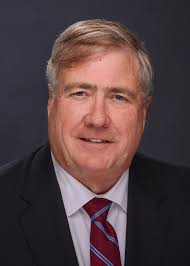
Mike Brock0:17
Howdy. All right. Excited today to speak to everyone about our go to market strategy. Going to dive deeper into the Cash App and the Square ecosystems. So before we start, I just want to ground ourselves in a really important reality that I don't see in a lot of other businesses and it was one of the key components when I started to get familiar with Block that really hit home for me, and it is the organic nature of both networks and how they unfold. And so when you think about the Cash App ecosystem with 67% of new actives joining Cash App as a function of an organic experience, it really just illustrates the strength of the peer-to-peer network and the dynamics of how these network effects unfold as individuals really want to pull others in their community, in their neighborhoods into the Cash App ecosystem. And when you look at Square with over 70% of our new volume added coming from our self-boarded experience where there's not a single human that speaks to those sellers as they join our platform, it really illustrates the strength of where Square started from a sense of building a really strong self-onboarding motion, technology first, really thinking through how do we drive scale into our ecosystem. So the grounding nature of what drives our network on an organic basis and the foundations I think is really important. The second thing that is really grounding for me that I pay a lot of respect to is just the position that the two brands have in the market. They have really strong brand presence. There's a meaningful amount of customer empathy. There's obviously a lot of scale as my colleagues have spoken to earlier. But when we think about how we're showing up to our sellers, how we're showing up to our consumers, we have a really strong brand foundation to build off of. So what I want to talk about today first, speak to from particularly from a marketing and product attach perspective, how we focused on accelerating Cash App. Then we're going to speak through what we have done from a Square go to market perspective to transform our motion over the last largely 12 months, and finally perspectives on what are our sustainable competitive advantages and where I am really focused over the next 12 months.
Cool. So just starting with product attach. Owen kind of spoke to this, but when we started, well more specifically when I started when I joined the Block ecosystem and got under the hood of seeing that yes, we have 58 million monthly active consumers, but over 40% of them have a Cash App debit card, over 8 million are primary banking actives, and so on. And to see not just the scale of the monthly active base, but knowing that Cash App is more than just a peer-to-peer network. These consumers are engaging with Cash App in a way that is fundamentally different to how they see their other neo bank or fintech relationships because Cash App serves them differently. And what Cash App has been able to prove is an ability to drive product attach rate, drive cross-sell and upsell across its full suite of services. And it's doing it at scale. And the reason why it's important is that when we're able to attach a consumer to more than one product, they have two and a half times the monthly inflows. So really incredible engagement within the app, but consumers are really looking to use Cash App for more and more things as their relationship with our network develops. And then secondly, we have really strong channels that we own. The ability to drive over $600 million of incremental Cash App card GPV from our owned channels is something that I'm really proud of and similarly gives us a competitive advantage as we think about our owned and operated channels to drive growth. The other thing that we do and we hold ourselves really accountable to is showing up in a hyperlocal way. So if you're looking at this map, it represents the actives on Cash App. The darker the green, the more dense the network. And even if you take an example like Florida, we're not just looking at Florida as a city; there are four subnetworks that exist within Florida that are all different. They're all unique in their own rights. Those consumers are attaching to our products in different ways, they're engaging with each other and with our business in different ways. And so the ability to be hyperlocal in how we show up and to consider each subnetwork I think is core to the DNA of Block. If you actually overlaid Afterpay on this, Square on this, Bitcoin on this, you would see the really dense map of Block and Block's network. But this really gives us insight into the Cash App ecosystem.
Just getting on to now how we focus on driving customer acquisition efficiently. As I mentioned before, two-thirds of consumers that join Cash App come in organically, but a third join us as a function of really thoughtful strategies that we're implementing. They're not just thoughtful, but they're operating at scale and they're operating with really strong payback periods. The strength of the referral payback period just is a further extension of that organic nature of Cash App where consumers and actives really want to pull their networks in, and we see really strong payback periods across our referral network. And our paid marketing spend is operating at scale with up to six quarter payback on that spend, which is incredibly efficient. And when I think about the course of the last 12 months, we have significantly scaled our marketing spend. And we have been able to prove that we can keep pushing into that curve, accelerating our actives adoption as a function of our paid marketing strategies and execution. And we're seeing those payback periods illustrate the strength that continues to prevail. And then finally, building brand through partnership is something that I think is such a competitive advantage not just for Cash App frankly, but for Block as an overall business. We are really fortunate that some of the best brands in the world, some of the most culturally influential people in the world, some of the most influential sellers in the neighborhoods, they want to partner with Block. It's a really unique opportunity to build brand through partnership. And when you think about some of these examples, you've got the launch of Afterpay in Cash App that we did through ASAP Rocky. You have the Timmy Shalom brand campaign that went out earlier this year. Or the Sabrina Carpenter partnership is a really perfect example where it's end-to-end. It's thoughtful on how do we think about partnering with her on the pre-sale of her tour where that's driving Cash App actives into our ecosystem and driving Cash App card actives into our ecosystem. But 2.5 million consumers have put a Sabrina Carpenter stamp on their Cash App card. That's big. And it's not just big for our network. It's also big for the partners that we work with. And so the opportunity to keep leaning into this brand-led strategy through partnership is something that I'm personally really focused on and the team is leaning into very intently.
There's been a lot, this has come up many times. But when you can start to think about Block where Cash App is Square's advantage and Square is Cash App's advantage, that's when it all starts to really hit home because you have two independent networks that are functioning really efficiently and effectively in their own right. But when they can both feed each other and drive the network effects of one another, I really believe that's when you see the next phase of Block's growth come into fold. So the last 12 months we've worked really hard first and foremost, and it's been a lot of conscious work to think about what are the main levers for us to transform Square's overall go to market opportunity. I fundamentally believe that Square was underselling itself relative to its true technical capabilities, relative to the scale that it operates at, and it was a real privilege to have the chance to think end to end like how do we push this further and achieve greater outcomes. So when I think back to what was the state of play for Square on the 1st of January, we had a strong telesales motion, but we hadn't pushed it as hard as we had the opportunity to. There was a lot of room to scale in our telesales motion. We had basically zero field sales reps in the market. We hadn't got out from our offices. We hadn't got out into the field and started selling. There wasn't really an end-to-end strategy. We were doing a lot of different things, a lot of different verticals, and we were probably a bit too peanut butter spread on how we were showing up in the market. So we got really conscious of our end-to-end quick service restaurant strategy and thought about this in detail. And then finally, there wasn't a clear framework that allowed us to keep scaling into the curve as long as the marginal ROI is there. There should be no limitations for how much we push and scale our business as long as the incremental dollar of spend or the incremental headcount brought on is producing a marginal ROI that meets a benchmark and a threshold that we've set.
So what that meant over the prior 3 years when we talk about NVA, we're talking about new volume added. So a new cohort of sellers that we're bringing onto the platform. It was pretty stagnant between 22 and 24. We hadn't really seen much growth, and it's pretty daunting when you're thinking about the fact that the baseline is $30 billion of NVA and we got to shift that curve. These are big numbers and we want to shift that curve upwards. But we've seen a really good reacceleration over the course of 2025. So we estimate that our full year 25 NVA growth will be north of 15%. Which is pretty amazing to see when you think about the baseline and the scale that we're talking about. But also Q4 is going to be the strongest quarter that we've seen year to date. And so we haven't just seen a really good outcome over the course of the last 12 months, but we're exiting 2025 in a really strong position with Q4 estimated NVA at over 23%. And that's a combination of seeing strength in self-onboarding and a combination of seeing strength through our sales channels. And I want to dive into a little bit more detail on that. But before I do, I've been asked a lot of questions like is Square just buying market share? That's been the question that keeps coming up at me. And I actually feel, well firstly the data point here is really clear. Our new volume added growing at 12% year on year. New profit added or our gross profit is growing at 11% year on year. So yes, there's a 1% delta, but they're largely correlated. And when people think intuitively in this room about what's the spread, I actually think some of it maybe hasn't been as considered as to what might drive the delta between new volume growth and new profit growth. And there's kind of three main things that I want to just highlight. The first is in the US we're actually seeing stronger net profit added than net volume added. People might be like that's great. I'm like well we probably have some room here. We should be getting a bit more aggressive. We should be showing up with pushing this a bit harder because we got room in our ROI model. But from a US perspective we're seeing new profit growth outpacing new volume growth. Over half of our NVA comes from our international markets. International markets do have different margin profiles than the US market. There is interchange regulation, it leads to lower margins in our international markets. So as our international growth does continue and I think we have a massive opportunity given the respective competitive profiles of the US market versus rest of world to really accelerate our international opportunity. But there will be a spread between those two. And then the second thing, you've heard Jack talk about a couple times that our goal is to take us from 70/30 self-onboarded to sales mix to 50/50. We don't want to do that by driving any cannibalization of our self-onboarding motion. But naturally, the self-onboarded motion is serving smaller sellers relative to what the sales team is serving. We're not always serving the Katz's Deli of the world, but even when you get to an average deal size that starts to get above 250, 500,000, the margin profile is smaller than the self-onboarded motion. So you should expect some spread as sales continues to outpace self-onboarded. I don't see any of these things as a bad thing. I don't see them as buying market share. I see them as some of the strongest cohort network growth curves that I've seen in the business as I've studied the Square business over the last years.
Okay, so let's now just get into four key areas that I think will kind of sum up where our strategy has been for Square and more specifically where I see the growth continuing to prevail over the course of the next 3 years. Self-onboarded. We are seeing post the last couple of quarters a real step change in our self-onboarded NVA growth curve. We see strength in web and app which is those kind of coming into our ecosystem via our own channels. And a lot of this is being driven by our marketing spend. And so what we've seen over the last 12 months is we've grown our overall Square marketing spend by over 50%. And as I was on the last slide, 70% of leads into the self-boarded business and also the lion's share of leads that come into our sales team are coming from a marketing originated channel. So we've scaled our marketing spend by 50%. We're maintaining over 300% ROIs and there's four to five quarter payback. So really strong paybacks are sustaining as we've significantly pushed the spend. And we're seeing really strong payback periods. So our marketing strategy I see as a fundamental competitive advantage and the science that exists in how we execute that spend is also a function of just the DNA of how Square has been developed over the last 16 years. There are a couple of other things that are driving the elevation of our self-onboarded motion, which by the way are some of the highest growth rates that we've seen since 2017. So first and foremost we're moving into an AI era. Square's brand is the number one brand that shows up in SMB related keyword searches through AI platforms and that's happening as a result of very conscious strategies. I've spoken about the marketing performance but a real competitive advantage for us. And then we've been really conscious of how do we continue to build a more personalized onboarding experience that's adaptive, that considers the industry someone's in, the size that they're in, etc. So really thinking about our funnels, our flows, have a great team that is resolutely focused on how we drive these two components. And then secondly, we continue to focus on how do we show up? How does the brand show up? How do we continue to stay hyperlocal? Thinking about this from a local neighborhoods perspective.
Brand transition. When I stepped into this role, one of the first things I learned was that people thought that Square was for coffee shops and small businesses, but it is so much more than that. And when you tell our partners at Square serving millions of sellers, talk about the scale of the volume through the platform, the breadth of the industries that we serve, we weren't showing up in a way that was reflective of the quality of our software, the quality of our hardware, and it just wasn't end to end from a vertical perspective. So we very purposely declared QSR as our primary vertical that we wanted to focus on. It wasn't done with the goal of alienating all the other verticals that we serve. It was actually the opposite. It was to be illustrative that if we focus on being end-to-end, we can build a marketing and a brand strategy that can shift perception in an industry. And then let's go and take that playbook and let's scale it across the broad set of industries that we power and that we focus on. It's translating to real outcomes. And so when you look at these some of these brand metrics, 4.5 point lift in the belief that Square is made for the business of my size. A lot of that is starting to come from some of these upmarket deals that we're winning whether it's Katz's Deli or Bluestone Lane. Square is made for my industry. Being really thoughtful on how we're showing up end to end in all the publications, in all the local channels, being really thoughtful of this industry and how this industry shows up. The quick service restaurant industry is very different to the full service restaurant industry. They both happen to sell food, but there are a lot of things that are very, very different. And so we're thoughtful in how we execute these strategies end to end. And a lot of that is coming through in our sellers understanding the breadth of technology that we can offer them.
Now, getting to sales, we've seen really strong sales growth over the course of 2025. Our international sales NVA growth is over 70%. Seeing really strong strength outside in rest of world outside of the US market. Field sales is at 12% of US NVA. Now remember that was at basically zero on the 1st of January. 12% is a great number but we've been ramping over the course of the year the field team. So when you think about the ramp here, in June we were 42 field reps in seat, end of December we estimate we'll be at 150, and we just want to keep pushing it and pushing it globally as long as the marginal ROI prevails. There's a really interesting dynamic in the US market that is unique to us, which is we're able to see the Cash App debit card data every day in a really granular neighborhood level. What that does is it allows us to see Square's penetration in local neighborhoods, our competitors' penetration in local neighborhoods. So the TAM, where our opportunities are, lead lists we can then build targeted field motions and density profiles against the information that we have. So we know the addressable market and then we have good models to estimate how do we maintain that marginal ROI and really scale into the curve. And we've only really just started this from a global perspective. We had our first UK field cohort start last month and we're starting now to push that out across all of our international markets. We're also seeing really strong payback even though that team scaled from zero to likely 150 by the end of the year. We're seeing a marginal ROI of about 250% through this channel. US field is already outpacing our US outside payback period even though it's a really new motion and we have a lot of room to keep scaling. So I'm really proud of the team. I'm proud of the leadership within that team and how they're driving the outcomes. A big part of field as well is how we work really locally with partners. If you think about a local neighborhood, there's many people that power that neighborhood. Whether it's the Cisco rep that's showing up every day at our partners, the same partners that we're serving door, whether it's the telco rep, we're thinking really in real pod-like ways and working very closely with a few partners that we believe can be really impactful in driving this motion. But over 50% of our inbound leads to our field sales rep have come from partner-led motion which is a really interesting learning and one that is new for us that we're seeing come to life.
And then a couple of I've mentioned Bluestone Lane and Katz's Deli, upmarket wins that really starts to put us on the map. Blind Tiger is an example of someone that went to a competitor and on their own accord after having a couple years with that competitor, decided to come back and then unbeknownst to me wrote this beautiful post on LinkedIn that many of you have probably seen illustrating why they made their decision and why they love Square. And it's really incredible when you start to see the market start to prevail where people understand the true dynamics of the Square platform and how powerful and capable it is. Bluestone Lane was actually also beginning to roll out that same competitor had some teething issues, tested us in parallel, and within 3 weeks later they'd rolled out across all 70 locations. So I feel like we're showing up better and better. And then you'll hear from Alex Fischer, who leads our Square sales team later today on a partner panel with Built and Cisco. And excited for you to get some insight directly from them as to how we're partnering both from the Afterpay and Cash App side as well as the Square side. And then finally, these are kind of new channels but many that we believe we have clear leading indicators that can scale pretty quickly over the course of the next 3 years. Many people ask us about our third party sales motion. It was about 1% of our US NVA, so diminimus nothing this year. But we're in pilot to prove that we believe that we could drive the right outcomes, the right economics. 90% of our deals that we're doing through third party is at rack rate or a flat rate. And the seller size is more upmarket. So we've brought in some leadership who I believe built the third party motions across the world. We have really strong teams now. We feel like we can scale this and we believe that by 2028 it can be over 10% of our NVA. So an S-curve to watch over the course of the next 3 years.
That was the laser instead of the clicker. And then international, seeing really strong growth from an international perspective. You're already seeing sales NVA almost at 50% in our international markets which really gives us this confidence to keep investing into the curve. But we have really strong product market fit in our international markets. The quality of our hardware is unmatched and it's a real competitive advantage when we can bring that level of innovation into these international markets. We've invested deeply in direct processing relationships in our core markets, which means that we can compete given our scale on a processing cost perspective with better margin profiles. And we feel like we're in a really good spot to compete. And then we're starting to roll out new opportunities where we're shipping our software with some payment partners in local markets starting with LATAM and a test and learn underway in Mexico. So what do we think? I really believe yes 2025 was a great year but we have so much room to keep growing. 23% CAGR of NVA growth over the course of the next three years is something we can touch and feel. We can see the line of sight. We know the levers. We've spoken about them today as to how we make that happen. And I believe it's a lot about the right execution, the right focus, the right marginal ROI profiles, and then beginning to build some of these new motions, scale field, continue to see the right ROI, and bring third party and partnerships and lean really hard into our international opportunities.
Cool. So these are the four sustainable competitive advantages that I believe Block has that are largely unreplicable with our competitor set. Number one, we have true global reach. We are not just a US company and we know how to show up locally, build local strategies, and get the leverage we need from a global perspective. And we're seeing over 50% of our NVA come through our international markets today. Two, there's been a huge amount of investment in our payment infrastructure and architecture in all of those markets. Gives us a processing advantage, a scale advantage that we can bring into some of the newer early stage markets. Number three, Cash App is Square's advantage and Square is Cash App's advantage. We're no longer just selling the what. When you show up and you're like, 'We can do your kitchen display. We can do your payments. We can do your order management.' It's a very different conversation when you show up and say, 'We can do all of those things that you want to run your company, but we also have a business called Cash App. Cash App has 58 million monthly active consumers. We have our neighborhoods product. We can drive down processing costs as a result of the strength of Cash App. And we can drive foot traffic into your store.' That is a very different conversation than the one that we've had over the last three years. And fourth, we're not just driving growth for growth's sake. We're driving profitable, considered compounding cohort curves. I'm really proud of what the team's been able to do in step-changing the NVA curve and looking at the profit profile that's been able to come with that. So just to close, we are winning more today than yesterday. Sounds really basic, but if we keep winning more today than we did yesterday, I believe it puts us in a really, really good spot. So I appreciate everyone listening here today. Excited to have a conversation later at the Q&A and yeah, see you all soon.
Thanks. Please welcome to the stage Block's foundational lead CFO and COO Amrita Ahuja.