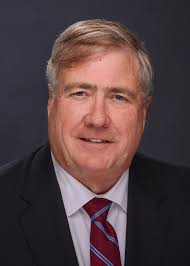
About Mike Brock
Mike Brock, the former CEO of TBD at Block, has become a full-time political writer and commentator on his Substack, "Notes from the Circus," and through frequent appearances on other podcasts and live streams. In late 2025, he has been a vocal critic of the Trump administration, describing its actions as lawless and accusing figures like Donald Trump and JD Vance of undermining democratic institutions. He has characterized the political right as a coalition that includes what he calls fascists and has called Republican members of Congress who do not oppose the administration "cowards." Brock has also commented on specific events, such as the shooting of two National Guardsmen near the White House, which he described as a potential rallying cry for political repression.
In his professional capacity, Brock has continued to advocate for Bitcoin as an "open protocol for money" and a tool for pricing political risk. At Block's Investor Day in December 2025, he discussed the company's strategy for entering the Bitcoin mining hardware market, arguing that the current market is dangerously centralized and that Block's expertise in hardware design gives it a competitive advantage. He has also expressed skepticism about the idea that Bitcoin will replace state currencies, stating that he believes some elasticity in money supplies is important for advanced economies. Brock has described himself as a liberal and a proponent of democracy, and has stated that he left his role in the crypto industry because staying would have meant surrendering his values.
Source: AI-verified profile updated from Mike Brock's recent appearances.
Browse all interviews →
Transcript (42 segments)
H
Host0:02
Welcome back to another episode of Talking Intentionally. Today we're speaking with Mike Brock, who is an eccentric guy and also one of the early employees at Cash App and a bunch of other cool places. He's been in tech forever, worked in crypto, done a lot of interesting things. So, we're really excited for this conversation. We hope you enjoy and as always, let us know if there's anything you want to see on the podcast next or any feedback you have for us. Take care and be well. Bye. Hey guys, welcome back to another episode of Talking Intentionally. It's myself and Ash. What's up, guys? With Mike from a storied career in Silicon Valley. Thanks for taking the time to speak with us.
M
Mike Brock0:37
It's great. Good being out here in New York. Great time of year to be in New York right near New Year's. Right near Times Square here.
H
Host0:46
Life's okay, I suppose. I mean, it could be worse.
M
Mike Brock0:49
Could be. I could be sick. I'm not. Could be dead. I'm not. We're alive and kicking.
H
Host0:55
Alive and kicking.
M
Mike Brock0:56
We're alive and kicking, right? And the world marches on.
H
Host1:00
Yeah. I mean, what's your background? You're a person who I know pretty well in the world of fintech and tech. But what was your background with it and how did it color your opinion on how you view the world today?
M
Mike Brock1:13
How did my world and how did fintech...?
H
Host1:18
Yeah. Like your perspectives on the world are obviously a byproduct of your life and your existence. Would love to hear a little bit about that.
M
Mike Brock1:29
I mean, from a very young age I've always had a pretty strong world view. I write about this a lot actually on Notes from the Circus, my Substack. When I was younger I was into libertarian politics. I call myself a classical liberal today. Some people would even call me a liberal philosopher. I've always had this core set of romantic beliefs that go back to my childhood, go back to conversations I had with my grandfather who fought in the war, who was part of the D-Day Normandy invasions, about the sacred gift that we have to live in freedom and in a society that is capable of governing itself and has a system that tries to reach towards some concept of fair justice. I know that we fall short of that as a society in all different ways and our history is littered with examples of that. As I move through life, I've tried to the best of my ability live according to my values, which are long-held and give me a sense of meaning in the world. What I learned in fintech was that there are troubling features of the political economy in this country and throughout the world. There are features of our economy that have become, in the case of the financial industry and fintech, very extractive. Not all, I don't think fintech is extractive. I obviously worked in fintech, I don't think I was working on extractive products. Financial products serve a purpose, they can be pro-social or antisocial. My views on Bitcoin and crypto have evolved since I left that sphere. I'm definitely not of the ilk of the sound money theorists and Bitcoiners who think we should get rid of all high finance and debt-backed money. I think that's an insane proposition. John Maynard Keynes was correct in his rebuttal. The Bitcoiners and other sound money theorists, gold bugs, often misrepresent what Mises was saying about the properties of money and why he valued gold. The Bitcoiners are all triggered by Peter Schiff and they've been in this ping-pong match with him intellectually. Schiff himself is a scholar of Ludwig von Mises. Mises was a really smart guy. At the time, there were a few things going on in elite conversations and intellectual discourse. One big one that people don't talk about is the revolution in physics. We had the quantum physics revolution at the beginning of the 20th century. Niels Bohr was influential on the thinking of how to think about information in markets that both Mises and Hayek used. There's this thing in quantum physics called the measurement problem. You can know the position or the velocity of a particle but not both at the same time. In order to measure a system you must disturb the system, which creates a paradox in measurement. This insight from quantum physics leads to the economic calculation problem, which is the problem that a central planner in a socialist centrally planned economy has to contend with: knowing ahead of time what the required inputs are for everything. Mises, building on the insight from physics, intuits that you can't really do this. The only effective way is through the price signaling mechanism. The observation is that it's way more efficient to allow supply and demand signals in the market determine what the price should be. For example, if there's a shortage of apples one year, the price goes way up. That sends a signal through the market, and other farmers might grow apples next year to cash in on that demand. That's how the price signaling mechanism works. Mises observed that all of this happens in a distributed way. Milton Friedman talked a lot about this too. Friedman is not Austrian, he's associated with the Chicago school, which is closer to Keynesianism than to Austrian economics. A lot of people don't realize that because there's a weird aestheticization in libertarian politics and market fundamentalist politics that associate Friedman and the Chicago school with Murray Rothbard and libertarians. That's not fair. Friedman would have recognized these people as fascist reactionaries. There's a lot of tortured retellings in the crypto and Bitcoin world of what these people actually believed.
H
Host12:16
Do you think historicism is really that important? I think there's a lot of intellectual pontification about the roots of why Bitcoin matters, but for the vast majority of people who own Bitcoin, they have some form of skepticism about their government and they want to have something that maybe doesn't. What do you think a government is?
M
Mike Brock12:41
Tell me what the government is.
H
Host12:45
A planner that regulates public goods.
H
Host12:54
I think there's certain things that they should not meddle with and public goods should be meddled with. What's your definition?
M
Mike Brock13:02
I don't know. It would be an entity that regulates rules that the masses agree upon and is funded through taxing the citizens.
M
Mike Brock13:16
Government is the greatest social institution that humans have ever created. It is the basis of civilization. The ancient cities, like Babylon, ancient Mesopotamia, early human civilizations. A philosopher by the name of Thomas Hobbes, who wrote a famous treatise, Leviathan, observed that there were two worlds from his vantage point of civilization. In civilization, there are people who have moved to these great cities all around the world, like Constantinople in the Ottoman Empire. And there are other people who live in what he refers to as the state of nature, tribal people. He notices that the lifespans of these people who live out in nature are nasty, brutish, and short. Hobbes says to himself, what's going on here? In some ways these people living out there have a lot more freedom than we do. We don't have tax collectors and census takers and religious organizations exerting social control. But there's less violence, less people get killed arbitrarily. When that happens, people get punished and people are feared away from doing those sorts of things. He recognizes that this government thing actually saves a lot of lives. Anything doesn't go. We have some basis in our humanity for seeing what's right and what's wrong. You don't have to get sophisticated about it. You're a human being. This is a wrong thing. You shouldn't do this. Stop right now. I demand it.
H
Host16:09
More tangibly on the fintech side, or not even fintech, any tech, any corporation, any company that comes out. You mentioned at the start that there are certain decisions that are being made that are pro-social and good and help out a lot of people, and then there's certain things that are very extractive. What are things that immediately come to mind, any time period you want, when you first entered the industry versus today, or even go further back like humans a thousand years ago?

M
Mike Brock16:37
Let's talk about what pro-social is first. It's a good question and I don't think it's something that you can fully sort of like, if you wanted me to sit down right now and create a slide presentation of these are the questions to ask to drive the properties of a certain product versus some market opportunity, what would be pro-social or anti. The question is honestly we don't know. Social media is a great example. In the late 2000s, at the beginning of the Facebook and Twitter era, coming out of the MySpace era, I think there was a great intuition across both the left and the right that social media was a pro-social technology. We did not foresee the risk. Some people did, to their credit, like people yelling from the shadows in academia, people who really study Marshall McLuhan. McLuhan is responsible for the observation in media theory that the medium is the message. There were people that were like, this is a problem. As advertising became the answer for how social media was monetized, making the most amount of money in that advertising business means getting as many ads in front of as many eyeballs as possible for as long as possible. This leads to the rise of growth hacking product culture in Silicon Valley. You get data scientists analyzing behavior. There really only is one ultimate conclusion: the dopaminergic system in the brain. It's regulated through a complex interaction with the amygdala system, the fear anxiety system. If you can get that system really activated, you can get dopamine hits really easily by targeting out groups, enemies. Conspiracy theories work really well here. The brain just gets into a competition of who's the most intellectually honest conspiracy theorist. That's definitely happening. It's a perverse incentive system. The most profitable model that social media can engage in is to show content that makes people angry because that keeps them engaged the longest.
H
Host20:29
You wrote a whole piece on this, not social media, but like trading. A lot of what we see in our industry, but also abroad or fintech broadly, make money off of people losing money.
M
Mike Brock20:37
What do you mean out of that?
H
Host20:41
Just to give you a quick TLDR, the title was 'Losing Money as a Service.' A lot of crypto operates with that as a business model. You have a bunch of people who like gambling and you give them new products to gamble. In the US, in New York in particular, there are a lot of crypto regulations that prevent you from accessing 500x leveraged trades. That's probably pro-social, maybe. Some people would disagree. On our end, we want to build stuff that isn't going to be purely extractive and play to this losing money as a service business model.
M
Mike Brock21:19
It's not even the 500x leverage. It's that you look at the user base and the vast majority of profits are made from people who are net down. Somebody has gone in with the promise of something that has not... That sounds antisocial to me.
M
Mike Brock21:36
Society doesn't seem better. It just seems that money's moving from someone's hands to another through creating perverse social incentives.
H
Host21:55
Sure. So what would pro-social be? What's an example from the last 20 years?
M
Mike Brock22:02
Pro-social means both sides get something out of it. A grocery store is a pro-social business. Their employees make money, they're able to pay their employees, the money gets to the farmers through the commodities, the family puts their food on the table at the end of the day. Inside you have Starbucks that's employing behavioral science to make a caramel frappe taste so good that you will be addicted to it. The counter to that is you need to start fighting it the way they're fighting it, so you take GLP-1s to fight the hunger they're creating. GLP-1s appear to be a major medical breakthrough on many fronts. As a type 2 diabetes treatment, it is a miracle drug. The way it helps regulate appetite and create satiation, recent research has suggested that the same neural pathways responsible for cocaine addiction, heroin addiction are treated well. There are studies showing that cocaine and heroin addicts have managed to break their addiction within two to three days of starting a GLP-1. There are actual clinical trials. We should celebrate that kind of scientific breakthrough. This is a lot of suffering that these GLP-1s are alleviating.
H
Host23:57
Grocery store pro-social, clear. Most humans would agree with that. Same thing for scientific studies that prove something is better physically for humans. What about the stuff where it's not as clear? For our neck of the woods and yours in the past, finances are very strange. Auto-enrollment by the US government in 401ks in the 50s or 60s. Is that good? Is that too paternalistic? Is savings good? Is that something that's social?
M
Mike Brock24:25
Australia has a superannuation program, which is basically forced 401ks. Other countries do differently. Canada has the Canada Pension Plan, run by CPPIB. Similar sovereign wealth funds in Scandinavian countries. Norway has a huge sovereign wealth fund that they use their oil wealth to seed, and that funds their equivalent of social security. The Australian model is more 401k-like but it's mandatory. You have to pay into it. If you don't pay into it voluntarily, they add it to your tax bill and buy a plan for you. You don't really have a choice. Is that pro-social? Then you get to the question of is savings good? Is forcing people to do it in total opposition to the gambling risk on losing money as a service? I think it's fair to force people to save for their retirement. To be irresponsible your whole life and then show up at the end of your health span and create a situation where we're not going to let you die, so either taxpayers or unpaid medical bills are going to end up doing the job. That's a form of... Some people will be poor their whole lives and we can have programs for them. We have Medicaid. We should not for people who simply can't get off the ground because they're born with a physical disability or are victims of circumstance. Some kids grow up with a traumatic childhood, both parents murdered in front of them by a gang member, and they grow up really messed up, living in Section 8 housing. Should we feel angry that some of our tax dollars go to allaying that person's suffering when their life's been pretty shitty? I don't feel bad that some of my tax dollars go to that person. To ask people to save is responsible.
H
Host27:15
Agree on these examples, but these are also clear examples. A lot of what we've seen for stuff that to a lot of people is not pro-social, it's not as clear. Should you ban sports betting outright? I don't think so. It's my right. Somebody wants to go and do that. Should you ban...?
M
Mike Brock27:33
I don't know. I'm open-minded about it.
H
Host27:37
On the flip side for us, would it be good if every dollar on this planet was earning to some extent?
M
Mike Brock27:43
I think betting, I'm open to it. I have people close to me that take a harshly different view and I'm persuaded by some of their arguments against it, up to the point of suggesting that maybe some regulations are needed. Maybe something similar to the qualified investor status, where if you're going to bet thousands of dollars on one of these platforms, maybe there's some check to prove that you are above a certain income level. I know that sounds paternalistic. The reason why we had the qualified investor thing is because there was a lot of fraud. In the 50s and 60s, people would come to you and say, 'I'm going to build this new company, give me your life savings, you're going to be a millionaire.' That was why we brought in the qualified investor thing, to create some heuristic in the law for the kind of person that would be smart enough to identify that fraud. I hear everyone talking about how overly paternalistic that is, but they're also ignoring the really bad history of lives being completely destroyed by fraud in these secondary markets. There was a lot of financial predation in the 50s, 60s, and 70s that led to these laws. Then you have all these crypto anarchist people saying, 'No, what's really happened is the rich people want to keep it all to themselves.' It's not quite what's happening. Capital likes to have access to more liquidity. Having access to consumer liquidity is going to push the hurdle rate on risk down. There's no real incentive for the capital markets to lock consumers out. That doesn't make any sense from a free market perspective. What really happened was there was a lot of financial predation in the period before the Great Depression and again in the 70s and 80s. Then there was a whole series of deregulation and re-regulation after the financial crisis. Now we have crypto and betting markets, which are sort of a new deregulation thing. Look what we're seeing. FTX falling apart. Stories of people's lives being destroyed. And we're like, 'Is this paternalistic?' I don't know. A lot of people seem to not know the difference between something that's real and a fraud, and that's concerning at a societal level.
H
Host31:31
Agreed on the history side, agreed on all of this. But very tangibly with what we deal with every day. Today, if you are an American and you want to invest in a certain asset class, for a lot of these are good motivations and frankly a lot of these problems that happened in the past probably happen again. It is physically impossible for me, a recent college grad, to go and invest in certain things that are invested.
M
Mike Brock31:55
I'm not saying no. Maybe there's other ways of doing it. Maybe it's education-based. Maybe you have to prove that you did some online course or something.
H
Host32:13
Robinhood forces this for options trading.
M
Mike Brock32:15
Maybe that's better than having an income or invested assets limit. Where we say, 'You have to get a license to use Kalshi or whatever. We're going to ask you to take this three-hour online course that the government requires, and then we'll issue you a license. You take that license and you can sign up for Kalshi or one of these fancy secondary products. We're going to give you three hours of consumer safety information about what to look for if you see this might be a fraud.' Would that be so bad? I don't think so. But I don't think you can have a test that's agreed upon. Imagine trying to do that for prediction markets, betting, or gambling in general. I'm sure we all have vastly different questions on that test.
H
Host33:19
But we have a driver's license. People probably have totally different roles. You could make a libertarian argument that you shouldn't have to wait at a stop sign if there are no other cars. You can make a cohesive argument. Doesn't necessarily mean it's correct or that you should build a society around it. We already have to be licensed to be a stock broker. You have to do your Series 7 thing with the SEC. All we're saying is if we're going to open up these secondary non-public markets to consumers, they should get a license too. It doesn't have to be that complicated. It can be done as an online course with some basic things so consumers are like, 'Oh yeah, this is probably a scam.'
M
Mike Brock34:14,
Here's my question. I do think the market can potentially provide a solution that would be the premier solution for these kinds of things. He just mentioned that in order to trade options on Robinhood, you need to take a course. Robinhood is probably far more trusted by the people who would teach me about financial products when I'm growing up.