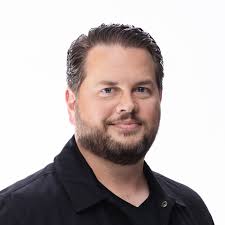
Every leader's journey is shaped by a handful of defining decisions, those moments of risk, doubt, and conviction that influence their lives and careers. In this podcast, we get to hear the stories behind those choices. Welcome to Executive Decisions with me, Steve Sedgwick. In this episode, I speak to the CEO of Pinterest, Bill Ready.
We can get sort of trapped in the constructs of what we think is possible. I actually think for all of us, so much more is possible than what we imagine.
Bill grew up in a small town in Kentucky working in his parents' auto repair shop. His early goals were simple: become the first in his family to go to college, get a stable job, and have health insurance. But he went on to exceed those expectations and move from the shop floor to Harvard Business School, Silicon Valley, and eventually the C-Suite.
The further I've gotten in my career, the more I look back and say, a lot of the best lessons actually came from that little town in Kentucky, that little auto repair shop.
As CEO of Pinterest, Bill faced his toughest decision yet: making the platform private for users under 16. It was controversial, but it was guided by a strong sense of accountability.
Users become sort of nameless and faceless, but for me, I see every single one of them staring back at me.
These are Bill Ready's Executive Decisions.
You have an amazing CV. I can't work out what you evolved to and from. You, VC, working for the big corporations, working for small corporations, being a CEO, setting your own companies up. How would you describe yourself?
I did five startups, so I would still consider myself primarily an entrepreneur. Although I was an accidental entrepreneur. I grew up in a little town in Kentucky, and my aspirations were as the first in my family to go to college, and my aspirations were get a stable job and have health insurance for the family. Didn't have health insurance growing up, grew up in a place where I needed government assistance to get to college and things like that. So get to college, graduate, get a stable job, actually have healthcare for the family. Those were the goals, but then have ended up having the good fortune to have built multiple of those to billions of dollars in revenue. And so I've ended up running larger companies as a result of that. But in my heart, I'm an entrepreneur and a builder.
Let's go right back to Kentucky. I know you worked for the family business, the garage, and you worked really hard from a young age. Tell me about the key influences and the people you drew inspiration from when you were very young.
Yes, my parents are small business owners. A little auto repair shop in a small town in Kentucky. And so, you know, I grew up working there. And later on in life, I'd get to Harvard Business School and McKinsey and Silicon Valley and all those places. The further I've gotten in my career, the more I look back and see a lot of the best lessons actually came from that little town in Kentucky, that little auto repair shop, of just what it means to take care of customers, what it means to do the right thing by people, what it means to have a long-term relationship with your customers. And so those were instilled pretty early on. I always say I started working at a repair shop when I was 13, but that was when I started working on cars. Before that, I'd paint the building and repave the asphalt, so that started like seven or eight years old. So hard work was a must from the beginning.
Did you enjoy the hard work?
Not then. Again, these are things like the more time goes by, the more I appreciate how valuable these things were. At the time I was like, oh, my friends are getting to do all these other things and I'm here working. They drive by while I'm out there working and sort of wave and think, oh wow, I wish I was doing that. And I look back now like, oh no, those were like really important lessons.
There is no way you could have been as successful as you've been in Silicon Valley and elsewhere and these extraordinary companies you've worked with, for, and created, if you didn't have a strong work ethic as well. Has that been instilled in you that actually a job isn't just 9 to 5?
I think that's right. I would say for my family a lot of it was just necessity. But I think the work ethic was definitely there. Military family. My dad woke me up to the Navy Reveille every morning for about 18 years. So there were definitely things like that. That little town in Kentucky was just outside of Fort Knox, so you grew up outside of a military base and so a lot of those things in terms of discipline and work ethic sort of rubbed off in that. But a lot of it was hard work out of necessity just because it was, I always talk about the link to doing good things for customers is sort of instilled at an early age because we literally, if we took good care of customers and business was good, then we ate well. If things weren't going great with customers, then we'd go to the grocery store on the other side of town where the meat was only expired by a few days and probably wouldn't make you sick. So that linkage of like, hey, take care of customers and good things happen for you was sort of there, but it was out of necessity. But I actually think as an entrepreneur, one of the things back to lessons I didn't realize were such powerful lessons then, necessity is the mother of invention. I'm a huge believer in the theory of constraints. Silicon Valley, so much of Silicon Valley, people talk about tech titans and things now. The story of Silicon Valley is not one of titans. The story of Silicon Valley is one of an upstart with no resources but a lot of imagination, a lot of hard work, and a lot of ingenuity can go take on massive incumbents. That's how Silicon Valley was born.
Tell me about taking responsibility as well of your mistakes.
So, I was 13, had just started actually working on cars in the shop and I had messed up on a farmer's truck.
And actually, it was a careless mistake. It was actually less the mistake itself, but more that we were going to need to keep it for an extra day for me to redo the work that I had done. And I'm sort of expecting my parents to go explain to him what I'd done. And they said, 'No, no. You go tell them what you did and what you do to make it right.'
13. And as I tell the story, people often times imagine it's going to be like a Norman Rockwell painting or something where the farmer's like, 'Oh, son, it's all right. Don't worry.' No, he needed that truck for his livelihood. It was a place where most people were living paycheck to paycheck and he needed that for his livelihood and he let me know it. And so even telling it now, every time I tell it, I feel the lump in my throat of what it felt like at 13 to stand there like knees knocking and having to look somebody in the eye and explain to them the mistake I made and what I do to make it right. And back to the powerful lessons from early on, I think one of the things that has happened in tech is that there's so many people running platforms with hundreds of millions or billions of users and I've had the good fortune to work on products that have served billions of users, but I think so many people that are working on these products, they don't have to sort of look eye to eye with all the customers and with hundreds of millions or billions of users. Users become sort of nameless and faceless, but for me, I see every single one of them staring back at me.
And I have that same, when we make decisions about what we're going to do, that's sort of my bar: could I look someone in the eye and say I did my level best to do what in my heart of hearts I felt was the right thing.
Bill, that's going to come up later in your story when we talk about Gen Z as well and your extraordinary actions and I want to come to that. You grew up in, for want of a better word, a really tough rural environment where it was really tough for the customers, it was tough for your family, paycheck to paycheck, customer to customer. You got to the University of Louisville, tell me about the first one in your family.
Yeah. That was sort of the dream was just to get to college.
For you or your parents or both?
I'd say my parents always wanted me to do well, they didn't know what was possible in that and so they wanted me to do well in school, things like that. But I think certainly for my dad, his dream was two things. My dad would reliably say to me when I see him, the first when he shakes my hand, he'll say, 'You're still not working for a living, not enough calluses.' And the second is only half, he's proud but only half joking, he'll say, 'You could have been a damn fine mechanic,' which is, and the business is still here waiting for you. But it's great grounding for those things. But back to University of Louisville, yeah, just getting to college was a dream. The day I stepped foot on campus, I felt like I had made it.
Did you feel part of it or did you kind of think, wow, should I be here?
You definitely have those feelings. University of Louisville, it's funny, then that was the big city. Louisville is a midsize city in the US, but from where I grew up, it was like, oh my gosh, they had one-way streets and parallel parking and all these things were like very different from where I grew up. And so that was a big dream at that time.
Big dream and a big decision. And like you, this is called Executive Decisions and most of our conversation will focus on your business decisions, but in many ways it's kind of the biggest decision you ever made in your life, you know, not to work with your father, not to become a mechanic, not to have calluses on your hands, huge decision to become the first person in your family to go to university.
This is one of the things I think a lot about is that I think, and it's actually not that unique amongst entrepreneurs. You look at Silicon Valley, why does Silicon Valley skew significantly towards immigrants? So many people that had to take a leap to go take a chance, and willing to sort of take that leap without knowing what was on the other side. But I think when I talk to people that have done that and have sort of traveled a long journey to get to where they are, yes, there's a lot of hard work in that. There had to be some aptitude in that, but there's also not just some good fortune, who were the people along the way that were the nudges in the right direction. And so I think about who are the teachers along the way that said, 'Hey, you could do this.'
Your mother bought you these encyclopedias.
Yeah. And she had to work overtime to do it. And so she wasn't pressuring me to go to college or these things. She just wanted me to do the best I could do. And I remember she had to work overtime for me to be able to get those. And so I remember like cover to cover read them all as a kid. If I could go back and talk to the younger me, I'd say dream bigger, dream bigger. And people say, 'Hey Bill, hasn't having, from small town in Kentucky, haven't things...' It's like, well, I just didn't know how big to dream. And sort of for me it was sort of each stage along the way, run the hardest I could to the furthest horizon I could see and then you get to that and then oh, there's the next horizon and you run hard for that and there's a next horizon. But if I could go back, I'd say dream bigger.
What would that have changed?
I don't know if, here's the thing. I wouldn't change anything because I think it was all part of what was necessary along the way. The deeper I get in my career, the older I get, the more I see like these were all foundational things. It all happened as it should have. And even the things I thought were really hard in the moment, these were learning moments. These were character building moments. But I think for all of us, we can get sort of trapped in the constructs of what we think is possible. I actually think for all of us, so much more is possible than what we imagine.
Tell me about some of those academic mentors. Was there someone who said, 'Bill, you can do this, you're not that country mouse, actually you are really smart and you've got a great future.'
There were multiple along the way, more than I can name. I remember one of my professors in the computer science department. He actually taught Harvard Business School case studies.
And he said, 'Hey, Bill, I love that you came here to University of Louisville, you could be there.' And so that was sort of what prompted the leap to go to Harvard Business School. As well as the first two startups. So I was the first engineer and one was a do IPO but then there's also a do crash and burn. And the second one's sort of the same way. And the lesson I learned from that is that the products were good, the software for both of those actually still runs today, 20 plus years later, but the business model didn't work. So I was like, oh, I've got to figure out the business model side too. And so I wanted to do that. But I had multiple professors in the computer science department like, 'Hey Bill, you could go do that.' But I remember specifically there's one of them that he taught Harvard Business School case studies and he's like, 'Bill, you could do that.'
Working in your parents' auto shop to Harvard Business School.
Yeah. It was, you know, might as well have been like going to the moon. So yeah, I can see that. Like I said, never had even met somebody that went to an Ivy League school. But again, this is where if you're honest with yourself, who are the people along the way that gave the encouragement? I didn't even imagine that was possible for somebody like me from a place where I came from. And so you had those people that encouraged.
I'm hearing only positivity and mentors and encouraging people. Were there people who just said you are that country mouse? Were there people trying to put you down and did that drive you?
Sure. Yeah. I don't talk about those as much, because I like to focus on the positive. It's interesting. My wife and I both had similar experiences on this. We went to the same high school. We went to the same university. But we had similar experiences in elementary school. Mine was like I was from the wrong side of the railroad tracks. She had started school in Korea and then came to the US. But same experience which was first grade they sort of separate you up into reading groups and there's sort of like low, medium, high and I got put in the low group. And I remember saying to the teacher like, 'Hey, I can read those books.' And no, no, no, you're over here. And I think a lot of it was just like, yeah, I was coming to school in clothes that other people had donated and things like that. And so was off of the sort of assumption of sort of, yeah, you're from the wrong side of the railroad tracks, you're over here in this group. And it wasn't until third grade was the first standardized test. And so there's been lots of criticism of standardized tests, things like that. And like there's always room to improve these things. But I would say standardized testing was one of those things that probably changed my trajectory because after being consistently in the lowest reading group, I finally got a chance to prove like, no, I can read those books. And so took the first standardized test in third grade and then went from that to like, oh, we're going to bust you to the other side of the county to a different school. Only for a couple days a week because, you know, it was small town Kentucky, so the resources are limited. But like that's a first early example of like, oh, there's maybe a different thing is possible.
Let me ask you a question. Are you driven more by the positive energy you get from people or by those examples when people have been negative about you and you want to prove to them wrong?