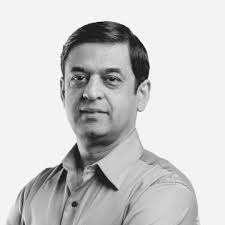
In this heartfelt episode, we pay tribute to Samir Bortis, the late CEO and co-founder of Isertis, Seattle Orcas, and Thai Seattle board member. Join us as we delve into the memories and legacy of Samir through the eyes of Monish Darda, co-founder and CTO at Isertis. Monish shares intimate stories of their journey together, highlighting Samir's visionary leadership, infectious laughter, and unwavering dedication to building a consequential company. Discover how serendipity played a role in their entrepreneurial path, the challenges they faced, and the values that shaped the company's culture. Shares and Gary also shared their stories of Samir as a friend and co-board member of Thai Seattle.
Welcome to the Startup to Exit podcast where we bring you world-class entrepreneurs and VCs to share their hard-earned success stories and secrets. This podcast has been brought to you by TAI Seattle. TAI is a global nonprofit that focuses on fostering entrepreneurship. Thai Seattle offers a range of programs including technology panels, the TAI Entrepreneur Institute, and the Thai Seattle Angel Program. We encourage you to become a Thai member so you can gain access to these programs. To become a member, visit www.cattle.tai.org.
Hello everyone. Today we'll be paying a special tribute to Samir Bodis, the CEO and co-founder of Isertis, a leader in contract life cycle management who passed away recently following a courageous battle with cancer. Samir was also a longtime board member at Thai Seattle. We will be interviewing Monish Dara today who is a co-founder and CTO at Isertis. He started with Samir back in the day on Isertis and he'll be sharing his memories of Samir as both a visionary entrepreneur and leader. But before we get started, let me share my personal memories of Samir as a dear friend, colleague, and a successful entrepreneur.
I'd known Samir since the early 90s when he joined Microsoft. I was actually on the interview loop and thought he would be a great hire for Microsoft. It was clear that he was a smart, energetic young man who had a great future ahead of him. While we didn't work together at Microsoft, we kept in touch socially. He was a great friend, had an amazing laugh, and was very friendly. Later after many years we both joined the board of Thai Seattle. Samir was a very active member of the Thai Seattle board. Even though he was very busy running Isertis at that time, it was very clear that he was very passionate about helping other entrepreneurs. He gave his time generously and was one of the most active members of the board. His advice and guidance were invaluable in helping Thai Seattle become a major force in the Seattle entrepreneurial ecosystem. So it was a real shock to hear that he had passed away after a long battle with cancer. The Seattle area has lost a great entrepreneur who has always led with integrity and he'll be sorely missed. With that, let me now welcome Monish so he can share his memories of Samir. Welcome Monish.
Thank you so much Shang and Gary and thanks for the opportunity as well to share my memories.
Great. So you know a lot's been written about Samir and we'll discuss kind of his attributes as a visionary founder and leader etc. But tell us what he meant to you on a personal level.
What can I say? Every time I remember him there's a big smile on my face. He made me laugh. I remember when he turned 50 and I turned 50, we just one month apart. Our birthday dates are just one month apart. And he called me and he said, you know, Manish, this is my 50th birthday. I made a resolution. I'm going to laugh more in the rest of my life than I laughed in my first 50 years of my life. I think that's what I remember every time I remember him now. So I think he's been a brother, he's been a friend, he's been a co-founder, especially when you start a company and you get the company to the level of high certainties that we did together. You get much closer than even sometimes your wife, your kids. He was on speed dial before my wife and I'm sure his phone was exactly set up like that. I can't put it in words but I think you get to know a lot about people when you work with them so closely day and night, right? And we always said, I was a very late riser but I went to sleep very late. So even today my schedule is like 2:00 in the morning. I go to bed at 2:00 in the morning, wake up at 8:30. And we always used to say between the two of us, we have like only 2 hours where we are not talking to each other. So that's how close he was. And that's what he meant to me.
That's great. That's great. So how did you first come to meet Samir? Looking at your background and it didn't seem like you had worked together in the past. Had you worked with him in the past?
No. So it was very interesting. He was the CEO of Aztecsoft and what happened was my co-founder I had actually gone to school with him and this was my first company where this started in 1997 and we had our own building in Hinjewadi which is IT park in Pune and Aztecsoft was building a facility just in front of our office in Hinjewadi and Samir was very involved so he used to come at least once a quarter to visit and see how the building was progressing. And of course it was a construction site. So he would come and sit in our office because he knew my co-founder. That's how I first met him. You know very casually we got to know each other found it very interesting. And then as it happened my company got acquired by a company called BMC. His company got acquired by a company called Mindtree and I became his customer. So Aztecsoft/Mindtree kind of did some work for us at BMC. That's how I came to know him more because of that acquisition and they were so close to each other. Mindtree's acquisition and BMC. In a year we kind of said hey what's next for us when we gone through this acquisition. We don't want to work for a big company. Let's figure out something. So that's how this idea of this came about.
I see. So what obviously you got to know each other etc but you didn't really work together. So what made you decide to partner with Samir at that point? What were the key attributes that you saw in Samir that made you want to do a startup because it can be a pretty long journey together.
That's right. And you know actually finding a founder that you like and frequencies kind of match is very hard. Isertis was by the way my seventh startup and Samir's third. So we had both got through that journey of finding co-founders working with them and figuring out what those relationships were and so we were both careful as you would think we would be right coming into something like this and we knew each other but we didn't know each other closely enough. It never worked. But I still remember there's a small coffee shop on Ferguson Road in Pune and we went to have a coffee to figure out what we would like to do and he said Manish you know what you dream and I said you know I've been brought up you know even though I studied in India I did my masters in Florida I'd spent a lot of time in India and I was based in India he was based in Seattle. And I said you know I've always been brought up my whole professional life thinking or people telling me that no consequential product companies coming out of India. And this was you know in the 2000s there were like very few companies who were global companies that came out of India. And I said you know I've worked through six startups. I would love to build a consequential company that can come out from India. And he said exactly I think you know if we can figure this out I don't have a product idea. I don't know if you do but I would love to build a consequential company no matter what we do. Right. So I remember when we started Isertis we didn't have a product. We did not have an idea. We said we figured this out as we go but we were very clear that we wanted to build a consequential product company. And that conversation struck with both of us. As we work through the pains of a startup we never forgot that. And that's why you'll see the Isertis culture the values that we call FORTE became such a big part of all of our lives and all of Isertis as well that resonated with both of us like really well in that conversation.
That's great and we'll explore FORTE in more detail in the conversation. So how did the idea of Isertis come about? As you said you didn't really have a product idea at that point. I understand that there was some serendipitous meeting with the legal counsel at Microsoft that kicked things off. Can you talk more about that?
Yeah, absolutely. Like any other idea that comes in and becomes a seed and grows into a tree, serendipity plays a big role, right? So, we were doing a lot of things. We're trying to figure out what to do and where to focus. And our theory was the cloud is coming. There's a wave. Samir always used to say to be successful you have to either ride a wave or create a wave. We knew we were not in a position to create a wave but we could see this whole cloud wave coming and we were thinking we should ride this wave and the first applications that would move to the cloud would be not the core applications like ERP or supply chain or finance but there would be these surround applications that would actually first move to the cloud where the CIO would be ready to move without too much hesitation. So we were busy building some of these surround apps, surround ERP apps as we call them, including stuff like transportation management and warranty management and so on. And Samir was at a dinner in Seattle and he met a long-term friend of his who was an associate general counsel in Microsoft. He said, Samir, what are you doing? And Samir said, you know, we've been like two three years now. We doing this ERP surround. We are very bullish about Azure. It was called Red Dog then as you know early days of Azure it had not even been released but we were working with Microsoft on that. He said but we are on the Microsoft stack but you know we are doing these products and he said so this guy who he met said you know I don't know what ERP surrounding is what you're doing but we have a real problem at Microsoft. I just grabbed a $50 million project to get all of our templates in order in our legal department. Would you be interested in doing something with Microsoft? And I love the way you talk about Azure and the Microsoft stack and this is what we are looking for as well within Microsoft and so Samir was like you know he was not sure he said okay let me think about it he called me he said Monish you know I met a friend of mine he was saying you know can you do CLM and I said I know all about CLM and he said how you know I never heard the word I've worked with contracts before, but I never heard of CLM. And I said, No, nothing to do with contracts. It's cloud life cycle management because that's what I've been working on in BMC. And he said, No, no, no. Talking about contracts and CLM is contract life cycle management. And I said, so I looked it up and I said, you know, Samir, if it's Microsoft, let's do it. That's how actually got it accidentally and first serendipity completely got into CLM.
That's great. So that was the basis for really the core foundation for Isertis but originally as you said you had built a suite of enterprise applications because you were not convinced that contract management on its own was a big market. What made you decide to focus just on contract management?
No actually we didn't even think about it as a market. What happened was because we got Microsoft as a first customer and we were doing other things as well at that time. I was in Seattle. I was in Bellevue and Samir and a friend of his had gone to play. We had gone to play golf at the Bellevue public municipal golf club and his friend asked us casually, hey, what are you guys doing? And we said, you know, we have Microsoft, you know, we're doing all of this stuff and then we have this contract management stuff that we're doing with Microsoft. We just signed with a large pharma company and then we signed with a couple of companies in India which were about 500 million in revenue. so large companies. So we said you know we have like four or five customers in CLM and then we doing all of this other stuff and he said you guys you don't understand what you're doing you have like at your size we are about maybe 70 people there at your size you don't get customers like that like Microsoft and like one of the largest pharma companies in the world and one of the largest IT services companies in the world you should forget everything else and focus on this. And that was kind of a come to Jesus moment. We both looked at each other and we said, Yeah, that makes sense. Actually, it looks like we're finding traction here and we'll not be focusing on that. And that's the time that we decided we'll focus on CLM.
Right. And that was Preeth Singh.
Yeah. Who's a successful entrepreneur, very successful entrepreneur.