This world is moving very quickly. Yes. And you know, we saw the opportunities and the convergence of private and public. And State Street has a long history of innovation, having launched the very first S&P 500 ETF over 30 years ago. Gold, which has hit all-time highs, right? That's been in our ETFs for over 20 years. So, it's really about reigniting that notion of we should be the ones that are thinking ahead about what are those exposures that our clients should have.
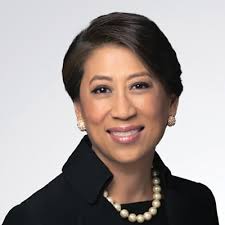
Welcome to Work Ethic, a show about the people shaping the future of wealth. From leaders building trusted wealth management firms to those scaling billion-dollar startups, we dive into their personal stories, values, strategies, and how they work. Today, we're going in-depth with Yie-Hsin Hung. She is the president and CEO of State Street Investment Management, one of the world's largest asset managers.
I'm Doug Scott, CEO of Ethic, and this is Work Ethic. Quick heads-up, this podcast is for information purposes only. Yie-Hsin, welcome.
Thank you. It's great to be here.
Thank you for coming. I thought we'd start with a fun one. What is something unique or interesting that most people don't know about you?
Not necessarily unique, but I was very serious about dance growing up. Yes. Both jazz, modern, in a dance company when I was at Northwestern.
Really? When did that start? Did it start when you were younger or?
Very much so. Yeah, growing up in Pittsburgh.
Pittsburgh. Okay, how was it growing up in Pittsburgh? Did you enjoy it? Was there a good dance scene in Pittsburgh or?
I don't know. Much more of a football, ice hockey city, but no, it was great. It was very enjoyable.
Oh, that's amazing. And you studied engineering.
Okay, what drew you to that?
You know, my father was an engineer and I oftentimes joke in our family was pretty much you can choose to study engineering or medicine or just decide what it is, right? It's going to be one or the other. But you know, I really enjoyed science and math and so it was a very natural choice for me going into mechanical engineering.
Mechanical. And what kind of engineering did your dad do?
Really? Did I have a degree in civil engineering? Oh, I didn't know that. Did he work? What was it in in Pittsburgh?
He was really focused on nuclear facilities, but he worked for Westinghouse and that's what drew him and our whole family to Pittsburgh.
Wow, nuclear facilities. God, that's a lot. As for a civil engineer, I was like thinking through the complications of misdesigning something.
That's so interesting. How do you think, I guess an engineering mindset, because I often talk about this of like the problem-solving, how do you think that helped I guess in that early part of your career maybe studying engineering then going into the world of finance? Like what was the skill set or some of the themes that came through from that style of thinking?
Yeah, so you know, oftentimes you're dealing with very complex problems and you know, whether it's a right or wrong belief, but I always feel like any problem there's a solution to it. And so I think that mindset of embracing what that issue is and not being worried about whether you're going to figure it out, I think that comes from that sort of engineering mindset.
Mm, that's really cool. And did you know you wanted to study finance? I mean, I had kind of a similar, I studied engineering and finance and I sort of knew a little bit, but did you know you wanted to do that when you were studying or?
You know, I really didn't. I was working my summers when I was studying engineering and you know, I find it interesting, but I oftentimes wondered what was the company's strategy or what are they doing with these products? And so when I was deciding what to do next, I applied to master's degree programs in engineering and then I thought, let me just apply for MBAs opportunities and as it turned out, you know, I had quite a few to choose from and so I figured if I was going to go engineering, I'm probably going to business anyway. So might as well just go ahead.
Skip steps. Skip the step.
And I think being in business school is when I got exposed to the world of finance. I hadn't realized like what a broad career that could be. So that kind of led me in the direction of heading to Wall Street.
Very interesting. And what was that first role? Was it internship or like what was the first job out of university or out of MBA school?
Yeah, so I was back in the day when you could go straight from undergraduate to business school and so I spent the summer not doing finance, but working for a big supercomputer company called Cray Research.
Interesting. What did you do there?
You know, I really I'm not sure. It was extremely complicated, but it was fascinating.
But then I ended up moving into investment banking after I graduated and found myself in sort of real estate investment banking, which in a lot of ways was kind of perfect because real estate oftentimes is quite complicated from a structuring, tax, ownership standpoint. So not every single company was the same. So I was able to apply like some of that analytical orientation along with learning the whole world of finance.
I did. I really found it quite interesting and the time that I got into it was when we saw this massive movement of privately owned real estate companies going public. So it was a great opportunity to sort of really get to know this different realm of entrepreneurs and what they think about and how the capital markets work.
Interesting. How did you then sort of, I think from studying finance, working in investment banking, asset management's a little different. I mean, there's some fundamentals in there, of course, but how was the bridge there? I know you worked in hedge funds and like what was the sequence then thereafter?
So I was in real estate investment banking for maybe a dozen years and you know, I remember at that time, you know, the dot com, the internet bubble ultimately, but all of that was really a big focus and bricks and mortar weren't all that interesting. And so in talking with my manager at the time, you know, we thought maybe this is the right time to make a shift. And then there was an opportunity within the bank where they were trying to bring together investment bankers and technology and figure out, you know, what was it that we should invest in, how can we modernize this craft of investment banking. So I did that for a couple of years and felt like it was time to figure out what the next step was and I was very fortunate because as I was looking, one of my bosses' bosses' bosses from way long ago was looking for someone that was a chief of staff for their asset management business. And so I jumped into that. And actually I thought it was perfect because it still has the incredible intellectual rigor of the markets, but yet it is a business that you know, you leave December 31st, come back January 1st and you know, it's not you're not starting all over again. And at the same time it has such incredible purpose. You know, you're helping millions of people achieve their financial aspirations. So it was really a great place for me.
You mentioned a couple of different bosses and did you have mentors that sort of stand out in your early in your career and what were some of the?
Yeah, so I would say, you know, the manager that sat me down and said, you know, maybe it's time to make a switch. I would count him. His name is Bill Smith. He's a long-standing real estate veteran. I think he himself has a big family, but then when you consider all the people that he mentored and sponsored, he's an enormous family. But I really appreciated the fact that he took such an interest in what I was doing, not only just the work that I was doing, but also you know, where I was going with my career.
That's really interesting. What do you think makes a good mentor?
I think it is someone that you know, someone you feel really comfortable talking to. You know, oftentimes I think all of us have certain strengths in certain areas and probably some blind spots in others. And you know, being willing to sit down and give you the honest feedback about what does it take, what are you doing really well, what can you work on because at the end of the day, especially in a larger corporate environment, if you don't really know what it is that is maybe getting in your way, it's really hard to figure out what do you have to adjust. And so I find that part of a mentor helpful. And oftentimes people say, you know, is there a difference between a mentor and a sponsor? And I do think there's a difference. In this case, I think I had both rolled into one.