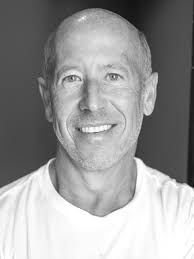
Starwood Capital Group Chairman and CEO Barry Sternlicht discusses his company's business strategy and expansion plans. He spoke to Bloomberg's Romaine Bostick from the sidelines of the Milken Institute Global Conference.
See omnystudio.com/listener (https://omnystudio.com/listener) for privacy information.
Bloomberg Talks curates top interviews from around Bloomberg News. Hear conversations with the biggest names in finance, politics and entertainment. On Bloomberg Talks, we round up interviews with Fortune 500 CEOs, government officials, well-known investors and business leaders.
Listen t...
What Barry Sternlicht said
Written from the verified transcript and checked against it. Every figure links to the moment it was said.
Barry Sternlicht discussed Starwood's expansion into data centers, noting the firm has been active for five years, starting in the Dulles market with 8.5 gigawatts, and has launched platforms in Europe and Asia. He highlighted the majority stake in Ireland's largest data center operator, a joint venture with Iberdrola, and the acquisition of ESR with Warburg, which he described as Asia's largest real estate asset manager, taken private last year. Sternlicht valued ESR's footprint in logistics and fast-growing Asian markets, noting its AUM shrank from $150 billion to $120 billion, while Starwood is around $130 billion. He mentioned a partnership with Telstra in Australia and a first data center deal there. In Europe, he cited positive leverage, a Swedish home builder acquisition, and high rents in Berlin. He expressed concerns about U.S. wealth disparity and shying away from blue states, while waiting for Kevin Warsh to lower rates.
Key takeaways
Starwood has been doing data centers for five years, starting in Dulles with 8.5 gigawatts in place.
Starwood owns a majority interest in Ireland's largest data center operator and has a JV with Iberdrola.
Starwood and Warburg took ESR private last year, Asia's largest real estate asset manager, with AUM around $120 billion.
Starwood is working on its first data center deal in Australia with Telstra.
Sternlicht expects Kevin Warsh to lower rates, arguing oil spikes should prompt cuts to help housing.
I'm here with Barry Sternlicht here at the Milken Conference in Beverly Hills, the CEO and chairman of Starwood, who of course made his name turning around hotels. You created the W. You got Sheraton, you did a lot more, but you made a little the West. We can go on and on. You were like the hotel guy for a long time. And I guess you still are.
You started hotels again. But you've broadened out. I mean I'm looking at some of your investments lately. You're doing a lot right now in the sort of AI data center infrastructure business. That's become a huge component of your business, isn't it?
It has recently. I mean for the last 5 years we've been doing data centers and we started really in the Dulles market, the largest data center market in the world, 8 and a half gigawatts in place. And it's the Dallas was the home of the internet and then so there's great connectivity and it's sort of ground zero is like Park Avenue in 57th Street. And then we brought it out to other markets. We did a deal with a Bitcoin miner, Core Scientific, and we're looking at others and then we're expanding other states and we've with two platforms we've launched into Europe and into Asia. Both directly and indirectly in Europe we have the largest data center operator, we own the majority interest in the largest data center operator in Ireland, which has expanded a joint venture with the Spanish utility Iberdrola and then we've also got sites in Milan and then in Asia we bought together with Warburg a controlling interest in ESR which is Asia's largest real estate asset manager, took it private last year and they have a big data center business and then on our own we partner with them, with ESR but also have moved into Australia and we're looking in Japan and Korea also and we've been in and out of Malaysia, we haven't been in the dust yet but I don't know, bit the dust, I think that's the right word, bit the bone.
We'll talk about ESR because ESR is pretty expensive. I mean that includes South Korea, Japan, India, I'm probably forgetting a couple nations. That gives you a pretty broad footprint there. Why did you lead that deal?
We like their footprint in the new world. They're leaders in logistics, the largest or second largest neck and neck on logistics with a huge footprint in Australia, which is a super healthy market. We did a large investment into Sydney and Melbourne in industrial a year and a half ago. And also we like Japan, you know, it's done great with their abandonment of the yen and the fact that they've become so competitive while letting the currency go. So ESR has had a really good footprint in really the fast growing countries and we think Korea was distressed but coming out of that. And they're great developers. They've done some great development deals all across Asia including India. And they were 150 billion which shrunk them down to about 120 billion of AUM, assets under management. We're about 130 and we're long as a firm more Europe and the US and they're long Asia. So it was complimentary of what we were doing. And you know we're working with a group of investors. We took it private. It was I think the largest privatization in Asia last year.
Would you have done that? I mean, you mentioned Japan and obviously the big changes that we've seen in the yen and fiscal policy over there. Would you have done a deal with such close ties to Japan, I don't know, 5 years ago, 10 years ago like this?
I think those two asset classes have caught the favor with investors and a lot of their clients are sovereign wealth funds that invest with us. So, we could do diligence on how they felt about ESR as a manager. And ESR was a sort of a funny company. It was listed on the Hong Kong stock exchange but didn't really pay a dividend. Most asset managers pay dividends and they grew at hyper speed and so the markets were then they had a lot of exposure to China. We think we valued that market appropriately but they were a big logistics player in China. It's one of the probably the weakest logistics market in the world that I'm aware of. But I think we valued it well below book and we bought the company I think attractively. We put together a consortium that includes some of the original shareholders just rolled over into our privatization. And then we put a really good group including some of those sovereign wealth funds joined us in the take private. So it's going really well. I actually I've rarely done a consortium deal. We usually were doing deals by ourselves, maybe one partner, but there are five of us invested, but we've all agreed on the business plan up front and we're executing and the team's good and focused and I hope we can grow it dramatically and then re-IPO it.
Australia is a good market. There's trunk lines from the US. So, and there's no data sovereignty issues. I think both in Europe and Australia and to some extent all of Asia, we've seen the hyperscalers who were really focused on the US. In the last 6 months, they seem to be really focused on moving out and not abandoning the US, but they're much more active in Europe. They're much more active in Asia. And we're working right now on our first real data center deal on our own in Australia.
Sternlicht, B. (2026, May 5). Starwood Capital Group CEO Barry Sternlicht Talks Property Market Outlook | Bloomberg Talks [Interview transcript]. Bloomberg Podcasts. CEOInterviews.AI. https://ceointerviews.ai/interview/885677/
MLA
Barry Sternlicht. "Starwood Capital Group CEO Barry Sternlicht Talks Property Market Outlook | Bloomberg Talks." Bloomberg Podcasts, 5 May. 2026. Transcript, CEOInterviews.AI, https://ceointerviews.ai/interview/885677/.
BibTeX
@misc{sternlicht2026_885677,
  author       = {Barry Sternlicht},
  title        = {Starwood Capital Group CEO Barry Sternlicht Talks Property Market Outlook | Bloomberg Talks},
  howpublished = {Interview transcript, Bloomberg Podcasts. CEOInterviews.AI},
  year         = {2026},
  month        = {may},
  url          = {https://ceointerviews.ai/interview/885677/},
  note         = {Speaker-attributed transcript with timestamps}
}