Back
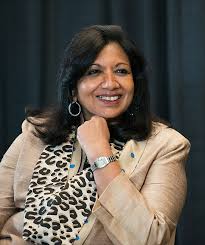
Kiran Mazumdar-shaw
Executive Chairperson, Biocon

Newsmaker | Biocon's Succession Plans | Claire Mazumdar Is A Worthy Successor: Kiran Mazumdar Shaw

🎥 May 08, 2026 📺 CNBC-TV18 ⏱ 21m 👁 229 views
Biocon Chairperson Kiran Mazumdar Shaw discusses the company's Q4 performance and the landmark decision to name her niece, Claire Mazumdar, as her successor. Learn about the phased transition plan and the future of India's iconic pharma giant. #BusinessNewsLive #MarketNews #CNBC #cnbctv18 #biocon #clairemazumdar #kiranmazumdarshaw #pharma #biotech #businessnews #stockmarket #leadership #corporate #india #economy #healthcare #stocks #marketnews #n18g #newsmaker 🔴CNBC TV18 LIVE TV: https://youtube.com/live/P857H4ej-MQ SUBSCRIBE to our Channel: https://bit.ly/3nvEcxf ---------------------------...
Watch on YouTube

About Kiran Mazumdar-shaw

Kiran Mazumdar-Shaw, Executive Chairperson of Biocon, has been discussing the company’s growth strategy and the broader challenges facing women entrepreneurs and the Indian biotech sector. In a July 2026 interview with NDTV Profit, she stated that Biocon expects to double its business over the next five fiscals and aims to become a $20 billion company by market capitalization. She attributed this potential growth to the company’s differentiated portfolio of biosimilars, insulins, and GLP-1s, as well as its end-to-end manufacturing capabilities. In a separate conversation at the Future Female Forward event, Mazumdar-Shaw said that 50% of Biocon’s research employees are women. She also commented that women entrepreneurs face greater difficulty than men in raising capital, saying that "banks and financial institutions and venture funds are very reluctant to really invest in women." Mazumdar-Shaw has also spoken about the need for regulatory reforms in India to foster innovation. At the India Global Forum in London in June 2026, she said that "the world doesn't wait for us" and called for "very rapid regulatory reforms" to help India compete globally. She noted that India is often perceived as a generics-focused country and argued that the country needs to emulate the US ecosystem to retain intellectual property and grow company value. In a BBC StoryWorks documentary on cancer care, she stated that Biocon’s mission is to make life-saving medicines accessible through biosimilars, which she described as having the power to bridge the gap between access and affordability for patients worldwide.

Source: AI-verified profile updated from Kiran Mazumdar-shaw's recent appearances. Browse all interviews →

Transcript (36 segments)
E
Ekta Batra0:02
Hello and welcome to a special broadcast. I'm Ekta Batra. Biocon is in focus today. The company reported its Q4 numbers, but it has been dominating headlines over the past few days for a very different reason. Chairperson Kiran Mazumdar-Shaw has named her successor and it will be her niece Claire Mazumdar. I spoke with Ms. Shaw about this landmark decision for one of India's most iconic pharma companies and began by asking her on her choice. Listen in to what she had to say.
K
Kiran Mazumdar-Shaw0:33
Ekta, as you know, I've always been asked about what my succession plan was for many, many years because obviously, having been a very strong founder and having built the business over four decades, I think people wanted to know how am I going to deal with succession? And this is a question that's been sort of asked to me several times. And whilst in my mind I'd always planned to groom Claire to take over from me, I think the time has come now to say that I have decided that she is the worthy successor because of how Claire has earned her stripes. I think Claire was given the opportunity to build Biocara Therapeutics for Biocon and she's done an outstanding job. I think she basically proved to me that she is a very, very strong entrepreneur herself because she was able to raise capital for Biocara under very challenging circumstances. In fact, when she took the reins of Biocara as CEO, that was kind of the most difficult time for biotech companies to raise capital in the US. And at that time she managed to raise a pretty significant amount of capital. She even managed to go on to raise an even bigger round in Series B and finally took it public on Nasdaq in 2024, where she basically listed on the first day as a billion-dollar company. She continues to drive that particular business, which is really based on a clinical asset which is advancing very well in the clinic. And she managed to get a breakthrough designation for that program for the ficlatuzumab molecule, which is a bispecific antibody that we had developed in India, but which she basically took into the clinic in Boston. And I think she's done a great job of creating value, of taking risk, of understanding the market dynamics, and dealing with clinical development in a very strategic way. And I think the way she's designed the clinical program, the way she has developed the product, I think is very, very impressive. And I watched her grow as an entrepreneur, and she's been recognized and called out as a young outstanding entrepreneur. Even EY recognized her as the entrepreneur of the year in the Boston region, and things like that. So, I think she's proved to me that she can take over from me in five years for sure.
E
Ekta Batra3:35
Okay. Well, credentials definitely speak for themselves, Ms. Shaw. But you mentioned five years. Just give us a timeline on what we are expected to see in the next five years as you undertake this transition. And is it going to be a definitive five years, or could it go to maybe seven years or extend beyond that?
K
Kiran Mazumdar-Shaw3:57
So right now the way I view it is Claire is actually leading a very important phase of Biocon. So she needs time to basically transition from Biocon over a few years. It cannot happen immediately even for her. And as far as I am concerned, I'm right here at an inflection point where I need to be here for the next few years just to make sure that the transition in whether it's Biocon, the integrated Biocon, or whether it's Syngene, I have to make sure that I work very closely with the CEO and the management to ensure that we drive the kind of growth trajectory that we believe is possible. But during this time, I also expect Claire to start playing a role at least first at the board level, working with me closely, understanding the business. She's already on some of our subsidiary boards. And she understands the biologics business. But I think she also has to come on board to understand how group Biocon works. So I think she's smart enough to pick it up in a few years and that's why I gave a time horizon of five years. Now, you asked whether it could be five years or six years or seven years. Let's see. I'm hoping that it can happen in five years, but if it needs to be extended by a year or two, I'm sure we'll take a call then.
E
Ekta Batra5:34
Okay, absolutely. Dr. Thomas Roberts, I understand that's her husband, has been appointed as a non-executive director in this board meeting that took place. What is the thought process behind it? Is that in any way connected to the succession?
K
Kiran Mazumdar-Shaw5:49
No, Tom Roberts was already on the board of Biocon Biologics. He is a very accomplished and well-recognized oncologist at Mass General Hospital. He is also an MBA from Stanford and of course a doctor who's graduated from Stanford Medical. And that's how they met and therefore he understands the business of healthcare very well. He is a very, very strong contributor to a lot of the strategic thinking that goes on at Biocon Biologics. So, I think he has already been playing a role and he's being brought on to the Biocon board because of the kind of valuable insights and inputs he provides into the strategic intent of Biocon.
E
Ekta Batra6:40
All right. Well, I'm also going to quiz you about Eric Mazumdar who's your nephew and he's also a non-executive director on the company. And he's a professor in the US plus he's expected to have expertise in AI. What kind of role would he play in say the next five years and beyond?
K
Kiran Mazumdar-Shaw7:02
So, Eric is a very smart young man. As I mentioned, he's a rising star in AI. And given the kind of digital AI that's overtaking every industry and where we need to understand how we are using AI, how we are deploying AI and how do we make ourselves more competitive using AI. Eric has been helping us think through our strategies. He's working very closely with my colleagues at Biocon. In fact, he's heading now the science and technology task force in the company, in the group as a matter of fact. And my sister-in-law, who is also on the board of Syngene, is also a computer science expert because she's a professor of computer science focused largely on all these new emerging technologies. And I think the kind of task force they've set up across the group is going to be very, very important in the way Biocon group differentiates itself in terms of being AI-led. So, I find Eric is going to play an increasingly important role in getting the Biocon group to being ahead of the curve when it comes to deploying AI.
E
Ekta Batra8:24
Okay. So, how should we think about this, ma'am, going forward? Say five years hence, is Claire, Eric, as well as Dr. Thomas going to be the top team at Biocon taking over the company?
K
Kiran Mazumdar-Shaw8:38
See, I made it very clear there is a board role to play and there is a management role to play. I have made it very clear that family will remain at the board level because I'm relying on professional management to drive the operations of the company on a day-to-day basis and manage the company on a day-to-day basis. Board is there really to make sure that we have a strategic review of the business, we provide strategic inputs to management, and it's for management to execute and deliver. So, that's the way I've actually set up the Biocon structure where family will basically play a board role.
E
Ekta Batra9:25
Correct. But, these three family members, we should understand, should probably be the most important people to consider at the board level going forward.
K
Kiran Mazumdar-Shaw9:34
Absolutely.
E
Ekta Batra9:37
All right. What role do you then envisage for Claire who will probably take the lead on this one? Would it be a more overarching visionary role or do you expect her to get more granular?
K
Kiran Mazumdar-Shaw9:49
So if she takes over my role, obviously it's a visionary strategic role where she needs to work with management to make sure she understands the business effectiveness and make sure that she basically works with them to drive growth. But she's not going to basically have an operating role.
E
Ekta Batra10:12
Okay, correct. What does this mean for Biocon's longer term plans as well as Syngene's longer term plan? Say in the next five years you have a great suitor who comes along and gives you an offer you might not be able to resist. Is that something that you would consider Ms. Shaw?
K
Kiran Mazumdar-Shaw10:28
Look, many offers have been made to me personally for both companies and many would have considered them as offers too good to refuse but I have refused them because to me these are businesses that need to be built as long-term global businesses which are hugely profitable and sustainable. That's the legacy I want to leave now in the hands of my successors. That's a different matter for them to address. But I think they will continue to build these businesses.
E
Ekta Batra11:04
Okay, all right Ms. Shaw. We're going to leave it on that note but it's been a pleasure. Thank you very much for talking to CNBC-TV18 especially about something such as your succession plans which I think the street has been looking forward to hearing on for a long time. Thanks very much.

K
Kiran Mazumdar-Shaw11:18
Thank you.
E
Ekta Batra11:21
Time for a short break but don't go anywhere. Special interview with Biocon MD and CEO Shireen Tambe once we're back.
Welcome back. You're watching Newsmaker. Now, let's turn to Biocon's quarterly scorecard. The company reported its Q4 FY26 numbers. Revenue came in broadly in line with estimates, while margins improved sequentially. Biosimilars grew 12% on a year-on-year basis, driven by the advanced markets. We did speak to Srihas Tambe for his read on the numbers. Listen in.
S
Srihas Tambe12:00
This quarter, just like we said in the past, again has been a tremendous quarter, good successful growth that we've seen on the back of our biosimilars business, particularly in the US. You rightly pointed to the oncology business, which continues to be strong for us. We've seen good traction play out in the Pegfilgrastim product, which we've called and branded as Fulphila, as well as trastuzumab, which is our Rituxan biosimilar product. That continues to be strong. And now, this particular quarter, we're also starting to see our biosimilar ustekinumab, which is the Stelara biosimilar, starting to show in the numbers. So, that's really what's underpinning this growth.
E
Ekta Batra12:52
Okay. Tell us about the price erosion in the biosimilar segment. There are some analysts who say that it's quite steep at any, you know, as much as 70 to 80%.
S
Srihas Tambe13:04
Yeah, I think you can... So, there are two things the way to understand this market is that there is a list price, and then there is a price which you actually do business. Now, from whatever is a list price, which the US market calls as WAC, you will have a certain discount that you would list the product to. And then all costs would be associated and linked to that number. You see that and that's visible to everyone and you track. But the actual price at which business happens is what reflects in your numbers. And what you've seen us do specifically is that we've always focused on margins. So, which is why you've seen our EBITDA margins at that 24, 25. Last quarter it was at 28. We are currently at 26. And it's at 26 this quarter. So, we've been very margin focused. So, erosion is on the list price, which is what you see. It's an artifact of competition. So, I would say that that's what it is. But businesses which focus on margins and profitable growth are the ones which... and I think that's what we focused on.
E
Ekta Batra14:15
Okay. But considering price pressure, would you consider exiting any unprofitable biosimilars?
S
Srihas Tambe14:23
We've never gotten into a space where we do business when it's not profitable. I think that's just... when you're looking at business, it has to be profitable and you can take a wider window if you want to. But it has to be profitable. Like it cannot be that you're doing business where you're not generating margins. Then it doesn't make sense.
E
Ekta Batra14:46
All right. How is the company's GLP-1 portfolio shaping up? You do have a tie-up with Ajanta Pharma for semaglutide in 26 countries. Tell us about the launches and the kind of traction that you might be seeing in a couple of these geographies. And what is your plan for key markets such as Canada?
S
Srihas Tambe15:04
Yeah, I think the first piece which again I've kind of got to say that I sound like a stuck record is we've seen the peptides business and the insulin business very differently than what most people have been talking about. We've not seen this as a sprint. This is a marathon in our view. This is something that we understand because of our insulin's presence. This is not about whether you are first out the gate. It's important that you can do this for a very, very long time because these are chronic therapies and you need to be with the patient for a long time. So, that's the first thing that I want to put out there. Two is we have a very differentiated play because the insulin... just take it in terms of the products we make on the insulin side, the drug substance API, similar technology on fermentation if we want to, the drug product, the devices, again, very similar platforms. And now with the merger that we've done, we've operating leverage. We've got the same commercial front end capability and relationships. So, it allows us a lot of capability, operating leverage in several markets. You talked about partners that we've got. That's another channel available to us, but we're now present in several countries where we can be with the customer directly. And that adds to the revenue and to the profitability. Just to give you a sense of that. Sure. Then you asked us about the specific markets like Canada and other markets that we are. We're working with regulators globally. It's not just Canada, but say Brazil or Saudi Arabia, Turkey, wherever markets open up before the end of the decade and then we'll continue to do several filings as we get over them.
E
Ekta Batra16:47
All right. Section 232 most favored nation pricing. There's a lot of noise in the US around that. Given all of these risks, might I call them, what are you guiding for the generics business along with say pricing pressure?
S
Srihas Tambe17:05
I think the intent of that is to see that the American patients, citizens are not at a disadvantage. I think that's really what's guiding that approach. And if you really look at it, generics or the biosimilars industry as such is not the challenge here. They are actually a part of the solution there. So, I don't see 232 affecting any part of business adversely at all. In fact, there's a lot of favorability in terms of how the outcomes of this will play out, and you see right from the beginning of the conversation, whether it was the tariffs or the reviews, generics and biosimilars have been excluded and been viewed favorably by the administration given its strategic importance to the economy.
E
Ekta Batra17:53
Okay. What is the status between Biocon Biologics and Biocon the big merger? And what are the operation synergies? When can we see them? What are you guiding for consolidated margins in FY27?
S
Srihas Tambe18:08
Yeah, I know you'll always push me for specific numbers of the margins, but I've always stayed away from specific numerical guidance. Let me just first say that you've already seen two, three things happen in the current quarter once we've started to merge. You've seen the strengthening of the balance sheet right away. Okay, that's happened. You're going to see a 300 crore improvement from an interest line that you see the P&L after the EBITDA because you've already retired all the structured debt. So, that 75 plus crores a quarter that you'll start seeing an improvement. So, that's going to play out. On the EBITDA margin where you asked, the operating leverage is kicking in because you will see that we just talked about how we will commercialize peptides. You're not going to need a new sales force. You're not going to need a new front end to commercialize all the products that are coming in. So, the merger will provide this. As we get through fiscal '27, you'll be able to give you a little more guidance on what are the synergies that we are seeing, which will play into the P&L. We already have visibility to it. We've got a three-phase approach: preserve, which is what we've done, preserving value in the margin. Two is consolidate, which will play out in fiscal '27, the four quarters. And that will set us up for acceleration post fiscal '27. So, through '27, we'll be able to give you more color on the actual P&L benefit that will accrue as we start seeing it in the other numbers.
E
Ekta Batra19:41
All right. Quickly, Mr. Tambe, leave us with, you know, what the consolidated debt on books as of now is and what is the deleveraging plan? I know interest costs are expected to reduce in FY '27. So, just lay it out for us. What are we seeing in terms of further deleveraging and how will that come about?
S
Srihas Tambe20:01
Yeah, I think first up, you know, just for the benefit of our viewers, we were at a debt to EBITDA ratio of 4.3 when we did the acquisition. I think since then, and including the most recent measures that we've taken on the fund raise that we did over the course of last fiscal and the early part of this calendar year, I think we've been in a position where it's sub three. Which is closer to 2.6, 2.7, which is a very, very healthy position. We do not have any meaningful payouts that we need to do. Of course, there will be the bond that we will start looking to start paying on that servicing on that, but otherwise, we don't see any major debts that we will need to write down at this point in time. So, we are in a very comfortable position. And the bonds are trading at a premium, which means the debt market's also very, very comfortable with our position. The rating agencies have upgraded us in terms of our credit rating. So, I would say that we are in a good place. As the business ramps up, as you see organic growth in the EBITDA, you will be in a much more comfortable position. We've guided in the past that we don't like it to be above two, and that's something as the business organically moves up, you're going to start seeing it go below two as well.
E
Ekta Batra21:22
Okay, all right. Mr. Tambe, we're going to let you go on that note. Always a pleasure. Thank you very much for joining in and speaking with CNBC-TV18.
S
Srihas Tambe21:29
Thank you so much.
E
Ekta Batra21:32
And with that, it's a wrap on Newsmaker. Thanks very much for watching.