Back
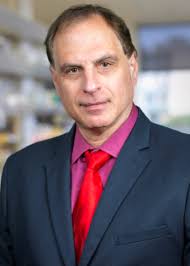
Mark Shapiro
Chief Operating Officer, President & Director, TKO Group Holdings

The $5 Billion Gamble: Mark Shapiro on merging WWE and UFC

🎥 Apr 17, 2026 📺 Yahoo Finance ⏱ 36m 👁 1078 views
#wwe #ufc #tko #sportsbusiness TKO President and COO Mark Shapiro has helped oversee one of the biggest transformations in sports and entertainment. In this episode of Power Players, Yahoo Finance Executive Editor Brian Sozzi sits down with Shapiro to talk about the explosive growth of WWE, UFC, PBR, live events, sports media rights, and the future of fan experiences. #wrestling #mma #business #espn #leadership Chapters 00:00 Mark Shapiro’s career journey begins 02:44 Working with Bob Costas and ESPN 06:19 How to build a career in media today 13:32 Where great business ideas come from 18:2...
Watch on YouTube

About Mark Shapiro

Mark Shapiro, President and COO of TKO, participated in two public events in mid-2026. At a Wall Street Journal Sports event on July 16, Shapiro discussed TKO's role in live entertainment. He described attending the New York Knicks' 29-point comeback in Game 4 of the NBA playoffs as a memorable live sports experience. Shapiro stated that TKO's event at the White House for the nation's 250th birthday was a "one and done," calling it a "smash" but adding that the company would not repeat it because it was expensive and they were "first mover." He also said that increased discretionary time from AI would strengthen demand for live events, asserting that "sports is at the epicenter" of physical aggregation. At a Meridian International Center event on June 18 focused on sports diplomacy, Shapiro said that sports and entertainment provide a "shared cultural language" that allows people to "get away" and "connect." He described TKO's strategy of using AI and social chatter to identify local interest before bringing events to a city, adding that the goal is to "drive economic impact" for hotels, arenas, and restaurants. Shapiro stated that TKO's approach is not about politics, but about business opportunities. He also noted that sports benefit from simplicity, using the example of mixed martial arts where "one is going to get knocked out or submit and the other is not."

Source: AI-verified profile updated from Mark Shapiro's recent appearances. Browse all interviews →

Transcript (56 segments)
B
Brian Sozzi0:04
Welcome to a new episode of Power Players with Brian Sozzi. I'm Yahoo Finance executive editor Brian Sozzi and if you're watching this, you might be wondering why is Brian coming to me from a very noisy conference center in DC. I'm coming to you from Symbol 4's World Economic Conference in DC and I'm doing this episode because my next guest is very special. He is just superhuman. He's very busy and once you get a date on the calendar with him, if you cancel that date, you may never get another one ever again. So you have to strike while the iron is hot. That is TKO Group president and CEO Mark Shapiro. Mark, good to see you, man. Thank you for doing this.
M
Mark Shapiro0:40
Great to be with you, Brian. Great to be with you always. Yeah, I appreciate it.
B
Brian Sozzi0:44
So last time I saw you, I was going into a WWE event. It was Madison Square Garden. I'm sitting behind Andrew Schulz, the comedian. All of a sudden Logan Paul comes out and rips him out of the crowd. Mark, I'm like, 'Holy, did this just happen?' I mean, this is crazy. Crazy. I thought they were going to pull you. That's where I thought they were going.
M
Mark Shapiro1:05
They should have. We'll take that offline because I am down for that, Mark.
B
Brian Sozzi1:08
Well, nonetheless, good to see you back for hopping on this podcast.
M
Mark Shapiro1:12
I got a bad line to Triple H and you'll be on in 2 seconds.
B
Brian Sozzi1:17
Hey, look, you want to pull me out from a crowd and beat the hell out of me on WWE like live, Raw, SmackDown? I'm in. I'm in. That's like childhood dream stuff. Just don't squash me. You know, I got to have the face. You know, the face, the TV thing. Which you get as a long-time media executive, my friend. For those not familiar with your career, everything that you have done, where did you start? Because I imagine you do not get to what you are doing at TKO Group without like starting somewhere and starting somewhere cool.
M
Mark Shapiro1:48
Yeah. I'll tell you I started as an intern with NBC Sports back in 1989. Actually doing a lot of events for Bob Costas. So, and Costas is still going strong as you know all too well. I was an intern over a summer. I worked on a lot of live events. I kind of got my chops. I sold New York Times newspapers over the phone at night to make money because in those days, Brian, they didn't pay you to be an intern. It was just college credit or nothing. And then ultimately I got a job as sort of a gofer at ESPN when they were launching ESPN2 in 1993 and worked my way up from there.
B
Brian Sozzi2:31
Bob Costas. Like how do you go from doing that? Like what's the career arc from spending that time in those early days with Bob to, you know, launching and developing new shows on ESPN?
M
Mark Shapiro2:45
Yeah, you know, it was a pedigree. It was a foundation of storytelling. And there's no better storyteller than Costas and still one of the best interviewers today. News, sports, politics, you name it. And one of the most researched men you're ever going to see and meet. So, you really get those chops, right? You get those learnings. You get the right skills, the right habits, research, homework, like you do, pound the pavement, make relationships. And ultimately when you got in ESPN, what is it really? It's storytelling. It's journalism, right? They're breaking news and they're covering the news, but it's a lot of live events. It's a lot of studio, a lot of insight, a lot of reporting. And it really became the place of record. And I think working with him, who's such a journalist, but he's also a commentator, and he covers so many different cultural events, was really the best training I possibly could have had.
B
Brian Sozzi3:40
Did you go to school? Did I hear that right? Broadcast journalism?
M
Mark Shapiro3:44
Yes, I did. I majored in communications, broadcast journalism. I had a minor in political science at the University of Iowa, but I went to college knowing that I wanted to be in sports broadcasting, sports journalism, right? So, I researched out what are the best schools, the best programs, the best curriculums, the best facilities. Iowa has the number one creative writing school in the country, and I'm from Chicago, so it was a Big Ten school, but not too far from home. And you know, I set the table there, and then while that was incredible training and again another good pedigree for what I would do, at the end of the day as you know, it's about experience, right? It's about getting out there, who you're meeting, different internships, really putting yourself ahead by having first real hands-on experiences that can't be taught in a classroom.
B
Brian Sozzi4:38
What was it like, you know, who did you idolize broadcast journalism-wise growing up and why?
M
Mark Shapiro4:59
You know, I went to bed on Monday nights with a transistor radio underneath my pillow while listening to Monday Night Football.
B
Brian Sozzi5:07
Yeah, me too.
M
Mark Shapiro5:08
Yeah. Even in junior high, somehow in my house there was a bedtime. And it was no more television, and your homework better be done. It was pretty strict, good discipline, good values from my parents. And you're in bed, but you got your hands wrapped on the radio, right? You didn't... And there were no highlights to get the next morning. There were no social clips. There were no... you're waking up to scores. You know, it was the newspaper, but you wanted to be in the moment, and that's just such a good byline, a good tagline on what sports is, right? These are in-person experiences that you want in real time. And they really resonate, and you remember them, and you don't want to get them kind of after the fact. And I think that sets us up pretty well at TKO now because we have WWE, we have UFC, we have PBR, we have IMG, which of course distributes all kinds of sports properties around the world. And of course we have On Location, which is the leader in premium experiential hospitality. And sports stands out in this AI world. It's very much AI proof because you want to be in it. And of course all the youth of today suffers from FOMO. So they want to be able to show people that they were in it.
B
Brian Sozzi6:20
Mark, I still remember when I got my first beeper in high school and I had the sports scores scrolling across the side next to 143, I love you from my girlfriend at the time. I mean, that was awesome. That was those were the days and I want to get into... I called an 800 number. 9761313 was the number, which charged 95 cents to my dad's phone bill to get NBA scores at night. Is that crazy?
M
Mark Shapiro6:44
Oh, that is crazy. Oh my god. The kids today, they can't even appreciate that. But you know what? I don't think they could appreciate too. Like so you arrived in the ESPN young executive, you got all these amazing ideas. Oh but yeah, but then you look up, there's like 75,000 layers of management above you. Like how did you make it through all of those layers to launch your new ideas?
B
Brian Sozzi7:06
You know, first of all, great question because that's... it feels like especially at that age that it's impossible. And it also feels like as you're ascending everyone's rooting against you, right? Because now all of a sudden everybody that hired you is reporting to you. And they're just kind of waiting for you to fail to say, 'See.' So you have to make sure, you know, your approach is layered with humility. Right? That you don't know everything, not even close. But you know enough to know you're only as good as the people around you. So, you have to listen, and you have to be curious, and you have to care about what other people think, and what they say, and their ideas, and have an open door, and collaborate, and push creativity across the board. And when we win, we all win. It's not one individual. So, look, when I took over programming at ESPN at 32 years old, and kind of I felt like every guy's dream coming out of college was to work for ESPN. And now I'm running the show from a content perspective, you know, it was a humbling experience, but I really approached it in just that way. That I'm going to spend 90 days just listening, figure out what's wrong, what's not going right, what we can improve and do better, because I'm in this job because a lot isn't working. So, let's find out what it is, and then, once you're informed, you combine that with your instinct and your gut, and you start making decisions that hopefully put you on a path to success, profitability, and a better culture.
Mark, you're a high-energy guy. You're a good-looking dude. You know the industry. How did you know that, you know what? I don't... I'm going to put those ambitions to be a Bob Costas or a broadcast journalist and put it to the side, and I'm going to go climb the C-suite. Like, was there one defining moment that made you say, you know what? All right, I'm going to go down that path.
M
Mark Shapiro9:07
It's funny you say that, because that is the real truth. Not everybody can be like you. Have the looks, have the presence, and really have the whole cadence, the package to be on air like you are. They say that every producer, truthfully, deep down is suffering from the fact that they wanted to be on air, and they couldn't make it. So, I was in high school, frankly, and we had our own TV studio. I mean, back then, we're talking in the '80s. That's like unheard of. And we programmed the local cable channel, which most communities it was just color bars when you turned to that channel. We programmed it and produced all the football games, the basketball games, and I was the play-by-play, and I also hosted a lot of the interview programs. So, in those days, I wanted to be the next Bob Costas. What happened was the internship at NBC went well. That moved me into live events. All of a sudden, I'm working on the Barcelona Olympics. I'm going to Wimbledon. My career started really climbing at a rapid pace. And when I came out of college, I realized, 'Wait, I'm so ahead here. I can keep going and probably be a producer in a couple of years, or I can turn back and try and go on air, but you're going to have to start your career in a really small town like the 200th market, you know, making bubkes.' And do I really want to give this up? So, I kind of buried the on-air aspiration and moved towards the production, the producing, the programming, which ultimately turned into management.
B
Brian Sozzi10:39
I want to jump around a little bit, so bear with me here. How could one go about today being a Mark Shapiro? Like you mentioned like newspapers and listening to transistor radios. Like me, I spent 10 years as a stock analyst writing by hand equity research reports on like Walmart, Target, and other retailers. Like these career paths have changed. Like how do you adapt or just adopt or take what we did and fit it to today's environment and still get jobs like this?
M
Mark Shapiro11:14
Look, for me, it starts with homework and hard work. I mean, that's what you were doing. Yeah, you took everything available to you to make those notes and be able to give the kind of counseling guidance that your clients needed or expected. Whatever the job is, today's environment, you've got to jump in with both hands and both feet. You got to be willing to get sweaty. You've got to be willing to put your blood and tears into it. There's no substitute for hard work. Yes, we have more mechanisms and devices and tools and resources to make our jobs more efficient, to get answers on the fly, but at the end of the day, it doesn't take away from the fact, it only supports the fact and the theory that you just have to sell out. You have to be all in. And I think today a lot of kids, it's a generalization, but they're coming out of school and things are a little easy and COVID slowed some things down and the 5-day work week or 7-day work week like we had, you know, isn't what it once was. But to me, that's opportunity. If you go sell out and you come into the office and you do the work and you do more than expected, right? If you get the assignment and go above and beyond and you're there and in person and available and responsive, you know, there's no telling where you can go. And AI might make it easier for you. So, learn AI, right? Learn what tools are out there. Be adaptive. Be curious at the end of the day. And at the same time, just really invite and embrace new technology because you have to be in touch, Brian. Like I'm in touch. I do a lot of reading, you know, I watch a lot of shows, I pay attention to the news, right? I'm up early to do that. I'm on the treadmill reading. Like I have to be up to speed if I'm going to do an interview with you. If I'm going to go about my day. If I'm going to have a lot of meetings with external parties. And that's really important to stay in touch of what's hot, what's trending. Otherwise, it's tough to really be innovative if you're not up to speed on all that.
B
Brian Sozzi13:35
You know, that's a good point. And also, you know, inherent in this industry, there's so many... I feel ridiculous even mentioning this to you. Like there's so many big egos. I don't know. Like egos everywhere you look, there's egos. Egos behind that door, ego behind that door. How have you managed these egos? And like what's the secret to managing their expectations, managing their egos? You know, I would argue just the fact you have your resume and your pedigree, that keeps things initially in check.
M
Mark Shapiro14:05
Yeah, I mean, obviously now because I'm older, you know, it's different. But, you know, as you're climbing up the way, I can't tell you enough, like I'm just a... And this isn't like a political speech or position. I'm just a big believer in building great teams. You can't know everything. You can't be an expert on everything. You can't get to everything. The art of delegation is part of my recipe of success. In order to delegate, you have to have people that you trust to get the job done, right? That maybe are smarter than you are, right? Paying attention or in touch or out in front of trends more than you are, maybe better risk-takers more than you are, more innovative, more creative, more nuanced and experienced, different walks of life, diversity so important these days. And I can tell you that I have an art of building and surrounding myself with incredible people. And by the way, if they're not performing, they're out the door. Not like that. You put them on a path to recovery and hopefully rehab them and they're delivering what you need. But if they're not doing it, you're not doing them any favors to carry them. So, I'm a big believer in churning out my team to make sure I'm surrounded by the best and the brightest and not be threatened by that. Very important.
B
Brian Sozzi15:31
To that end, media thrives on new ideas, a new show, one new newsletter, new new new, new everything. For you, where have these new ideas come from over the years? Like what's the genesis or the origin story of a new idea?
M
Mark Shapiro15:50
You have to make the time, which is easier said than done. Two-fold here. You have to make the time to have time in your life to just think. I don't care if you're walking the dog or you're on vacation, if you can get one, you know, it's a Saturday morning, you're up earlier than anybody else. So really just get out there and have free mind to think about what could we be doing that we're not? What should we be doing that we're not? Where are we behind when most people would expect us to be out in front? So it's an individual thing. I found some of my best ideas are on a plane, right? Or, you know, at a time when the rest of the world is shut down like an Easter Sunday and I just got time in between family to think. I think that's really really important and I say easier said than done because it's a hamster wheel, right? Like we're on it all the time. The calls keep coming, the emails keep coming, the texts keep coming. Not to mention your family and your personal life that you're trying to balance. I think the other part of it is to make time to listen to others. I have a kind of a rule, we have 8,000 employees between WME Group and TKO. Anybody who wants a cup of coffee, you get it. You just send my office an email and we'll schedule you for 15 minutes. It may not be for a month because I'm on the road or I'm too busy or I'm traveling, but we will squeeze you in.
B
Brian Sozzi17:14
I mean, it's taken me months to get this interview. So like I get it, man. I get it. I get it.

M
Mark Shapiro17:17
You're just kidding everybody. That's not true. It was an immediate priority.
B
Brian Sozzi17:21
So, as we're going to tell you, they... And then they come in, you get to know them, and then you solicit ideas, and that then leads to follow-up with more ideas because some of the best ideas, right, come from the people around you who are thinking about what can I create to not just better our company, but so I can move up the ladder. So, you have to take the time to really have that ear, spend the time to reserve moments to listen to others, encourage their ideas, and then when you get good ones, activate on those ideas, and then reward those individuals that come up with the ideas so that you can encourage repeat behavior. I want to get into the business of TKO a little bit, and while my heart wants to start on WWE, I don't watch... this is... I don't know, maybe I came out of the womb UFC. I want to start with PBR. I went to my first event Madison Square Garden late last year or earlier this year. I was blown away. I was blown away by what I was seeing in the ring. Is that a ring? I guess it's a ring. Hats off to all the bulls and all the riders. I mean, it was awesome. But, it's a production value. It was in the dirt. Thank you. It was just an amazing show. Like, how fast is that growing?
M
Mark Shapiro18:37
Is that crazy? I mean, it really is. The fact that PBR sells out at Madison Square Garden every single year for multiple nights, and for some it's a curiosity, it's a novelty, but you know what? For some it's western lifestyle, they live it, they breathe it, they believe in it, right? They're turned on by it, and some is just a family event. And we're all looking for those communal opportunities to have these shared experiences. I think PBR has benefits from having two stars. The star is the rider, right? Who's trying to stay on that bull and not get hurt. God forbid. And the other side is the bull itself, who are their own names and characters and have their own followings. So, look, it's over the course of a couple of hours, it's easy to understand, and it's something for you to cheer for. And now we have a team series, so we have all these fans getting behind different cities. So, it's become very provincial, like their city team. It's really catching on. It's across the country. It's year-round. It's now airing on Paramount Plus and CBS. So, we're really excited about the growth opportunity there.
B
Brian Sozzi19:47
Well, I get it. It was my first time there. I'm sitting there. I'm enjoying a light beer, you know, it was my treat for the week. All of a sudden they threw something out, and it was like a gift card for Western boots. I made a little note. I'm like, 'I got to ask Mark about this.' I mean, everything was so well thought out. But, how do you grow a property like that over the next 5 years? Like, what's in that vision board?
M
Mark Shapiro20:13
Well, I think that's really the magic, you know, of TKO and what we do with live events. Right? Is we've taken a property like PBR or new property like the last few years with WWE coming into the fold, and we put you into our machine. Right? It's media rights. It's financial incentive packages, where different cities and provincialities are paying to bring our show to town because of the economic impact it brings to that region. Right? It's global partnerships. It's brands that want to get out in front of new consumers, right? That want to be relevant and are chasing with a lot of our properties, especially young men, which is the hardest to reach. It's consumer products and licensing, right? It's taking WWE superstars and UFC fighters and PBR bulls and making them storylines, making them personalities that you want to not just follow but buy a t-shirt or a tchotchke when you're with your family or your friends at the event.
B
Brian Sozzi21:19
I bought a bull. Mark, I bought a bull. Totally unprompted I bought a bull on the way out. Like it's a pink bull. It's in my room. Full disclosure. Like it was awesome.
M
Mark Shapiro21:27
Exactly. And that's part of the machine. We've got a history of doing it. We've got a huge track record. I mean, take just one thing for example, Brian, we've got $15 billion in the aggregate of all of our properties in terms of media rights deals wrapped up for the next 5 to 7 years. So, PBR, CBS and Paramount Plus, WWE's Netflix and ESPN. Obviously, much hay has been made about our UFC deal, 7 years, almost $8 billion with Paramount Plus and CBS and so on and so forth, right? We launched Zuffa boxing. So, you come into our machine and our consumers, our partners, our fans know that we are one-stop shopping for premier high-quality sports and entertainment.
B
Brian Sozzi22:21
I do want to get to WWE. Like I mentioned, Mark, like so many my age grew up watching WWE. I've had the great opportunity to interview Stephanie McMahon. I think it was twice. Yeah, I always enjoyed talking to her. So, I get the property. I get it all. Like it's great. Like I am still the WWE fan. Now, I'm taping this a couple days before WrestleMania, which I plan to watch. Now, there's been some talk about how ticket prices are high for this year's WrestleMania. What say you about all this?
M
Mark Shapiro22:50
The WWE, UFC, PBR, you know, in today's economic climate and obviously a lot going on from a geopolitical perspective and a lot going on at home here from an affordability perspective, we're still seeing massive uptick, maybe even more so of families and fans that want to come out and escape the day-to-day. And they're doing it through the lens of our sports and entertainment properties. So, we're seeing strong growth on our ticket yields, we're seeing sellouts across the board on our UFC numbered events and our Raw, SmackDown, NXT, and of course our premium live events at WWE. And PBR is having its best year in the last 5 years. So, that should tell you something in terms of demand, anticipation, and following and should bode well for years of long-term sustained growth. I would tell you that Vegas is 2 years in a row for WrestleMania 42. So, some of the challenges we had there is usually we move WrestleMania year after year to a new spot and that allows us to obviously grow and see the kind of economic impact we would expect. Maybe it's a mistake I made because Vegas was so huge last year and such a winner for our fans and the product that I said to Nick Khan, who runs the WWE, we got to go back to Vegas next year. Like we have to move New Orleans down the road and we got to come back to Vegas. But I mean Las Vegas, I don't need to tell you, is the mecca for great events. More and more events are moving there. Music has residencies and more and more sports teams, as evidenced by the NHL and soon-to-be Major Baseball, are popping up there with teams to come. Obviously, the Raiders are a massive success in Las Vegas. So, absolutely no regrets on going back there, but the only reason you're hearing some of, hey, it's not what it was last year, is because we're not benefiting from the first mover experience.
B
Brian Sozzi24:46
Are you keeping Mania there or it's going to go back to its like OG ways and travel all around the US?
M
Mark Shapiro24:52
It is. It's going to go back to its OG ways of a new spot every year. And in fact, in 2027 we're going far away from the US. We're going to Saudi Arabia for WrestleMania. So, that's going to be a massive massive show. They're actually doing three shows this year, Brian, in Saudi. Three other events in anticipation building up back to your question, how do you build the following? Well, have more events. So, Saudi Arabia is doing three events this year. The following is just going to get bigger, right? The avidity is just going to grow, fan avidity. And then next year you bring the ultimate show to town and that should just be a tremendous spectacle.
B
Brian Sozzi25:34
That's tremendous. I mean, it's really... I don't have to tell you this or... I mean, it's intense over there right now. So, all everything, all the fights, all the wrestling that you plan in the Middle East, I mean, this year, I mean, it's all systems go like you're not... they're still on track?
M
Mark Shapiro25:48
Yeah, you know, I'll tell you I think the market has overreacted a little bit in terms of... don't get me wrong, Middle East what's going on isn't good for anybody or any business. I want to be clear about that. More importantly, for humanity. We're not like F1. We don't have a lot of events at this time right now that would be impacted or changed or moved or altered because of what's going on over there. We have an event at the end of June. That's our next event. We had Royal Rumble in January for WWE. We've got another event at the end of June. We have another UFC fight planned in the Middle East that will be actually by the time this airs we'll have already been announced. So, all systems go, but you know, as you'd expect, we're going to monitor the situation and if we have to make a move or have a schedule change, we will do the right thing by our audience and more importantly, by global affairs.
B
Brian Sozzi26:40
What's it like having The Rock on the TKO board? The Rock follows me on X. He has for years. It's awesome.
M
Mark Shapiro26:46
Look, he's everything. He's everything and more. I mean, he really is. And also, he gets back to you like that. Not just because he's on the board. That's like who he is. I'm not sure he sleeps, right? He's an investor, he's an entrepreneur, he's an actor, he's one of the biggest stars in the history of WWE. He's an owner in the UFL. I mean, this is... He's just a magnetic personality. And he's kind of what you see is what you get. He truly cares about his audience in a very real, personal, and meaningful way. So, we're thrilled to have him on the board. He brings a lot of value every day. And more importantly, when we need him to make a phone call to get some business done, that's a nice guy ringing somebody up. I can tell you that. It makes a big difference.
B
Brian Sozzi27:37
Well, you can't tell him no at a board meeting, Mark. I mean, the alternative is he rock bottoms you. I mean, let's get real. Yes, sir, Mr. Rock, whatever you say. I mean, who wants to get rock bottomed?
M
Mark Shapiro27:45
Yeah, it's all right. We're doing well. So, the good news is all systems go. But, yeah, you got to be careful. If we take a bad turn somewhere here or there, he won't be shy to make sure I know about it. And then it will be, 'Yes, sir. Yes, sir.'
B
Brian Sozzi28:01
On UFC, before we wrap this one up. I mean, a historic deal with Paramount. You have a big fight on the White House lawn. Like, what are preparations... I've never seen a fight on the White House lawn before, Mark. What are the preparations for an event like that?
M
Mark Shapiro28:19
It's insane, Frank. Kind of careful what you wish for is all I can say, right? We've got UFC Freedom 250, as we're calling it, on June 14th, which is Flag Day, which is the president's birthday. It's going to be on the South Lawn. I mean, you know, we're tearing up all the sod to put this in. And we got to be careful we don't in any way get in the way of the bunkers that are underneath that sod. Don't forget about that. There's a reason there usually aren't events... And not to mention safety, right? Hopefully you never have to use it. But that's there. So it takes a city, a country for all the preparation and all the due diligence to do this just right. But we're working very close with the administration. They've been exceptional partners. They're really excited about this. As you know, the president is a major UFC fan. We've got a card of seven fights. And it's really the best... It's a marketing spectacle, right? I mean much has been made about the $60 million roughly that we're spending to make this event happen and the fact that we're actually going to lose some money on this. Well, we're not losing anything. What this is going to bring to the UFC from an awareness standpoint, from a sampling standpoint, from just a priority standpoint, moving us up on the ladder of mainstream sports and entertainment, the global coverage we're going to have from just all the news outlets that are going to be covering this event from a news perspective, not even sports. This is going to be a cultural impact like no other. A true spectacle, an amazing stage. We're going to take advantage of every minute and I'll tell you this, we're doing the day before a music fest at the ellipse. Tickets are free. It's a registration. You have to sign up and the first 60,000 get tickets. On the first couple of hours of putting those tickets up for registration, 56,000 people signed up in the first few hours and we only hold 60,000. So I can just tell you this folks are amped up and excited for what this is going to be and Dana White has just put together an extraordinary card.
B
Brian Sozzi30:33
I went to UFC. I think it was last year and it was the day that the president came. I was at Madison Square Garden. He came out. It was... I had never seen anything like that before to be honest with you. Like what type of... How is the president impacting the value and the business of UFC with all this attention? I mean he's such a fan, but he hasn't just been a fan like yesterday or the day before. I mean he's been a fan for years of UFC.
M
Mark Shapiro30:56
Yeah, one of the reasons Dana and the president are so close is because when a lot of folks didn't believe in the UFC, right? Or thought it was, you know, too violent, quote unquote, and couldn't get legislated, right? Couldn't get approvals to bring the show to certain states. President Trump was the first guy to say, 'Bring it to the Taj Mahal in New Jersey. Like bring it here. I'll put it on.' And he's also in the WWE Hall of Fame. Folks don't know that. So he's a massive fan of both these properties, helped Vince McMahon in many ways build and spread the word on WWE and build the fan base into what it is. And he's done the same thing with Dana. But I would tell you like he went to the Miami event back in April. And he doesn't leave the table. I mean he's sitting octagon side. Like at his age I got to go to the bathroom three times, right? Not him. He doesn't want to miss one moment. And he actually turned to Dana and said, 'Hey, why isn't Derrick Lewis, one of our fighters, heavyweight, why isn't he fighting on the main card at the White House? Like can you add that?' And we added a fight just for him. I mean like he knows the fighters, he knows the storylines, he knows the rivalries. Like he's not there just for show and tell. He's a true fan. And I think we've really benefited because of the attention he has brought to the UFC.
B
Brian Sozzi32:19
Well, I mean, yeah, no, absolutely. I totally... to name drop, I traveled in with the press corps on Air Force One with him to the US Open in Bethpage, Long Island. And to your point on him being a fan, like he was right on the course. He stayed there the whole time. I mean he's greeting all the players, and he's totally... I mean, he gets the scene. Well, before I let you go here, before I let you go here...
M
Mark Shapiro32:42
Well, he's a big sports enthusiast, to your point. I mean, he really is. When he shows up to the US Open or the College Football National Championship, it may be a pain for the fans because of security and how hard it is, how much longer it takes to get in, but he's actually coming not just for face time. He's coming because he's a fan. He loves sports, and you know, we're happy to have him there. And it's not about political views or any kind of stance or any kind of position. He's the leader of the free world, and he's, you know, one of the biggest fans of the UFC. We'll take it.
B
Brian Sozzi33:13
Last one for you. I look at your career, and I see it as a straight line up. I know we have ups and downs. I've had ups and downs, too. But what I think a lot of folks don't realize is that you led Six Flags, and I want to end the interview on this. You led Six Flags Great Adventure. I grew up going there. What did you learn from that experience? Because I have a feeling it wasn't like super amazing. Like, it wasn't bad, but it was just like maybe an interesting point in your life and your career.
M
Mark Shapiro33:41
Yeah, look, I was at ESPN, which is a division of the Walt Disney Company. And by the way, it was printing money, right? This was at a time when ESPN was worth more than the rest of the Walt Disney Company combined. And I remember I took this job to be CEO of a flailing Six Flags, like on the verge of bankruptcy. And the cable guy, back in the days of cable, came to fix something at my house and said to my wife, 'Did I read your husband's leaving ESPN for Six Flags? Like, that it's in the toilet. How could that be?' Look, I love startups, but I also like fix-its, Brian. And like you, I grew up on Six Flags Great America in Chicago. And Kingda Ka was in Jersey, it's now retired. And Bob Pittman was running the company at that time. It had gone through Marriott, it had gone through Time Warner, and it was an incredible like bigger than Disneyland closer to home. And it lost its way and took on too much debt and the experience suffered and moms turned away and frankly was unsafe for a period of time. And all of a sudden, you know, a team comes to me and says, 'Hey Mark, you got some Disney experience, you know something about theme parks.' I knew this much. But you know how to build brands, you know how to build followings and fan bases and you build great teams. Can you come and fix this? And I knew going in that a holistic reorganization was in the cards. And JP Morgan and Jamie Dimon helped me effectuate that ultimately. But first we needed a turnaround of the brand, right? We needed to clean up the parks. We needed to bring moms back. We needed to make it safe again and affordable. And we spent the better part of three years doing just that. And once we achieved that and the company was free cash flow positive for the first time in 50 years, we then put it through a holistic reorganization, got rid of the debt, and the next 10-15 years they crushed it. I left, but we gave them the pathway to be successful. So, I love that experience. I love the 32,000 employees who'd been there, a lot of lifers if you will, and they really cared, they were really passionate, and I don't need to tell you, whatever you're trying to win at, you're in a sports event, you're running for office, you're overseeing a big-time global company, if your people believe, if culture is good, if they're collaborating and communicating and creative and they feel like they're getting paid for performance and they're positive and passionate, you're unstoppable.
B
Brian Sozzi36:14
Mark, I thank you for doing this. It feels like I've kept you away from creating the next big idea at TKO. Thank you for doing this, giving me some of your time.
M
Mark Shapiro36:21
Brian, great to be with you. Thanks so much for the time. Thanks for having me on and a big fan of your series, so I'm looking forward to the next guest.
B
Brian Sozzi36:28
Thanks so much, Mark. I appreciate it. And that's it for the latest episode of Power Players with this guy, Brian Scalabrine. We'll talk to you soon.