Back
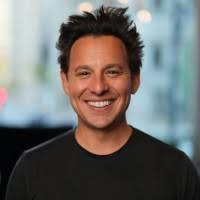
Harley Finkelstein
President, Shopify

Shopify President on How E-Commerce Is Changing in 2026 | Harley Finkelstein

🎥 May 19, 2026 📺 Sammi Tannor Cohen ⏱ 68m 👁 597 views
Harley Finkelstein believes we’re entering the most important shift in commerce since the invention of online shopping itself. As President of Shopify, Harley has helped build the infrastructure powering millions of businesses across more than 175 countries. Now, he says AI is about to fundamentally change not only how consumers discover and buy products online— but how “machine customers” might do our shopping for us. Harley explains why agentic commerce could replace traditional search, his take on the idea that every brand is becoming a media company (featuring a Favorite Daughter case st...
Watch on YouTube

About Harley Finkelstein

Harley Finkelstein, President of Shopify, appeared at the company's DotDev 2026 global partner event in July, where he discussed new POS features such as buy online, return in store. He described the feature as bringing foot traffic into stores and turning returns into exchanges, adding that it is "not just about convenience" for brands. In an April 2026 interview, Finkelstein discussed his family's history, including his father's escape from persecution in Hungary and his grandfather's work at a farmers' market in Montreal. He said that a building with his family's name is "a symbol of survival" and "perseverance." Finkelstein also spoke about anxiety, stating that he has "had anxiety my entire life" and that it does not go away. He described AI as delivering "uncapped reach and uncapped resources" for entrepreneurs and suggested that the current era may be "the golden age of entrepreneurship." He also said that entrepreneurship is "the greatest tool for freedom and for independence in the world" and that Shopify "tries to level the playing field so anyone can do it."

Source: AI-verified profile updated from Harley Finkelstein's recent appearances. Browse all interviews →

Transcript (46 segments)
H
Harley Finkelstein0:00
Every 26 seconds, a brand new entrepreneur gets their first sale on Shopify. It is only in this particular era that you can go from mom's kitchen table to doing $3 billion of topline revenue inside of 3 years.
S
Sammy Cohen0:13
I would love to hear from you about Shopify's partnership with OpenAI. If you want to find customers for your online store, you can use SEO, you can use performance marketing, but now you have a brand new other thing called agentic commerce. Shopify, as you said, powers millions of businesses across 175 or so countries. How do you keep that founder intensity alive?
H
Harley Finkelstein0:34
I remember standing at the New York Stock Exchange ringing the bell was truly one of those incredible moments. I don't think you can inherit that give a factor unless you are kind of a founder.
S
Sammy Cohen0:45
I'm Sammy Cohen and this is Social Currency, a podcast that unpacks the stories that are shaping business, culture, and the intersection of the two. Before we dive in, quick ask. If you're enjoying the show, but you haven't subscribed yet, take a second and hit subscribe. It really helps support the growth of the show. So, thank you. Now, let me tell you about my guest today. Harley is the president of Shopify, one of the most influential commerce companies in the entire world. What started as a small Canadian startup has become the infrastructure powering millions of businesses across more than 175 countries. And Harley has been there for almost the entire journey. Some of my favorite parts of the conversation are when we talk about how some of the best brands show up physically and online and what it means in this new age of brands as they become their own media ventures and why founder-led companies will always have an edge over non-founder-led companies. We also get into the future of AI and commerce from agentic storefronts and machine customers to what happens when AI starts selling products on behalf of brands. Harley breaks down how Shopify is thinking about AI powered entrepreneurship and what real consumer behavior is revealing right now. Without further ado, this is Harley Finkelstein on Social Currency.
This episode is brought to you by Mercury. Radically different banking now available for personal accounts. So, if you've been listening for a while, you know that I use Mercury for my business banking. It's fast, it's intuitive, it works the way that modern software should. No phone calls, no waiting on holds, no clunky interfaces that feel like they were built in 2003. And I always thought, why can't my personal banking work like this, too? Turns out now it can. Mercury just launched personal accounts, and it's the same level of design and intention that I've come to rely on for my business, but now for my personal finances. I can set up sub accounts for different goals, whether that's a home renovation fund, a travel account, whatever project I'm currently working toward. I can automate transfers so those goals actually get funded without me having to think about it. There's high yield savings to put idle cash to work. And if you manage finances with a partner or need to give your accountant read-only access during tax season, you can do that seamlessly. It's banking designed for people who want to bring that same craft and intentionality to their personal lives as they do to their work. And you can toggle between business and personal with a single click. Visit mercury.com/personal to learn more. Mercury is a fintech company, not an FDIC insured bank. Banking services provided through Choice Financial Group and Column NA, members FDIC. Harley Finkelstein, welcome to Social Currency.
H
Harley Finkelstein3:13
Thank you for having me. It's an honor to be here.
S
Sammy Cohen3:15
You are a Canadian. You grew up in Montreal surrounded by immigrant entrepreneurs and you've said that it shaped how you see business as a means for survival versus passion. How do you think that that sense of forced entrepreneurship mentality differs from this romanticized Silicon Valley version?
H
Harley Finkelstein3:32
It's interesting. I think actually for a long time it was sort of that romantic version. I think ultimately if you go back 300 years, the baker really loved baking bread and the cobbler really loved making shoes. They were attracted to something that was like their craft and then they were able to kind of commercialize that craft. Pretty much for the industrial revolution, we kind of went away from that and it was like, okay, forget about what you love doing. Do the thing that's going to provide shelter and provide food for your family. And then people started to get a lot more kind of focused on like jobs and career and employment. And actually now for the first time I think like maybe since the days of the baker and the town square we're back to the point where we actually can do things that give us real purpose and real meaning. But I think there is this certainly for in my upbringing and for my family, entrepreneurship, which they never called it entrepreneurship. It was called small business, but that was a means of survival. It was my grandparents, immigrants come to Canada in '56 from Hungary. Holocaust survivors. They escaped the Hungarian revolution, immigrate as refugees to Canada. No one's going to hire my grandfather or my grandmother. No one's going to give them a chance. They don't speak the language. They have no money. So entrepreneurship was like the only thing they could do. And in the case of my grandfather, he found out that there was an opportunity to sell eggs at a local farmers market. And he spent literally 75 of the next 75 years selling eggs at this little farmers market in Montreal. Was he an entrepreneur? Unequivocally. Did he call himself that? Certainly not. But he was doing it because he had no other choice. And I think there's an entire generation, certainly for, you know, I'm in my early 40s and I think for those of us that are in our kind of 30s, 40s, a lot of our parents and grandparents that were entrepreneurs or small business owners, it wasn't out of passion. It was because they had no choice. And many of them got really good at it. They actually became truly exceptional at a world-class level at their craft. But it wasn't sparked by passion. It was sparked by I have no choice. I've actually had both those experiences in my life. One is when I was 13, I wanted to be a DJ because I just thought DJing was cool. Nobody would hire me. So, I started my own DJ company. So, that was very much passion based. And then as a freshman in college at McGill, my dad was no longer around. Had to support myself. I started selling t-shirts because I was a forced entrepreneur. And I actually think whether you come to entrepreneurship because you are passionate about something or because you have no choice, I think the lesson there is that entrepreneurship remains one of the greatest tools for humans to self-actualize, to find their thing, to solve problems. And I wish more people knew that. Not every problem of course, but for a lot of the problems that anyone who's listening have, starting a business, getting deeper into entrepreneurship may be the exact ticket to solve that issue.
S
Sammy Cohen6:23
What you just said reminds me of a conversation that I was listening to of you and your friend and co-founder David Seagull. I believe he was the one to say this, but you just echoed the same sentiment and it really stuck with me and I think about it a lot. And it's this phrase that entrepreneurship is really this personal journey that is disguised as this business endeavor.
H
Harley Finkelstein6:45
Exactly. That's what I mean. Ultimately the best entrepreneurs I know, they are going on their own personal growth journey and the vehicle they're using for that journey just happens to be business creation, scaling a business, running a business. But it's very personal and I think that's the cool part of entrepreneurship is that it looks different for everybody. And for some people the goal of their entrepreneurial venture is they want to become a billionaire, that's it, they want to make a billion dollars and they want to like buy a private jet or buy some sort of big house or mansion. But for others, the goal is literally just to put food on their table or they want to be able to afford, you know, ballet lessons for their daughters and they can't. And I think that is the universality of it is that whatever your version of success is, you can find it through this thing called entrepreneurship. The thing that I think people miss right now sitting here in, you know, 2026 is that it is probably the greatest time in the history of the world to be an entrepreneur literally right now.
S
Sammy Cohen7:45
And I agree and we're going to get into why, but I want to start with the earlier days. And you've mentioned you've had these entrepreneurial projects. You started as a DJ. You still are a DJ for your socials, but you were practicing law at a Toronto firm when you met Toby, who's the acting CEO of Shopify, and you became one of Shopify's first merchants before ever joining the company. What was the conversation that you had with him in the early days that made you realize that you were ready and you wanted to make that jump from this very steady world of law and that's, you know, what our parents have told us, these professional degrees, you know, you should go into, you're going to have a future, to join this very early stage company that was nowhere where it is today.
H
Harley Finkelstein8:35
I think most people what they want for their children, my wife and I, Lindsay and I, have two daughters, Bailey and Zoe, and I can see this a little bit. I can see where my parents were coming from and where their parents are coming from, that the idea of having some stability, professional stability is quite appealing. Knowing you're going to get a paycheck, knowing that you're going to have this thing that can last as long as you want it to last from a career perspective. I can see the appeal of that. But I was never searching for that. The idea of having a safe job or a steady career was never in my DNA. As you mentioned, I'd been starting these little companies since I was a kid. I loved entrepreneurship. And actually, the reason I went to law school, believe it or not, was not to appease my Jewish mother or my Jewish grandmother, although they were very proud of the fact that their grandson, their son was becoming a lawyer. I did it because a mentor of mine had convinced me that I should look at education as the acquisition of skills rather than the acquisition of a diploma. And that is a very different tactic to take when you're going through school. Most people start school whether it's undergrad or college or graduate school or professional schools like medicine or law or accounting, whatever, engineering, they do it because at the end of it they get this piece of paper called the diploma and there is some intrinsic value to that diploma. That was not what I was doing. This mentor of mine said, at the time I was finishing college, I was 21, I had a t-shirt business that was going okay, he said, look, you do not have the sophistication yet to fully understand entrepreneurship at the scale that equates to your level of ambition. Meaning my ambition was so high but my skill set was so low there was this massive gap in that. And he said that, you know, I teach law at the University of Ottawa. He's a lawyer but he was a law professor that year, took a year off to teach law. He said law school could be an exceptional proxy or a finishing school for entrepreneurship. You will learn how to write, how to think, how to negotiate, how to be more articulate. You will learn how to read 4,000 pages and pick up the one single line that matters in those 4,000 pages. Because I was young and impressionable and this mentor of mine was someone I trusted, I said, you know what? That sounds great. I'm going to go and apply to this law school. And I ended up getting in. And so I moved to Ottawa in 2005, which is the capital of Canada. I'd never been there before. I only moved there because I wanted to go to law school to get a law degree to become a better entrepreneur. I always knew that my tribe was entrepreneurs. So I asked where were the entrepreneurs hanging out in Ottawa and I was directed to a coffee shop and I met a group of entrepreneurs that we ended up hanging out every Friday night. We called ourselves the Young Entrepreneurs Club. Stupid name. We would hang out every Friday night and we would share advice and insights and tactics and commiserate and talk just about business and entrepreneurship ad nauseam. And one of the entrepreneurs that I met there was Toby who had just moved to Canada about a year earlier. He met a girl who's living in Canada, Fiona, became his wife and he moved there and he was selling snowboards on the internet and this is now a pretty well-known story but he wrote this piece of software to sell those snowboards and realized very quickly that the snowboard business was a good idea. But the software that he'd wrote to sell those snowboards was a great idea. I ended up becoming one of the first people to use what would become Shopify selling these t-shirts, selling my own t-shirts. The experience that I had with Shopify, this is like 2006, so like 20 years ago, it was a superpower for somebody who has ambition because ultimately if you think about the history of business, generally you were always limited by your TAM, your total addressable market. So, for example, here in New York City, if you set up a coffee shop in Chelsea, your customer base, your potential customer base is anyone that walks by that coffee shop. Maybe you do some good marketing and someone comes from Soho to Chelsea because they love your coffee, but generally you are rate limited by the surrounding geography of the coffee shop. But that was not the case with modern online commerce. The internet changed that. It made distribution everywhere. And what I loved about moving my t-shirt business from a wholesale t-shirt business to this online store was when I hit the launch button in 2006, my business had a global TAM that anyone from any country in the world was a potential customer for my business. And I didn't have experience. I didn't have a lot of money. I hate this term, but I'm going to use it anyway because it's the perfect term here. It felt so democratizing that it didn't matter that I wasn't experienced. It didn't matter that I didn't have a last name that people knew. What mattered was my product of value to the people I was selling it to. I fell in love with that idea of my t-shirt business being global. But even more so in that moment, I fell in love with this tool called Shopify that I felt like this was kind of what I was always searching for: a mission, a product, a journey that would allow me to find my life's work. And 20 years later, I think what I found through that journey was my life's work is actually all about entrepreneurship. And specifically, how do I encourage more people who may not otherwise think about entrepreneurship to do so? How do I reduce the risk for them? How do I make it so that the cost of failure is as close to zero as possible? How do I make it so that people that have an idea in the shower in the morning, instead of forgetting about that idea and going to their job they hate, they actually go to their mom's kitchen table and they get started? I ended up finishing law school and my online t-shirt store continued to grow. And then in 2009, I called Toby and said, I do not think there's any better place for me to spend my time, to build a career, to do my life's work than helping you build this company called Shopify. At the time, I think we probably had, I don't know, a couple hundred merchants on the platform. Today, we have many millions. It was a very simple product, e-commerce for small businesses. Now, I think we're about 14% of all US e-commerce. And pretty much anyone who's watching, if you go to an online store that has a great experience, that looks good, is fast, is well-designed, it is most likely a Shopify store. And the partnership that I've had with Toby over the last, you know, two decades has been incredible.
S
Sammy Cohen15:00
Wow. This episode is brought to you by Mercury, radically different banking loved by over 300,000 entrepreneurs. Here's a reality check. You wouldn't run your business on outdated software. You wouldn't ship products using tools from the '90s. So, why are so many of us still banking like it's 1995? I switched to Mercury after one too many frustrating experiences trying to send a simple wire transfer. We're talking phone tag with my bank, waiting on hold, manually confirming details that should have been automatic. Meanwhile, I'm losing hours I could have spent actually building my business. Mercury has changed that completely. It works the way you'd expect best-in-class software to work. It's intuitive, fast, and elegant. I can send same day ACH transfers, issue invoices, see exactly where my business stands financially, all from one dashboard. There are no in-person visits, no surprise fees, no duct taping together five different tools to do one thing. And as my team has grown, I can give my bookkeeper access to exactly what she needs. Nothing more, nothing less. Spending limits, merchant locks, multi-step approvals before money moves. It just works. If you don't accept mediocre tools anywhere else in your work, why accept them for something as important as your money? Visit mercury.com to learn more and apply online in minutes. Mercury is a fintech company, not an FDIC insured bank. Banking services provided through Choice Financial Group and Column NA, members FDIC.
The busier I am with work, the more I realize I want to be intentional about how I live, what I eat, and how I take care of myself. I'm always looking for an easy on-the-go snack that actually tastes good and fits into a busy day. And lately, that's been Mosh protein bars. Mosh, which you may have heard about on Shark Tank or Oprah's Favorite Things, was founded by Maria Shriver and her son Patrick Schwarzenegger with a mission to spark a conversation about brain health through food, education, and research. After Maria's father was diagnosed with Alzheimer's, they set out to create something bigger than just a protein bar. Mosh protein bars are made with ingredients that support your brain and body, like ashwagandha, lion's mane, and omega-3s. Plus, Mosh is the first and only food brand boosted with Cognizin, a premium form of citicoline that helps support focus, memory, and mental clarity. And they taste amazing with nine delicious flavors, including plant-based options in chocolate chip cookie, hazelnut chocolate chip, and peanut chocolate chip. My favorite is Cookie Dough Crunch. It's the one that I keep reaching for when I need something quick between meetings or before heading out the door. Find your favorites, build your boxes, or keep things fresh with a variety pack. Mosh bars are the best way to customize your health while giving back. Head to moshlife.com/socialcurrency and subscribe today to get 25% off your first variety pack and 20% off your monthly subscription with code socialcurrency. That's 25% off your first pack and 20% off your subscription of brain-boosting bars delivered straight to your door. Start building brain health into your everyday with Mosh Bars. Thanks to Mosh for sponsoring this episode.
Now, I would love to hear about some moments that have defined Shopify. This year is Shopify's, I think, 22nd birthday officially. So, congratulations. Today, Shopify, as you said, powers millions of businesses across 175 or so countries. So, the impact and scale of the business is really unparalleled. I want to ask you though, every company has had at least a few key decisions that really defined its trajectory. And I'm sure you could list off countless numbers of them, but can you share one with us that really defined the trajectory of where it is today?
H
Harley Finkelstein18:30
Well, maybe I'll start with a personal one and then I'll start with more of a Shopify one. One of the greatest moments I think for any entrepreneur, and I hope this isn't for everyone, but for some of us, standing at the New York Stock Exchange ringing the bell to take Shopify public was truly one of those incredible moments. I mean that is where Henry Ford stood when he took Ford public. It is just, you know, the New York Stock Exchange or NASDAQ, like this is the capital of capital and to stand there and ring the bell. I think at the time Shopify had about a billion dollar market cap. So I mean we're talking about a long time ago but it wasn't even about the market cap. It wasn't about market itself or the liquidity. It was just it felt like a moment where Shopify really arrived and it really felt to me like okay we were going to build a generational company here. On a personal level that was a very special moment for me personally but I think in terms of like there were a couple periods or a couple things that happened in Shopify's journey that I think have shaped the company. The first one was that I mentioned a little earlier that the initial product was built to help small businesses build beautiful scalable online stores. What happened around the time of the IPO was fascinating. We started seeing that some of these very small stores that started again at their mom's kitchen table started to get really really big. Gymshark for example, Ben Francis starts this in his dorm room in 2012. And by the time of the IPO, these guys were cranking. And so we were watching these seemingly small businesses just grow huge on Shopify and never leave the platform, which is unique in software. Usually for most software customers, as you grow, you tend to hit the ceiling of the product you're using and you have to sort of migrate to the next larger one. You know, eventually you go like from small business to medium business to large business, then eventually you go to like some enterprise platform. But that wasn't happening at Shopify. We were watching these people get started and then grow without any type of ceiling whatsoever. And so that gave us the insight that maybe we can also help much larger companies, established companies also use Shopify. And so in the last decade or so we've seen like Mattel or Hunter Douglas or On Running or, you know, these brands, staples, Estee Lauder, these iconic brands in some cases that have been around for hundreds of years are now coming to Shopify as well. So that was sort of one inflection point. Maybe the second one was around point of sale. I mean like the point of sale terminal you have in like your brick-and-mortar store. It doesn't seem like, you know, such a mind-blowing thing, but the reason that's important is because I think when we began to introduce Point of Sale to the market, Shopify transitioned from being an e-commerce company to being a commerce company. And that subtlety is really important because what that means is that we were no longer just helping merchants and brands and retailers sell on one particular channel, online store. At that point, we didn't know it then because this is like 2016, but at that point, we put ourselves on a journey and a trajectory whereby no matter where consumers are spending their time, online, offline, on social media, on agentic applications, on marketplaces, third party marketplaces, that our job is to make it really easy for merchants on Shopify to sell on every surface area that exists now and some don't even exist now, but will exist in the future. And in many ways that is the moment where we became agnostic to the channel and we began to think more about Shopify like a retail operating system whereby you basically have this beautiful hub in the middle that has all your information, your inventory, your products, your marketing, your analytics, that's where you go to have all your customer data and that hub is like it's the back office, it's the system of record, retail operating system, and then one spoke is the online store, one spoke is your offline store if you have one, spoke may be social media, another spoke may be agentic, another spoke maybe augmented reality, but the idea is that no matter where your consumers are spending their time, you now can sell directly to them. And I think both the first example of growing really large and then also the point of sale example that has sort of made Shopify where we are today, which is that it is the very best place to go and start a business. In fact, best stat in the world to me. Every 26 seconds, a brand new entrepreneur gets their first sale on Shopify.
S
Sammy Cohen22:55
Wow. That is an amazing stat. Not just because it's happening so quickly but also because their identity in that moment changes. They at that moment they go from being an aspiring entrepreneur to an actual entrepreneur and that happens every 26 seconds on Shopify.
H
Harley Finkelstein23:13
So the best place to start, but as they grow and they become Alo Yoga or Vuori or On Running or they become Figs or they become all these incredible brands, Supreme or Elevant or the brands, James Purse, my favorite brand on Shopify, that means that they never have to worry about do they have the right partner, that wherever commerce goes in the future, they are future-proofed. They are set up for the highest likelihood of success. And I think those moments, you know, when you're in them, it doesn't always seem that profound. It's like, well, just add a new, now we're doing point of sale or now we're helping big. It doesn't seem so profound, but as you kind of zoom out and you have the perspective of a decade or more, you begin to kind of, you know, draw these little lines, you're like, oh, that led to this, that led to this thing as well. And it's an amazing thing building a company like that.
S
Sammy Cohen24:02
As you're explaining the rollouts of these different facets of supporting the entire shopping economy, I think a lot about the media of it all and how inherent media is, and I'm sure you've heard this, it's big in the entrepreneurship space, but every company is becoming a media company, right? How does Shopify fit into that at all? Or if not today, maybe are there things coming in the future that we should be looking out for? This idea that every brand or every retailer has to also be a media company.
H
Harley Finkelstein24:34
There are some where it is so obvious. Sarah and Aaron Foster. Yes. Okay. So, I think they're incredible entrepreneurs. Sarah's become a friend. I think Sarah and Aaron are incredible entrepreneurs. I can't figure out where their brand, which is Favorite Daughter, ends and where their TV show starts and where their podcast, like it's kind of like it's all one. Right. Like if you watch Nobody Wants This, which is their hit Netflix show, they're wearing Favorite Daughter clothing. And if you listen to the podcast, we're talking about building Favorite Daughter. And if you walk into their store, you know, you're like it just it all kind of fits together. So there are some who have done it so organically that you almost don't know where it all fits and it doesn't matter. It's not supposed to, like it's not made so that you can understand the segments of their business. It's all one and the same. More people watch the show, therefore more people buy their clothing, therefore more people listen to podcasts. And it's this like wonderful flywheel of growth and entrepreneurship. And it's beautiful to watch because it's just like it's so interesting. In other cases, you have these brands that are not native media companies that have had to figure out their own voice. And some of them do it really well and some miss the mark in truth. You know, there was a period of time in the late '90s, so like '96 to '99 or so, I was in high school in South Florida, and I remember there's this incredible shopping center in South Florida near my house called the Boca Raton Town Center. And it's a really beautiful mall. And I remember walking through the mall with some friends when I was in high school, maybe 10th grade. And we walked into a couple stores. It was like Lucky Brand store next to a J. Crew and next to an Abercrombie & Fitch. And all of them kind of like they all had a DJ for some reason that morning. They all were serving coffee. All of them had kind of the same aesthetic. They were all, I don't know if they were copying Abercrombie or they were like it was all kind of mixed up and everyone was trying to effectively emulate everybody else but it wasn't authentically their own. It was well everyone now needs a DJ so let's put a DJ there. I think about that analogy and that metaphor for like modern-day brands that no one else can do what Aaron and Sarah did. It is so uniquely theirs. So don't try to create a show like theirs or a podcast like theirs. It's just like the way that Kibbitz on the podcast, it's just it's uniquely their own authentic selves. But if you look at a company, for example, like Figs, for example, do you know Figs? They make these amazing scrubs for doctors and healthcare workers. I remember during Black Friday, Cyber Monday 2025, they set up these pop-up stores near hospitals. Why? Because they know their demographics are near work in hospitals and those facilities and so they want to make it convenient to drop in. So they have deep empathy for the people they're serving and so they're building products, experience, content, media for that particular customer. And I think the companies that do it well win. I think the companies that don't do it well that effectively see someone else doing something and say, I'm going to do it the same way, it comes off inauthentic and people know that. Like I can walk in blindfolded to a James Purse store and know it's a James Purse store. Why? Because there's a smell. And I've asked James 100 times about that smell. He's like, there's no smell. I was like, there's a smell. He's, I was like, it's the wood or it's something. Are you lighting a candle? No, no, it's just, he's like, we're not doing any scents. Somehow there is something to that. Same thing when you walk into a Glossier store or you walk into an On Running store. Like you can almost sense it even blindfolded. So, do I think that every brand has to become a media company? Not necessarily. But I do think though that media and your ability as a brand and brand owner to connect directly with your consumer is so much easier now than it's ever been. You don't need intermediaries. So, if you want to tell a story to your audience, you can do through a podcast, through social media, through an ad campaign. You can do it in person. There's a store in Soho that I love called Tecovas. Do you know Tecovas? Yeah. The Cowboys. Company. They're out of Austin, Texas, but you walk into their store in Soho that they opened I think a year ago. It feels like you're in Austin. Not like some copy of Austin, but like a version of like Tecovas in Soho with an Austin vibe. Like they have a bar set up there. And they have a saloon there and you can just kind of hang out there and you can buy boots if you want or you can just hang out and have like a bourbon if you want. So there are these brands that I watch and everyone's like, well, they do it so well. It's because they're really authentic doing it. And then I watch some other brands and people are like, well, what's wrong? Why does that not feel right? It's because they're copying somebody else. And I think today though, if you are building a brand, no matter whether you're a big brand or a small brand, you have to figure out the right message, the right medium, and the right messenger for your story. It may be a podcast or it may be the in-store experience. It may be the story about the authenticity of the boots and how they're made. It may, I mean James Purse, if for anyone who's watching who's ever met James, he is fanatical about making black t-shirts. You can make a version of a James Purse black but it's not going to be that because no one cares more about GSM counts or ribs the way James does. He's obsessed with this thing and because if you know, you know, people want to spend, are happy to spend a little bit more on a James Purse t-shirt than another brand because of that deep storytelling authentic connection. And I think it's easier now to do than ever before in the history of business.
S
Sammy Cohen30:09
So I want to get into kind of the elephant in the room because there was a huge announcement that happened earlier today. We didn't get it on camera. This will be done in post-edit, but we just watched the big reveal. This by the time the podcast comes out, this will be live to the world.
H
Harley Finkelstein30:24
Yeah, that was kind of fun, by the way, of me kind of showing you something as it was happening in real time. You can sort of see the Shopify product release cycle happening in real time, which is, it ended with ship it. That's right. Exactly. That's right.
S
Sammy Cohen30:36
So the this announcement though, we knew it was coming because at the end of last year there was another video that said, hey, Shopify is really doing this industry-leading partnership with OpenAI that will let people discover and of course purchase products directly within ChatGPT. This is now live and this is really the beginning. I almost like have chills as I say this because I am so invested in just learning about where the industry is headed, but I feel like it's one of those watershed moments. So, I would love to hear from you about the significance of this, what this means, and how this will ultimately empower people using the Shopify platform to reach new audiences and really expand what they're currently doing.
H
Harley Finkelstein31:21
So the announcement we just made literally while we're sitting here talking is that there are now millions of stores that are live Shopify stores that are alive right now on ChatGPT. Let's first talk from the consumer side because there are more consumers in the world than there are entrepreneurs. I say that begrudgingly, I wish there were more entrepreneurs but there's still more consumers. Years ago I remember meeting someone, I must have been 16 or 17 years old and it was a friend of a friend. And it was a very fancy older lady. And she told me this kind of the story of her personal shopper. And I was curious by this idea of a personal shopper. I didn't grow up with a lot of money. My parents certainly didn't have that. But I was like, explain to me what a personal shopper is. And she's like, oh, it's a very wonderful experience. You walk into, I think it was actually Nordstrom's, at least in the heyday of Nordstrom's, they were famous for having these personal shoppers. And it was all over the US. I think Neiman Marcus had it as well. Barney's probably in New York. But this particular woman in Boca Raton, Florida, had a personal shopper at Nordstrom's. And she said, well, I go in every Saturday and I go into this beautiful room and there's all these things that are laid out based on my specific preference, based on my size, color-coded based on everything else I have in my closet. It's all kind of put together for me and it's curated and I don't have to browse. It is pushed to me rather than me having to pull it. And based on what I decide to purchase on that particular day, the next round of personal shopping experiences, she'll have a different set. If I buy all black, maybe the next one is mostly white clothing. And if I buy some summer stuff, maybe the next one will be winter stuff. But this idea that a personal shopper knows everything about you, knows your preferences, your tastes, knows your size, was something that I think was limited to a very select few people in the world, people that could really afford it. One of the greatest parts of what we call agentic commerce, which is effectively having a conversation with a chatbot, whichever application you use, who knows a lot about you because it has all your search history as context. And then you saying, I'm looking for a product. Here's my price point. I need to deliver the next couple of days. What should I purchase? And then to have these agents, these incredible piece of technology go out in the world and look across all these Shopify stores to say that's the one. And that's the one not based on because that particular product is paying more for an ad, but based on this incredible thing called merit, that that product objectively has merit to that consumer. That's what makes us so exciting. That we're all getting personal shoppers that know everything about us and they're not showing stuff because the agent's getting a commission like probably some of these personal shoppers we're getting I suppose, but rather because it knows that I don't want to wear sandals. I've done research that I really like light hiking boots so don't show me heavy hiking boots. It knows that I prefer these colors because I've had thousands of these conversations with my ChatGPT or with any of my chat applications or with my Gemini applications. So, it knows so much about me and now it can curate and suggest things that it knows I want to buy. And then right from the chat, I can click it and this incredible in-app browser pops up and you're literally, it looks exactly like the Shopify store of that brand and you as a consumer never have to leave the chat and you can click buy and have it shipped to you. So from a consumer perspective, this is really exciting because we are all going to have much richer, deeper, more interesting experiences shopping, but we also can have great convenience. So the example I love to use is for Zoe's 7th birthday, Zoe's really into, my seven-year-old, she's really into rainbows and she's really into unicorns. Not surprising, she's a seven-year-old. So like everything we do is like rainbows and unicorns. When we want to have a birthday party for her, what I'll typically do is I'll go to one of the chat applications and I'll type in having a birthday party for Zoe. It already knows that Zoe loves these things. What do I need? And it'll be like you need tablecloths, you need decorations, you need streamers, you need countless things. And it'll say all these things are available to ship to Canada, which is where we live, and click here and you can purchase the whole thing. So, it's not just about discovering new brands, it's also about this incredible convenience. So, on the consumer side, I think shopping is about to become way more interesting. I also think you're going to be able to find brands that
Historically, you may never have found before. Typically, most consumers do digital shopping or e-commerce shopping through some sort of search engine. The search engine will show you things that are relevant, but often it will be big stores because they have higher trust signals. They know that if they show you Foot Locker, you're probably going to end up buying something, and therefore that's a good trust signal that you're going to complete a purchase. Some of my favorite sneakers are not from brands sold in these big retailers. They're more niche brands. It's something from Kith, for example, or it's something from 11y, or it's a pair of sneakers from James Purse, which most people don't even know James Purse makes sneakers, but they do. They make amazing sneakers. In fact, everyone's big on the Zenya trend and the triple stitches. Well, actually, if you look at the James Purse sneakers, they were running that style well before Zenya was.

S
Sammy Cohen36:34
We've got a James Purse super fan over here.
H
Harley Finkelstein36:36
I am a total super fan. It's going to show me things. It's going to show me brands. It's going to show me products that I never would have otherwise found. And I love that idea from a personal shopper perspective that you have a universal level of inventory but well curated based on your particular taste, needs, and preferences. And then on the merchant side, the reason I think Agentic Commerce is so interesting is because from the merchant's perspective, they now have a channel, a brand new channel, a new surface area where they can discover hundreds of millions of new consumers for their products. And that to me is such a major opportunity. Now, if you want to find customers for your online store, you can use SEO, you can use performance marketing, you can do paid spend, you can do social, you can do content. But now you have a brand new other thing called agentic commerce whereby if you merchandise your products properly, and we take care of all this for our merchants on Shopify, but we tell these agents exactly what these products are. We tell them all the product attributes, pricing, what they're good for, all the little nuances, the details of the particular product. We feed that to all the agents. We created a language called UCP, Universal Commerce Protocol, which basically is a language that every merchant can speak to every agent. So it knows everything about this individual t-shirt. We think from a merchant perspective, this is going to lead to more merchants finding way more customers. And again, it's not going to be based on who spends the most amount of money. It's going to be based on merit. And we have not had merit-based shopping in the online digital commerce world maybe ever. And finally, we do. And it's happening literally as we speak.
S
Sammy Cohen38:20
Yes. One thing that I've thought a lot about because this is really changing the game. It's adding a brand new channel that merchants have never experienced or dealt with before. You think of your average merchant who has spent a lot of time, maybe they're using a Shopify template, but maybe they've really spent time to get the UX to feel like them, right? And they really have put a lot of thought into the look and feel of their actual Shopify page. What would you say to a merchant who hears this news and is maybe excited about the new channel, but they worry that the feel of their brand is going to be portrayed in a different way because all of a sudden it's showing up within ChatGPT? Are there ways for merchants to still communicate that to the end customer that's doing that checkout buy process within ChatGPT?
H
Harley Finkelstein39:07
Actually, I think it's becoming even more important now. So, what I would say is that the reason that this particular version or iteration or permutation of agentic commerce is we think so powerful is because it still allows you as the brand to show your product, your brand, your product attributes within the chat. So, for example, when you do decide to buy the particular product, you are actually taken to the online store. It's just built directly into chat. So, the convenience is you don't have to leave the browser tab. You're staying in the same tab, which is ChatGPT or Gemini or any of these amazing applications, but the actual checkout is exactly as it looks like within the online store. And not just that, things like loyalty come through, subscriptions. I mean, one of my favorite brands is AG1, Athletic Greens. Kat Cole's an incredible CEO and they built a monster business, but subscriptions are a huge part of AG1. That gets carried over, too. Things like shipping. Let's say you're buying a piece of furniture. Let's say you're buying a beautiful couch like this, and you want it delivered on Thursday at 2 p.m. because that's when you're going to have people at the house to help you bring it in. Your friends are coming over to help you lift it up. Well, now all that stuff like that bespoke shipping or white glove shipping, that all gets carried over also. So I think initially when we announced this agentic commerce there was some trepidation, some concern that am I going to lose control? But actually the permutation that we announced today allows you to keep all of it. And from a consumer perspective you get to have all the details, all the different features that you get when you shop at their online store. And from the brand's perspective you get to carry over your brand, your narrative. I want to touch on something else because I think where you were going is really important, which is there is this worry that it becomes more transactional and you lose the story. I don't believe that to be true. In fact, I think in the world of agentic commerce the story becomes even more important. So for example, if your chat application knows that you care deeply about more craftsmanship. So for example, you're not just looking for a random pair of sneakers. You're looking for a pair of sneakers that you think can last a long time. Historically, traditionally, I think you want to be able to run 100 miles in any pair of running shoes. Well, if you've asked those questions to your chat application, it should know that you want something that's durable. Therefore, the story, if your sneakers are durable, the story that you have to be telling and you have to have part of this within this conversation between the actual merchant and the agent has to talk about durability, has to talk about the fact that these are very high quality sneakers. So, maybe you're a little bit less price sensitive, but you're focused more on quality. The flip side is if all your conversations with this chat are all about price and looking for the best deal and two-for-ones and coupon codes, it should show you again based on merits, things that they think you're going to like. And because these applications are objective, meaning they're not being paid a commission. They don't have a bias for one brand because their wife went to school with the brand owner or whatever. I'm using an example of a retail buyer in a big store. It is 100% based on merit. And that's where I think you're going to see a lot smaller brands get a lot bigger, a lot faster in this agentic commerce era because it's not just about who has the most amount of money. It's going to be about who creates the most value for that particular consumer.
S
Sammy Cohen42:23
You've also talked about the machine customers in the AI world. So an example of this would be a smart refrigerator that autonomously makes purchases because it knows that you usually like to have your Harmless Harvest coconut waters stacked, right? Something like that. And it sees you're running out of Harmless Harvest.
H
Harley Finkelstein42:40
Yeah. Which is also, I'm a super fan of Harmless Harvest. So that's the show. I know that's why I'm looking at the camera. Someone from that world has to be listening. Okay. I bring this up because I think that is the world that we're moving into where we're going to have these agents of various kinds who are making these purchase decisions on the human behalf. How should merchants think about marketing to these agent computers versus humans? It's exactly the same thing except that machines are actually way more reliable. So, here's an example. Back to the running shoe example. If the average running shoe lasts for 100 miles of running and you use a Nike Run app or use Strava or one of these amazing apps, it should know when to send you new pairs of shoes. But it's not right now because the connective tissue between the running app and the sneaker companies, they're not really well connected. And partially it's because these are different systems. But actually there is an opportunity here with agentic that it all kind of fits together to say, for example, back to your 'I'm running low on coconut water. Buy me more.' Well, it should also know your schedule. It should also know that next week you're not going to be in town. So, don't reorder the coconut water because you don't want coconut water sitting at your front step when you're out of town on some business trip or vacation or something like that. I think you have to be a techno optimist right now. And years ago, I remember when the first iPod came out with the scroll wheel. So, I remember giving my mom, I think my sisters and I bought my mom the original iPod for her birthday. This is again I think in the '90s, maybe early 2000s. And I remember my mom telling me that it doesn't work. And I went over and I looked at it. I was like, 'Ma, it has to work.' I think there was a YouTube version. My mother loves YouTube. So there was a YouTube version. I was like, 'Ma, show it to me.' And so I tried. I was like, 'It works fine.' She's like, 'No, look,' and she's like, 'Well, the track wheel doesn't work.' She ended up putting it in the drawer and never used it again. That was her experience. My experience was like, 'This is pretty good. I bet you the next generation is 10 times better.' And it was. And the next generation after that was 10 times. And now we've effectively just built it into the phone. So I think if you want to be at the epicenter of what is happening and you want to deeply understand innovation and take advantage of these opportunities, you have to believe things are getting better at an unbelievable rate of change and improving literally on a day-to-day basis. So some of those things again you're going to try it once and be like, 'Ah, it wasn't perfect.' Try it again a week later because I believe the rate of change, the rate of improvement that we're experiencing right now in 2026 is unlike any we've ever had. And I love my mom, but my mom is not a techno optimist. My mother believes if it's not perfect right now, it's never going to be perfect. And I don't think she's a tech doomer or anything like that. But she doesn't necessarily have the same level of optimism that I do. And I think in this era of entrepreneurship, optimism really, really matters. You have to believe that if this is pretty good now, it's going to be incredibly good, not in 3 years from now, but maybe in 3 weeks from now.
S
Sammy Cohen45:47
And I think we've seen that with all of the LLMs. And it seems like they're rolling out their new models every few weeks.
H
Harley Finkelstein45:54
Do you remember the famous Will Smith eating pasta thing? Like initially it looked ridiculous. It looked like some weird fever dream. And then they redid it recently and it was like perfect. And that was a year later. Now that obviously has become a meme as an example for this techno optimism. I think just back to the entrepreneurship thing. I think there's a lot from an entrepreneur's perspective if the cost of failure is as low as it's ever been. If your opportunity to grow and scale is higher than it's ever been, meaning there's no limit on TAM, if you have access to these new tools like agentic shopping, which are not really about who's spending the most amount of money, but rather who has the most amount of creativity, the best storytelling, who's creating the greatest attributes so that the merit-based algorithm in these LLMs connect you with the new consumer. Those will be the ones that will win. You know, I love talking about the large established brands. I love Mattel. I think Mattel is an amazing company. Built in 1945, it's iconic. Barbie, Hot Wheels, like amazing what they've done. But the brands that I love the most talking about the most on Shopify are the homegrown success stories. The ones that started at their mom's kitchen table that now are global behemoths. Why? Because it is only in this particular era that you can go from mom's kitchen table to doing $3 billion of topline revenue inside of three years. That was never possible. It used to take decades to have that type of velocity of growth and we see it every day on Shopify.
S
Sammy Cohen47:21
Yeah. You have talked a bit about your passion for entrepreneurship and the way that Shopify enables people to start these businesses. One thing that you've said that I found really interesting and I kind of agree with you is you say that there is for founder companies specifically this give a factor. And for Shopify, you've been there basically since the beginning. Tobi's still CEO. I'd love to hear, especially since you guys are still in it, still grinding every day, still really operating at the bleeding edge of the industry, how do you keep that founder intensity alive?
H
Harley Finkelstein47:57
Just to say, you know what, I think a lot of us are probably thinking about this founder era of company building. It wasn't that long ago that the founders of the companies that were being built, once it got to a certain scale, someone would pat them on the shoulder and say, 'Good job, kid. Now, let the grown-ups come in and run the company.' I mean, that literally is how it always happened. The last decade or two, we are now, I mean, if you look at the top 10 companies on the S&P 500 in the United States, I wish it was the case in Canada, it's not the case, but in the US, I think at least half are still founder-led. And if they're not founder-led, they're like Satya at Microsoft is quasi-founder, right? He's not Gates or Paul Allen, but he's been around for 35 years. So, we're living in an era now where great companies that are generational companies still have their founders leading it. And I don't think there's anyone, just back to the give a factor, I don't think you can inherit that give a factor unless you are kind of a founder. It's just so personal to you. It's your baby. It's the thing that you care most about in the world other than your children. I just think it's very difficult to compete with a founder company. Now the qualification of course is that for a founder to continue running their company over the long period of time they have to re-qualify to the extent that they are the best leader for the company each and every year. The idea of re-qualification I think really matters. So I think one is that give a factor. The second thing is a lot of the conversations, a lot of decisions that have to be made, probably there was a conversation about it some period of time in the past. Why don't you go up market or maybe I should go down market, maybe I should go to a premium model, like whatever decision all of you that are watching and listening are thinking, you've probably had these conversations a few times. I think having super high context is really, really important. And nobody has higher context than founders. They know everything, every decision. They know why the logo is a particular way. They know why the pricing is this way. It does not mean they've made all the right decisions, but they simply have a larger database of which to pull from based on past decisions. And I think that's one of the reasons that you see these companies that are the largest companies in the world today. Maybe I'm even underelling it. Maybe not even the top five. Maybe the top of the top 10 companies. Think about Nvidia or even Apple to some extent or certainly Google. Obviously Meta. These are founder-led companies. I'm not surprised that these are the biggest companies on the planet. I mean look at Elon for example. The founder's favorite founder. I like the idea of give a because it brings in all these different things, but it's high context. It's high care. And I think also the founder wants truly what's best for the long-term success of the business. Meaning the best founders I know that have left their companies, they were the ones that raised their hand and said, 'Okay, I'm not able to requalify for this next particular phase. Let me go and find someone who is.' It doesn't always lead to well-rounded executive teams. I've mentioned this before, but Shopify is not a well-rounded executive team. We are all very spiky. We try to be the very best at what we do in one particular area, whether it's storytelling or it's software development or it's coding or product. Whereas some of the more professionally managed companies, I do find that their executives are more well-rounded. They're very good at a lot of things, but they're not exceptional in any one particular thing. So, there's a bit of a trade-off, but if I was a betting man, I'd always bet on founder companies over professionally managed companies every day.
S
Sammy Cohen51:20
People who are listening to this who may not have their own Shopify, they may not be leading their own company, but they are aspiring to figure out what that next thing is. You speak a lot about ikigai, the Japanese concept of finding that intersection of what you love, what you're good at, what the world needs, and what you could be paid for. Are there any other frameworks that you think are really helpful? Maybe you think about them a lot, or you would encourage other people to start thinking about them.
H
Harley Finkelstein51:46
There are two very simple litmus tests, I think, for life's work, ikigai. The first is how do you feel on Monday morning or how do you feel on Sunday night? You know, there's sort of that meme around Sunday scaries. I think for some there is real truth to that, that Sunday night there is some anxiety because Monday is coming. I think often what I found to be true is that for myself and also for those that I've met that have found their life's work, it strikes me that their Sunday night and their Friday night feel pretty much the same. Their Monday morning and their Saturday morning, they kind of have the same energy. And I think that is a great way to know that you are doing your thing. And I don't mean your anxiety is at zero. I still have anxiety every day. I meditate and work on, you know, have all these different practices. That's one thing. The second thing is in terms of the search for your ikigai, for your life's work. I heard years ago, I don't remember who said it, but someone had told me that well-known quote now, but I don't have the attribution, which is whatever you're doing between the ages of 13 and 16 for fun, if you can find that in your career, your job, your life's work, your life's pursuit, you probably are on to something. Ultimately, between the ages of 13 to 16, I was starting all these little companies. I was DJing, which I now actually realize DJing is like the ultimate form of storytelling, lighting, music, decor, my voice. It's time for a conga line. Now it's time for dinner. Now it's time to play a hip-hop set or a disco set. Reading the crowd, responding to the crowd based on what their energy is and what song to play. But I think often the thing that we love doing the most between the age of 13 and 16 are the things that we should probably get curious about as well. So, those are two things I would say. And the last thing I would say is don't make it so precious. I've met a lot of wonderful people that are hobbyists that have these amazing hobbies that they really love. They make jewelry on weekends for their family members or they make the greatest matzah ball soup or something like that. I met this guy Benji Greenberg who makes the best matzah ball soup recently. And I was like, you should just have an online store that just sells matzah ball soup. And the first reaction I get from a lot of these people where I sort of encourage them to consider making their hobby their job or their career or the way that they make money, like real money, is, 'Well, I can't.' I was like, 'Why can't you? What's too expensive?' I was like, 'Well, that's not true anymore.' That was true. That's like a very dated version of entrepreneurship. Like it costs too much to start a business. I have to go take a bank loan. No, you don't. This isn't a pitch for Shopify, but for 39 bucks a month, you can go start a business and if it works, you can scale it to a billion dollars and if it doesn't work, you can try something else. And the second thing I always hear about is it's too difficult. If you have not played with the tools, again, this is not a pitch for Shopify. But if you've not played with the current tools that are available today, right now to help you start a business, like Sidekick, for example, which is the AI tool built into Shopify. It's basically like your digital co-founder that's built into Shopify. It's literally you go to the admin. Sidekick is there. You can say, 'I'm ready to build my store. What kind of store? T-shirt store.' Great. What theme do you want to use? Pick these themes. Click there. Great. How do you want to market? Well, let's have a marketing campaign. What is the pricing? Like the tools that are available now make it so that if you're just really good at making matzah ball soup, just focus on that because the tools are so good now that you don't actually have to be good at digital marketing and merchandising and product photography and product description. As long as you're good at your one thing, technology is playing a role now where it can help you. It can act as your co-founder in every area that you were not good at. I'm not saying everyone should commercialize their hobby. Some hobbies should stay hobbies. You've seen me DJ on Sundays on Instagram. I'm going to keep it as a hobby. I don't think I'm going to be a professional DJ, but I love doing it and it's going to stay a hobby because I enjoy the craft of it and I enjoy the process of it and it's just something I enjoy doing Sunday afternoons with my kids. But there's a lot of people out there right now who are at a job they really hate, but yet they go home on nights and weekends and they work on something. They make barbecue sauce or they make these beautiful toys or they have a service that they offer their friends and family but they don't offer commercially. They should consider the idea of what it would look like for them if they commercialized that hobby and turned that into their life's work. Because when I look at Trinad Figs or Ben at Gymshark or Richard of Fashion Nova, Danny Aloe, most of these companies that are household names, billion-dollar companies, they started by the founder solving their own problem. They themselves had an issue and the way they solved it was to create a product. And it turned out that other people also wanted those products. And that has turned into, I think Ben's the youngest billionaire in UK history. And UK is pretty old. It's been around for a long time. So Ben Francis being the youngest billionaire in UK history from a single t-shirt in his dorm room turning that into this global behemoth called Gymshark. That is not because Ben is smarter than anyone listening. It is because he's got real conviction in what he was doing.
S
Sammy Cohen56:39
All right, we're going to go to the last three questions I ask every guest. So, first one, can you share a system that you have in place that benefits your career or business? And it can really be a system for anything.
H
Harley Finkelstein56:49
Maybe two things. These are not sophisticated systems, but they're important to me. One is calendar. I calendarize everything. Everything. I mean, I'm in New York now doing this incredible podcast with you today and my wife ended up coming with me to New York and after this in my calendar it says 'walk' like I'm going to take a walk with Lindsay. We're staying not too far from here so we're going to go for a walk. It's in the calendar. I actually think that people use their calendar for things like appointments and meetings, but they actually miss that the calendar is so much more powerful than that. If you want to do something, there's this great line about if you want to see someone's priorities, show me their calendar. Same thing exists on a day-to-day basis, even on a personal level, if you want to get better at cooking, calendarize the fact that half hour before you cook your meal, you look up a couple recipes or calendarize going to the store and buying these three ingredients. So the calendar is something that is so simple and so poorly used by most people and I calendar everything. I'll mention this to someone. They'll criticize. They'll be like, 'Look, that's making life too rigid.' It's not rigid. It's just if you're busy or you have a lot of things on your plate, you have to find time for these things. And the easiest way to make time for it is to actually put it in blocks into your calendar. So that'd be the first one I would say. And the second one actually goes back to what I said about my wife being here with me is I think a lot of people have this connotation or this philosophy about work and life that they're separate, that now I'm at work and now I'm at life and they're different things. And I think that was very much the case if you're like for people that were sort of clocking in and clocking out like literally punch card era. I think today you can actually incorporate things in a much, I don't know, for me at least, a much nicer way. Like my wife is also an entrepreneur. She's also a psychotherapist. She has a very busy schedule, but I told her I was coming to New York right now and this week. And she's like, 'Great. I will make time for it.' She's like, 'That's a really great, I want to spend more time with you. You've been traveling a lot for work. I'll schedule my time around coming to New York so we can spend some time together as well.' This idea of separating these two things. I don't know where it came from. Like work-life balance insinuates you have these different buckets. I actually think about incorporating these things, especially as an entrepreneur, leads to a much more meaningful, richer life. Some Saturday mornings I have to work. I'm in the office. Some Tuesday afternoons I go for a walk with my wife. But the idea of compartmentalizing these two important parts of your life, like my wife and children and my work stuff, and separating them and keeping them separate forever. I mean, often Bailey and Zoe, our daughters, will come to the Shopify retail space for a popup where I'm giving a speech. And I love having them there. First of all, it humanizes the whole experience for me. I'm always on my best behavior in front of my children. But it's also nice for other people to see that I'm not one-dimensional. And I think this idea of incorporating those aspects of your life is really meaningful. So those are two. Maybe the third one I would say is I think it's really cool to have, you know, we mentioned the idea of commercializing your hobbies, but doing things that are just for fun is also really important. You know, I have this little weekend podcast called Big Shot, which is not, you know, your podcast is much bigger than mine, but it's not a huge podcast, but it allows me to sit down with these iconic 85-year-old Jewish entrepreneurs who come from nothing and have built billion-dollar companies. People like Izzy Sharp who created the Four Seasons Hotel, or Linda Resnick, who created Fiji Water, or we just had Jeffrey Katzenberg, who was fired from Disney and then a week later creates DreamWorks with Steven Spielberg and David Geffen. And I get to sit down with them and I put it on YouTube and put it on podcast apps, but if nobody watches, I'm okay with that. I'm doing it for me. I think having those types of things are really important. Now, your version of that may be different than mine, but I like the idea of having these things in my life that are deeply personal and really fun.
S
Sammy Cohen1:00:23
I love those. Okay, next question comes from the social currency corner where I get your input on something that's impacting business and culture. And this one I'm really excited to get your take on. This is about the dupes of it all. The hashtag #dupes has hundreds of thousands of posts on TikTok. More than 70% of Gen Z report buying cheaper versions of name brand products. Some people say that this is a reflection of savvy consumers who are trying to get the best price while others say that it's more of a race to the bottom. What is your honest take on dupe culture? Do you think it's a healthy correction or is this fundamentally a problem for brands and brands that could even be on Shopify?
H
Harley Finkelstein1:01:02
I mentioned this earlier, but I didn't grow up with a lot of money. I've been supporting myself, my mother and sister since I was 17 years old. I've been paying my mother's rent. So, I didn't grow up with a lot. And I remember, I went to public school. Every now and then I'd see a kid that had some really cool sweatshirt or sneakers on and I couldn't have those things. I remember wanting those things. I felt less than because I didn't have those things as well. There weren't dupes in those days. E-commerce didn't exist when I was in middle school or high school. So, I couldn't go and buy a fake pair of Jordans. But I deeply understand that if you can't afford something and you want something and there's a different version of it even if it's a lower quality but it makes you feel part of some in-group, makes you feel like you belong, I think go for it because I didn't have a lot either. I will tell you though however that one of the things I've always done is I've always been very aspirational. I ended up getting a pair of really cool sneakers when I was in 11th grade and I had to DJ like 30 bar mitzvahs for me to afford those shoes. You don't make a lot of money DJing so it took me a long time. But I remember when I first got those sneakers that I really wanted, they actually were Stuy sneakers, you know Stuy, they were sushi sneakers with the S on the side. I really wanted them and that was sort of skateboard culture was big in my high school. And I remember buying that pair and because I'd worked so hard for that particular pair of sneakers I would go home and I would wash them every night and I clean them off with a small little toothbrush. It made that product meaningful to me. And even now, like I've mentioned this t-shirt that I'm wearing 10 times in the show partially because it took me a long time to be able to reconcile the fact that I can pay a hundred bucks for a t-shirt or even afford a $100 t-shirt. But I like stories. I think from a consumer perspective, go buy whatever you want, whatever makes you feel good. From a brand perspective, I don't think you're going to create a generational company with a dupe. I think ultimately you have to do your own thing. And I see Telfar for example, you know Telfar, like an amazing designer here in New York City. I mean, there's no other bag in the world that looks like a Telfar bag with that circle. And I'm sure there's a hundred companies that try to copy it, but if you actually know the story of Telfar and what he's done and what he's built and where he comes from, you want to vote with your wallet to support that. I want to vote with my wallet to support James Purse or Aloe or these brands that I really, really love. And I think sometimes stuff is just stuff and other times it's a symbol of hard work. And for me I don't have a lot of things but the things that I do have I really love and I cherish. And I think I only had that sensibility because when I was 16 years old it took me 30 DJ events, gigs, for me to afford that pair of shoes. And that pair of shoes was not just a pair of shoes. It was a symbol of the hard work that I did. And so, if you're watching and you cannot afford these nice things and you have a dupe, good for you. Like, I get it. I couldn't afford it either. But I would suggest to you that you should have some really great goal in mind. If something doesn't have to be expensive, but something you really want, you really love and work hard to get that thing. And you will see the difference in the connection you have with that dupe versus the real McCoy, the real thing. Because I don't think you could have the same type of relationship with something that you haven't really worked for.
S
Sammy Cohen1:04:04
Let's end with a listener question. This question comes from Marcus who runs a direct-to-consumer brand doing about 3 million in revenue but feels stuck. He asks, 'Everyone talks about the zero to one journey, but I'm at the one to ten and it feels harder than starting. What's the unlock for founders who found product-market fit but can't seem to break through to the next level?'
H
Harley Finkelstein1:04:22
Team. I think zero to one phase is pretty manic. We're all sort of Swiss Army knives. We do everything. I remember the early days of Shopify. I was the company's lawyer. I was running BD. I think I was doing sales. You do everything. I was a janitor. You do everything and then eventually once you have product-market fit you're kind of in this next phase. That phase I often refer to as triple threat phase. So every leader kind of finds two or three things they're very, very good on. The next phase is kind of the pointy object where you're really at scale like we are now where everyone needs to be the very best in the world at one particular thing. This particular entrepreneur is kind of in that middle phase which is the triple threat phase. What I would say is do a really good audit of what is this company really good at? What am I really good at? And be brutally honest with yourself and brutally honest about the business of where are our gaps. Is it manufacturing? Is it marketing? Is it logistics? Is it operations? Is it finance? Is it tech? Whatever the gap is and then go and find someone who can be the co-founder for this next phase. People often refer to a co-founder as the person that was there in day one. But often you can make someone feel like they're the co-founder of the company, meaning have that much agency in the business at a later stage. And I think really good early founders bring on people and make them feel like they have ownership and make them feel like they're a founder of the company. So in this particular case, I would say do a really good audit, be honest about what's missing and then go and find people that are really, really good at those things and bring them in. If you look at most co-founding teams, like not just in tech, but on the planet, most co-founders actually have a lot in common. That's the reason why they met each other. They would have been friends in high school. In my experience, the best co-founding teams, the best frankly teams in general would never have been friends in high school. I mean, Tobi, like I was class president in high school. I had a DJ company. Tobi was not class president. He definitely wasn't DJing parties when he was in high school. He was like in the lab, he was coding and taking apart computers. So, we wouldn't have been friends in high school, but we make this wonderful team because we have such complementary skill sets. What he does, I cannot do. And vice versa. It works out perfectly well because you will not organically meet someone that is the opposite of you because the coffee shops you go to, the places you hang out at, the clubs you're a member of, the Reddit subreddits you're in, those people are not there. So once you have a really good understanding and define what is missing from your team, then you can figure out, reverse engineer where are those people hanging out? Who else do I know like that? Who can they introduce me to? Go find those other people. Bring them in because often it's not necessarily an issue of your business. It's an issue of your own competency and that's okay. It's not a bad thing. It is okay to say I am competent in this stuff. I am incompetent in this other thing and then go find someone who's like their life's work is this other thing. And I think that's how you go from one to n to a million to a billion to eventually build a $150 billion company just like Shopify.
S
Sammy Cohen1:07:07
Harley, thank you so much for coming in today. I'm so excited about what you're building. The future is here everyone. AI augmented commerce. Go shop in ChatGPT powered by Shopify. Thanks for coming on.
H
Harley Finkelstein1:07:17
Thank you for having me.
S
Sammy Cohen1:07:18
Thank you for listening to today's episode of Social Currency. Before you go, take a second to subscribe to the show wherever you're listening so you never miss an episode. And if you liked what you heard today, please rate and review the podcast. It massively helps the work I do to bring the show to life. And if you have a friend who is as obsessed with business and culture as you are, send this episode to them because sharing the show is one of the best ways to support it. And if you want to keep up with the hottest business lore in real time, follow me on Instagram at Sammy Cohen Talks and subscribe to my newsletter, Social Currency, linked in the show notes. Social Currency is a production of Social Currency Media and Money News Network. The podcast is hosted and executive produced by me, Sammy Cohen, and produced by the Money News Network team. See you next time.