Back
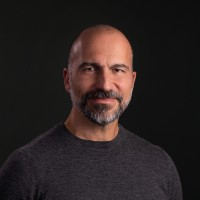
Dara Khosrowshahi
Chief Executive Officer & Director, Uber Technologies Inc

Why Uber Is Investing Heavily In India Despite Losses: Dara Khosrowshahi Exclusive Interview

🎥 May 19, 2026 📺 Mint ⏱ 24m 👁 800 views
Uber CEO Dara Khosrowshahi knows a thing or two about turnarounds. After scaling Expedia Group, he took over from Uber co-founder Travis Kalanick in 2017, led the company through its IPO, and transformed it from an $8.5 billion loss-maker in 2019 to a business that netted $10 billion in profits in 2025. However, the battle-hardened executive now faces intensifying competition, rapid technological change, and regulatory hurdles worldwide. Mint caught up with him on his latest trip to India - watch what he had to say. #uber #ceo #business Mint is an Indian financial daily newspaper published...
Watch on YouTube

About Dara Khosrowshahi

In July 2026, Khosrowshahi announced Uber's $14.8 billion acquisition of Delivery Hero, describing the deal as "compelling value" that would expand Uber's delivery operations into nearly 50 new markets and bring its total delivery footprint to 99 markets. He stated that the company expects over $1 billion in synergies and that the effective price paid for the assets is eight times EBITDA. Khosrowshahi said that Uber's capital allocation strategy would prioritize organic growth, investment in autonomous technology, and stock buybacks, and that the company would remain "opportunistic" regarding future acquisitions. Khosrowshahi has frequently discussed the future of autonomous transportation, stating that robotaxis are "coming" and that within five to ten years human and robot drivers will share the roads. He described the rise of physical AI, autonomous vehicles, and drones as "another trillion dollar marketplace" that will change how society operates. Khosrowshahi also noted that Uber's AI budget was exhausted within a quarter, forcing the company to meter headcount increases as engineers become more efficient. He emphasized that Uber's priority is organic investment and innovation over buybacks, and that the company aims to drive efficiency to lower prices for riders and increase earnings for drivers.

Source: AI-verified profile updated from Dara Khosrowshahi's recent appearances. Browse all interviews →

Transcript (34 segments)
D
Dara Khosrowshahi0:00
Waymo has innovated, but I'd argue we've innovated faster and we more than held our own, and it shows in the business. As long as everyone is playing on a level playing field, then we think it's perfectly fair competition. And I think competition in this sector is only natural based on the size and scale of the sector, and it makes us better. It keeps us on our toes.
Highly profitable obviously as a company, and geographically we use the profits that we have in the US and in Europe to invest in our most promising markets. We could turn a profit here in India, but it would be selling our business and the potential of this country short.
The EV part of our business is going to grow at substantially higher rates than our overall business, which was already growing very, very quickly. It'll take a long time for us to make the transition to full EVs, and I don't know whether we will go to full EVs one way or the other.
Today the cost of robotaxis is higher than the cost of humans. Probably two generations of robotaxis, the economics will get to a point where they will be more affordable on a variable basis than humans in certain high-fare markets.
N
Narrator1:29
The CEO of Uber knows a thing or two about turnarounds. After scaling Expedia Group, he took over from Uber co-founder Travis Kalanick in 2017, led the company through its IPO, and then transformed it from an $8.5 billion loss maker in 2019 to a business that netted $10 billion in profits in 2025. But the battle-hardened executive still faces intensifying competition, rapid technological change, and regulatory hurdles worldwide. Mint caught up with him on his latest trip to India. Watch what he had to say.
D
Dara Khosrowshahi2:13
I think certainly petrol prices going up is not constructive, whether it's for our sector or other industrial sectors here. So, I'm hoping, and as a person who was born in Iran, I'm hoping that that conflict is one that's resolved sooner rather than later, both as it relates to me personally, but also as an executive.
You know, what we find is that even with all the variability in the world, with the various conflicts, with economies going up and down, people still want to go places. They need to get to work. They want to go see friends, go see relatives. And on-demand transportation is the most efficient way, certainly as it relates to the utilization of cars that when personally owned sit idle 95% of the time. So, I think where there's life happening in a city, Uber is also happening and Uber is growing. So, of course there will be bumps on the road, but the growth that we see in this business, I think it's going to continue uninterrupted.
Well, there's constant risk in the business. And for me, I'm not interested in moats, you know, they imply standing still and playing defense. The best way to ensure success is to keep running and to keep innovating and moving quickly. In autonomous, for example, we have partnerships across mobility, across delivery, even across trucking with over 20 companies globally. We are always looking to be on the bleeding edge, and the minute that we fall back, the minute we try to play defense, the minute we want to establish moats, I think the danger becomes greater.
Rapido has innovated, but I'd argue we've innovated faster, and we've more than held our own, and it shows in the business. The business here is accelerating. It's something that I'm thrilled about. And certainly, I'm coming away this week, I'm towards the end of my trip, telling the team to go faster, to go harder, and to innovate, because the minute we stop, someone else is going to look to get ahead. It hasn't happened yet, but I don't rest easy for one minute.
I don't want to comment on the particular statistics that they have, but if you look overall at our business, we grew transactions 20% year on year, we grew bookings 21% year on year. And our global profitability was up over 40% with almost $10 billion of free cash flow. The fact is we run a portfolio, and there are parts of the business that are highly profitable, and we use those profits to reinvest in our most promising parts of our business. So, the investment here in India is by design.
Of course, this is a competitive market, but it's competitive because of the potential that we see here. One of the fastest growing segments here in India is the two-wheeler segment, and today it's not profitable, but it shouldn't be based on the growth that we see. And of course we charge a subscription. We have a subscription model here. I can't comment on our competitors, but I think the value that a product brings is related to the price that you charge. And the fact is that we bring significant value to our driver partners.
I sat down with them two days ago and actually asked them about the subscription model and how they liked it compared to, let's say, the commission model that we ran in the past, and they were very, very positive as it relates to the subscription model. They love getting 100% of the fare of the rider. And our growth here has been absolutely spectacular.
You know, what I found is that promotions can get you short-term market share. But the long-term, what counts is the quality of your brand, the quality of your service, the reliability of that service, which creates true loyalty. Promotions create a transactional relationship. And we're looking for something much more fundamental than that.
Highly profitable, obviously, as a company. And geographically, we use the profits that we have in the US and in Europe to invest in our most promising markets. We could turn a profit here in India, but it would be selling our business and the potential of this country short. So, at this point, we continue to lean into India. We continue to invest. And the results that we're seeing are very, very encouraging in that India now is our third largest market in terms of the number of trips on a global basis. And I would expect that to only improve based on the investments that we're making.
As long as everyone is playing on a level playing field, then we think it's perfectly fair competition. And I think competition in this sector is only natural based on the size and scale of the sector, and it makes us better. It keeps us on our toes. And what I've seen actually as it relates to government involvement in the technology ecosystem in India has actually been uniquely impressive. You look at the identity space. You look at the payments space. ONDC, it's actually something that I've never seen in other countries anywhere else in the world. The competence that is on display here and the public-private partnerships that are thriving, it's pretty extraordinary. Ola happens to be a competitor. As long as we compete on a level playing field, I think competition makes us better and can certainly serve society.
We navigate it through dialogue. We do think that two-wheelers are a benefit as it relates to the affordability, as it relates to acting as first and last mile for public sector transportation, and earnings opportunities. There have been interruptions. But we want to first make sure that we're good citizens and we play by the rules. We want to make sure that we over-communicate with the general population and public sector. I do think this is a growth area. But just like growth in Uber hasn't been smooth every single year, yes, there will be interruptions. There will be disturbances on the road. But there's no question that bike taxi is going to grow long term.
The subscription model is a relatively new model for us. So, we're still in the experimentation and exploration phase as it relates to subscriptions. I think it's going to be a permanent fixture here in India. I love having local innovations that we can expand globally. We are as we speak testing out subscriptions outside of India in the Brazil market, for example, and I expect that experimentation to continue and to expand. The profitability of the subscription model compared to commissions remains to be seen, but there's no question that there's enormous growth and appetite for it, which is why we're leaning into it.
I wouldn't say that building a super app per se is a goal. I want to make everyday life for you, for a consumer, just a little bit better and easier, you know? In some ways Uber gives your time back by giving you the convenience of food delivered to your own home or the ability for you to work on your next article as you're going to work. And so we keep adding conveniences and services to the ecosystem. But really it's to make your life a little bit easier. We think if we do so, maybe you'll spend a few more dollars on our system and we can thrive as well as you.
You know, in some ways I want to wire up everything that moves. Transit is a huge part of that. I think we just sold our 10 millionth transit ticket here in India, metro ticket. It's something that we're quite proud of. We've got plenty of things to wire up in the near future.
Oh God, that's a tough question. You know, we want to win. And you need focus in order to win. And the potential and the size of the market that we saw in India as it relates to mobility was so great that we thought that we should just focus on mobility and look to expand there. And that's not a decision that I regret, certainly based on the growth that we've seen here. So there's a part of me, there's an emotional part of me that would love to be in delivery. I had an all-hands with our employees and it was one of the questions that folks asked. I think a lot of our employees want us to be in delivery, but I think our focus on mobility in India with all of the potential here, I think it served us well. So, I think an honest answer is the right decision to make.
Uber continues to challenge me every day. This is a company that, you know, looked at from the outside, what you see is growth and you see increasing profits. But every day here is a challenge. There's a ton of competition. The world is changing. We don't want to run the company just for pure profit. We also want to run it for the benefit of society as well. And every day is difficult. But that difficulty also is rewarding in the success of the company and in my team.
We use promotions to bring new users and or for example, new drivers onto the platform. But we don't want to depend on promotions to drive long-term growth. And the situation that we see here is a constructive one where of course, you know, promotions play a part in the ecosystem. But the loyalty that we see from our consumers and our drivers are the engine that really is going to power the business. And so far, the trends here are very, very strong.
Well, we operate the largest on-demand EV fleet globally, and here in India as well. I do think that the EV part of our business is going to grow at substantially higher rates than our overall business, which is already growing very, very quickly. It'll take a long time for us to make the transition to full EVs, and I don't know whether we will go to full EVs one way or the other. They are significant investments that are required in terms of vehicle affordability. We need the residual values of EVs to be established, which they haven't yet been established. We need more reliable and dependable battery technology as well as multi-billion dollar investments in infrastructure. We are actively leaning in on all of the above. But we also need partnership from both the private and public sector as well. I'm certain that EV is going to grow and grow very quickly on Uber. I don't know whether the end state will be 100% EV or not.
Well, that remains to be seen. Obviously, we would need the regulatory framework to be here and it's something that we would love to talk to the proper regulators about. That said, these vehicles are incredibly expensive. They cost well over $100,000 and I don't see the economics of the Indian market supporting robo-taxis at least profitably over the next five years. But at the same time we would love to experiment here and it's a dialogue that I look forward to having with the proper authorities.
Today the cost of robo-taxis is higher than the cost of humans because the vehicles are very expensive with significant compute and multiple sensor stacks including cameras, lidar, and radar. Those partner costs are going to come down. So, even though the unit economics today are negative, we are leaning into robotaxi development. And I think with probably two generations of robotaxis, the economics will get to a point where they will be more affordable on a variable basis than humans in certain high-fare markets. This is a technology that's super exciting. And at this point, we are focused on developing safety and capabilities versus the particular economics, but I'm certain that the unit economics will get to a positive point. It's just going to take time.
We're very excited about our partnership with Adani. I can't think of a better partner to look to continue to build our local business here. We do think that the transportation ecosystem is enormous. And we need partnerships like ones with Adani to continue to grow and innovate here, and that's something that we're very excited about. Our second largest collection of technical talent is right here in India. We have over 3,000 engineers here. They are not playing a complementary part to what we build. They're playing a fundamental part to what they build. You know, these engineers, designers, product managers are responsible for products on a full stack basis. And we think establishing a data center here is another way for us to demonstrate our commitment to India and to continue to build product here that is locally relevant but also a part of our global strategy as well.
Not at this point. We are in over 70 markets globally. Our breadth in terms of ride share and delivery is unsurpassed. India is an enormous market with very significant potential ahead of it. And we've got plenty to do here. We don't need to get into China.
I think the loss of life is tragic. I talk to my friends who have family there and they're incredibly worried and they have a very hard time communicating with their families. I don't know whether there will be regime change, but there's no question in my mind that the current regime of I guess 47 years in Iran hasn't served the population well. I think that Iran deserves to be a part of the global community. And I do hope that there's change. I don't know how it will happen. But if it happens, I hope that it happens in a way that avoids the loss of human life.
I think war in and of itself is a loss. My hope is that it ends. It really is my hope.
You know, I certainly believe in flexibility at work. And that's in some sense what Uber is all about. As a service that we offer the 10 million earners who are on our platform on a global basis. I personally, when I'm at home, I sit down with my family and have dinner from 6:00 to 8:00. I put my phone down. I don't let that interrupt me. But after dinner and after I put the kids to bed, I'm working again. And the fact is that we operate in a challenging sector. And I personally think that there is no replacement for hard work. You know, some people say that you can have it all and that sounds great. But the fact is that there are trade-offs in life. Uber has a culture of hard work. But that doesn't mean you can't have a family life. That doesn't mean you can't have your interests. We want you to work hard, but we also offer you the opportunity to work flexibly. And what I've seen in my life is that people like working hard and succeeding. They like standing shoulder to shoulder with their teammates. And while in the moment hard work can seem difficult, the satisfaction that you get from success and shared success, it makes it all worthwhile.
It's a letter. It's a present for my wife. My wife gets me watches every year, so this one's my favorite. It's really lovely, and when I see it, I think of her, which is wonderful.
God, we read a lot of books. So let me think of the last one that has left an impression. I mean, Good to Great is one of my favorites. The last one that I read was actually 1929. It was a book written by Andrew Ross Sorkin. He's a friend. And you know, it just shows that progress can be interrupted. In this case, interrupted by one of the great tragedies, economic and personal tragedies by so many who were involved. But certainly growth continued, and the lessons of those unfortunate times are lessons that we've got to take forward. It was a great book, full of personality, but lots of learnings, too.
So, this view is probably the most touristy thing I've seen during my travel.
U
Unknown24:25
Like Muhammad.