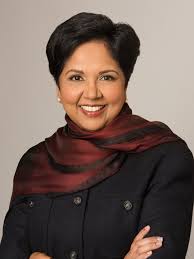
Hello and welcome to Positive Leadership, the podcast which helps you grow as an individual, as a leader, and eventually as a global citizen. I'm super excited to share today's episode with you. My guest Indra Nooyi is the former chairman and Chief Executive Officer of PepsiCo and one of the foremost strategy thinkers of our time, someone who redefined what it means to be an exceptional leader, the first woman of color and immigrant to run a Fortune 50 company. She was the chief architect of Performance with Purpose, PepsiCo's pledge to do what's right for the business by being responsive to the needs of the world around it. Today she's a New York Times best-selling author of her memoir My Life in Full: Work, Family, and Our Future, and she continues to inspire leaders worldwide with her dedication to corporate social sustainability. I'm excited to speak to her about diversity, equity in the work place, the power of purpose as well in driving strategy and the triumphs and setbacks she faced in her leadership journey. Indra Nooyi, a very warm welcome to the show.
Thank you so much. Jean-Philippe, thank you so much for having me on this program.
So, Indra, in your book, you paint a vivid picture of a very vibrant family life growing up. The hustle and bustle of your childhood home, your mom, Ama and her daily calls, and what struck me was the repetition and consistency in which family life conducted, which must have felt very grounding for you. So my question is can you talk a little bit about your family life growing up and how your parents and extended family influenced and inspired you and what lessons you learned growing up that have been invaluable to you.
That's a mouthful on its own, but let me try to be as pithy as I can. I want to put my birth and growing up in some perspective. I was born a few years after India got independence, and this was a time in the mid-'50s when there were no computers, no internet, India had no television, it had a few radio stations, and anything from overseas came either through the BBC or voice of America, so it was a different world. We got all our news by going to the library or to the US consulate or the British counsel libraries. And our view of the world was guided by what we read in those magazines, what we were taught in school as the teachers decided, and so it was a very sheltered existence, and, as girls in the family, growing up in the south of India where it was pretty conservative, in those days, in most families, the boys were educated, and the girls were not overeducated, because the belief was, if you were overeducated, nobody would marry you. But I was in an unusual family where my mother, father, grandfather, everybody believed that women should be given an equal chance as the boys, as long as you have the aptitude for it. And so we were encouraged to study as much as possible. We were given all the help at home to navigate through difficult subjects, and we were never held back because of our gender. However, in this family where everybody got together all the time and accepted each other for our issues, our life was about spending time with each other, because we had nothing else to spend time with. There was no streaming that was attracting us or social media or television, nothing. We figured out games to play. We made up games, because we didn't have too much money to buy games, and there wasn't so many games in the marketplace. Our life was about one foot on the brake, one foot on the accelerator, that's the way I'd say it. A brake in terms of you will live within these social norms, the accelerator. Dream big, you can be anything you want to be. So I think in many ways I won the lottery of life, and, in many ways, I am a product of that upbringing, which might sound a little restrictive, but I think it was glorious in its own way.
I mean, it's wonderful to hear, but, in the way you framed it, Indra, I don't know if it's the luck, but the opportunity you had through your parents to get educated, because I think at the time probably you were one of the few, right? It was quite rare for girls to go all the way to higher education the way you did it.
That's right. In fact, I was surprised that my parent allowed me to go out of Madras as a single woman, first to Calcutta, but then the bigger shock was when they actually bought me a ticket to come to the United States. And, again, I use this word winning the lottery of life judiciously, because I was lucky. My parents could have stopped me any time, and they didn't. They gave me tailwinds.
So let's build a little bit on that kind of family's life and what you learned through that discussion with your parents, grandparents, I mean all of your brothers and sisters as well and some of the skills you acquired at the time. I think I heard you talking in a number of shows about the art of debating, right? And starting at school but also with your family. And I believe you attribute actually a lot of your later success to that skill, putting forward your case, and bring people around you, around the way of thinking and your way of thinking, so can you tell us more about this skill and how positively this impacted you in your life.
You know, I went to a Roman Catholic school in Madras, in Chennai, Holy Angels Convent, and, at that time, the nuns from Ireland were still there teaching, so it was wonderful to have those nuns there who invested in two things. One, they said you all have to have the right diction and way of talking, so they took a few kids under their wing. We happened to be—my sister and I were both a year apart in the same school. We were one of the few that the nuns picked, because we were, you know, sort of bustling with eagerness to study, and the nuns taught us how to speak, diction, you know, not in a singsong way like we do with the Indian languages. They really helped us with diction. And the second thing they said was you've got to be able to listen and articulate points of view. You've got to listen to differing points of view and articulate a point of view, and the school had an outstanding debating team. And, first, it was elocution competitions, and then it was debating teams where you had to argue for or against, leading all the way to sort of impromptu debates where you'd go to a debate, pick a topic from a bowl and start to talk, so it was difficult times, but you had to read and be aware of issues all the time, because you never knew when a topic was going to be thrown at you that you had to make a case for, and, when you went into debating competitions, you had to show confidence, mastery of the subject. You had to be clear in your articulation of ideas and be precise, an so that's a skill that I think every leader needs to have, and I think in many, many ways, that skill was developed, honed and fine-tuned, starting with my debating days in Holy Angels Convent and then progressing on through the years, where I stayed on the debating team right through my undergraduate college and my postgraduate degree in Calcutta.
Wow. I think that's an amazing story, because, I mean, to my knowledge, across the world actually, there's so few schools who are teaching the art of debating, so few. And at the time where everyone is—not everyone, a growing number of people using ChatGPT and AI to get access and knowledge, I think what the art of debating provided you, I guess, Indra, is developing your critical thinking, because you have to not only acquire some knowledge. You've got to make sense of it, and then you've got to listen to others, understand their point of view, and then form your own point of view in return, in response to that, which I believe is very powerful.
Well, that's a very, very good point, because, in those days, as you said, there was none of these tools, including no internet, no computer, so we had to go to the library and research topics, and, after you developed your argument, you almost had to think about what would my opponent say and where would that person get their arguments from? And you had to research those arguments too, to be able to say how will I craft a path when it came to my rebuttal, and so I think, you know, you spend hours in the library going through material and reading, learning, digesting, drawing conclusions. In a way, you know, today's world, everything is presented to us in a digested way. Even a speech can be presented to us now through GPT. However, even though it was tedious and arduous, I wouldn't trade that experience for anything in the world, because it was a social experience as much as it was a discovery.
No, completely. I think that's very exciting, and I think that's a wonderful skill. So let's do a fast forward on your studies. You were accepted to study at Yale after studying at the Indian Institute of Management, which you describe in your book as this incredibly important position in your life, boarding the plane and your first impressions when you landed, actually, in the US, so it must have taken a lot of courage and confidence to make the huge step of coming to the States to study at Yale. And further your book, you talk about how that feeling of being an immigrant has never really left you, actually. The fear, insecurity at time, but also your belief, of course, in the American dream. There were times you didn't feel you fitted in, and you recount the story of buying an outfit for a job interview, actually, so how much were you influenced by the idea of the American dream, and how much has the experience of being an immigrant shaped you, Indra?
In the '70s, which is when I came to the United States, the United States was and still remains the shining beacon in the world, the cradle of innovation, entrepreneurship, freedom of thought, music, culture, art, you name it. The best ideas came out of the United States, and we would crave American music. When somebody sent us a cassette of American music, we listened to it over and over and over again, and one of the best kept secrets, Jean-Philippe, is that I used to play in a rock band, a pretty bad rock band, but I used to play in one, and we played all the American songs of that time, Credence Clearwater and Cream and things like that.
Which instrument did you play, by the way, in rock?
Yeah, and so, you know, you listened to this music, and you say I want to go to the place where this music was birthed. I want to go to the place where, I mean, it's so exciting everything you hear and read, and so, when I got admission to Yale and was offered a loan and scholarship to pay my way through it, I didn't think my parents would send me, but they did. And I landed in the US, thinking I would know everything about it, because I'd read about it in magazines, but you land here, and you realize you know nothing. I mean, it's scary. It's a big country. Not as many people as there were in India, and it was lonely, and I was the first in my dorm to show up that year, and I was overcome with incredible loneliness, and the first two days were just overwhelmingly scary. And being a vegetarian, I couldn't find any food to eat in those days, so it was challenging times, but, again, you talk about incredibly loneliness. I'd actually focus on the incredibly generosity of people who showed up and reached out and said, come on, let's help you get a mailbox and bank account. You needed all those, those days. Let me get you all that. Let me help you buy the right clothes to settle in, so all of a sudden, the incredible generosity and the hospitality of both Americans and foreign students really took over, and, after that, there was no looking back.
Wow. Can you recall maybe in the very early days, Indra, the biggest shock you had, again, being confronted with this American culture as well? Anything coming to your mind still today as well?
Yeah, you know, when we were in college in India, we treated professors with incredible deference. You sat up straight when the professor walked in. Everybody stood up when the teacher or professor walked in. You sat down when the professor told you to. Here you come, and the first thing you notice that students were calling professors by their first name, which I struggled with. They'd put their feet up on the table, and sometimes they would eat in class, and I'm like, oh my god, how? This would never be allowed in India. But what I realized after that initial shock was that this, again, went with this notion of freedom in this country. People could, you know, be themselves, either talk about their issues, have a debate with the professor. The professor was one of them, one of us, as opposed to this professor being this absolutely distant person. And it was liberating, it was exhilarating, but it took me a long time to accept it.
Yeah, that's really interesting, and, I mean, in a way, very energizing, I'm sure, for you as well to discover these kind of new set of attitudes, and scary, I'm sure, to transform yourself in a way that you never thought about. So shifting a bit gears and talking, you're already talking about people who have been helping you as you land in US. I'd love to talk about mentorship. You've credited the mentors you've had as being a great support to you throughout your life, and you found mentors I think in every job. The first, Norman Wait, influenced your decision whether you should go to Yale and helped persuade and soothe your parents' concerns as well. So can you tell me more about the importance of mentors and a bit more about the role mentors have truly played in your own life?
I want to separate out two kinds of people who are kind of mentors. Mentors that you pick who can give you advice, give you suggestions on how to be a better leader, better person, whatever, and mentors who are true supporters, promoters who are in your line of work or line of influence, so they can actually do something for you. Some people call them supporters and promoters who call the others mentors. I've had a lot of people that chose to mentor me. I did not go to anybody and say can you mentor me. And many of—
They came to me, or they were my mentors, I didn't even know that. And many of these people would give me a lot of feedback. I would respectfully listen to their feedback and improve myself, but, unbeknownst to me, they also moved my future along by either suggesting me for interesting programs in India or helping me in my career, so I think that I treated every one of these people with great respect. I listened to them very, very carefully, and, if I wanted to do something different from what they suggested, I always went back and told them why I was doing something different. And I always gave them credit for my success. Always, always. Even if it was a small piece of my success that I could attribute to them. I always told them that I am who I am because of the many things you taught me over my life. And I'm in touch with every living mentor, even today. And, generally speaking, mentors pick you. You don't pick them.
I love that, because we had a number of guests, Indra, with whom we discussed mentorship, and one in particular, Mellody Hobson, that you may know, maybe.
And Mellody had this wonderful, you know, example of mentorship she had starting really in the very first job out of university, and she said the following. She said, you know, feedback is a gift, and you need to look for that gift, and I think you said basically the same. Well, not only listen to the feedback, whatever it was, because I'm sure some of the feedback maybe was challenging, was tough as well, not always great. And the fact that you circled back with the mentors I think is very powerful. I know for a fact because when I see from time to time people, I didn't know it was necessarily a mentor, by the way, exactly as you said, but I mean somehow hopefully supporting, helping, developing behind the background. Coming back to me saying, hey, JP, at this time what you did was so important for me to achieve this, and I think that circling back is very powerful as well.
I agree with you there. It's showing a sense of gratitude and respect what they've done for you.
Exactly, and it's wonderful. So from the beginning starting out at Mettur Beardsell, you experienced men dominating the room. You describe having to put up with a lot of difficult behavior, like being interrupted and talked over. You also mentioned your time studying at IIN, being taught by men and studying the work of men as well. So what effect did this have on you at the time? And throughout your career as a woman in a very male-led industry, different roles obviously, did you feel you had to change your behavior and your attitudes and were you ever in a position where you felt you could fight gender discrimination head on? I know there's a couple of different questions.
Let me, again, put it in context. In those days, though you didn't think about gender equality at all, because there were no women in the workplace. So I was just glad to have a seat at the table. And I knew I had to write a lot of the rules for behavior. And I wasn't going to write it as a woman. I was going to write it as a very good professional. So I wanted them to look at me as an equal executive who happened to be woman as opposed to here's a woman. Okay, so I had a very different perspective, because people like me, if we don't deliver as professionals, we don't set a great example for people following us. So my focus, my granular focus was on doing my job very well, that's all I focused on. And, yeah, doing not just my best, delivering something that was valuable to the company, and very interestingly, I didn't really care about all the men surrounding me, because I was doing my job. And, if they ever stood in my way, I had these mentors, like Norman Wade and [INDISCERNIBLE] who would swoop in and make sure that I was respected or seen. And so I had the hand from the back of leaders who sort of saw the value in me and pulled me up. And so I think that today's different, Jean-Philippe, because you've got more women, and they're not fighting for a seat at the table, like I was then. There's more of them, but they still get frustrated because progress is not as much as they would like. Although we've had significant progress, don't get me wrong, I think we have still ways to go. And so the situation's slightly different. And the other thing too is that the more I focused on the quality of my output, the respect for me grew. And pretty soon I became just one of the guys. And more importantly, when they went off on their golfing or fishing or horseback riding weekends, they never asked me to join them, and I didn't want to be asked, because I had children at home, and I said I don't want to join you. I don't horseback, I don't fish, I don't golf, I don't eat meat, I don't drink, I have no desire to join you. I'm glad you didn't invite me. However, however, if decisions were made in those retreats and the women were excluded, that would be a terrible, terrible commentary on the company. That didn't happen in mine, no. I told the men do not make decisions in these retreats, because, when you come back, I'm not going to do the work to support it.
Oh, wow, so you're very firm in standing up to this position.
Did you see that any moment where you had to really express your frustration, maybe anger in terms of gender discrimination, in a way that you were not respected enough, you were not appreciated for the professional work you were delivering, as a female professional, exactly as you said?
Of course I've seen people cut me off halfway. Sometimes people rolled their eyes when I'm talking. And I've seen it happen to other women when I was CEO. Now, you can't just at that moment let it go, because the senior most person in the room has got to stop it, right then and there. The leader if that person says, you know what, I'll talk to him later, then what you're doing is at the meeting sanctioning the sort of bad behavior, so I had leaders who will stop that meeting and say let her finish, or what's your problem, why are you sort of smirking or rolling your eyes when she's talking. And then, when I became CEO, I do the same thing, not because I was female, I was a leader, so I wanted the right behavior modeled in the room. It still didn't stop some of the men talking over the women or rolling their eyes saying there she goes again, but, if you called out this behavior, very soon that message went to the whole company saying, hey, we better watch it.
Yes. Appreciate again your candor here, Indra, in the way you've been living your professionalism, number one, and certainly defend your position through a great work, I mean, all along your careers. So after continuing a bit on your skills and some of the skills you acquired, after or during you went to work at BCG, Boston Consulting Group. The job which required you to learn a lot of strong analytical skills to dissect evaluating every part of the business of the company, and I'm sure this must have been a very important job to help you to understand the business inside out. So can you tell us more about the skill you acquired then and how that helped you or not maybe to progress significantly in your career, and what did you—how did you grow out of that actually?
Actually, I would say BCG was one of my most formative experiences, through my entire life, for several reasons. One, it was very hard to get into BCG those days, because even today, but those days it was impossible, because it was considered the preeminent strategy firm. Bruce Henderson who founded it was like god. And you went through such a rigorous interview process. It was like a lottery, winning the lottery to get into BCG. So, when I got the offer, I was just—it gave me confidence, put it that way. So I started at BCG. What BCG did for me was it allowed me to learn multiple industries ground up and taught me how to go and understand the value drivers of an industry. There was no training program, we learned it on the job, but the seniors in the team taught you to do that. That was great. Second, as a young consultant, I was now interacting with C suite professionals and CEOs, so it gave me that ability to have confidence in myself to be able to look at a CEO eye to eye and share your conclusions. It taught me how to sell unpopular ideas, because one of the things that BCG taught us is that the client pays you for the quality of your output, not for how you play the politics. So don't try to shape your conclusions to suit the politics. Talk about what's the right answer, which I thought was fantastic, this compass pointing true north which BCG would reinforce all the time. So sometimes you were at odds with the client who said I disagree with this, even though the data points overwhelmingly to this conclusion, and it taught me how to defend my point of view, which was analytically derived and stand firm for it. And it just taught me all of those skills which I deeply appreciate in that firm, and I carried that through my entire career, even today.
Yeah, and connecting that back actually, Indra, to a discussion we had on debating in a way, right, so can you remember maybe one of those examples where you had to confront maybe the CEO executive of a large company on your conclusions, your strategy conclusions for the business that they did not agree with and where you had to insist, confront, to challenge as well, and you may never know the company, it's not the point. But it's really about the way you did it, right?
Yeah, there was a particular company where they were gung ho in investing in a brand new technology, which would have been, you know, a different technology than all the machines that are running with the old technology. We ran the analysis again and again, and I went and studied this backwards, forwards, and I still remember late in the night, at about 8:00 or something in a small town in the Midwest, I had to tell the head of operations and R&D that we're not going to recommend investing in this new technology, because it was too risky, and we might be able to leapfrog, but don't invest in a technology where you are number two, even though it's the technology used today. And I explained why that was the case. Very objectively explained everything. The operations had came unglued, totally unglued, because he had banked so much on this technology coming into the company, and rightly so, he felt great ownership, and we had a few words. I mean, I kept my cool, because I don't know how to utter words with them, but he didn't care that I was a female consultant across the table. He let me know exactly what he thought of me, and then he walked out in a huff, and I went back to the hotel room crushed that he was so upset. But, interestingly, in a couple of days, he came around, and long after we stayed friends, because what he did was he went back and thought about it, and he put the company before him. And he said to himself I think this is not about me, this is about my company. And if this is the right decision for the company and the consultants have no axe to grind, they're looking at the data and the analysis and coming with a conclusion. Who am I to behave so badly? And, in a day or two, he came around, and it was really for two reasons it was gratifying. One, there are conclusions. We're steeped in data and analysis, and he bought into it. And, second, he didn't fight it. He actually came with us to the CEO to say I've changed my mind, I'd like to not invest in this technology, so I learned a lot about staying true to your values, staying true to the data and conclusions. Having an eye towards the cultural aspects of implementing it but based on data makes a difference.
Love it. Love it and love about again your firmness in terms of the opinion, backed up with data evidence. And the fact that, in a way, you coach that leader to what you just said, right, just don't put yourself out of the company. It's about the company's future, so let's get the facts on the table, let's decide, so wonderful example. Thanks for sharing, Indra. So then back in 1994, after your term as director of corporate strategy and planning at Motorola, you joined the PepsiCo team. After an instrumental role in buying Quaker Oats, you were named president. Then in 2006, you received the call, informing you that you are going to be named as the next CEO. So I must ask you, that must have been an incredible moment. Can you describe the feeling you had, and what are you wanting to achieve as CEO in those very early days?
So I went from Motorola to Asea Brown Boveri, and then I was recruited out of Asea Brown Boveri into PepsiCo, and, you know, in PepsiCo, I just kept working away, because we were, you know, making a lot of transactions between '94 and '99, and then, when I became CFO, we bought Quaker Oats the first few months, so, all of a sudden, I was in Quaker Oats mode, and the CEO changed at that time. I was working for Steve Reinemund and the CEO, outstanding human being. And we had a great partnership. You know, we would argue, we would fight, but it was a partnership, and one day when he walked into my home when I was on staycation and told me that in a few days the board was going to name me the CEO, mine was not elation. Mine was more, god, what happened to this partnership with Steve? It was a wonderful partnership. We were working so well together. He's still so young. Why is he stepping down? Because sometimes you have partnerships where you learn a lot, where you both are working like the yin and the yang, and you get into a groove. And I was actually very, very sad that Steve was stepping down, and I remember still when I told my mother a few hours before that announcement that I was going to become CEO, she goes, no, no, you don't want to be that. Let me call Steve, he'll listen to me. I said, mom, that's not how it works. But that was my first reaction, but then, after a while, when Steve said his mind cannot be changed, he's decided this is how it's going to be, and, you know, he gave me many words of confidence in me that gave me, you know, the ability to immediately switch my brain from president and CFO to CEO, because we had a week to get all the announcements and everything ready, and so the first few days, you're just getting ready for the big announcement and how you talk to the employees, keep them all focused on the job, and then you start to think about your agenda.
That's such a great story, and particularly the way Steve, I mean, certainly a fantastic leader, don't know as a person, of course, gave you that massive confidence, Indra, to get into the shoes of the CEO, which must have been an amazing day for you and your mom as well, I'm sure, your family.