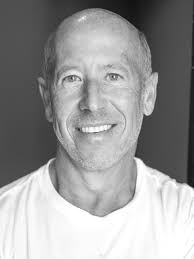
About Barry Sternlicht
Barry Sternlicht, chairman and CEO of Starwood Capital Group, discussed his company's expansion into AI data center infrastructure during an interview at the Milken Institute Global Conference. He said that Starwood has been investing in data centers for five years and is working on its first data center project in Australia, citing activity by hyperscalers in Europe and Asia. Sternlicht noted that development yields and interest rates in Australia are similar to those in the U.S. and described the firm as agnostic about geography.
Sternlicht also expressed concern about wealth disparity in the United States, stating that "half the country isn't doing so great" and that this could affect politics, real estate, and taxes. He said Starwood has "shied away from blue states lately because of their propensity to tax businesses and individuals," pointing to higher growth rates in Sun Belt states such as Nashville, Dallas, Atlanta, Raleigh, and Florida. On monetary policy, he argued that if oil prices spike, the Federal Reserve should lower rates to support interest-rate-sensitive parts of the economy like housing.
Source: AI-verified profile updated from Barry Sternlicht's recent appearances.
Browse all interviews →
✨ AI-enhanced transcript with speaker attribution
B
Bloomberg Host0:06
We're happy to say Barry Sternlicht joins us now from the FI Priority Miami Conference and he is the CEO of Starwood Capital Group. Barry, since the last time you spoke publicly about this dynamic, the market's expectations for rate cuts have changed dramatically and you have more and more investors even thinking that there's a possibility of a rate hike. How do you think of that possibility?
B
Barry Sternlicht0:30
I don't think we'll see a rate hike. We'll see if January turns out to be a blip in the strength of the economy. I think you have two economies clashing. You have the private economy and the public economy. Public being driven by public spending and whether it's the infrastructure bill, the climate act, the chips act, or the leftover money from the America's Recovery Act, there's still a ton of fiscal spending. In the meantime, companies are beginning to hunker down. You're seeing a series of layoffs. I think also the practicality of keeping rates this high, I do think you'll see inflation come down materially towards now soon. And I think because of that, the Fed's going to be faced with a decision. It can leave rates where they are. The non-capital intensive parts of the economy, which I'll call the Fab 7, these companies have great balance sheets. Their technology is not necessarily, or heretofore has not necessarily been capital intensive. It is at the moment because many of these companies like Amazon are building out amazing data center infrastructure businesses that are hugely capital intensive. And Microsoft, Nvidia themselves recently, Meta, Google, all these companies are actually spending money and that is actually, it's such a race and it's so right now that it is buoying the markets and keeping construction jobs busy. But you have a huge wave of apartments completing, almost a million apartments this year, 70% this year, 30% next year in the first half. And I think it's easy to see over the horizon and see that there'll be almost less than 200,000 apartments being started. So industrial starts have fallen 70%, apartment starts will fall 65-70%, housing starts are stalling again because rates are rising. So I do think the economy is softening and I do think the Fed, particularly Janet Yellen, she's changed her tune recently. You've heard her talk a little about the regional banking market. I think they're worried at the $1.9 trillion of loans these banks are holding, real estate loans, which is up materially since pre-pandemic levels and valuations are obviously down. So there is a giant skeleton in the closet in the regional banks. I think the Fed is aware of that and they themselves have a $34 trillion deficit that they have to finance. They can finance it at 5.3% or they can finance it at more.
B
Bloomberg Host2:47
Barry, we can get back to the deficit. Up to them. And I also want to welcome in our radio audiences as well to this conversation with Barry Sternlicht, the CEO of Starwood Capital. We were talking about the opportunity that people have to really put money to work and shore up capital in this environment right now, but you have really pointed to the existential crisis in property in the office market and now we're seeing even parts of the residential market see some pains as well. Where are those skeletons hiding?
B
Barry Sternlicht3:15
It's not clear exactly. I think there are some offshore investors, particularly in Asia, that took junior slices of debt and they'll be the first to lose money. Whether some of these are in Korea, to some extent Singapore. So there's that. Then there's the pension plans that are in the core funds in the United States and individuals that may own small properties. Most of the regional banks are lent to smaller operators and every piece of real estate is worth less when interest rates go up 500 basis points now. And no sector of real estate in the United States other than data centers are rents really rising rapidly today. So you're in a stall pattern. Foreclosures in January just announced, I just saw on the wires, 177%. So it is a US phenomenon really. The issue with office, that is a US situation. Offices are full in Europe and they're full in Asia and they're full in the Middle East. I'm at the FI conference, I can tell you they're all back to work. Americans are not back to work and that's causing a significant stress on the office markets. Not only that, the markets are about 18% vacant, shadow vacancies are like 23%. So there's no asset class in real estate in the United States that's in as much strain as the office markets. And there are no lenders. So if you want to sell a building, you can't get financing for the building because all the banks, the commercial banks, the big ones and the small ones, are trying to reduce their exposure to office, which makes lending a very interesting thing but very hard to buy unless you're a high net worth family just buying a building and putting it away as an unlevered investment in your trust, which people are doing. And in the office markets, you have the really good buildings which are leased and they're full and then everything else. And the office markets will look a lot like the mall market in the United States where there are great malls that tenants fight to get in and then malls that tenants can't wait to get out of because they're going to the abyss. So I think office is also block by block, city by city, and what the quality of the building is. Is it ESG compliant? Is it a leader in its field? And good buildings are holding their tenants and they're full in almost every city. And those eventually, I think capital will come back and finance and the markets will stabilize. But there's a lot of B and C office buildings that just do not have demand today and we'll have to see. Those losses are spread primarily in the smaller buildings, in the regional banks, in commercial mortgage-backed securities, in insurance companies probably not that bad because insurance companies never got that aggressive and maybe they were loaning 50-60%. And the commercial banks, I think the commercial banks are also nervous about some of their office exposure.
B
Bloomberg Host5:50
Well Barry, I want to talk about some of your portfolio because of course one of your REITs, the Starwood Property Trust, it reported earnings today. And if you take a look at the earnings call, there were some interesting nuggets in there. For example, you had an executive mention two foreclosed buildings, a vacant building in LA, a Houston office tower. They were both in active discussion to be sold, those deals fell through. What happened there and what does that say about the current market for property sales?
B
Barry Sternlicht6:15
I think it's absolutely emblematic of the markets today. Both, they were very willing buyers at an attractive number for us, basically we probably lent 50 or 60% of original value. But the value declined 40% and my number of a trillion losses is 30% off of the value and of course that includes leverage so it doesn't have to go down that much to lose that much equity. But in that case, that building in LA, we took it, I think the original basis was like 400, our loan was like 240 and now we've written it down to $150 million and it's going to be converted probably to a residential building or maybe even a data center. It's downtown LA. But I think that is, the buyers can't find financing. And now financing, if you're going to borrow, they're going to want 10%, 11% money today and many buyers just walk and say I'll just wait for rates to come down and then they come back. So I think you see transaction volumes in the United States have fallen 65-70% and everybody wants to wait till the second half of this year. So if you don't have to sell today, why would you sell? You're going to get a distressed price, right? And I think our view is the mortgage REIT is in good shape. We have $1.2 billion of liquidity so we ourselves will reposition these assets and sell them off in due course and put the capital back to work in other uses. But it's a very good time to be a lender because the banks are pulling back and the regional banks are almost out of business it seems like in real estate. And many of the money center banks, investors are nervous so they want to reduce their exposure. Not just investors, the government's all over them. The OCC and the FDIC are looking at them and saying reduce your exposure. That's usually a really good time to be an investor and a lender, right? When everyone else is running away. But the banks, nobody's going to their credit committee at a bank and saying I have this great office loan today, even if it's a great office today. And I'd argue the risk reward of making the right loan to the right tenant in the right city on the right block is probably pretty attractive today. So we're anxious to go back on offense but right now we're playing defense.
B
Bloomberg Host8:10
Appreciate the clarity there and we're up against the clock but before we let you go, of course we do want to talk about politics because we're speaking to you, you're coming from Miami, you've co-chaired some fundraisers for Nikki Haley. Are you still supporting Haley and how long do you plan to support her if so?
B
Barry Sternlicht8:27
I think I'm like most of the nation who would like two other candidates. And you know, I think it's, we don't know what's going to happen whether Biden will make it to the primaries because of age and some of the politics of the situation. I think as business leaders, you know, we think we ought to be more, I'd say we should be making friends first and argue later. So regarding China, I think there's so much interest in actually seeing if we can agree we're both better off with peace and we can't afford a war. So we can fight later. And I think Nikki, on several issues, I don't agree with most any politician on everything, but I certainly agree with their stand on the Middle East and Iran. And sanctions are required to keep them from financing the people that want to hurt us here in the United States, in the western world, and in fact obviously the democracies in the Middle East. So yes, we'll see. I mean, I don't think anybody knows what will happen with President Trump's legal challenges. And you know, the left side of the Democratic party is not for me. So you know, I'm not a socialist. And one thing that really makes me angry is calling these people progressives because they're really communists and socialists and we should just call them communists and socialists. What's progressive about what their policies are? There's no progress. It's one of the great labeling acts of all time. So I'm not a far-left wing and I think unfortunately they've taken too much. The parties are splintering to the far left and far right and I would love to see a moderate candidate. So would most of America. Half the nation's independent and I'm in that camp. I'm an independent. So I think if there ever was a third party candidate, this would be the year.