Back
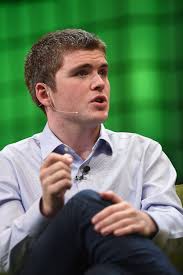
John Collison
President & Co-founder, Stripe

Barney Hussey-Yeo in conversation with John Collison

🎥 Jun 10, 2026 📺 Stripe ⏱ 39m 👁 283 views
Cleo founder and CEO Barney Hussey-Yeo joins Stripe CEO John Collison for a fireside chat at Tour London. Register for Stripe Tour 2026: https://stripetour.com
Watch on YouTube

About John Collison

John Collison, president and co-founder of Stripe, has been promoting the concept of "agentic commerce," in which AI agents autonomously make purchases on behalf of users. At Stripe Sessions 2026 in late April, he demonstrated how a coding agent could use Stripe's new Agent Wallet to buy data and publish a report for sale, describing the transactions as "agent commerce live today." He stated that "if your product or your platform can possibly support machine to machine payments, we think you should build for it now." Collison also noted that new business creation on Stripe in the first quarter of 2026 was up 71% year over year, which he attributed to AI lowering barriers to entrepreneurship. Collison has described the current period as "the singularity," which he said the company arbitrarily designated as starting on January 1, 2026. He characterized this as "the slow part of the singularity" because model improvements still require human effort. In interviews, he discussed the shift from keyword search to AI-powered shopping assistants and predicted that agents would increasingly use stablecoins for transactions, saying "I don't know that the treasury will be giving them social security numbers. So my guess is they're going to like stable coins." He also addressed the impact of AI on software companies, noting that while the software sector lost a trillion dollars in market value in early 2026, SaaS payment volumes on Stripe remained higher than before the sell-off.

Source: AI-verified profile updated from John Collison's recent appearances. Browse all interviews →

Transcript (109 segments)
✨ AI-enhanced transcript with speaker attribution
J
John Collison0:00
Thanks for being here.
B
Barney Hussey-Yeo0:00
Thanks for having me.
J
John Collison0:01
So, Cleo, you guys are presumably familiar with a phenomenon in the consumer financial advice space, 400 million in AR.
B
Barney Hussey-Yeo0:12
As of last month.
J
John Collison0:13
Yes. Unicorn, and really rapidly growing, one of the top AI startups and based right here in London. But before you started Cleo, I want to go back to your prior career. You were a poker shark. Is that right?
B
Barney Hussey-Yeo0:30
Shark, a fish. I played at university. I funded my university career through playing online poker.
J
John Collison0:36
I only know what I've seen in Rounders and Molly's Game and all this kind of stuff. So, how does actually making like professionally playing poker work?
B
Barney Hussey-Yeo0:47
This was back before you had GTO and the solvers. So, it's all online and you know, play on like multiple sites and you'd play four to six hours a day heads up. And actually really interestingly, I've just built an AI agent that now plays for me and earns rake back. So I make about, I shouldn't say this publicly, but I earn about 200k every year now just through my little agent that plays and barely beats the low stakes. But yeah, I used to play, you know, low midstakes heads up and it was quite profitable.
J
John Collison1:13
And how so? GTO is game theory optimal, which is doing the exact right thing that the probability tables would tell you that you should do, right? And you didn't have that in 2012, 13, 14.
B
Barney Hussey-Yeo1:26
When I was playing. That recently. Only 2016, 17 you had the solvers and we actually learned how you could build, beat the game. You, it's still right at the, you know, the edge. You can probably beat the GTO solvers, but it's basically a solved game, which means online play is kind of dead now, but you should play tournaments. You go play a live tournament. They're always fun.
J
John Collison1:46
No, because I'll be playing against your boss probably.
B
Barney Hussey-Yeo1:48
Yeah. Don't play online against me. You're gonna get... Yeah, that's very interesting.
J
John Collison1:51
You always, a lot of these things are discovered later than one would think like Black-Scholes is, you know, a relatively recent invention for, you know, valuing financial options and I hadn't realized that GTO is such a recent invention in poker.
B
Barney Hussey-Yeo2:04
Well, you don't want to tell people if you've got an edge, right? So there's probably all these things in hedge funds where you could have a massive economic benefit to GDP which keep secret.
J
John Collison2:14
Exactly. Yeah, this happened in cycling as well in pro cycling where people used to inflate their tires up really high, you know, 120 PSI tire or something like that. And then one Tour de France team figured out that actually everyone was overinflating their tires and you don't need to overinflate your tires and they kept it a secret from everyone for a long time. Anyway, there's still plenty of room for new inventions is what we're taking away here. But we are not here to talk about pro cycling or pro poker. We're here to talk about Cleo. So maybe just to orient people who aren't familiar, aren't users of the product. What does it do? How did you guys get here?
B
Barney Hussey-Yeo2:45
Yeah. Well, we started in 2016. So as an AI assistant for your money, which was weird in 2016 and now is like the thing to be building.
J
John Collison2:53
AI was not as hot in 2016.
B
Barney Hussey-Yeo2:55
Yeah, building an AI system was completely weird. Like natural language processing was barely working, but it was the really big research output at the time. So I did my masters in machine learning and we'd just gone from the vision era of like we'd beat ImageNet and then NLP became the thing all my professors were interested in. So I'd worked at fintech as a data scientist and I had this, you know, fascination with machine learning and knew it was going in that direction. So the thesis was everyone's decisions are wildly unoptimized and your financial life is the most stressful and important thing in your life. So, how could you make a billion people make better decisions every day or make decisions on their behalf? And how could you change the economy, the world, everyone's life through doing that?
J
John Collison3:34
GTO for your financial life, if you will.
B
Barney Hussey-Yeo3:36
GTO, I don't think it would sell. But maybe to you, John. Yeah. For the, just free idea for the magazine article, you know, for the opening paragraph on Cleo.
J
John Collison3:49
Okay. But that's interesting, right? Because you were founded in 2016. That's before, it's obviously before ChatGPT, but that's like before LLMs, two years before the transformer.
B
Barney Hussey-Yeo3:59
Yeah. But even back then, if you, the Meta lab we were just talking about, like they were really focused on it and they were pushing out a bunch of good, it was just intent classification back in the day.
J
John Collison4:08
Then you had two years later it was the transformer. Then you had BERT. Everyone then in computer science knew this was going to be a thing. And then everyone else just woke up when 3.5 dropped. But you could see it, right? But so what I, I mean I presume today you're heavily LLM based, just how did it work like how were you providing the financial advice like you, the user input some data and then what?
B
Barney Hussey-Yeo4:30
It started with regex. We had a lot of regex to start with but then it was just traditional supervised learning, right? So you had intent classification and entity classification. It's a bit nerdy but intent is what you say in a sentence so it was big, big multiclass supervised learning and then you had, and we still had the recommended systems and reinforcement learning to push you information at the right time. So you've gone from a supervised learning world to an LLM based world and that completely changed our architecture and our product actually.
J
John Collison5:01
How, the conceit of Cleo is that you should have personalized financial advice. How personalized does financial advice actually need to be? Because you know there's a view that you could say you should have the right savings rate and then you should invest in a low fee index fund and you know you shouldn't buy kind of financial products, it's like you know you shouldn't eat foods that are advertised on TV like the good foods don't, you know, don't have an ad budget and similarly you know you shouldn't buy financial products that are aggressively sold you should buy a low fee index fund and then you shouldn't have a home country bias, you know, you shouldn't buy the FTSE 100 you should buy the MSCI World Index. Like, is that not enough financial advice for everyone?
B
Barney Hussey-Yeo5:47
Showing how out of touch you are, John, with the real consumer and the normal humans on the street. Like, your life is your money. You spend, like it's the most stressful thing for the majority of people in their life. You spend so much boring admin time thinking about how you make financial decisions from, you know, where are you going to live, where's that mortgage, where's that rent going to be, how big should that be? Every single thing you do every day is a financial decision in reality. You make all these transactions every single day. Lost them on Stripe. But imagine if you had a world where everyone was making rational, sensible, you know, more optimized decisions. If you think about how much money goes towards consumer credit or paying on interest when it doesn't need to. You could really change the, not just the top 1% of people that get financial advice. It's the 99% that actually need the financial advice. The people that are living, you know, one month, two month, three month savings. If they can have a better life and make better decisions and you can do it for them. You shouldn't have to think about finance, right? It should just happen on your behalf. You need credit. You should just ask. It should go get it for you. If you have wealth, then it should just go get the best return. It should be tax-free. This should be a world where you don't manage your money by looking at a balance and a list of transactions. And that's coming very soon, right?
J
John Collison6:58
Where are you generally trying to steer people? Like I can imagine there's kind of avoiding bad financial products like the classic one of you know borrowing on a credit card. There's maybe price comparison where if you're getting a mortgage you can get somewhat better rates here versus there. There's tax efficiencies but just like it's actually your life.
B
Barney Hussey-Yeo7:17
You think about most of the consumers in the US, 60% of Americans have less than $400 of savings. It's how they spend their money every single day. How much do they earn? What's their income volatility? How much are they spending on rent, mortgages, subscriptions, like what are they actually doing with their financial life? And you can really help someone just by laying it out to them, making better decisions for them. And then on the products, they are just wildly unoptimized, especially at the lower end. They're paying incredibly high interest rates. They are not getting any returns on savings. Most people don't have investments when they just sit it in like a cash ISA in the UK. It's just like crazy the amount of GDP growth and the amount of financial wealth you could be creating people that's like left on the table. So I just think there's trillions and trillions of good that you can do for society and humans but also just the economy as well. If you had this thing moving effectively through the system, you can dramatically increase GDP growth.
J
John Collison8:08
How do you advise people spending? I mean like there's the meme online of the millennials with their avocado toast. Is it like you're trying to reduce the amount of avocado toast consumed or like how do you actually steer people usefully in an actionable way on spending?
B
Barney Hussey-Yeo8:23
Do you know what's funny back in the day because it wasn't as intelligent. We had to really rely on humor. So we had 30 female comedians on staff. Cleo was a, you know, it's a female agent. So we had these female comedians and they wrote every single line of copy both what we pushed and what we responded with. And we found that humor and money actually go together weirdly well which no financial institution spoke on to all your lawyers and your executives.
J
John Collison8:47
A banker is generally not known for...
B
Barney Hussey-Yeo8:48
Not for their humor. Yeah. So that was a real unlock for us in terms of engagement and like is there a roast mode in Cleo that makes fun of you for your spending. I don't know what it would make fun of you. Maybe the cheeky pints, John. But it, you know, roasts you for what you've done over the weekend or the bar whatever it is. And people really like that and it's a way to engage them in, you know, simple actionable financial advice and increasingly it's just taking action on their behalf. It's moving accounts, it's moving money, it's getting them the best credit, whatever that is, at that time for that user.
J
John Collison9:20
Do you have a way of measuring how Cleo is steering people's financial health?
B
Barney Hussey-Yeo9:27
Yeah. We have a measure, I'm actually really surprised that you, well you probably do internally but there is, we have constructed a view of financial health for every individual at Cleo. There's a score zero to 100 and all these variables and all these features. So we know whether you're leveling up your financial health or you're degrading it based on your actions that you do. So actually the objective function of the recommended system it used to just be engagement. So it was like can we make you like click this button and it was fun but now it is financial health and engagement. So we're optimizing for did this bit of advice, did this action lead to in two months, three months time their financial health getting better and them spending less than they earn, which is like the core primitive for them spending less than they earn. Oh yeah, it's like the core primitive of every human in that kind of low to middle income, right?
J
John Collison10:13
Yes. Who do you compete with? Like is this substituting for existing products? Is this just kind of a new thing that...
B
Barney Hussey-Yeo10:21
Yeah. But well, think about how people make financial decisions today. Like it's a vibe based optimization game for most people. It's maybe it's a packet and a napkin, but the vast majority of consumers don't budget. They don't think about their money in a very rational way or they do it in a very late way. There's only a really specific number of nerds probably everyone in this room actually that will have an Excel and I'm sorry I shouldn't make fun of all the audience but have this, you know, set of advice that they'll construct themselves so we're really in the advice game for people that don't have advice and I think there's going to be loads of avenues like this imagine health right we all make terrible decisions for our health all the time we've all got a Whoop now we're all getting into it but there's going to be all these big verticals in your life whether it's education or health or finance where your decisions are wildly unoptimized today and they are going to be, they're just going to be so much more thought through. Imagine how you deploy capital and people at Stripe. There's probably an army of nerds that are thinking about how you deploy that versus your strategy and where your goals are going. Imagine if you do that for every human for every decision they ever have to make.
J
John Collison11:27
So you think you go broaden beyond financial advice into...
B
Barney Hussey-Yeo11:31
There's a lot to do in financial advice. I was big time. So we're going to nail that first. And I think, you know, you're going to have these four or five agents that go really deeply vertical in these big specific areas of your life. And I don't think they're going to be the frontier model companies. Actually, I think they're going to be companies that focused all on health. They go all the way to the MRI and the blood test and they have a whole stack of advice. So, I'm bullish on that. And I'm less bullish on like OpenAI being the interface for everyone for everything.
J
John Collison11:59
Do you see that competition dynamic with users where anyone who's building AI tools? There's always the, anyone who's building kind of specific vertical AI tools, there's always the dynamic where people might just, you know, take a bunch of financial statements or connect their bank account to Claude and start asking questions. Do you practically see that behavior where an alternative to using Cleo is wiring up the relevant data to an LLM?
B
Barney Hussey-Yeo12:24
You can connect your Plaid account now to ChatGPT and ask questions, right? But I would bet a huge amount of money, they get very little engagement and it becomes a kind of side project that goes nowhere in reality for that business because to engage people with financial advice, it's got to be proactive and it's got to be agentic. So people don't wake up and go, 'Oh, how much did I spend on?' Yes. What, like is it just a boring thing to think about? So it has to be this agent that's always on, always pushing information. If you think about all the frontier model companies, it's a very reactive thing. It's replacing Google search for most people today. You have something in your head that you want to research, you want to go into, but there's so much space in the product cycle for it to become a proactive, intelligent, always on agentic thing. And that's going to require a lot of effort and a lot of training data and a lot of understanding of what you need to say to a user at what time and that's going to work.
J
John Collison13:17
It feels to me that we're early in personalization. When you're saying it'll be very personalized, it's just, I mean if you look at how kind of OpenClaw works underneath the hood, it's this static model and then a bunch of flat files that it's kind of writing notes to itself. It's like the movie Memento where he's like writing on his hand. And that's the only memory he has. That's basically the AI models today. And I'm curious just for your experience trying to build personalized products where the current AI technology is just kind of fundamentally a bit resistant to personalization.
B
Barney Hussey-Yeo13:54
I've never thought, there's definitely a meta point here of like we just have text, right? And like how does the human store memory and like when are we going to get to a different form factor for that? But in reality and what we've been doing, you can build a knowledge base of every single human like their financial aspirations, their financial health, their financial goals, every conversation they've ever had. So you remember Karpathy did that thing a few months ago where it's like oh I do this thing recursively with LLMs. We've been doing that for years. Like that is such a powerful way to build a structured knowledge. I was also giving you a bit of grief for Stripe not being intelligent enough and like they should be that knowledge base at Stripe. They should be every single card connected to every single user, who this user is, how much income they have, where do they spend. So we've built that over time for every user and then we have a recommended system that is thinking from that knowledge base. There's all of these opportunities for us to say things to users. What is the thing that's going to move the objective function the most? That's going to move that financial health, deliver that information, take that action on the back end. So I think text works as long as it's stored in a thoughtful, clear schema and database.
J
John Collison14:59
One thing we were talking about backstage is just the concept of personality in AI is interesting. Like I think at the beginning of the field when people were first introducing LLMs people might not have predicted that personality would be such a big thing but you know we're talking about the new Anthropic model Claude and just like what its personality is like or famously you know GPT-4o had this very controversial personality where you know some people found it too sycophantic for some people I guess they really liked how sycophantic it was and they were annoyed when they tried to take it away from them. And I get the impression that for you guys the personality of Cleo and how it interacts with you is a big part of the differentiation. And so what goes into getting the personality right? And for example like do you need to tune it for different users? Do you try to suss out what personality people want? Is it just what it is? How do you build that? Have you moved beyond the army of comedians or is that still how you engineer the personality?
B
Barney Hussey-Yeo16:00
I think this is one of the biggest things of Frontier Labs. Maybe they don't need to. Maybe they should be boring and it should be a generic, you know, not even personalized thing and they should just be the AWS intelligence. But I think for any brand or any company doing this, it moves the metrics, the personality and the personalization to the user dramatically changes engagement. It dramatically changes what a user does. So being funny, being concise, writing well, all these things move our MAUs, it moves our revenue. So we've known from like I don't know the first kind of like three, six months of building this business that the brand and the personality and the tone of voice mattered a lot. So it's been a, it was kind of linear supervised learning one tone of voice and then since LLMs it is now a much more personalized tone of voice based on your income, your financial health, where you live, you in Boston, you're in San Francisco, don't know how it talks, I want to make fun of John but I shouldn't make fun of John in front of 1500 people but it will talk to you however it thinks you want to be spoken to and you can craft that as well.
J
John Collison17:04
But is your general learning that you know finance for a lot of people is a high stakes topic. It's maybe they're nervous about it. It's a bit of a schlep. And so you're trying to make it more approachable is kind of the fundamental.
B
Barney Hussey-Yeo17:14
I think all these kind of great companies take the inverse. Take Stripe. Like it's completely archaic and complicated. I've got to go through enterprise sales to do anything in payments. Let's do the opposite. Let's make it really simple, dev friendly. It's going to be a one-click thing. It's the exact same. Remember Monzo? Like it was really bad UX to do anything with a bank and they just made it simpler, more transparent, less opaque. And we've gone, okay, it's really complicated financial advice. We're going to make it really simple. It's really boring. We're going to make it really fun. And we've just taken the inverse position, which is such an obvious thing to say, but I think like how many founders do you see actually take that? So I think it's worked for us.
J
John Collison17:54
It's product contrarianism or product differentiation. Yeah, it's like the, you always want it in the most extreme form generally like what is the biggest pain point of your incumbent and like what am I going to do? I'm just going to go incredibly hard at their biggest pain point and make it the most delightful experience. So it's a hack for building your first product, right?
B
Barney Hussey-Yeo18:13
Yes.
J
John Collison18:14
How is the landscape of financial products that you advise people on changing? Like borrowing is presumably changing somewhat at an industry level due to the emergence of BNPLs and things like this. I don't know is kind of the mortgage industry changing and how people are getting those here just yeah I'm curious how you...
B
Barney Hussey-Yeo18:35
There's only so many primitives with money as you definitely know, right? Like you can borrow, you can spend, like there's just only a finite set of things you can do so all of the innovation is, it's useful but it's slow and it's guided by regulators. I think you know buy now pay later is a great example of credit cards were this really bad thing for all these years so we're doing something better and something different. But it's not that interesting in my opinion generally. Hopefully like the biggest thing will be stable coins and like how do we transact and how do we move away from those rails but I don't find building the, we build a lot of financial products so I shouldn't say this because all my teams work on them. I find them constrained and slightly boring because the limited number of primitives but I think the intelligence and the advice if I was building Stripe I would be like the intelligence what I can give consumers from that would be the most important thing but I guess that's also my wonk.
J
John Collison19:30
Well it's not just a limited number of primitives, right? It's also all these products are heavily regulated and so they end up in kind of certain streams but for example do you see different like should people be consuming a lot of BNPL or a little like what's...
B
Barney Hussey-Yeo19:42
Well they shouldn't be maximizing that. What happens generally for consumers is they'll take a credit card out and they will max the limit and then they will stay on a max limit paying the minimums for 10 years. It's probably the most inefficient form of credit the vast majority of society has. So BNPL is a better way to pay over an actual time period and make it more like a termed product for a fixed amount of borrowing.
J
John Collison20:02
Though if you just use it to borrow more pretending that's bad. This has been my whole rant on debt for a long period of time like credit is such an important part of the economy and people's lives but is used so poorly by so many people and this is why I think the intelligence is the answer, right? Help make people make better decisions about how much credit they consume, how much they spend. If you just provide financial advice or provide financial products without the advice, I don't want to bash Robinhood but you end up just selling products and trying to get the most margin and it leads you down this way of like let's do day trading or let's do, none of these things are bad, right? And they can be used in the right way. I do think you need some sort of...
B
Barney Hussey-Yeo20:44
You can't be purely revenue maximizing is your view.

J
John Collison20:46
100%. I think it just leads to bad outcomes for consumers and bad outcomes for the business as a whole so I think the intelligence and the decision-making and helping users do it for them is just so critical for everything.
B
Barney Hussey-Yeo20:59
If you were in charge of regulating financial products in the UK what would you change?
J
John Collison21:04
Ah, where do I start with the UK and its regulators? I like innovation is good. Creative destruction is good. It's how you move every industry in the world along. It's what we've seen for the last 100 years. Creative destruction is what drives better outcomes for consumers or what drives better outcomes for businesses. So you need to enable creative destruction. You need to have a level of risk-taking to allow upstarts to take on incumbents. And all too often in UK it's like please come to our sandbox and let's work together for two years when a venture funding cycle is actually 18 months and it actually them trying to be helpful normally constrains a company. I've seen so many of these little angel investments I've done that have tried to engage the FCA but it just taken so long to get there that they've run out of money and not been able to prove product market fit. So if you're a founder doing it I actually do think you need to take some risk early on. I'm sure Stripe took some risk with its early clients and how it built the business. Don't want to get you in trouble, John. But taking some risk in this sector at the start is a way to build something that the incumbents aren't going to do as well.
B
Barney Hussey-Yeo22:12
And you think there's kind of not enough risk-seeking behavior in the UK or it's not enabled in the right way.
J
John Collison22:16
Well, it's, you go back to the Federalist Papers, right? You had checks and balances, you have state and federal. It's probably like, read those Federalist Papers. They're like, it's great insight how you should run a company and run a country and we need more of that in the UK. I see the prime minister has so much power. Number 10 has so much power. The regulators have complete control of yes or no across 60, 70 million consumers. Doesn't happen in US. We have the courts. We have the regulators. We have state. There's all these checks and balances which make America and capitalism work. Which is why I love building in America and why I want all my users in America because it's actually a better place to do business and it leads to more rational outcomes. You get obviously dramatic polarization and fights and all these things but the checks and balances of the US institutions is why America is winning versus Europe.
B
Barney Hussey-Yeo23:09
So maybe moving beyond financial regulation and just kind of more broadly to the business climate, you think just more embrace of creative destruction basically? Would that be the precis?
J
John Collison23:22
If I, yeah, if I was going to really synthesize it, it's like we've got to go from a culture of trying to conserve our legacy and our past and the greatness of Britain and Ireland to a place where we go, hey, actually we're all stagnating. We're all declining. We actually don't have much to protect at the moment. We actually need to take some risk. We need to go from a very conservative risk-off mindset to a we're going to build and we're going to build great stuff and we're going to take some risk and we're going to deploy capital, all these pension funds, all these institutions that could be doing productive things in society. You need to move from a mode of conservatism to risk-on creative destruction.
B
Barney Hussey-Yeo24:04
Does that filter down into how you think about how people should invest both at the individual level and at the institutional level? Like if you could tune how people are investing what encouragement would you give?
J
John Collison24:19
The individual is, you know, a largely solved problem even if people aren't doing it. The solved problem is, you know, the world index fund, right? And let's invest in the S&P 500 maybe it's getting a little bit tech heavy when Stripe goes public at some stage, but that's an almost solved problem if you had people making rational decisions there and like Cleo could dramatically help that. I think the, what's it, the new fund that they've set up with Lutnick and the baby accounts or whatever the Trump accounts, it's always the Trump accounts, isn't it? That is a good thing. Get people investing from a young age. But on an institutional level, there's a dramatic difference between the US and the UK and you know all of Europe. You look at our pension capital which should be the big pool of capital going into creative destruction. Tiny tiny tiny tiny fraction in the UK goes towards venture capital. I've got British VCs and the tier one European VCs. It's like, you know, it's the California pension funds are actually the LPs into those VCs. So I'm not returning to the British state any GDP growth. It's all going back to California. And if you don't want a world which is completely bipolar where you can either build tech in China or you can build tech in the US, it's really bad for Europe if we don't have this creative destruction and ability to deploy institutional capital in a different way.
B
Barney Hussey-Yeo25:37
It is an interesting point that yeah there's a lot of US, I mean it's not universal but a lot of US, Canadian pension systems are a little bit, and Australia, are invested in venture in a big way and much less so in the UK and Europe broadly.
J
John Collison25:53
And it's worked. If you look at Canadian pension funds, if you look at Australia, I would love to be an Australian pensioner like it's...
B
Barney Hussey-Yeo26:00
Yeah there was a news article about famously one of these pension funds that bought a lot of SpaceX a few years back and as you can imagine they're feeling quite good this week. You run a very scaled consumer AI product and I'm curious to talk about that. Well, actually first off, how do you make money?
J
John Collison26:20
We make money through subscriptions and financial products. So we've got cards, we've got lending products, buy now pay later and wage access, we've got wealth products, we've got stocks and shares. So the financial products make money, the subscription makes money, value occurring, and it's a premium model.
B
Barney Hussey-Yeo26:35
What advice do you have for people who are building AI products that they sell to consumers? Like what have you learned about willingness to pay, what works well, just acquisition, like this new space that's only existed over the past few years.
J
John Collison26:49
I don't know if I did it the right way. Like I spent the first four years of the business and maybe this is Zer just doing, like it was build a great product, just get...
B
Barney Hussey-Yeo26:57
Not focused on revenue, just focused on...
J
John Collison26:59
No revenue and everyone was like financial health, no revenue, this is great. That worked up until I got to the growth funds and then they were like where's your revenue? So I don't know if I would advise that but I kind of would, you know, like I would probably go back and do the same thing of just try and build a product that people are using and like and then integrate the monetization afterwards. The inverse of this though is just make sure there is one core primitive like Stripe where you're taking, you know, a margin on something or there is just one thing, tokens, whatever it is, and build that from day one. I wouldn't do anything in the middle which is like be like half-hearted on the monetization strategy. Like it's either baked into the product 100% from day one or you just completely forget it and get consumers. On the consumer side I think it works actually probably to just get consumers first then monetize. But what do you think?
B
Barney Hussey-Yeo27:50
Well, I'm curious like on the consumer side of things, it seems like many businesses decide that they're going to be one or the other where they're going to sell on a usage basis like a normal grocery store just like charging markup on what you buy or in the US, you know, Costco has this famous model where they basically make no money on the actual things you buy there and then they just sell a $100 a year subscription or it's probably gone up, a membership subscription and that is where they make all the money that Costco makes and they've decided that they're not going to bother making money on anything you buy in the store. They're just kind of a subscription business and do you guys just view it as both or are you in the business of selling subscriptions or are you in the business of selling financial products or it is just both?
J
John Collison28:42
We are in both. I think you know the interesting thing there is subscription has been the dominant form factor to monetize because of payment rails as well, right? Because it's actually hard to do microtransactions or lots of transactions and transactions fail so having a recurring monthly thing and making this a kind of phenomenon for the masses works really well for software businesses but I can definitely see a world in the future where like, you know, you got stable coins, there's no friction, the payment rails actually work, there's no cost. Then you move way more to the Chinese model, right, of for self-improvement products.
B
Barney Hussey-Yeo29:17
I feel like there's also sometimes a kind of using the sunk cost dynamic in consumer psychology where, you know, people say, I am going to buy a gym membership and I am going to get in shape and now that I've spent this money on the gym membership, I have to use it because I'll feel bad if I, you know, spent the money and didn't. Is there any of that dynamic with Cleo where people are investing in their own financial health?
J
John Collison29:37
I think every, there's like all this kind of behavioral theory in all of subscriptions. Like we just added a third tier because that, you know, that just works and we got this middle tier and just because we have three people will pick the middle, like it just, there's all this kind of weird behavioral stuff with payments and subscriptions that you have to optimize and learn about. So yeah, humans are kind of irrational actors and I think you kind of got to learn where they're irrational to help them but also to build a business.
B
Barney Hussey-Yeo30:08
Yeah, you guys are kind of like Duolingo or something, right? You're like weaponizing people's irrationality for good rather than for evil.
J
John Collison30:16
It's not right that in the press, but thanks John.
B
Barney Hussey-Yeo30:21
Harnessing.
J
John Collison30:22
Yeah, there we go. Better. We're just workshopping here.
B
Barney Hussey-Yeo30:26
Speaking of people's irrationality, you know, people in poker talk about the idea of going on tilt where, you know, people may mostly have a very solid betting strategy and then they just they break at a certain point and they start making irrational decisions, you know, maybe after a losing streak or something. Does that also happen in behavior you see in the app and are you trying to kind of get people back on the straight and narrow?
J
John Collison30:51
Yes, it's human psychology. It's the biggest thing, right? Money is such a personal, such an emotive, such a psychological thing. People will lose a job. People will have a breakup. Like we have all these user research interviews where you see someone, you know, go completely on tilt and, you know, do things that are slightly irrational there. So yeah we're definitely trying to help in those circumstances but it's, yeah, humans are humans in a way as well. But there's all these interesting mechanisms and features that we build around that.
B
Barney Hussey-Yeo31:23
You started Cleo before the current wave of AI, but you're still a kind of small and fast growing company. How AI native is Cleo in how it actually works? What ways of working do you guys have that we should be borrowing from you guys or people in the audience should be borrowing?
J
John Collison31:41
Well, my day-to-day is dramatically, like since probably January, February, I spend my time completely differently.
B
Barney Hussey-Yeo31:48
Oh, please do tell. Give us the before after.
J
John Collison31:50
Yeah. Well, the before was 500 people and you'd have all these division leaders and you talk to the division leaders and you'd go farm for information, give them your opinions. You have big pre-reads and the way of getting information in a company was to talk to all of these leaders and then give them your feedback and do that. You don't need to do that in an organization. I think one of the interesting things you probably won't want to talk about is like how you can understand what is happening in your organization day-to-day. You know their Slack messages, you know Notion docs, you know every single PR, you know what is built. So I understand, you know, if software is the output of all these companies I know what we're shipping in a really visceral clear way which I didn't know before LLMs.
B
Barney Hussey-Yeo32:28
And just very practically how are you synthesizing all this information across the company like are you using a third party tool do you guys build internal tools like how are you scouring the Slack channels and kind of ingesting on all the docs?
J
John Collison32:39
That workflow that Karpathy described is what I use for so much stuff. I just have LLMs that go over, you say, every PR and it summarizes this is what that PR does and it grades it and it tells me what's going on in that PR and it just builds a knowledge base by going over all these things, goes over all the Slack messages and all the channels, builds up a knowledge base of what is happening. So you take lots of disparate information across your entire org, you build it up into a higher level.
B
Barney Hussey-Yeo33:04
And it's assembling a sort of captain's log like it's going around the organization with its clipboard taking notes on like this dramatic scale that you could never have done.
J
John Collison33:13
And then you're querying the log.
B
Barney Hussey-Yeo33:14
Well you get humans also to input into that log their pre-reads, their dashboards that they're making, everything they do.
J
John Collison33:21
All goes into logs and becomes more synthesized and aggregated over time.
B
Barney Hussey-Yeo33:25
Are you doing that? I mean I'm not doing specifically that. But I think one of the interesting things that all organizations are focused on right now is like consumer AI tools are phenomenally useful and they are trained on the kind of corpus of information that's out there and they have web search tools and everything and companies are trying to internally open up the data but not too open, you know, I mean with all their permissions and security tools and everything and so I feel like that is the thing that all organizations are reckoning with right now. But it's really, as you say, I mean, does it drive your internal leaders up the wall? The fact that you are now going straight to the source for information.
J
John Collison34:05
My engineering managers hate me. Like honestly, like because I know who's shipping. I know like who is the highest velocity, highest code quality. I know which teams because it's a collection of engineers are actually doing great work. Where before I had this kind of, it was this weird view filtered through all these leaders that had all their different biases and all these different incentive structures. You can actually get really rational clear thought from these LLMs and build it up with context. So yeah, it's like I think the middle layer has probably, Cleo definitely hates me but I think, or just become way flatter because of this and it's just become, yeah, it's going to become a much more efficient organizational flow and information flow.
B
Barney Hussey-Yeo34:46
Do you think the average number of people that a manager at Cleo manages will be different in two years time versus currently?
J
John Collison34:52
Yeah, I've never been a massive believer of like you have to do a one-to-one with every single one of your directs every day. And I think...
B
Barney Hussey-Yeo35:01
Yeah. But when you say becoming flatter, like do you think that will show up in the numbers?
J
John Collison35:06
I really hope you're going to have less middle managers. And I think orgs are going to definitely become flatter. The only, like the only reason I'm caveating myself is like you do need to give junior people advice and time and grow and develop these people. So I think there's always going to be that need for nurturing and maybe it's done in a different way but I think those layers and layers of people and people and people probably half the Stripe team fall into that category in the room but I think that has to change and maybe we just get to do more stuff, right? Instead of like more hierarchical, fewer business units, maybe you just have way, way, way more bets, way, way more business units and it becomes much more agentic and much flatter.
B
Barney Hussey-Yeo35:50
I think you plausibly have that because you can have more impact from a smaller number of people. I think the thing a lot of people have been wondering as well that I think is very interesting is when you talk about junior people do you end up with more of an apprenticeship model because it's different if you have like one senior person with eight junior people then it's maybe kind of the classic org chart view whereas if you have one senior person with one junior person then you can do much more of a traditional kind of knowledge transmission apprenticeship model.
J
John Collison36:19
So I think the inverse is like one person with like 30, like I'm, so I hire all these grads from like UCL and Cambridge that have done their machine learning masters. They are so, they are like fully AI-pilled. They've been doing it from like their A-levels, right? Like it's crazy how good they are with these tools. So I think you're going to want more junior people that have had the learning and experience in LLMs from these institutions and are really pilled and then they are just dramatically, you know, they're managing a fleet of agents to do things. So like in software you want more and more software, right? But you want it directed at the right things. So you need great taste makers that can run lots and lots of these parallel agents and recursion just more and more and more tokens. So, you want as many people, I think, as possible at a lower level with good taste to run as many agents as possible. I like the idea that I can take 2,000 bets next year instead of like the 10 that I took last year.
B
Barney Hussey-Yeo37:15
Yes, that's the world I would love to live in.
J
John Collison37:18
Be cool.
B
Barney Hussey-Yeo37:18
We'll see. Last question. What's your most contrarian AI take at the moment?
J
John Collison37:26
I'm very AI-pilled, so it's hard to be like absolutely contrarian at the moment. I think the SaaS apocalypse, like Frontier Labs dominating. Every tweet is like they've just destroyed X industry with their little wrapper. There's so much work that goes into building a great business like Stripe or like anyone else. Like there's so much that you need to know. How much have you learned about payments that no one in the world needs?
B
Barney Hussey-Yeo37:53
No one should have to learn. Like it is awful. Too much.
J
John Collison37:56
Way too much. But there's so much of that and so much craft that goes into building a great consumer business to business or business to consumer product that you're going to have, you're still going to have great software companies that are like completely vertical and really, really deep. And this kind of idea that someone wrote a prompt and they've just got a frontier model and it's going to kill everything is wildly overblown. And investors are just the silliest most irrational people I've ever met in my life. And I can't believe they have...
B
Barney Hussey-Yeo38:22
People are kind of overextrapolating from the...
J
John Collison38:25
They have no idea what's going on. They don't have any technical knowledge at all. And they are in a world of, they don't understand. So they're in a world of we're going to sit on the fence and just put money into the Frontier Labs and Stripe apparently and that's all they're going to do. But yeah, I think like that rationality will play out in a couple of years and you'll see valuations multiples. The economy is driven by software. It has been for the last 30 years. We want more software companies. That is where GDP growth is going to come from. We want more creative destruction. That is what AI is going to lead to. Like the abundance is not a contrarian take, but I'm pro abundance.
B
Barney Hussey-Yeo38:59
No. That's a good note to end on. You heard it here. Lots more creative destruction to come and the story is not yet written and it's not just, you know, a small number of firms. They'll be shipping everything useful. With that, that brings our programming for Tour London to a close. So, thank you all for coming this year and we are going to roll into a reception which we're having out in the expo hall and we can't wait to see you guys next year. Thanks Barney. Thanks.
J
John Collison39:28
That's fun. Thanks for that.