Back
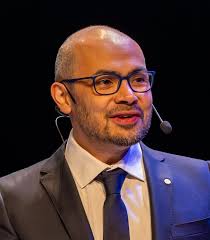
Demis Hassabis
CEO & Founder, DeepMind

AI and science with Demis Hassabis | The Royal Society x Nobel Prize

🎥 Jun 11, 2026 📺 The Royal Society ⏱ 80m 👁 553 views
Demis Hassabis, Alison Noble and Paul Nurse discuss how the scientific community can get the best out of AI. #ai #tech #science #chemisrty #nobelprize AI has already contributed to applications across all STEM fields. This Nobel Prize Dialogue looks at the ways that AI might transform science in the future. Event organised by @NobelPrize Outreach and hosted at the Royal Society. Demis Hassabis, Alison Noble and Paul Nurse joined us to discuss how the scientific community can get the best out of AI. Nobel Prize Dialogue in partnership with the Royal Society. Nobel International Par...
Watch on YouTube

About Demis Hassabis

Demis Hassabis, co-founder and CEO of Google DeepMind and 2024 Nobel laureate in Chemistry for AlphaFold, has continued to discuss the timeline for artificial general intelligence (AGI) and its potential applications. In multiple recent appearances, Hassabis stated that he believes AGI could arrive around 2030, describing the current period as the "foothills of the singularity." He has emphasized that key capabilities such as continual learning, long-term reasoning, and aspects of memory remain unsolved challenges. Hassabis has also discussed the importance of the "agentic era," where AI systems actively solve problems, as a path toward AGI. Hassabis has frequently highlighted the potential of AI to revolutionize drug discovery and medicine, stating that he believes AI could help cure every disease on Earth within a decade. He described a goal of reducing drug discovery times from an average of 10 years to months, weeks, or even days. Hassabis noted that Isomorphic Labs has test compounds in pre-clinical stage and that he views the first AI-designed drug reaching patients as a potential watershed moment. He has also expressed concern about public perception of AI, stating that the public is "right to be concerned" and that the technology is "dual purpose." Hassabis has called for international standards and cooperation on AI safety, and has advocated for the industry to demonstrate more unequivocal benefits of the technology, particularly in health and science.

Source: AI-verified profile updated from Demis Hassabis's recent appearances. Browse all interviews →

Transcript (99 segments)
✨ AI-enhanced transcript with speaker attribution
I
Interviewer0:00
So, I suppose we might start by looking out at the audience and looking at the variety of people here and thinking that when they come to this room, they're not perhaps all thinking of AI in the same way. What would you say to that?
N
Narrator0:18
Yeah, that's a very interesting way to start the conversation because we produced this report. I have a copy here a couple of years ago, and at that time, even in two years, we've come a remarkably long way in terms of people understanding what AI is. I think if I asked everybody in the audience, AI means different things to them. Back two years ago, when I was asked how do I need to understand about AI, lots of people would say how do I learn about CNN and understand how it might work. Now you do not get asked that so much because people have been using things like ChatGPT and they understand some of the principles of large language models, but they're, of course, very different things. So we have this notion, including in science, that although the technology moves on and we have different capabilities, people's personal views of AI have dramatically evolved, maybe even faster than the AI has in some sense in the last couple of years. Going to the report, we set out the report was published to the month two years ago, and that meant over the 18 months before that we decided to do a piece of work on science and AI.
I
Interviewer1:46
So, if I must just frame that you were chair of the working group, yes. Can I just ask you what the purpose of the report was? What were you setting out to do?
N
Narrator1:56
The purpose of the report came about from our science policy work deciding that we wanted to do a piece of work to understand how an area of disruptive technology was affecting scientists. One thing I said was do not come back and say AI. But of course what happened when you go out and talk to people, the most disruptive thing that either then or they could see coming was to think about how AI would affect particularly the scientific process and methodology as well as really what a scientist does. So we decided that that would be a really interesting thing to look at because although we hear about capabilities coming through, we hear less about how disruptive this is. I think what you would find in the report is that that's very much the type of thing that we were focusing on and also people are concerned about today.
I
Interviewer2:54
And how did you do the work? You had a working group but then you solicited a far wider input.
N
Narrator3:00
Yes. It was talking to fellows. Some in the room there, over 100 fellows had input through attending either workshops we had. Workshops on things like access to data at the time, in the UK it was hosting the first AI safety meeting. So we had workshops on safety, large language models, and it was about trying to get a sense from these interactions to understand some of the issues to frame the piece of work.
I
Interviewer3:35
And it's a big volume with lots of findings, but do you want to attempt to highlight the key topics that you thought were important?
N
Narrator3:47
The key things that I think are still also very relevant today: thinking about access to compute, some of that certainly in the UK has advanced, and the infrastructure needed to be able to work with any type of AI methodology. Access to data, I think that's one that's very much on people's mind, and access for your use is also an international issue. Reproducibility—this is not a new concept—but the challenges you have in being able to reproduce work and be responsible in the use of AI tools. Finally, how this is affecting skills and what people do was another aspect we were pulling out. AI often requires many different people to take on different roles. That means you're moving from siloed areas where an individual might work in their own office if you're a computational scientist, but now you're going to be working to do team science. Team science is very natural for certain areas of science, and other areas it's a brand new thing. Then it brings in things like how should you partner or should you compete? Scientists love to be competitive. So how do we manage some of these big cultural changes? These were all the things that bubbled to the top when we were thinking about the report.
I
Interviewer5:15
There's an awful lot in there, and it's a beautiful framing for much of what we'll talk about later. You at the beginning of the report asked the question whether AI is assistant, peer, or tutor, and that again is something we will come to. But you came up with recommendations as well, and those were at a slightly different angle to the topics that you identified as most important to think about. Do you want to talk about those a little?
N
Narrator5:43
Well, I think that some of the recommendations were what I've said—access to data, being able to come up with standards for data. A lot of this is discipline specific; you can't have umbrella rules. Also, I think it's reflecting that areas that are new to using AI methods should be learning from those that are more advanced. The ones that are more advanced, we're going to hear about later, where you set things like data challenges. You've invested in having high quality data; those were ready to take on machine learning as being a tool that you could discover new findings.
I
Interviewer6:30
As somebody who works deeply in this area already—you work on ultrasound imaging and on what you can get from multimodal data sets, so you're well into it—do you find that people are keen to learn from your experiences, or do you find that there are disciplinary boundaries to people's willingness to learn?
Well, in my own area, because I work in healthcare AI, as you said, I've done a lot of work in multimodal and ultrasound. What's been really interesting in terms of collaboration is that about a decade ago, it was very much computation—you were working asking for data and developing computational methods. It then went to co-design and co-creation of solutions with the end user, in this case a sonographer who is doing the scanning. And now we've moved on to as you deploy systems, you bring in experimental psychology to understand do people trust what you've used, how do they become reliant on the tools? Again, these are things that in certain areas are emerging, and we're going to hear a lot more about that in the future too.
The report is a production of a UK-based organization, but you are also Foreign Secretary of the Royal Society, so you travel a lot and have these discussions around the world. Do you find that attitudes to AI are broadly the same around the world?
N
Narrator8:07
No, they're not. It's been very interesting to have my role at this time when everybody wants to talk about science and AI because it's affecting people in different ways. I think there are some common things that we all would like to understand how science evolves—things like reproducibility, the effects of AI on publishing, peer review, writing papers, how the publishing of science will evolve. Then there are things like not everything translates to different parts of the world. In Europe, very much that is associated with responsible AI in science, underpinning everything. But if you go to India or China, they are much more excited by the potential, and you hear a lot less about the concerns, but they are also keen to talk about the ethical and responsible issues. I was at the AI summit in India, and things like the fact that large language models are built on Western world data is a big concern because it doesn't translate well into their own languages. So there are many things to have conversations about internationally. Whether this evening the conversation will get as far as international agreements and regulation, I don't know, but it seems of fundamental importance that you are having these conversations at every level to understand each other's perspectives as groundwork for future agreements. We find that as national academies is often a good place to have some of these conversations because we're talking about science that should cross geographical boundaries. The real barriers are things like access to data and being able to share information. The conversations for scientists in areas that affect global science are the ones we're having a lot of about at the current time.
I
Interviewer10:52
Thank you very much. A couple more things and then we bring up our other panelists. One is that this was published in 2024, so a lot has happened and work continues at the Royal Society. Is the next iteration another report or how does it go on?
N
Narrator11:09
I don't know if head of policy is in the room. I don't believe the plan at the moment is to have another report of this size, but certainly looking at how machine learning has evolved. For example, we do not talk about agentic AI—we mention it, but two years ago it was not so prolific. Also, thinking about reasoning and uncertainty within the context of science; we need to be able to understand uncertainty, that might also be something we look at. But watch this space for future pieces of work.
I
Interviewer11:55
And then this is a bit difficult, I think. Has the report had the impact you hoped it would?
N
Narrator12:05
Yes, in the sense that the purpose of a report is to start the next conversations and to provide a point of engagement to interact both nationally and internationally. From that perspective, it is a report that's had big impact.
I
Interviewer12:24
Well thank you. It must have been an enormous amount of work, and listening to you now has set the scene beautifully for this evening's discussion. You've covered almost every topic raised in the questions from the audience, so I could just leave it to you now, but I'm going to invite others. Could I invite Paul Nurse and Demis Hassabis to join me on stage please?
Thank you both very much indeed. I don't think great introductions are necessary—you were introduced at the start. Demis, if we could start with you. You are CEO and co-founder of Google DeepMind, also CEO and co-founder of Isomorphic Labs, and you have used this phrase that what we're witnessing is science at digital speed. Perhaps just set the scene to bring us up to speed with what we've seen so far, what AI has done to science so far.
D
Demis Hassabis13:34
Yeah, that phrase I use, science at digital speed, I coined it after seeing AlphaFold in 2020, 2021. We spent about a year folding all 200 million proteins known to science, and that's when it struck me that we were using the sorts of techniques and methods used in technology and engineering, but now applied to a scientific subject. I mean it in three different ways. One is the speed of the solution itself. AlphaFold not only was accurate enough for biologists to be useful, but it could fold an average protein in a few seconds. The second way is the dissemination of the solution. If you invent a new method, like CRISPR, it takes a while to percolate through into wet labs and become a standard tool—maybe a 10-year process. With AlphaFold, we put the structures on a database quickly, and now over 3 million researchers from 190 countries have used it. The final way, which is becoming more apparent now, is AI itself accelerating scientific discovery. I think we're in the beginnings of that now. I coined a phrase last week about being in the foothills of the singularity, which caused a stir, but I really mean that in 10 years, we'll look back and feel this period now. The agentic era is really coming to the fore and working for the first time, and when we look back, it's going to be monumental. The whole reason I worked on AI my whole life is my expression of contributing to science by building the ultimate tool for discovery. I think AI and AGI is that, and we're starting to see the beginnings now.
I
Interviewer16:49
There's an awful lot in what you just said. The choice of the word 'foothills of the singularity' is an interesting one.
D
Demis Hassabis16:54
Yes, because it's about the wider milieu around the technology. The technology we call AGI was coined by my co-founder Shane Legg, but what's going to happen to society, including science and economics, will affect everything. I think more and more people agree with that. It refers to the era we're about to live through.
I
Interviewer17:26
I want others to jump in, but may I just ask—when you talk about AI contributing to the discovery process, there were two papers published in Nature last week, one from Google DeepMind, where AI conducted experiments and made hypotheses. The pace of scientific discoveries filtering out into general use and acceptance is a strength of science, but it takes time to assess things. Do you feel people have that time anymore, or are things moving too fast?
D
Demis Hassabis18:10
I'd like to have more time to apply the scientific method more rigorously and understand the systems we're building, not just as black boxes. But it's lagging behind the pace of progress in performance. Now it's become a commercial technology with chatbots and LLMs, adding fuel to the fire of engineering ahead of science. I'd love to see the science catch up with the engineering. I'm both a scientist and an engineer, but that's the nature of market forces. It's amazing for progress, but when applied to scientific areas, it would be better to be more considered about deployment. However, we don't have a lot of time before AGI arrives—I think we're only a few years out. Society has had advance warning, and it's time to take this seriously. AlphaFold was finished in 2020, an ancient era in AI. AlphaGo was 10 years ago, marking the beginning of the modern era. So we've had time, though I'm not sure we spent it wisely as a society.
I
Interviewer20:15
Thank you. Alison, you wanted to jump in?
A
Alison20:20
One of the challenges is everyone wanting to be first. We do not reward people for slowing down, particularly in academia—you won't get a paper published if you're not first. We need to think about reward systems that encourage people to explore and understand methodologies, which is important for going forward.
I
Interviewer20:57
Thank you, very nice point. You two are both Fellows of the Royal Society, both Nobel laureates, and you have a long history together.
P
Paul Nurse21:08
We do. Even dress the same.
D
Demis Hassabis21:10
I was thinking as we came up, he was a chess master and we have the black piece and the white piece.
P
Paul Nurse21:20
I think we first spoke when you were an undergraduate at Cambridge or just after. We talked about a PhD, but you wanted to set up a gaming company, which you disapproved of.
D
Demis Hassabis21:36
You had no longer plan, yes.
P
Paul Nurse21:38
I thought I can't handle that.
D
Demis Hassabis21:45
And Paul's basically I consider him my mentor in biology. We've talked about virtual cells for 30 years now.
P
Paul Nurse21:55
We haven't got very far, but we will do soon.
I
Interviewer22:13
Okay, let's continue with this discussion of what's been happening or what will happen. What sort of problem is amenable to the approach you are spearheading? I'd like everyone's input. For instance, on Isomorphic Labs, which is a very ambitious project to reinvent drug discovery—you're an adviser, Paul, so that would be good to have your thoughts.
D
Demis Hassabis22:42
I can explain that generally. After AlphaGo, it dawned on me that the methods we developed are useful for problems with a huge combinatorial space, like in Go or protein confirmations, which can't be solved by brute force. You need a clear objective function—what are you trying to find?—and a source of data, real or from an accurate simulator. The interaction between data and synthetic data is interesting; we did that with AlphaFold. If you have these three things, current methods using deep learning to guide a search process can make intractable problems tractable. Drug discovery at Isomorphic is a continuation of that. There are 10^50 possible compounds, and we need to find one that fits disease properties. We're developing half a dozen more AlphaFold-like systems for biochemistry and chemistry to predict toxicity, ADME properties, etc.
P
Paul Nurse25:32
I wanted to go back a bit. I'm a wet scientist, so what has AI done for us? In my lab, machine learning now lets us analyze images in minutes instead of days. Literature surveys with LLMs get you started, though it's boring what you get back. AlphaFold has been amazing—we can test hypotheses quickly. The next step is applying a connected loop where AI helps at every stage of the scientific process. This requires integrating data from different sources, not just one type. Much biological data isn't collected in a uniform way, so we need methods to connect different types and lengths of data. The ultimate objective is understanding life, starting with the cell.
I
Interviewer28:54
We'll come back to the virtual cell. Alison, did you want to chip in?
A
Alison29:00
In my space, it's similar. You can't robotically perform an ultrasound scan—human expertise is required. We're thinking about solving individual tasks and integrating them. The ultimate would be a robot performing all tasks together. Five years ago, that was a dream; now people think it's possible.
I
Interviewer29:59
Things are moving so fast. You're talking about AI and humans working together, but young scientists worry about their career paths and the role of the creative scientist. Let's explore that.
P
Paul Nurse30:33
First, doing research in a wet lab is enormously boring. Most time is spent transferring small volumes of liquid. We should get robots to do that. At the Crick Institute, we have technical cores but not yet integrated as we'd like. But what we need to keep and develop is creative thinking. LLMs are not creative; they might push you in directions, but the human mind should be involved. The focus should be on how these tools assist humans to be more creative. What excites me is working with the machine to generate creative thought.
I
Interviewer32:25
But it's true that while pipetting, that can be a good time to think about experiments.
P
Paul Nurse32:34
In the 70s, I had time to think under the microscope. A problem with complex technology is you spend time making it work instead of thinking about the biological process. If it's simple, you have time to think. If robots do it, maybe we have enough time to think.
D
Demis Hassabis33:06
I agree with Paul. That's why I couldn't be attracted to the wet lab. These technologies should give us more time for creative thinking—setting hypotheses, choosing the right problem, asking the right question. That's much harder than solving it. Current AI systems can't do that. I think they will enable faster iteration through idea space, like engineering. It will free up PhD students and postdocs to do higher-level work. For example, imaging analysis will be done by AI, so students can think about experimental questions. The amount a single student can achieve will be incredible. AI is not going back into the box, but students should lean into the technology and understand it. STEM subjects remain important. The output of a PhD student in the future could be what a whole lab needed before. That could be hugely empowering, especially with tools available globally.
I
Interviewer38:14
I'm just imagining a graduate student wanting to go do some deep thinking.
D
Demis Hassabis38:20
Exactly. I have a dream with Gemini that when those become capable assistants, we can use technology less, not more. Today, we're bombarded by systems hacking our attention. If you had an AI that works on your behalf, you could delegate information gathering and protect your mind space.
P
Paul Nurse38:14
I'm just imagining my graduate student wanting to leave to do deep thinking.
I
Interviewer38:22
There was a lot in what Demis said. Do you want to come in on the engineering question, Alison?

A
Alison38:28
I think he said it well. In my group, computational postdocs can now get assistance with software and have more time to think and be creative. A few years ago, you'd need a few master students. But we must be careful about training and education. These tools are accessible, so we'll see more done by a PhD student. The notion of teams might involve smaller interdisciplinary teams.
I
Interviewer39:33
One thing to pick up on is the deluge of information. Should AI make people more creative, or are people just doing things because they can? Also, the publication system—how do we communicate science effectively with so much going on?
N
Narrator40:31
The technology has become dangerously seductive. Some high-profile journals invent ways of looking at problems, accumulate lots of data, and it's clever and expensive, but doesn't come to firm conclusions. They seem more interested in the technology than the conclusions.
P
Paul Nurse41:10
Actually something that's beginning to worry me. There's a journal called Cell which used to be a great journal. I can't bear to read it anymore because it's just full of this stuff and they just have no conclusion because they are not thinking about what it all means. I think we've got to get thinking and asking the questions back into this because I think the seduction of the technologies is a problem and it won't be solved by the computer because it's actually a human problem. They need to think the objective of all of this is to understand and not just collect data.
D
Demis Hassabis41:49
Yeah, I agree with that. There are areas of science where it's just about getting as much data as possible without thinking about functionality. I think early days of connectomics was like that. The seductive data gathering approach needs more thought. I see it in AI as well: big data was the buzzword, now AI. I used to pitch at DeepMind that big data is the problem, AI is the solution. We need more scientists thinking before generating data. The complexity is beyond any human mind, and AI is the perfect description language for biology, just as math was for physics. We won't get Newton's laws for a cell; it's more emergent, so we need simulation. We're thinking about virtual cells. We've shown it's possible with AlphaFold and predicting hurricanes with the Met Office. We used to need supercomputers for two weeks; now we can do it in hours. We're just scratching the surface. Science needs time to adapt to these tools. Many current uses are mundane but still useful. The real challenge is applying the tools creatively to the right questions. I tell CEOs: sometimes you just need stats, not AI. It's about understanding your domain and machine learning to shape the problem correctly. That new taste is required.
I
Interviewer46:59
Thank you. I'm going to, well you've mentioned the virtual cell a few times, and I think we should step up the ambition level and talk about the simulation of the virtual cell, a dream of yours that you share.
P
Paul Nurse47:11
Yeah. Well, I'll start. People try to simulate a cell by taking a simplified bacterial cell, reducing it to 500 genes, then building 400 differential equations. But if you have 400 equations and you can't predict anything, you're not very good at differential equations. I think it's nonsense to start that way. The kinetics are determined in vitro and won't work in vivo. We're nowhere near dealing with this problem. We have order and disorder in a cell, but not just order, order with purpose for survival and reproduction. It's ferociously difficult. My best idea is to divide the cell into black boxes, just knowing inputs and outputs. My lab measured protein synthesis and found huge variability in the population, with cells fluctuating around the mean. Biology thinks everything is tightly regulated, but it's actually very floppy. This may be how cells avoid getting stuck. You need to think like that, and with the sort of stuff Demis is doing, it's the way to approach it. For example, my Nobel work was scattering human genes on yeast cells that weren't replicating. It was kind of crazy, but it worked.
D
Demis Hassabis51:33
Cells that weren't replicating, which is kind of crazy. I don't think anyone thinking about it very hard would have done that, but it worked. Well, what you're saying is you have to be a bit crazy and maybe you need an input from your models. Dial up the craziness. Exactly. Just the right amount of crazy.
P
Paul Nurse56:31
Very complex.
D
Demis Hassabis56:32
Yeah, probably still too complex.
I
Interviewer56:36
So many places to go. So little time. Allison, one thing that Demis mentioned was the potential for everybody around the world to benefit from these technologies that can be distributed, but you also mentioned the barrier to access of compute power. How do we ensure that the rest of the world can participate rather than just be carried along?
A
Alison57:08
Well, people are working on this. For example, if the work depends on high-performance computers, how to do computation differently so it doesn't depend on large computes, providing access, and using techniques like federated analysis to share compute and bring results back. But some of this depends on the question and the fidelity needed to build a model. There are a variety of ways people are moving forward, and that is just evolution of technological solutions.
D
Demis Hassabis58:00
Yeah, look, we've got to sort out the computing problem. It's also an energy cost problem in this country. Energy basically means intelligence now. We have some of the most expensive energy in the world. Having said that, this is a creativity and imagination problem. Yes, you need billions for frontier models, but academia shouldn't do that. There are enough companies doing that. Instead, academia should work on analyzing black boxes, stress testing, creating benchmarks using open-source models like Gemma 4 or Chinese models that are only a year off frontier and can run on a single laptop. You can do plenty of great science with those. It's just FOMO. The best scientists block out the noise, just like we did in 2010 when no one worked on AI. Multidisciplinary work is going to be great because you can use these tools to get up to speed in other areas fast. There's plenty to be done in interdisciplinary work and the science of AI. It's just a lack of creative imagination.
I
Interviewer1:01:08
Thank you. I will turn to some of these questions. There were a lot of people interested in AGI and whether systems will become conscious. It's a very complicated thing to talk about. I know that you set out to create AGI and to use AGI to solve world problems. That was your direction.
Let's that maybe that could be talked about in another time. But now, do you see anything that worries you about any of this? We've talked about small worries, but what worries you?
D
Demis Hassabis1:01:47
Well, there are huge worries. Obviously the reason I spent my career building AI is to advance science and medicine. But there are two main worries: first, bad actors repurposing these tools for harmful ends, like bioterrorism or rogue states. Second, the technical AGI risk: as systems become more autonomous and powerful, we need guardrails strong enough to constrain their behavior to what we intended. That's a super hard problem. Then beyond that, the economics of sharing benefits as widely as possible. And then the philosophical question about meaning and purpose. I'm optimistic because I believe in human ingenuity, but we need to recognize the challenges. I'm surprised there aren't more economists working on what a post-AGI economic system would look like. Do you think we can ever build a system where the guardrails simply cannot be removed?
I
Interviewer1:03:37
That's the big question.
D
Demis Hassabis1:03:44
That's the big question. So, assuming a system gets more intelligent than us, how do we keep guardrails on something like that? That's an extremely hard but interesting research problem. It could be better done in academia or civil society, not big tech marking their own homework. I'm optimistic about steerability of current systems, but it's the alignment problem, and it's not solved. Anyone who thinks it's as simple as an off switch hasn't read Asimov. The three laws of robotics don't work.
I
Interviewer1:04:23
But is there the bandwidth for people to actually do this work while everything's developing so fast? Does a slowdown needed? And if so, what would it look like?
D
Demis Hassabis1:04:45
This isn't the way I imagined it 20 years ago. I always hoped we'd be doing basic research in a more scientific way with international collaboration, and applications like AlphaFold to cure cancer before AGI arrived. But the language bots changed that. It's not going back in the box. We need international collaboration around standards and certification, but that's hard with current geopolitics and fragmentation. We're at the nadir of international institutions. It's a tricky needle to thread.
I
Interviewer1:06:12
Sorry Demis, I don't want to keep coming to you, but since you mentioned consciousness, do you think everything the human brain can do is computable?
D
Demis Hassabis1:06:23
My all-time hero is Turing. I've talked with Roger Penrose who disagrees, but I don't see evidence of quantum in the brain. It's like putting two strange things together. So my assumption is most things in the brain are computable in the limit. I wanted to build AI as a tool for neuroscience and as a comparator to see what's special about the mind. But we don't know what consciousness is. AGI is why we coined the term – it's general intelligence without implying consciousness. I think they are dissociable. Animals have consciousness but less intelligence. Current tools don't seem conscious. I recommend crossing one rubicon first: achieve AGI and use those tools to better pose the question of consciousness. Then maybe cross the second rubicon of creating conscious entities later. Do we really want to conflate both at once?
I
Interviewer1:07:24
It's not a well-posed problem. Yeah.
D
Demis Hassabis1:07:26
And um but I think we have some aspects of it that are probably required: self-awareness, sense of identity. My view has always been that AGI is about general intelligence, not consciousness. I think those are dissociable. If I could wave a magic wand, let's cross one rubicon first: achieve AGI and use those tools to better understand consciousness. Then decide if we want to cross the second rubicon of creating conscious entities. I don't think we want to conflate both.
I
Interviewer1:09:02
Allison, I guess all scientists get involved in these conversations about consciousness at sometime. Do you want to chip in here?
A
Alison1:09:08
Well, I try to steer away from that in my applied work, but yes, it comes up. Also, how would you use that capability in science? It's a full circle.
I
Interviewer1:09:33
Yes indeed. One advantage of questions from the audience is they take you to places you wouldn't necessarily go. You mentioned philosophy already. A nice question: what is the role of philosophy of science in the future of science? A lot of conversations happen without philosophers.
P
Paul Nurse1:09:57
Well, I think philosophy is quite important in thinking about science, what knowledge is, and what you can test. You don't prove something right, you only prove it wrong, and after a while you accept it might be right due to deduction vs induction. We don't teach thinking about science properly, which has a philosophical basis. But philosophers can get tangled. We should read them but not be totally driven by them. There's no gold standard scientific method; it differs by area. How you do science in physics is different from biology or climatology. Some great physicists were hopeless in climate because they demanded complete understanding. It's complicated but we can deal with it by recognizing and describing it.
I
Interviewer1:12:03
Let's keep going. Yeah. Thank you.
D
Demis Hassabis1:12:05
Just going to say: I think philosophy's time has come. If I were a philosopher now, this would be the most exciting time ever. We need a new philosophy of science for simulations, black boxes, reverse engineering. What is understanding now? These black boxes can potentially be backed out into mathematical equations. So there's a new philosophy needed. And more broadly, we need new ethical philosophy about virtue, purpose, human condition. If we get the technical things right, those will be the most important questions. We need new philosophies like a Kant or Wittgenstein or Spinoza. If it's Wittgenstein, we'll just be silent all the time.
I
Interviewer1:13:12
Okay, two last things. One more question from here, and this one is for Allison and Paul. Possibly from a young scientist: Is there a possibility that AI will help us improve research culture and especially the kind of harassment of young scientists?
P
Paul Nurse1:13:28
What do you mean by research culture?
I
Interviewer1:13:30
I mean the culture of research that happens in laboratories around the world.
And can you see a way that AI can make it nicer to be a young scientist? You know, not so horrible as people may think.
We've talked about it in glowing terms for an hour and a half. You do hear about the problems.
P
Paul Nurse1:13:51
Well, look, scientists are bad just like everybody else, sometimes they misbehave. But I don't think we should get so tangled up with it. The media love saying they all make stuff up, but it's rare. Our culture isn't too bad, always improvable, but let's not beat ourselves up too much.
I
Interviewer1:14:16
Alison?
A
Alison1:14:17
Well, if they mean in terms of pressure to produce results, and worrying about publications, there is a lot of stress on young scientists. But we've talked about this: they should pause and reflect on what being a scientist is. That tension exists. It's up to senior people to stand up and say, 'I want you to be the best scientist regardless of the number of publications, come out with a few outstanding papers rather than volume.'
D
Demis Hassabis1:15:12
Volume doesn't matter at all.
P
Paul Nurse1:15:13
Exactly. Dead.
D
Demis Hassabis1:15:14
What matters is quality of what you produce all the time, not quantity. It's so obvious, yet astonishing that people don't realize it.
I
Interviewer1:15:25
Thank you very much indeed. I'd like to reiterate that the questions you submitted have really informed this discussion. Just to finish: Demis, when AlphaGo beat Lee Sedol in 2016, he retired from the game saying it's not the same game anymore. Is science the same game with AI attached? Has something changed?
D
Demis Hassabis1:15:49
Well, it's a bit more complicated.
I
Interviewer1:15:51
Yeah, but maybe a constructed premise for a last question: Is science the same game with AI attached? Has something changed?
D
Demis Hassabis1:16:08
Yeah, I think something will change. I saw Lee Sedol recently; he's doing great. He had a visceral experience of AI encroaching on his area. He was near the end of his career anyway, like the Roger Federer of Go. There was bittersweetness for me as a former chess player. But chess is more popular than ever now. People still care about human competition. In science, go players told me they want to know the mystery of the game, but do they really? Science is similar. I have an insatiable curiosity. AI will help us understand the laws of nature, but it will come at a cost.
I
Interviewer1:18:50
Thank you very much, Demis, Alison, Paul.
A
Alison1:18:52
I was going to say something similar: AI is a tool that will help you do science in different ways, but that's a positive, not a negative.
P
Paul Nurse1:19:06
The driver in science is to understand something we didn't understand before. Our motivation is curiosity about the unknown. The tools are important but they don't change the fundamental character of science as understanding the world.
D
Demis Hassabis1:19:33
Maybe I could just finish on an optimistic note. I am very sure that in the next 10 years we are going to enter a new renaissance, a golden age of scientific discovery. I don't know what happens beyond that, but at least we'll live through a golden age. Hopefully AlphaFold will just be one example of what we cracked with the help of AI.
I
Interviewer1:20:05
Thank you very much indeed. Thank you all of you. It's been an enormous pleasure. Thank you all.