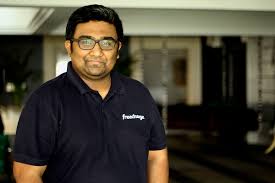
About Kunal Shah
In a recent interview with CNBC TV18, Kunal Shah discussed CRED's receipt of a payment aggregator license, stating that at scale, "even smallest optimization, be it on cost or performance, makes a huge difference." He said the license allows the company to build its own infrastructure and more reliable systems. Shah noted that CRED is deploying 30-40% of its payroll into new products, betting on a 2-4x expansion in revenue per user over the next decade, and added that "any company can be profitable if it stops building."
Shah described financial services as a "fundamentally more profitable" category that is also the most regulated, which he said allows for a "significantly higher runway." He called going public the "most overrated" trend in fintech and "building high-trust institutions" the most underrated. Shah remarked that "the business of money is business of trust" and that it is "significantly easier to build profits by letting go of trust." He also expressed a belief that within 5 to 10 years, every asset in the country should be tokenized, allowing customers to borrow at lower interest rates through secured assets.
Source: AI-verified profile updated from Kunal Shah's recent appearances.
Browse all interviews →
✨ AI-enhanced transcript with speaker attribution
H
Host0:00
Well, time now for Startup Central masterclass and Startup Central toolkit. We get you a serial entrepreneur, Kunal Shah, the founder of CRED. Ladies and gentlemen, you know him well. He of course had started FreeCharge and then sold it to Snapdeal. The reason we're getting you Kunal Shah, who's joining us from an airport lounge because he obviously believes a promise is a promise, a commitment is a commitment. Kunal, congratulations on the $120 million fundraise. CRED isn't even one year old at the moment. Thanks again for joining us from that airport lounge and being so patient. We really appreciate your commitment. Having said that, $120 million that you have raised from existing investors—what are you going to use it for? What's the future of CRED?
K
Kunal Shah0:48
First of all, thank you for having me, and I'm sorry for stressing you out. I just want to make sure I make my connection. So about the fundraise, at this point of time, the primary objective with capital is to be able to grow the consumer base that we've started with. We are doing two things: we are primarily looking at launching a bunch of products with banks, particularly if you can also do personal loans and other products powered by the banks on the platform, and also we are experimenting and exploring international markets if the product has some product-market fit. So we'll do some experiments on that, but the primary objective is to grow and grow the revenue streams with the bank and explore international markets.
H
Host1:40
Kunal Shah, does it help that you have had success in the past with FreeCharge, for example, when you go back to your investors? Like I said, CRED is even one year old. You've gone in for this fundraise. Is half the battle won because you are Kunal Shah? You've had a successful product in the past. I'm of course asking this question on behalf of all the entrepreneurs and startups tuning in.
K
Kunal Shah2:03
I think there is an advantage to being a second-time or third-time founder to be able to raise capital. I don't think that solves the problem of building a formidable business. I don't think it actually removes the pressure; in fact, it puts more pressure. Capital is a great way to create runway for being able to take off, but taking off the plane is a different act than extending runways. So I believe that capital will give us the advantage to do all the right things that we want to do, but I think we still have a lot to do, a lot to prove, before we start celebrating even a bit.
H
Host2:54
I love it, all the analogies you're drawing with runways and airports because you're of course at an airport having to make that connection. Let me know when you have to go. But Kunal, having said that, your entire model is also based on getting consumers to make credit card payments on time and rewarding them. This at a time when we are seeing some ugly fights. For example, you know, I use CRED. I know you've got some fantastic restaurants, for example, that I can go to and avail discounts. Ad Singh's Olive, for example—whoever thought that Ad Singh would be giving discounts, right? But he's doing it through CRED. How do you make sure that you're never going to be in a kind of pickle that Swiggy and Zomato are in today?
K
Kunal Shah3:35
I think it's a great question. I believe for any business to be sustainable, it's important that you deliver high-quality customers to your merchants and you're ensuring that you're not getting them hooked on to deep discounting. The moment you go down that path, automatically you have the curse of creating adverse selection for your merchant partners. We have been extremely careful in ensuring that we deliver the highest quality customers and never create deep discounting behavior. In fact, the reason you see top restaurants on the platform is that we are able to drive two times the average ticket size that they currently have on the restaurant, which automatically makes them prefer what we do versus just trying to get the kind of customers which they would less likely desire to be associated with.
H
Host4:32
Okay. So, and have you noticed that people are making credit card payments more on time if they're using CRED? Have you done any study like that? Where is CRED at now? How many members do you have?
K
Kunal Shah4:47
I think it's too early to talk about numbers, but I can tell you what people are liking about CRED so far. I think anybody who has multiple credit cards realizes the pain of managing due dates, amount to be paid, tracking it, paying it on time, remembering the due date—all of these are complicated tasks in the busy lives that we live today. CRED makes that incredibly easy to do, and the rewarding behavior is an interesting incentive to create good financial behavior. We believe that it's not a great idea to penalize people to learn good financial behavior. I think incentivizing good behavior is a great way to create a better understanding of money. A better understanding of finances and lifestyle is something that will increase and improve automatically the moment you get better with money.
H
Host5:45
Okay. And when you're saying you want to go overseas, why now? Do you think you've reached that inflection point that it's time to go overseas? There's a time when Digital India, for example, is being talked about, the penetration that we're seeing with digital money too. And where exactly do you want to go?
K
Kunal Shah6:06
Considering the business model that we are focusing on is on a niche audience, it is essential for us to kind of go more horizontal into different countries versus trying to go vertical into one country. I think it's unfair to keep an expectation for one company to go deep into one country. I think what we see in global giants is that to go to other countries is where the wealth creation has happened. You see that already in many companies: Paytm has gone international, Ola has gone international, I'm sure many other companies like UrbanClap have gone international. I think it allows you to go to countries which may be likely to have better unit economics, better customer profiles sometimes, and the capability of building from India, making the product in India, and being able to create a global customer base is something that we've all desired. The only company I remember which did it first was Zomato. I think many companies are now entering global markets and trying to make a dent. And for us, it even makes more sense considering our customers are limited, and we are more likely to see them growing by expanding horizontally across multiple countries versus trying to go deep into one country.
H
Host7:23
Okay, so which are these countries?
K
Kunal Shah7:27
We are at a very early stage of exploring. I think we are probably six to eight months away from actually meaningfully launching anything, but at this point of time we are exploring where does the product-market fit make sense. I don't believe in failing fast; I believe in planning better, so we are just beginning to start our planning phase on this.
H
Host7:50
Kunal, before I let you go, for all the people who use CRED or are thinking of using CRED, when will they see more rewards? You've got some fantastic rewards that are taking place and you can renew on a monthly basis, so I'm asking this question on behalf of all your consumers.
K
Kunal Shah8:10
I believe we've been very fortunate to get the kind of response that we got in eight or nine months. We have just started ramping up our teams to be able to get more rewards. Our goal is to get to four to six new rewards every day in probably 60 days from now, and I think that's when you will see many more options and interesting formats appearing. Lots of exciting formats will start appearing. One of the interesting formats we are thinking about is can there be something called 'CRED Studio' where you can watch a live show in the evening with your credit coins? So lots of interesting formats coming up.
H
Host8:52
What do you mean, a CRED Studio? Watch what live? Can you give some more details on that?
K
Kunal Shah9:00
Well, imagine you can tune into a singer performing at their home unplugged at 7:30 PM live, and maybe hundreds of thousands of CRED members can watch it live on the platform without having to leave their home, watch a live performance which will never be played again.
H
Host9:21
Well, that sounds pretty cool when you bring it like that. So is that the new form of rewards that we are likely to see as well? Is that how you see this evolving? Exclusivity something that maybe American Express and the concierge service had done?
K
Kunal Shah9:36
I think we misunderstand the points to only have one appeal, which is what credit cards have done so far. We are entering an age where people are looking for more and more exciting things to do, and technology allows you to enter into formats that otherwise in the past banks or financial services could not enter into. When I talk about doing a live show for coins in the evening, we are actually replicating an experience of a physical club which can actually offer multiple things: sometimes there is food, sometimes there are products, sometimes there is content, sometimes maybe there will be education. The goal is that people have different needs, and trying to force the standardization on what has been done before by the banks may not be the wisest thing for the new age format of rewards.
H
Host10:33
You know, you said you don't believe in failing fast. I don't know if Kunal Shah has ever failed, but having said that, for everybody who is watching you now, they do emulate you. They look at your success, look what you did with FreeCharge, look what you're doing with CRED. But the fact is that when you're starting out, for a lot of people failure is inevitable. What's your advice to them? And I know you sometimes like to give a lot of advice on Twitter, but I'm asking you on television.
K
Kunal Shah11:01
All I would say is that don't believe in overnight success. This is probably my ninth startup, and a lot of times people just look at your last few success stories and start believing that's a shortcut to getting there. I spoke to one founder who was extremely upset that he's not able to raise any money and I'm able to raise money so easily, and he wrote a negative post on social media criticizing Kunal. I said, 'Why are you upset with us? What did we do wrong? Give me a feedback.' He told me, 'All the investors keep giving you money. They can't even understand what I'm doing. I'm even profitable.' I think a lot of times people don't understand that it's not that Kunal Shah just managed Kunal Shah. Kunal Shah has probably done this for 15 years before he even got any investor to fund any of his companies. I think a lot of the time we give up too early. All I would say is that don't look at these success stories to be these glorious things. I think a lot of that glory has come after putting probably tens of years of dark hard work behind it to get any learning, any understanding, or any competence to be able to get any money.
H
Host12:09
So are you also therefore saying that maybe the core could be that people are going too early for funding, or maybe this particular gentleman or lady didn't know the art of making a good pitch that nobody could understand what the startup is all about?
K
Kunal Shah12:25
I believe raising money is a lot more like dating. You cannot blame the other person if they say no. You have to blame yourself for not being convincing enough for the opposite person to say yes. And I think the absence of dating culture in this country is probably the reason we are not very good at raising money, because we've not been successful at pitching and converting people. All we have done is given exams and got a merit list. Life does not operate on giving exams and merit lists. And I think that is the opportunity for a lot of people to learn that. Why blame people who are able to do it successfully when all you have to do is learn from them instead of trying to get envious or feel hurt? Because for everyone's success, there will be at least a thousand failures. That's given.
H
Host13:23
Kunal, I don't understand your analogy. You have to pitch to someone to date, so you know, having said that, there has to be natural chemistry. So I would imagine that also has to exist between founder and investor.
K
Kunal Shah13:39
No, let me explain. When you are proposing to somebody to do something with you that is going to take any amount of effort, attention, and life from them, you have to make it compelling enough to do that. If we don't empathize with them on what they like and what they are likely to give attention to—and I give the dating analogy because it's an important process through which you learn what people are likely to like and what properties you need to have in yourself, or traits you need to have in yourself, for people to appreciate that. People will like your story, your narrative, your pitch if you do the effort of understanding what they like. A lot of times, founders, I believe, do not take enough effort. And I've been on both sides; I've also been an investor, I've been a founder. I have seen consistently, when I was an investor, that people fail to articulate and empathize what the investor is trying to say. And I think just blaming the investors for not understanding and funding a few people—a lot of people say, 'Hey, they only fund IITians and other things; I'm a philosophy major, I'm not even a science graduate.' But you have to understand that all it takes is ability to understand what it takes and maybe learn from that. I think we, as founders, can take a lot of lessons from that and not be bitter about people who are able to raise money.
H
Host15:06
They do say the backbenchers are always more successful, right? I like to believe that I was a backbencher. But Kunal Shah, my last question to you: you talk about empathy, talk about compassion. It's your ninth startup that really flourished. So having said that, do you also invest in other startups or do you act as an angel investor?
K
Kunal Shah15:31
I have been probably an investor in more than 50 or 60 companies. I try to spend a lot of time with founders and give back a lot. I believe that I have been very, very fortunate in my journey, and the only thing I can give back is not just money but my time, which is actually more valuable. I try to spend a lot of time with and mentor a lot of founders. I fundamentally believe that I would be personally happy, along with the success of CRED, if I could make probably 500 founders successful by helping them. I think we'll create a big revolution in this country. I believe this country's progress is rooted in job seekers becoming job creators. If we do not make that happen, we are going to always keep blaming the government, keep blaming external factors, whereas we need to fix the country's need from becoming job seekers to job creators.
H
Host16:27
And on that very patriotic note and optimistic note, Kunal, I'm going to thank you for joining us here. That's indeed very good to know. And you know, they also say time is money, so you might be giving your time, but that's akin to also giving money. Thanks a lot, Kunal, for joining us from that airport lounge. Here he is, a second-time founder with CRED, successful founder of course. He said he had a string of failures before that. Promise is a promise. He was scared of missing his connection, but he took the time out and joined us from that airport lounge. The future of CRED, ladies and gentlemen, only on Startup Central, a rare TV interview with Kunal Shah after raising another $120 million from existing investors with CRED.