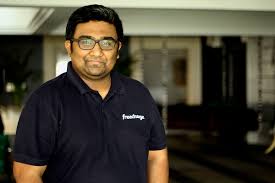
About Kunal Shah
In a recent interview with CNBC TV18, Kunal Shah discussed CRED's receipt of a payment aggregator license, stating that at scale, "even smallest optimization, be it on cost or performance, makes a huge difference." He said the license allows the company to build its own infrastructure and more reliable systems. Shah noted that CRED is deploying 30-40% of its payroll into new products, betting on a 2-4x expansion in revenue per user over the next decade, and added that "any company can be profitable if it stops building."
Shah described financial services as a "fundamentally more profitable" category that is also the most regulated, which he said allows for a "significantly higher runway." He called going public the "most overrated" trend in fintech and "building high-trust institutions" the most underrated. Shah remarked that "the business of money is business of trust" and that it is "significantly easier to build profits by letting go of trust." He also expressed a belief that within 5 to 10 years, every asset in the country should be tokenized, allowing customers to borrow at lower interest rates through secured assets.
Source: AI-verified profile updated from Kunal Shah's recent appearances.
Browse all interviews →
✨ AI-enhanced transcript with speaker attribution
H
Host0:10
Well, this is the Diwali special on Startup Central, and we've got two very special guests with us. I'm now joined by the founder and CEO of CRED, Kunal Shah, as well as the CEO of Myntra, Amar. Thanks, guys, for joining us here on this Diwali special. A Happy Diwali to both of you and both your teams. It's a COVID-19 Diwali, but it's looking like it's turned out to be one with firecrackers when it comes to the shopping and the consumption patterns. I'll come to you first, Amar. You had promised that you will never see better deals than you will this year on Myntra. Was that indeed the case? Did your customers believe that, and did you see perhaps better numbers, better sales than you had anticipated?
A
Amar1:01
Well, thanks for having me on the show. It's been a phenomenal season for us, and the validation we got from the customers is a good indication of how good these deals were that were offered to them by all the brand partners we work with. In fact, on the platform, we've seen over 100% growth in almost every metric we track. It's been a phenomenal season. In terms of our geo-penetrations as well, it's actually blown our expectations out of the sky. We are growing stronger in tier 2 and tier 3, much faster and much deeper than we ever thought we would do in 2020. It's almost like three years of growth has been accelerated for us. So yeah, couldn't have asked for a better festive season.
H
Host1:49
In fact, that seems to be the big theme of this festive season, the COVID-19 festive season. You've seen penetration of the internet in tier 2 and tier 3 cities adding to the growth, and that's not the story just on the startup street but even the likes of Unilevers of this world are talking about it. Kunal, let me come to you now. You dazzled us all with that ad campaign for the IPL. You took a big gamble with the IPL. First up, I want to know, did your favorite team win, and how bigger a success was it for you?
K
Kunal Shah2:30
First of all, thank you for having me. IPL has been great for us. We got very fortunate by getting the right attention, both from the sponsorship as well as the ads and all the discussions that happened around the campaign. Like or dislike, as they say, the opposite of love is not hate, it's indifference. So we were fortunate to not get indifference about our ads. Everybody discussed about it, and it created an interesting conversation at home for a lot of people because they saw all these stars, and all these youngsters were constantly discussing why is this funny, what are they trying to say. A lot of times, keeping that thing to let people think a little bit more created an interesting version in terms of the overall campaign. Super happy. I was supposed to be in Dubai for the finals; I chose to not do that and let the team go there and have fun, all the team members who worked on the campaign. And I don't have a favorite team. I'm not keeping up with cricket these days, but hopefully it was a good game.
H
Host3:40
I want to ask you though, and it's something I thought about every time I saw one of those stars in the ad campaign. And one has to say they were very sporting, from Madhuri Dixit to Anil Kapoor to everyone that you had. Was it difficult to convince them because they were kind of mocking themselves as well, and that was really nice, the 1990s kind of advertisements that we had seen?
K
Kunal Shah4:05
I think what I have noticed about class is that class is very secure. It does not get shaken by making jokes on themselves. And I think that's what we saw. These stars are timeless in many ways, and therefore we could relate to it and have fun with this. Even if it's a joke on themselves, I think these guys can pull it off quite well. We were amazed at how they participated and improved the script further, added those extra lines, and did a lot of that with fun. And all of this during COVID was super hard to pull off, get all the shoots done at the same time. But we were very fortunate to have a list of celebrities who are extremely generous with their time, their effort, and their spirit in doing this.
H
Host4:57
How are we going to find the next 500 million internet users? And it's not just about finding the next 500 million internet users; you've also got to make sure that they spend money and make it worth the while of companies like yourselves. So Amar, is that the next big challenge before all of you consumer internet companies, to expand the market?
A
Amar5:20
No, absolutely. That's always the path that we are chasing. But if you look at the fashion space and the segments in which we operate, which is a premium kind of segment, these users already exist today, both online and offline. These are the users who are buying high ASP items like iPhones, TVs, refrigerators online, but when it comes to fashion, they are still offline. So that's where our initiatives are going to be, that's where our investments are going to be. In fact, what has happened during the pandemic is more and more people got exposure to buying fashion online, and we would like to believe we did a decent job of holding them back, retaining them back, which is a reason why we see continued action happening on the platform ever since we started operating from unlock 1.2. What we need to do on top of this, what the pandemic gave us, is to make this experience in line with the consumers' expectations when it comes to offline. That's the reason one of the biggest investments we made during this season is the omni investment. We believe there's a new normal setting in when it comes to shopping, which is this omni way of shopping. The user doesn't really care if they're buying online or offline; they want the best at the best value.
K
Kunal Shah6:47
Not only do you need to expand the market, you've got to make sure that they continue to use the credit card, not give that in for UPI or whatever it is, and stay online. And with premiumization, the question around credit cards and anything to do with that is showing with data. You can see that the credit card spend have fully recovered from June-July timeframe from pre-COVID levels, and actually they are at all-time high now. The consumption story for the affluent will continue to happen because they have literally no impact from COVID; their income status, their job status. The worry I do have is for the rest of the country. We keep talking about 500 million customers, but the country's per capita income is $2,000. If you remove the top 20 million families, the per capita income probably drops to $700-$800. That is not an income where people are going to engage in consumption beyond basic necessities. One data point that came out recently is that Bangladesh crossed us on per capita income. People often forget that that is largely because 68% of urban female population in Bangladesh is working, versus that number is growing lower in India; it's lower than 8% now. We are imagining the per capita income will grow when one gender is just not contributing to the labor force for various reasons. The point is, will this create the next 500 million customers? I have my serious doubts on that. We have already solved data with Jio coming in, we have already solved payments with UPI coming in, we have all sorts of rails built in, we have figured out deliveries across all PIN codes in this country. The question is, where is the income? That is going to be a big question that all companies will have to ask themselves: is the market large enough? Our focus remained on 25 million customers which currently hold a card, which addresses around 70% or 80% of all discretionary spend that happens in this country. But beyond that, all of us will have to think how do we grow there. For us, we are very happy with this scale because with this scale you can achieve a very large business as long as you are really sure that you're going to focus on that. I think many companies have confused themselves: are they 500 million or 50 million customers companies? You really cannot be both.
H
Host9:38
Do you want to share the numbers with our viewers? Because it is quite amazing how in such a short time you have amassed such a large market.
K
Kunal Shah9:49
When you made that comment on how big we are, I was going to answer that I've lost six kilos as well. But that being said, the scale is... we've been very fortunate of being the largest player in credit card bill payments and focusing on credit card as an ecosystem. I think it's too early to give out specific numbers, and maybe in due course we will announce that. But we've seen significant growth. We probably saw our new user growth plan go up by 5 to 6X than it was before IPL. So super early to talk about numbers. I don't want to comment on the UPI numbers that have been published, but I would say we are getting there.
H
Host10:40
Okay, so let me take you through the numbers. In two years, you've grown to a community of about 3 million members. 35% of them access CRED at least three times a month, and you're seeing business and transactions worth about a billion dollars on CRED every month.
K
Kunal Shah10:59
Yeah, I mean we've grown since those numbers. We've not announced some of the newer metrics, but the engagement actually went up. We see consumers coming to the app probably eight to nine times a month now, and that number has only been growing as we are adding more categories of businesses on the platform. Recently we launched a store platform, specifically focused on D2C, and that has seen some very strong traction. We are still maybe listed 100-200 SKUs so far; we have not gone to scale. But the curation and discovery is creating many interesting early consumption, a new version of consumption, where people do not really come with an intent to purchase something but end up picking up stuff because it's cool and they discover something new that people are buying.
H
Host11:52
Amar, let me come to you now. Do you want to share with us the kind of traffic that you have seen so far the festive season? It's not completely over as yet.
A
Amar12:03
It's not over, but I can share a few numbers. During the five to six day event that we did, in fact seven days including the pre-early access event, we acquired more than 1 million customers, and almost half of them came from tier 2 and tier 3. But what's more encouraging for us is three out of five women who came on board came from tier 2 and tier 3. That's the biggest shift we've seen. We have been seen as a fashion platform especially in tier 2 and tier 3 where we had a lot of ground to cover in the past. In terms of concurrent users, and this is something we're really proud of, on the day when we opened up the sale, we had close to 800,000 users at the same time on the platform waiting for us to open the sale. This is by far the biggest spike any fashion platform has ever seen. But if I take a step back and look at how big Myntra has become, there are two metrics I'll introduce. The two metrics that we always look at as an e-commerce platform are daily active users and monthly active users. For a very long time, the DAU over MAU metric, which is a proxy of how many users are coming to your platform every day, was not very encouraging for e-commerce platforms because not a lot of users come back every day. Social platforms enjoy this very well because people go to WhatsApp, Facebook, Instagram almost every day, whereas for an e-commerce platform, unless you have an intent, you don't go to the platform every day. But for the first time as an e-commerce platform, we are trending toward social platforms, and that is because of the investments we made on the platform with respect to content, with respect to the influencers we got on board. Today, more and more people come to Myntra not just to shop but to actually figure out or learn how to do stuff.
H
Host14:14
Gentlemen, you know we did promote that we're getting both of you here on this special edition of Startup Central, Diwali episode. We also reached out to others in the community to try and brainstorm and increase the level of the conversation that we're going to have over here. Here's the first person who's got a question for both of you. Here he is.
R
Rajan Anandan14:40
Although India has over 500 million very active internet users, today only about 80 million of them buy online. We've seen that number accelerate in fact, both the number of buyers but more importantly, I think the number of frequent buyers has increased thanks to COVID. And we have about 150 million that use digital payments today, mostly UPI and then some wallets. So the question I have is, what would it take for the 80 million users who actually buy products online in India today to get to 200 million, let's say over the next 15-16 months, so by end of 2021? If you want to have 200 million buyers in India of products, number one, is that possible? And number two, what would it take? We'd love to get your thoughts on this.
K
Kunal Shah15:25
Increase of income. People do not need to be told that they need to buy stuff; they always buy stuff. The question is, do they have the money to buy stuff? Consumption of many categories... while we claim 80 million users, we probably have 30-40 million that frequently buy. To break from that number, we need significantly higher income levels for them to come into. I don't see it as an 18-21 phenomena. We may see a lot of trials, but for frequent buying, the necessary condition is income.
H
Host16:05
Amar, Kunal is saying that unless your income goes up, discretionary spend goes up, you're not going to find those users on the internet which will also be worth your while. What are your thoughts on this? What would you say to Rajan Anandan then? The macroeconomic situation of the country also has to change for more and more shoppers to shop?
A
Amar16:22
It's not about online or offline shopping for users to shop. But when it comes to online shopping, I'm very optimistic about the kind of growth online is going to see, primarily because if you look at the last 10 years, the infrastructure that was required for e-commerce platforms to take off happened parallelly when the e-commerce industry was growing. Our internet infrastructure, our digital payment infrastructure, our supply chain infrastructure. Today we are actually at a point where we have very reliable, very scalable platforms available in all these three segments. As a retailer now, as an e-commerce player, what we are doing right now is working with this kind of data, this kind of consumer base, and working closely with the partners to bring the best value for money. We're trying to bring the relevant selection at a better value for money, which we believe will accelerate this growth online on top of the infrastructural goodness that's been created in this country in the last 10 years. So I'm really optimistic about the next 18 months to two years.
H
Host17:35
But you know, I'm treating both of you like the gurus that I have today on this Diwali Paathshala, and it brings me now to the next person who wanted to ask both of you a question. The next guest actually became a unicorn during the pandemic. Here's the next question for both of you.
H
Harshil Mathur17:52
Hi, this is Harshil, co-founder and CEO of Razorpay. My question to the panelists is, as we go downstream to the next billion users, we've seen that the way they use the internet is significantly different from the traditional users. Instead of Google, for example, they search things on YouTube. Instead of text, they prefer voice-based communication. So given all of that, do you think the current generation of internet companies, whether it's in e-commerce, foodtech, or even fintech for that matter, are they suited to serve the needs of the next 500 million users that are going to come online, or do you think some new platforms will have to emerge?
H
Host18:32
So that's Harshil, the co-founder and CEO of Razorpay. Like I said, Razorpay did become a unicorn during the pandemic. Kunal, I'll come to you first. It's a very interesting observation he's making, that all of us are now consuming differently on the internet. What was valid a few years ago isn't, and that's always going to be the case. How conscious are you of that, and like Harshil's point, are you seeing the emergence of these platforms?
K
Kunal Shah18:51
I think it's a very good question. What you will notice is that the norms that they follow are not influenced through Western behavior. A lot of us in the top 30-40 million consumers are influenced by Western peers and how we consume content, consume products, and so on. The next 500 million customers are probably going to shop on WhatsApp, and it's not even an imaginary possibility; I think it will probably happen in 12 to 18 months. I don't think many companies are prepared for that. There's one interesting phenomenon that is going to happen, something I call 'snacky commerce'. Consumers spending small value stuff to buy interesting stuff on WhatsApp or Instagram, 500 rupees, because their per capita income is not there but they have the snacky income to go and do some micro transactions. I think many platforms have not created themselves for the 500 rupees mark. Therefore, you see platforms like MPL, Dream11 have actually become quite interesting in terms of getting to the next 100 million customers already, by fundamentally changing the ticket size as well as the mediums through which they engage these customers. The final thought is that the lines between social media and commerce will blur, definitely for 500 million customers.
H
Host20:31
This is a week, a festive week in which WhatsApp has said that the shopping button is live, WhatsApp Pay is going live. You've got Kunal now talking about snacky commerce. What does that mean for someone like Myntra?
A
Amar20:44
Well, let me take a step back on this. This change that we are talking about that might happen, or which I believe is already happening, hasn't been new to e-commerce. 10 years ago when Flipkart started, the early adopters of e-commerce were more mimicking the Western behavior. Five years into the journey, we were one of the first countries probably in the world to go mobile first, or mobile commerce more than any other country. There were players which quickly adapted to it, and those are the players which still are ruling the market. So these changes are still happening as we speak, and I agree completely with Kunal. These are the users whose behaviors will be different from the way we have experienced the users so far. I like the word 'snacky commerce', and that's exactly what we are also doing in the world of fashion. What we're doing with the brands today, we are working with the brands to create special merchandising units. These are SMUs which are very local and regional to the markets. We no longer carry the same catalog, same inventory across the country. We are working with the brands to make it more relevant to somebody in Tamil Nadu versus somebody in Rajasthan versus somebody in Kolkata. The other thing that will happen, which we are also preparing ourselves for, is social commerce. I agree that the lines will be blurred between social and commerce. The main reason why social and commerce are coming together is because this is the next set of users who want validation for their purchase. We chose to go with influencers because they are like the boy next door or the girl next door who happen to use the product just before you and can give you a very authentic review on the product, which is helping our users. That's also the reason why there's a lot of increased engagement on the platform. The third thing that will happen in the world of commerce to make the unit economics work, going back to the snacky commerce thing, is it has to be hyperlocal. It cannot follow the traditional e-commerce way of supply chain, and that's also where our omni investments are happening. So to your question, as a fashion platform, we are relooking at our consumer base and we are actually reimagining the way we do business in terms of our selection, in terms of experience, and in terms of delivery. So that's pretty much how we are preparing for this.
H
Host23:05
So before I go on, I want to very quickly, before we run out of time as well because there are many more questions, will WhatsApp therefore become the only super app? Looking like at the moment where I will go on WhatsApp to transfer money to friends, WhatsApp to shop, WhatsApp to pay my credit card bills. Kunal?
K
Kunal Shah23:24
It's hard to imagine what will happen, but will WhatsApp play a big role in times to come? The answer is yes. What users would prefer to do and not do on that will be something that we will see with time. For example, we already allow WhatsApp payments as a payment option on CRED. We allowed that even much before they got the permission to go to 20 million; we already allowed that probably even a year before they got a million customers first. My view is it will become another version of the internet in many ways that we all will have to adapt and be participating, just the way we participate on app stores. We will have to have a WhatsApp strategy.
H
Host24:11
Amar, will Myntra have to also rest on WhatsApp?
A
Amar24:16
Well, the way I see it, WhatsApp catalog... WhatsApp is going to have a significant play in the world of commerce, there is no denial about it. But commerce also, if you look at the kind of purchases, I'm just broadly categorizing them: there are habitual purchases, there are experiential purchases, and there are specs-driven purchases. WhatsApp can probably play a very significant role in habitual purchases where you know what you're buying. In its current avatar, unless WhatsApp changes its avatar, which I don't think will be the play because that's one of the reasons why WhatsApp had such an adoption because it's a very simple app to use. So there are many things at play here. All I can say right now is it's going to play a very significant role, and we will also be going with the trends of the industry to see where we need to play. As of now, our focus is to get that experience, get that kind of information for our consumers onto our platform so that we become that go-to destination for fashion.
H
Host25:25
Okay, I'm going to move on to the next question that we have. Before I do that, I don't know about you guys, but ever since I started shopping online later, I have to say one thing that keeps me up at night, worried sometimes, especially when you have data breaches. We just read about the BigBasket one recently. What if my account gets hacked, whatever, all my money goes? And I admit it's also because I live with a very paranoid father who brings up this conversation almost every other day for dinner. And with that, it's time for our next question. It is from the cybersecurity expert, this is Saket Modi.
S
Saket Modi26:05
Hey guys, wishing all of you and your families a very, very happy and safe Diwali, both physically and virtually. The question I have both for Kunal and Amar is twofold. Number one, you guys have built massive internet businesses that almost every consumer internet entrepreneur or aspiring entrepreneur looks up to. However, as Tim Cook says, with a lot of power comes a lot of responsibility of making sure that your platform is secure. How do you ensure, or how are you ensuring, that anybody who comes to shop on your platform or pay their credit card bills, their data is really secured and they don't have anything to worry about? The second question I have for you is, why the hell are you guys not using us to do your cybersecurity and your cyber defenses? Those are the two questions I would love to get an answer from you guys. Again, a very, very happy Diwali to both of you and to everybody hearing this.
H
Host27:11
I'll take it. You don't have to answer an ET Now why he's not your cybersecurity expert. But Kunal, this is something that we all have to worry about, right? It's happened to pharmaceutical majors, it's happening on startup street as well. Security is a big issue, and a lot of us don't talk about it often enough.
K
Kunal Shah27:32
No, I think it's a very important question to talk about. When you are dealing with any matter of money, the responsibility is 100% to make sure that every single customer data and money is 100% secure. Fortunately for payment companies, because of the regulation and the way the systems are designed, there are many checks and balances. For example, we have to be PCI compliant, we have to be ISO 27001. We are audited by many entities, banks who work with us, and so on, which keeps us always ahead on some of those things. But we are living in a world where constantly things can change and bad things can happen. The only thing that you can do is create immense amount of guardrails to protect all of that. We have a 100% data protection policy as a rule. The company never gives out consumer data to any third party without explicit consent, and everything is protected on the platform. In terms of payment data, we follow the UPI standard. UPI has an elaborate method to onboard partners to work with. If you are especially a payment partner for them, we have been very fortunate to be getting all the guidance as a young company from every single thing, getting to scale early on. Fortunately, because of FreeCharge experience, it was not that I'm a new entrepreneur in the space. In FreeCharge, we had zero incidents of any breach, any privacy issues, and I think we continued that good culture of investing heavily. When I say invest heavily, it is not just in team but all the processes, all the systems to ensure that, because we will not be in business if you cannot guarantee safety for the users' data and their money.
H
Host29:41
Okay, the next question now. He's in the business of trying to get people to go out and eat at restaurants. He also launched India's first luxury hotel chain in almost 20 years, but of course came COVID-19. He's still got a smile on his face. This is Kunaal Chopra, the founder of Easy Diner and Postcard, with his question for both of you.
K
Kunaal Chopra30:05
The question I wanted to ask both of you was, how can startups in India really focus on building global companies? And when I say global companies, I mean institutions. How can startups in India aspire to build institutions and not build companies which are very great to be acquired by global institutions? I think that is the paradigm change that all of us would love to see from India. And how do you think venture capitalists can aid this mindset, instead of just helping startups raise the next round and the valuation going up and then exiting the company? How can venture capitalists and startups actually come together to create global institutions out of India? That's the question that I have for both of you.
H
Host30:49
I think this question will be more appropriate for Kunal because if you're going to build a startup, how do you build it into being an institution? And is that something the venture capitalists understand, or is it still about from round to round just funding the short-term to medium-term growth story? Kunal?
K
Kunal Shah31:06
The change in mindset that is actually needed in terms of institutions to be created, I think it'll be built on focus on brand, focus on trust, focus on creating a superior offering, and understanding of consumer. That may be something that we will all have to evolve to. So far, many business models were just copy-paste of Western models. But if you see businesses today, you see games on Flipkart, which was not something that you could ever learn from the Western model. It may start from saying 'oh, how commerce should do add to cart and checkout', all of that is fine, but today that company is completely different. I think soon we will all evolve to create more long-term thinking around what do we need to really do to keep the consumer happy and engaged and trusting us with more services that we may offer. That'll come with a mindset of thinking long-term. One request I would have for the ecosystem is: be patient. Be patient with your founders, be patient with your CEOs and startup guys, because it's not easy doing this job. This constant spotlight, constant criticism, constant questions, like 'oh, you are two years old, how come you've not figured out revenue?' But nobody's ever questioned WhatsApp for 20, I mean 10-15 years of existence with no revenue. We all get scrutinized way too much because fortunately we are slightly more accessible than some of the bigger companies. That is something that we expect back: support your local founders, support your local CEOs, and they are out there to build something that will last forever.
H
Host32:50
Okay, that's something to really think about. Forget the me-too models, build for India and build for the world as well, because that's when you're really going to see the phenomenal growth, isn't it? Kunal and Amar, I don't know what you guys were doing at 15. I would imagine you would have already done something really special to be where you are today. But I've got two 15-year-old kids who had questions for you, and I was just blown away at how not just knowledgeable these kids are, but just what they want to know. They're not even sweet 16 as yet. So my next question for you is from this 15-year-old girl who's already got a startup.
S
Sarah Kari33:29
Hi, I'm Sarah Kari. I am 15 years old. I am the co-founder and CFO of YQ. So I have two questions. Hello Kunal sir, you have founded FreeCharge and now CRED. So my question is, what are the areas do you feel have great potential in the fintech space in the next 2 to 3 years? We have seen wallets, so what do you think is next? Second of all, for an early stage startup in the fintech space that has little traction, what is the revenue-cost breakup ratio that an angel investor looks for? So these are my questions. Thank you.
H
Host34:10
I wish I was... I'm telling you, I was so overwhelmed when I saw this question. I wish I was remotely as smart as this kid when I was 15.
K
Kunal Shah34:26
I'm going to take a stab at his question. First, I think the next thing for fintech is not about the label of wallet or UPI, but seamless access to credit, seamless ways to maintain good financial health. That is going to be the big thing. Every society that has prospered has solved these two things: create seamless access to credit, because without credit, expecting growth is harder to imagine. That's number one. Number two, in terms of revenue to cost breakup, I would say the best angel investors do not ask these questions. So do not waste time with people who are asking these stupid questions to you. The best angel investors are the ones who can imagine a very, very large company with you. If they can, they will not care about what your metrics are. They should see the right people, the right insight on which you are building, and the right early data. If they are asking you revenue-cost breakup and all of that stuff right now, maybe they are not angel investors, and you should probably skip them.
H
Host35:44
Okay, with that, I'd like to thank both Amar and Kunal for joining us on this very special edition of Startup Central. Thank you for being patient, thank you for taking all the questions that have been coming in. Here's wishing you and your families a very happy, prosperous, and healthy Diwali. Thank you.
K
Kunal Shah36:05
Happy Diwali to you as well.
H
Host36:14
A very, very happy and warm Diwali from the team of Startup Central and ET Now to all the viewers. Keep watching us and stay healthy and stay fit at this Diwali. Happy Diwali everyone from the Startup Central team. This Diwali, stay home, stay safe, enjoy a lot of homemade sweets, and play your card game online. That's my biggest lockdown lesson: never miss an exercise, whether you're in a suit or in your workout gear, just get it done. Live only once, live it well, live it healthy. Here's wishing you all a very happy, prosperous, healthy Diwali from the entire R household, including my babies Waffle and Bogy. Diwali wish you a very, very safe Diwali.