Back
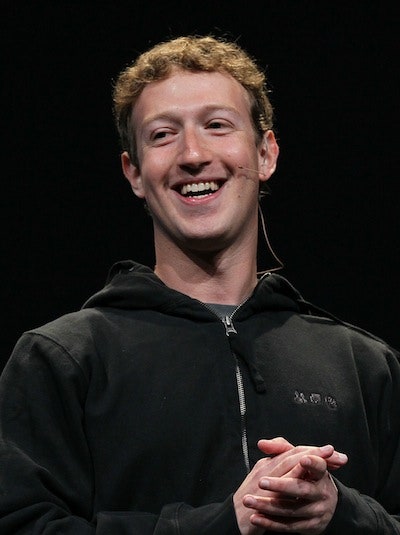
Mark Zuckerberg
Founder, Chairman & Chief Executive Officer, Meta Platforms (Facebook)

Biohub: The Future of Biology is Open-Source with Mark Zuckerberg, Priscilla Chan, and Alex Rives

🎥 Jun 03, 2026 📺 No Priors: AI, Machine Learning, Tech, & Startups ⏱ 56m 👁 10440 views
Biohub started with an ambitious goal of curing, preventing, and managing all disease by the end of the century. A decade later, thanks to the convergence of frontier AI and biological data, that goal may have been too conservative. In this episode, Elad Gil and Sarah Guo sit down with Biohub co-founders Mark Zuckerberg and Priscilla Chan, alongside Biohub Head of Science Alex Rives. Together, they discuss Biohub’s $500 million virtual biology initiative, which integrates frontier AI with wet-lab work to build predictive world models of cells, proteins, and systems. They also talk about their...
Watch on YouTube

About Mark Zuckerberg

During Meta's Q1 2026 earnings call on April 29, 2026, Zuckerberg stated that the company is increasing its infrastructure capital expenditure forecast for the year, attributing the rise primarily to higher component costs, particularly memory pricing. He said the company is focused on increasing investment efficiency and is rolling out more than one gigawatt of its own custom silicon developed with Broadcom, along with a significant amount of AMD products. Zuckerberg also noted that the company plans to reduce the size of its employee base in May, describing a leaner operating model as a way to move more quickly and offset substantial investments. On the same call, Zuckerberg expressed a view on artificial intelligence that he characterized as different from many others in the industry, stating he believes AI will amplify people's ability to achieve personal goals rather than replace people. He described the company's investment strategy as a bet that individual aspirations will become more important in the future, contrasting this with what he described as industry rhetoric about a centralized AI system performing all productive work. Zuckerberg said the company's formula has been to build experiences that can reach billions of people and focus on monetization at scale, adding that he believes the company has shown it can build leading models and be a leading AI company.

Source: AI-verified profile updated from Mark Zuckerberg's recent appearances. Browse all interviews →

Transcript (84 segments)
✨ AI-enhanced transcript with speaker attribution
M
Mark Zuckerberg0:00
We just want to give tools to the whole scientific community.
We want to understand how biology works. I want to understand the genetics of this person. I want to understand the risks they have to different illnesses. My goal is to be able to treat the individual as an individual, understand the mechanisms and be able to intervene.
We'll have a bigger impact by getting this in more scientist hands quicker by doing it as open source projects instead. It's not just like there's some factory somewhere that you can pay to produce the data. You actually need to invent new novel scientific approaches. The theory isn't that we're going to cure the diseases. We're not. It's that we want to help accelerate the pace of progress for the whole scientific field. We folded over 1.1 billion proteins and predicted their structures. And we didn't design a model for antibodies. We didn't design a model to be able to bind one particular target. We just designed a model that could understand proteins. If we could design a protein to actually change the physiology, then we can actually cure someone.
H
Host1:05
Today on No Priors, we're joined by Mark Zuckerberg, Priscilla Chan, and Alex Reeves. We'll be talking about Biohub and all their various efforts to now start applying AI at scale to do world models of cells and different levels of interactions across biology. Mark, Priscilla, thank you for doing this.
P
Priscilla Chan1:22
Yeah, thanks for having us. This was fun.
A
Alex Reeves1:23
Thank you.
H
Host1:26
You guys made BioHub your primary philanthropic effort and then committed $500 million to this virtual biology initiative. Can you tell us a little bit about, you know, why do that and how did you go from we should fund this to this is like who we are?
P
Priscilla Chan1:41
So, Biohub in its current form, we're super excited about. We feel like it's a really good fit for who we are and what we bring to the table and what we can achieve together. But this work started 10 years ago when we were thinking about how can we give back and Mark wanted to build an organization that could cure, prevent and manage all disease by the end of the century. And we had a series of hilarious meetings with scientists like famous Nobel Prize winning scientists were just laughing at us. Was that your starting line? We're just going to cure all disease.
M
Mark Zuckerberg2:18
No. No. And to be clear, we don't think that we're going to be the ones curing the diseases. Our goal was always to build tools that could accelerate the whole scientific field. That way, the scientific field collectively could cure all the diseases. But still, I thought that by the end of the century was a stretch. Now, I think it's too conservative. And so we kept being like, 'Okay, well, we had these series of funny, awkward, educational conversations where we're like, okay, but like why? Like why do you think it's impossible?' And being the person in the room is just like, 'Well, I don't know why. You tell me.' Finally, we got people to like they're like, 'Fine, if you really must know.' And we're like, 'No, we do. It seems important.' They were like, well we work in silos and when you publish information doesn't get shared, it gets locked up for long periods of time and we don't have tooling. They gave the example of we build a great tool by one postdoc in a lab and it lives on their computer and when they graduate the tool is gone. It was very hard to build shared tools to move science faster, build a shared knowledge base to quickly move science faster. That's where we began in thinking about okay, if those are the problems, what can we contribute?
Yeah, I mean so the original biohub model was basically focus on long-term tool development by bringing together engineers and scientists across multiple universities to focus on long-term tool development and it basically worked. We started off with CZI doing a number of different things and I think over time we just felt like okay, the science piece is really working and we just kept on investing more and more in it until now it is basically the primary and main thing that we're doing. We've expanded the original San Francisco Biohub to a handful now. There's New York, there's Chicago. The real focus and the unifying theme at this point is the virtual biology initiative around taking the unique data sets that are able to be generated in order to effectively model starting with the smallest pieces of proteins, but then eventually cells and whole biological systems. That's how we've evolved. This idea that some of this is an AI problem and you want to build a frontier AI lab, but you need to couple that with a frontier biology effort that can do the work of being able to understand and get the data that you need to actually be able to build these models. Because unlike language models, there's just a lot of data out there on the internet. That's not really the case with biology. There are obviously a bunch of different data sets that exist that academia and scientists have generated over the decades, but a lot of the stuff that I think we want to put into this, it doesn't exist. You want to be able to visualize things that people haven't been able to see before, which is why we're doing the imaging work. You want to be able to record things that are going on inside the body, which is why we're doing the kind of cellular engineering work. You want to be able to measure things like inflammation in ways that haven't been possible, which is why the Chicago Biohub is focused on building those kind of devices. That will fundamentally create new types of data sets that will allow new types of models. Going back to what you said, if the scientific field primarily needs tool development that now is going to empower scientists across the field to be able to do their work faster, that's what we think we can provide through this kind of long-term focus on tool development. But I think there's a fun through line from where we started to our work with Alex. Our very first request for application here was around single cell sequencing and we wanted to look at the RNA that is transcribed in individual cells. That was possible but it was still pretty early on in understanding how different cells were expressing their DNA. At the beginning we were just funding methods, getting people to describe how to do it so that others could share that methodology. Then that became us funding the human cell atlas, which is now one of the largest databases of single cell transcriptomes. It was getting hard for scientists to annotate the data, so we built cellbygene, which was a very simple annotation tool that scientists could use to make use of that data. A community came around cellbygene and started contributing more data that we had nothing to do with. Now cellbygene is a corpus of knowledge that a lot of transcriptomic based models are based off of and is used regularly by the scientific community. But there were always critiques that this is just stamp collecting, just gathering bits of data, and we're not going to be able to pull scientific knowledge and wisdom and insights out of it. We didn't have an answer for a while, and then imagine our delight when large language models became a huge topic of conversation that could make sense of large amounts of data. For me, what if we could actually understand how biology worked? Move it from a discovery based science to an engineering based science where we could systematically understand how living cells worked and understand why things go wrong. When we saw that moment, we're like, this is it. Something really big could happen here.
H
Host8:29
Alex, you started at Metaphair but you were on the path to you had assembled a team at evolutionary scale and you raised venture and you were making progress in your models. What was the pitch from Mark and Priscilla who said that's actually the right way to go after the mission?
A
Alex Reeves8:43
I think for me it was really the moment when I understood that they really saw this as an integration of frontier AI and frontier biology. I had developed conviction that this is a new era of science that's just beginning, what's going to be possible with artificial intelligence. We're in the age of information theory at scale and we have these systems that can basically predict the next token and learn world models from that. They can learn biology from the data. So I think it was really clear that to build the next institution for the next era, you would really need to have frontier artificial intelligence, frontier biology, and start to put those things in feedback, have models that are learning from the biology. You need the right scale and the right people. This really felt like the way to do that.
H
Host9:43
There's a variety of different models that you all have been working on. Some of the earliest breakthroughs in biology were things like AlphaFold where it was a Google model that showed that you could do protein folding at scale in a really interesting way that people didn't realize was very tractable. This was pre the really big transformer wave. You're working on a variety of different things at different scale: incremental molecular modeling, protein folding, cell-based stuff, thinking about interrogating larger scale systems in biology. How well do you think that extends from the micro to the macro? You mentioned starting with building blocks and building up, but modeling cellular behavior is very different from modeling protein folding. The data is very different, the modeling is different. Do you think it's all similar in terms of it's just data and you train stuff, or do you think there are differences in how you actually have to deal with these systems?
M
Mark Zuckerberg10:35
There are probably some differences. You can probably talk more to the specifics around this, but I think each layer is going to end up being somewhat qualitatively different. But you need to be able to understand the protein interactions in order to be able to understand how cells work. So you can't just go straight to cells without understanding the protein modeling. If you're trying to understand something like the way the immune system works or a bunch of cells interact together, it's tough to do that without first understanding cells. You might be able to simulate a system at a very high level of abstraction, but if you really want to understand how it's going to work, you want to build the simulations at each level hierarchically. That's basically the approach that we're going through, starting with the building blocks and the protein. There's going to be different types of data that you want to collect for each. The modeling techniques, I think we'll see. That'll all keep advancing across the board. But a big part of the strategy is this view that you need to build it up hierarchically. One of the things that's unique about us in the space is we were very intentional that the AI efforts and the wet lab efforts were a single effort. We've done a lot of work to bring them together. The really neat thing that we can do is try to pull and gather data that helps us connect across the hierarchy. You can look at transcriptomics with space within a cell and look at where it's localizing. We can look at translucent zebra fish and look at the development across different cells. We have sensors that allow us to look at cell cell communication and different molecules. So we can be strategic about the types of experiments and data we want to collect that helps us bridge across these and creates connective tissue that drives the modeling magic that happens.
H
Host12:35
The reason I asked the question by the way is I used to be a biologist. I have a PhD in biology and I worked in wet labs for almost a decade and everything else.
M
Mark Zuckerberg12:40
Are you looking for a job?
H
Host12:45
I'll we can talk about that later. At this point in my career, I'm almost at retirement. One of the things that was always lacking was this integrative nature across the different layers of biology. The developmental biologists would work on their own, the molecular biologists would be doing different experiments. So that's what I was curious about.
A
Alex Reeves13:09
Typically there's a reductionist view of biology and there's a systems view and those people didn't really work together deeply. One of the exciting things about what you're doing actually is how you're bridging that.
H
Host13:20
Yeah. And if I could add something there, I think that we're in the age of this kind of information theory in biology. There are levels of complexity and hierarchy in biology and each level is made up of and constituted by the lower levels. As you want to have that more complete description and want to have systems that can really generalize and begin to answer experimental questions digitally that you could ask in the lab, you need to have the right basis for modeling at every level. I think what's really unique about what we can do is, as Priscilla and Mark were saying, to build information at each of these different layers, collect them, collect connection points, but also do it at the scale that will reveal that underlying information architecture. That's going to be really critical to actually be able to build digital representations that can answer new experimental questions. One of the things that inspires me most about this effort is what Priscilla said: there's so much we actually don't understand about biology and what if we could? That's very different from lots of other incredibly interesting and useful AI problems we attack, where we're trying to replicate human behavior and a lot of that data is on the internet captured, and without pretending to understand all human behavior, you can predict a lot of it. I thought one of the most interesting things in your release was the mechanistic interpretability stuff you alluded to: can we actually extract new knowledge from what the model believes is happening? Can you talk a little bit about that?
A
Alex Reeves15:03
I'm really excited about that. In mechanistic interpretability, traditionally it's been applied to large language models with the goal of understanding the representation space of a large language model, how it computes things, and whether that connects to our intuitive understanding of the world. There's a really rich toolkit that has been developed to start to ask those questions. For biology, one of the classes of models we train are protein language models. They're trained on the codes of proteins, so anything they learn about biology is emergent. We've seen that they can learn things like biological structure and biological function emergent from the token prediction training task. As we think about mechanistic interpretability in those models, we're seeing the unknown because the models have been trained on billions of protein sequences, both known and unknown biology. They develop representations that start to capture things that correspond to that reductive picture of biology built up over centuries. You can start to connect the dots between proteins where we don't know anything about them with proteins where we do know something, because there's an underlying structure grammar linking them in the representation space of the model.
H
Host16:36
At the extreme, it could be we're going to understand systems in the body that we didn't before, or the mechanism of action for a new treatment, because we can ask the model and interrogate that representation.
A
Alex Reeves16:48
That's right. The hope is that you really learn the underlying basis for how it's making the predictions. You open up the black box and can understand the biology that the model is representing.
H
Host16:58
So asking for a friend, you all believe in venture backed companies as a way to have impact on the world. What was it like collecting data on zebra fish or the span of the data or the wet lab work or just the scale? What makes this a better fit for this big nonprofit ecosystem effort versus a venture backed company?
M
Mark Zuckerberg17:24
Well, I think we just want to give tools to the whole scientific community. In order to have the biggest impact, it's not actually clear that we couldn't run it as a business if we wanted to. I just think that we'll have a bigger impact by getting this in more scientist hands quicker by doing it as open source projects instead. That's the approach. You have to raise a large amount of money in order to build compute clusters. In a lot of ways the data is even more of a constraint. The scale of these models compared to language models is smaller because the amount of data is less. To get the data, it's not just like there's some factory somewhere that you can pay to produce the data. You need to invent new novel scientific approaches to do the cellular engineering we're doing in New York or the types of devices in Chicago. When we talk about frontier biology and frontier AI, the frontier biology is you need to do real science to advance different biological methods to observe the things that create the data that go to the model. It's not an off-the-shelf thing. That's a pretty big effort. I don't know that there are many things like that done as biotechs. It's the scale of the ambition and the horizon over which we're committed. If you're building tools this complicated, you want a 10 to 15 year time horizon. There's no rule that said you couldn't do it as an incredibly well-funded startup, but this made more sense. It simplifies strategically to not have to think about making money. We release them as open source. The theory isn't that we're going to cure the diseases. We want to help accelerate the pace of progress for the whole scientific field.
P
Priscilla Chan19:50
As the person least experienced with making money here, I would say that the neutral nonprofit nature of our work actually helps harness more people to enter this effort. To achieve the mission of understanding the totality of human biology and to cure, prevent, manage all disease, you need the entire academic biotech industry to come together and work on this in a unified way. There's a lot of talent out there and it's not helpful to exclude any talent. There's a super long tail of diseases. There are the common ones, but even heart disease, cancer, neurodegenerative diseases, if you unbundle dementia or depression, there are many subcategories that become more niche. That's not even looking at the long tail of rare diseases. Those often get orphaned when we look at the most efficient way to impact the lives of many. If you decentralize the effort and put the tools in many people's hands, you get people who are super interested in spinal muscular atrophy. If you put the tools in that person's hands, they're going to be able to make progress. If you had to focus your efforts and make big bets, you probably wouldn't because it's a niche disease. But understanding that disease process helps unlock knowledge about how the human body works.
H
Host21:42
Do you have any thoughts or predictions in terms of what disease areas this work will impact first? I know it's very hard to be predictive, but given the nature of the work and the nature of the models, are there areas you're most optimistic about in the short to medium term?
P
Priscilla Chan21:55
That's actually not how I think about it. The way I think about it is we want to understand how biology works. The ideal world is I understand the genetics of this person. I want to think about people at the individual level. I want to understand the genetics of this person, the risks they have to different illnesses, and the mechanistic connection between a gene variant, a protein, and a disease process. If you understand that through chain, you can design a protein, design a drug bespoke to them and intervene. We've all had experiences being sick. If you have something non-standard, you go into PubMed, you look up a paper, you start going through the methods, and you're like, am I represented in this paper? We're just making guesses. We have no mechanistic understanding. We say, okay, you're like these people we studied, and this drug impacts the pathway we think is implicated. Let's try and see if anything happens. Time passes and sometimes it works, sometimes it doesn't. My goal is to treat the individual as an individual, understand the mechanisms and be able to intervene. There are different diseases at different stages of filling out that through line. For some diseases, you want to understand which gene variants actually cause disease. That in itself can be super empowering to patients. Beyond that, there are diseases where we understand the chain we just can't intervene and change a specific protein function. That's super exciting too. If we could design a protein to change the physiology, we can cure someone. To me, that is as exciting as contributing to our understanding of how someone gets sick in the first place.
H
Host24:12
Yeah. That's a very exciting vision because you're basically saying you can bring generalizable tools to provide very personalized things for each individual person.
M
Mark Zuckerberg24:19
And that's the power of the approach is you have these big models that you build that can then apply anywhere. I know that you mentioned earlier that you were going to try and cure prevent all diseases within a hundred years and you said it could actually be sooner now given all the advances in AI. Do you have some thought of when we think we'll be closer to that goal?
I'm optimistic it'll be sooner. The thing that's complicated is that it's a dynamic system. If you fix something, there will be future things that you need to work on. I don't think the current set of things we're aware of are going to be the only things that need to be worked out. The progress with AI is very exciting on this. The other thing I'd say is we look at more kind of systems than specific diseases. One area that seems really important to understand is inflammation. This is a big focus of the Chicago Biohub. There's a lot of data on that. It seems quite clear that it's connected to a bunch of different diseases, but rather than studying the specific diseases, we think that by understanding inflammation more broadly, other companies can use these tools to work on specific therapies. Another example is the immune system. I think it's a very good case to study for some of the work we're doing in cellular engineering when we lad up from proteins to cells to whole dynamic systems within the body. That one makes sense because cells can travel around through the body. Obviously that has a big part in addressing different diseases. How do you make the immune system function better? Connecting that last mile is going to be more something that biotech or other academics will be better suited to do. This is how we think about building out the tool set that helps accelerate all these other folks. Whether the timeline is 10 years or hopefully less than 100 now, I think it's useful for your average doctor or patient to think about what's externally visible in the progress here. You worked with patients for a long time at UCSF. What should doctors look out for? What should people look out for if you're actually accelerating progress?
P
Priscilla Chan26:52
This is the part I'm super excited about, the progress for us especially with this launch that Alex and his team have put forth. I think it's very clear that science is going to start moving pretty quickly. The thing that's less clear to me is exactly how we translate to the clinic and what that looks like. What has to change is the way we do clinical research. My hope is that we're shortening the distance between bench research and patient impact. There are a lot of steps there that need people who actually take care of patients to think creatively and think about how to deploy safely. That's a gap that we have some work in. We partner with Jennifer Doudna's Cures program at UCSF. We're dipping our toe in understanding how the deployment of research needs to change given how quickly research will be progressing, but that one is still shaping up.
H
Host28:04
Maybe I could say something about our most recent launch because I think it also
M
Mark Zuckerberg28:08
Please, explicitly.
Yeah, so about a week ago we announced the new ESM fold, which is an open system for scientific discovery in protein biology. It's a world model of protein biology trained on billions of protein sequences, using a language model to learn emergent representations. We can predict atomic-resolution protein structure very quickly, and we've folded over 1.1 billion proteins, identifying features through mechanistic interpretability. The most exciting part is that it's a general model of protein biology, allowing us to search its space to design new proteins. It achieves state-of-the-art on structure prediction benchmarks, especially for protein-protein and protein-antibody interactions critical for therapeutic design. We've used it to design single-chain antibodies digitally, and after selecting from hundreds of thousands of trajectories, we synthesized and tested 96 proteins in a short experimental cycle, finding nanomolar binders. This shows that general-purpose models can yield protein design as an emergent property. It also highlights the power of open science, as we're releasing it as an open discovery engine anyone can build on, replacing intensive lab screening with computation.
H
Host31:10
You should say more about how we took that antibody screen data, validated it with PDL in cells, and used cryo-EM to complement and validate what the models were showing.
M
Mark Zuckerberg31:34
That's right. It's critical to characterize these molecules in the lab. We have a structural biology center with powerful cryo-EM microscopes, allowing us to look at proteins biophysically and functionally. We designed proteins for several therapeutically relevant targets and confirmed their function and structure at atomic resolution at the binding interfaces.
H
Host32:06
When it works the way it's supposed to.
M
Mark Zuckerberg32:08
Yeah, it's amazing.
We're able to look at the structure also at atomic resolution at the binding interfaces.
H
Host32:14
Correct. I know a lot of your work is focused on basic research and fundamentals. If I look at actual translation into drugs, a clinical trial can be 15 years and $1.5 billion. The molecule and preclinical work account for about $50 million and a few years, while the rest is drug development gated by regulatory issues, recruitment, and drug failures due to absorption or toxicity. Have you considered tackling that other chain of molecular design, or is the primary focus on basic biology and initial molecules?
M
Mark Zuckerberg32:56
My hope in building a comprehensive model of how cells work is to also predict off-target effects. Some off-target effects occur because we didn't know a kidney cell expresses a receptor, leading to renal toxicity. With a single-cell atlas of all cell types, some not predicted before, we can see which cells have receptors for the target and predict downstream effects before human trials. That's an exciting application of a transcriptomic model to understand how different cells react to interventions. When it comes to delivery mechanisms and patient care, we need to choose the right disease first—some are easier to deliver therapeutics to. We were inspired by baby KJ, where the team at CHOP delivered a CRISPR therapeutic to edit a mutation that would have caused neurotoxicity. That disease was chosen because we could easily target his liver cells. The creativity and wherewithal to choose the right applications will unlock the first applications.
P
Priscilla Chan35:10
Maybe something to add to that. You described the conventional drug development process, and these tools can have a lot of impact on that. But it's interesting to think about new paradigms—what if the barrier to develop a drug is much lower? You have programmable biology and can create a medicine for every individual patient. That has enormous implications for drug development and the future of medicine.
H
Host35:52
Yeah, it'll be an exciting day when the FDA accepts a virtual clinical trial for phase one, based on a personal view of that person.
Yeah, or even just thinking about specific mechanisms where you see acceleration—if people feel they can predict impact in kidney cells or have a stronger perspective on toxicity because of this broader understanding, they'll be willing to try many more programs.
M
Mark Zuckerberg36:21
Yeah, recruitment could change. We have a program called Rare Is One. The idea is that many companies focus on common diseases, but there's a long tail where economics don't work. If patients can organize and say they'd take an experimental drug, and because the cost is huge, if you can flip that, the economics make more sense. You can generate something more easily and pair it with a group of people. In science and engineering, you often hit your head against the wall on common problems, but you learn a lot from rare or weird edge cases. That connects well here because now you'll be able to enable a long tail of new ideas and test them more easily.
P
Priscilla Chan37:34
Yeah, that's a really good point on rare disease cohorts. First of all, they're incredibly inspiring and powerful. Patient groups are self-organizing patient registries, natural history registries, biobanks, and even clinical trials. One disease group moved a gene therapy forward in 3 to 5 years instead of decades, because patients organized the resources a scientist or clinician might need.
M
Mark Zuckerberg38:14
But to some degree, you'll need something like this because many more new things can get created. That doesn't mean the general population won't want the same level of vetting. But giving people who want to be on the frontier the ability to opt in will also be helpful.
H
Host38:33
Mhm. Yeah, letting people opt in to be part of trials is a big shift that's starting to happen and could really accelerate biology.
All three of you have mentioned the power of open ecosystems. Should that logic around open source and the breadth of data collection also apply in the language model world and multimodal AI? Does any of the work you're doing here change how you think about AI at Meta?
M
Mark Zuckerberg39:06
I think it's a similar philosophy. As Priscilla was saying, our focus is building tools that empower individuals. That's a common theme across a lot of things I work on—putting technology in individuals' hands. We don't believe in a centralized future with a small number of institutions advancing everything. Our vision isn't a central superintelligence that solves all science. People are really important, and giving them more tools to be more productive will be critical for a positive future. Progress has always been made through empowering individuals to try non-mainstream ideas. That's central to our ethos—it's why you create social media, to give people a voice. Open-source AI is one instantiation of that. In science, it makes sense, and we're deeply committed to open source, though there are considerations around biosafety we need to balance. Overall, this is deep in the ethos of our work at Biohub and other projects.
H
Host41:08
You have this incredibly ambitious mission at Biohub, yet the AI scientists here could also go work in commercial enterprises. How do you think about talent and bringing people to Biohub?
M
Mark Zuckerberg41:25
It's a hot market for AI researchers, but they're in high demand and can work on what they want. This gets back to frontier AI and frontier biology. The AI researchers here could work on language models elsewhere, but those labs don't have the frontier biology part. There's a mission component—they can do unique work here that they can't do anywhere else. I don't think there's any other organization in the world doing both frontier biology and frontier AI.
H
Host42:27
Yeah, why are you here, Alex?
A
Alex Reeves42:28
It's really simple. Our mission is to cure, prevent, and manage disease. It's such a powerful mission, and scientists are deeply motivated by it. We're at a moment where that seems achievable, and we're building a unique place with the resources to really go after it.
H
Host42:40
You say that with a straight face in a less than 100-year timeline?
A
Alex Reeves42:42
It's very serious now. There's no more.
M
Mark Zuckerberg42:45
It's a really powerful mission, and you... yeah.
A
Alex Reeves42:50
Yeah, scientists are very motivated by that. We're building a unique place where we're tackling that problem with the right resources.
H
Host43:20
Yeah, that resonates with me as someone who hires a lot of research scientists. They want to know if you have the data, tools, compute, talent, and the mission. So I think that's super competitive.
M
Mark Zuckerberg43:34
The other thing is you don't need a very large team. You can make progress with a strong group of a dozen or a couple dozen people. Finding people who care about this mission isn't hard because it's a super important thing in the world. People are drawn to different missions.
H
Host44:28
So the simplest mental model people have is structure prediction for proteins and protein-protein interactions. There's this fundamental understanding piece, and then the theory that someday we'll zero-shot things into the clinic with a much better hit rate. What needs to happen to go from ESM Fold 2 to that other piece? Is it feasible?
M
Mark Zuckerberg45:01
That's a great question. I'm really optimistic. Historically, people could spend an entire career on how to optimize a drug or get it through preclinical safety. With a new scientific paradigm, questions that were once hard become simplified. I'm optimistic that many core problems will be solved emergently through these models. For example, toxicity: if you can digitally simulate everything and predict where a drug distributes and binds across the body, you have the beginning of a solution. Once we have accurate molecular representations, we'll see rapid progress on these core problems.
H
Host46:13
What is the most exciting use or experimentation with the models you've seen in the last week since release?
M
Mark Zuckerberg46:19
It's been great to see it integrated into all kinds of things. One interesting thing is people connecting it with agentic systems to do automated design and automate the whole process. It's another example of bringing together agentic frontier AI with a world model for biology to reason about and automate the entire design process.
H
Host46:53
How do you decide what the next step in the research agenda is? It's a world model for biology, and coarsely you could scale it up, add more data, which is non-trivial. Do you take input from the larger ecosystem about how people are using it, or do you have a view on the next structures or coverage you're looking for?
M
Mark Zuckerberg47:25
There are two things. We have a view on the next big challenge, which is the virtual cell—laddering up the hierarchy of biological complexity to the cell.
H
Host47:39
Sorry, very basic question: what is the input and output of this virtual cell model?
M
Mark Zuckerberg47:44
There are different views, but ultimately you want a system that can model each level of complexity: the proteomic, genetic, and transcriptomic layers, and connect that to the phenotype. It needs enough generality to answer questions about a new intervention in an untrained context. The gap we need to close as a field is making predictions that generalize, which will require an enormous data generation effort.
H
Host48:27
Yeah, in terms of what you decide to do next, it's a normal process of constraint management. Every lab feels compute constrained. Should you double down on the protein piece or do more cellular work? Those are ongoing debates. Within that, there's the Pareto frontier of model size and data scale. So it's about where you want to be on the curves and normal constraints.
M
Mark Zuckerberg49:36
This has been the most dynamic period of technology I've seen. It's so exciting with everything happening in AI—every week something changes.
H
Host49:44
Are you tired or invigorated?
M
Mark Zuckerberg49:46
I'm both.
I feel like everybody's in a manic phase. Yes, it's a combination of invigorated and exhausted.
H
Host49:55
Yeah, it's wonderful. Things are very unpredictable right now. We have early signs of exponentiation with agentic flows, and models helping with models is still very early. If you look back five years from now, what would success look like relative to your efforts? You have this common thread of tooling for Biohub and empowering scientists at scale. Is there a specific thing you want to have accomplished?
M
Mark Zuckerberg50:37
We have a clear view of this hierarchical set of world models around biology. We want to do the highest quality work in the world. With a world-class AI research team and biohubs that are world-class life sciences organizations, that's a setup no other organization has. But great ingredients don't guarantee success. Five years from now, I hope we produce something meaningfully better and a unique intellectual contribution. I also expect to see a lot more idea generation from people using the models, but I have faith that will materialize. For me, it's about making sure we do world-class work, and the rest will take care of itself.
H
Host51:55
Very last question. Snapshot: mid-2026. What's the biggest update in your own thinking about Biohub or the domain from the last year?
M
Mark Zuckerberg52:05
From the last year, the biggest thing is that we formalized Biohub as the main focus of our philanthropy—a very big shift. Alex and the team coming in has been interesting. They're a world-class group who know each other and work well together. That stability provides a compounding benefit. Previously, Biohub leaders were primarily biologists interested in technology. Now we've flipped that: Alex is primarily an AI researcher with a background in biology. That reflects our expectation that this will drive more value in the future. So those are the biggest updates: new leader and team. On the industry side, it's on track. Exponential growth is accelerating, which has profound implications and validates making a big investment.
H
Host54:51
I think the most important aspect is that you're closing the loop with actual biology. In code and research, it's a closed-loop system; here it's open-loop, and closing the loop is crucial for progress.
P
Priscilla Chan55:04
Yeah, for me, one of the biggest changes with the strategy we're driving now with Alex at the helm is that before we had amazing teams moving generally in the same direction, but now we are arms-linked, moving together. It's very directed and exciting—a bit scary, but truly a team playing off each other to make progress toward this goal. That has taken work, but our teams' maturity now makes it sensible to interlock.
H
Host55:56
Amazing. Well, to teams being on the curve, thank you guys for doing this.
M
Mark Zuckerberg55:57
Thank you for joining us.
P
Priscilla Chan55:58
Thank you.
A
Alex Reeves55:59
Thank you.
H
Host56:02
Find us on Twitter at No Prior Pod. Subscribe to our YouTube channel if you want to see our faces. Follow the show on Apple Podcasts, Spotify, or wherever you listen to get a new episode every week. Sign up for emails or find transcripts for every episode at nobriers.com.