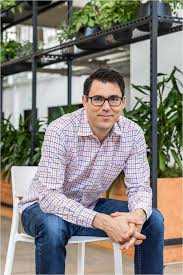
About Robert Scaringe
Rivian founder and CEO RJ Scaringe has been focused on the launch of the company's R2 vehicle, which began production in Normal, Illinois in April 2026. Scaringe stated that the R2 is crucial for the company's path to profitability, noting that its bill of materials is expected to be approximately half that of the R1 platform. He described the R2 as a "high volume mass market vehicle" with a starting price of $45,000, targeting the mid-size SUV segment. Scaringe also discussed the company's autonomy platform, stating that Rivian is developing a "large driving model" or foundation model for driving, and that the company plans to introduce point-to-point capabilities later in 2026. He said he believes advanced autonomy will become a key differentiator for customers by the second half of the decade.
Scaringe has also addressed the company's financial performance and broader strategy. He stated that Rivian delivered a second consecutive quarter of positive gross profit in Q1 2026, with a gross profit of $26 million. He noted that the policy environment, including changes to EV tax credits and tariffs, continues to be complex and rapidly evolving. Scaringe discussed Rivian's $5.8 billion software licensing deal with Volkswagen Group, which he described as allowing the deployment of Rivian's compute stack and software platform across Volkswagen's electric vehicle portfolio. He also mentioned the company's decision to increase the production capacity of its planned Georgia plant by 50% to 300,000 units annually, supported by a Department of Energy loan of up to $4.5 billion.
Source: AI-verified profile updated from Robert Scaringe's recent appearances.
Browse all interviews →
✨ AI-enhanced transcript with speaker attribution
R
Robert Scaringe0:00
If you're building a business today, you have to go into it knowing this is like full contact multi-dimensional chess and you're doing it sometimes in the middle of a tornado inside of a storm. So, you need to be convicted on the vision and the mission, but you need to be flexible on a lot of the details in all of those situations. It's built for me a recognition that resilience in instability or comfort in chaos is really actually important. So we with that we have a whole process inside the leadership team of checking our own assumptions like the world's changing so fast the thing we thought 6 months ago, is that still right?
J
Jeff Berman0:36
This is Masters of Scale. I'm Jeff Berman your host. This week on the show, RJ Scaringe. He's the founder and CEO of Rivian Automotive. Rivian just launched the much anticipated follow-up to its first electric vehicle. This one is the R2. It's a crucial moment in the company's scale journey. In my onstage conversation with RJ, we dig into how he thinks about competing with Tesla, the hard learned lessons of building a company that makes both vehicles and software, and much, much more.
RJ, business is hard. It's not easy leading teams, leading companies. Services are hard, software is hard, hardware is hard, logistics are hard. You're kind of doing all of them. How does that work?
R
Robert Scaringe1:26
I knew it would be difficult. It wasn't something I said this is going to be an easy path. There's certainly been aspects that are much harder. But a lot of the elements of building any business ring true within Rivian whether you're looking at team building, organizational structure design, processes, tool sets, supply chains. It's definitely a challenging business, but I'm having a ball.
J
Jeff Berman1:47
How do you think about teams working together when they work on such different parts of the business?
R
Robert Scaringe1:53
This is one of the things that's maybe most unique about building a car company is you have, when you really look honestly at what's necessary, you need many thousands of people to develop one product. That product requires we estimate on the order of about 40 million different decisions to bring it to life.
J
Jeff Berman2:12
40 million.
R
Robert Scaringe2:12
40 million. And there's millions of hours of engineering time necessary to deliver it. So the only way for this to work is you have to put lots of people working in parallel. So you have ultimately a team at full size of maybe five and a half to six thousand engineers working at the same time on the same product. And so it becomes a real exercise in coordination because you're not just talking about homogeneous teams of all the same background and all the same skill. You have chemists that are working on battery cell chemistry. You have structural engineers working on the body design. You have teams working on designing electronics, teams working on building software platforms across the stack from the lower levels all the way up through the application layer. And then you have to also build go to market teams, you have sales teams, service teams, and then around that you have a manufacturing team, a supply chain team. So they're very different backgrounds, very different experience sets, and the risk is you end up with a sea of many little islands of culture, many little silos that operate very differently. I think one of the most rewarding things is when you see these very different skill sets with different backgrounds, often from very different experiences, coming together around the common vision and coming together to create this amazing set of products. But it takes practice around what are the values of the business. How do we interact? How do we challenge each other? Do we allow for people to actively debate? Do we embrace that as an organizational culture or behavior? So this is something that iteratively we've really worked hard at. I think with these large organizations when you're building large complex products, there is maybe the natural tendency is to have silos and to have walls go up and to have the manufacturing team says, 'Well, if the engineering team would just make it easier to build that, we could build these things.' And the engineering team says, 'Well, the car would be so much cooler if manufacturing wasn't difficult.' Those are natural tensions. And learning to accept that there's going to be different perspectives on how to solve the same problems is really important.
J
Jeff Berman4:14
This is a lot. When there are disagreements within teams, I assume there's a team leader who makes a call. When there are disagreements between teams, how do you manage that?
R
Robert Scaringe4:21
Structurally, we've set up decision processes where here's the vision for the product. Here's what we're trying to achieve. Here's the frameworks for making these. Certainly, it can't be me making every decision. It doesn't scale. I learned that early. Often you'll have these decisions escalate if there's not alignment. We often have times where there's a point of disagreement. We say there's a disagreement on how we're going to approach this. We're going to make a decision and then we're going to all line around that decision. That process of accepting we won't always agree, there's just by virtue of the complexity of what we're building, but we ultimately have to build together means that once a decision is made, everybody gets on board.
J
Jeff Berman4:59
You referenced it doesn't scale and you learn that early if every decision runs through you. Was there a moment early on where you realized that that was a pain point that you had to solve?
R
Robert Scaringe5:07
Well, I'm an engineer. I started the company when I was 26 and I started the day after I finished my PhD and I love to build things. I grew up restoring and building classic cars. Not surprisingly, day one of the business, the first thing I did is I got my CAD station set up and I started designing parts. So I'm like, 'Oh, let me design this.' For it's not as if I wasn't already thinking about what was going to go into the vehicle, but very quickly it's clear that wow, there's thousands and thousands of components that go into a car. This won't work if my job in leading the company is designing all the parts. I have to design the teams and get the teams to work together and participate in creating scale. So I think for any time an engineer is forming a business, there's a tendency to be really close to the product, which I think is fantastic. It's a wonderful characteristic of technical founders, but you also need to recognize you can't be in every decision or in every meeting. And as the organization scales, finding ways to have influence or to impact the product, but to do it in a way that doesn't lead to the whole team waiting to say, well, what's RJ going to say and sort of paralyzed waiting for a decision to come from the top. So I often describe a car company as an exercise in enabling highly distributed decision-making that's highly coordinated, which are two things that maybe don't always go together. Thousands of people making decisions, but it needs to come out as a product that looks as if one brain, one human did everything, which of course you can't do.
J
Jeff Berman6:39
There's a theory of organizational growth, it's factors of one and three. One company, one person, at three, at 10, at 30, and so on. And what tends to happen between 30 and 100 is to your point about silos, companies literally create divisions, right? It's like one of the worst words in a company you can use. As you were going through that phase, 30 to 100, 100 to 300, etc., was there something that you realized you had to do differently than you'd done before, maybe than you'd seen other companies do?
R
Robert Scaringe7:08
Yeah, many times. And one of the things that I look back in hindsight and I say is very fortunate that things played out this way is Rivian was highly undercapitalized in the early years. And the reason I say it's fortunate is it allowed me to learn how to run a company. So it's my first time starting a business, my first time running a business. One of the things that was helpful for me is we were able to grow slowly but I was making mistakes. I was learning, but the impact of those mistakes was fairly small because we just by virtue of us not having huge budgets or a huge team. And so I directly experienced the difference of a one person team, a 10 person team, a 20 person team, and it was happening at a pace that I was sort of able to keep up my own learning. I remember early on the first time we were doing an all hands every week in the beginning, it was like the whole company met every day because the whole company was all sitting around the same table, but there's a point where we all didn't fit in one room. So the solution there was, oh, the all hands, we go to a bigger room. But eventually, you get to a point where the room size doesn't matter. You can't have everybody in the room. And you quickly learn that disseminating and distributing information, both the decisions that are being made for the business, but also how to approach making decisions becomes a real key exercise. And I give this advice all the time to people starting businesses. You also recognize the organizational structure is going to change all the time. And so you need to be really cautious around getting overly fixated on this is exactly the structure. And the way I characterize it today is the organizational structure is the most efficient way to try to organize people to get work done efficiently. But by virtue of it being a structure, it's not perfect. It's always going to be imperfect. There's going to be communication and decisioning happening across the lines. And so we should not look at this as how we communicate or how we work together. It's how we're trying to organize ourselves to be as efficient as possible. But it will change. And so it looked very different at 30 people than it did at 100 people, which looks wildly different than it does at a thousand people. Today we have 17,000 employees and we couldn't possibly all meet in the same room. We couldn't possibly have an open discussion amongst the whole team. And so getting ready for that for me was really important.
J
Jeff Berman9:29
Yeah. At this point team meetings in an NBA arena and at some point it may be an NFL stadium. One of the things I'm not sure everyone knows about Rivian is you also are a software company. Not just for yourself, but you all made a decision to license software to Volkswagen, which is at least nominally if not actually a competitor. Why?
R
Robert Scaringe9:51
Fair question. Well I have to wind the story back a little further. So early on in building the business, as an engineer there's a desire to build everything. And so I often joke that if given infinite resources, given no constraints, our supply chain would be we buy land and we'd extract resources and we'd make our own aluminum. We do everything and of course full vertical integration, no limits. We just own pieces of Earth and we're not even using Atlassian. I mean, that's how far you'd be willing to go here. At least I'm wired. Left unchecked I might end up there. But of course there are constraints and those constraints are not only money, it's time, it's focus. And so you end up having to be very intentional around what you do build. So you don't end up buying plots of land to extract raw materials, which is funny because now we actually have done some of that. But the way we looked at it is we said there's a few areas we need to completely own. That was the software platform. In the vehicle, to do the software platform well, we have to own all the electronics. And we're going to architect the way the vehicle networks, the way the software is integrated into the vehicle in a very thoughtful way where we consolidate computers down to a very small number of what we call zonal computers. So rather than computers tying to a function, which is what essentially every car on the road does today, where you have a computer that corresponds to the air conditioning system or a computer that corresponds to the seats and these little ECUs supplied by third party suppliers with little islands of software on them. We're going to make a very small number of computers where we build all the software. I remember making that decision when Rivian was still much younger and we had not a lot of money and our board said to me, 'RJ, you're crazy. You want to build computers and write all the software yourself.' And I said, 'Yeah, of course. Trust me.' I was emphatic. I was like, 'Trust me. This is what's going to be most important for us from a competitive point of view and from a product differentiating point of view.' And I obviously made the case. We ultimately made that decision. But at the end of that conversation, I said, 'Look, if we do this really well, who knows? We could end up licensing this as another way to monetize this huge investment we're going to make.' And everybody's like, 'Ah, that's not going to happen.' Anyways, fast forward a decade and we did a $5.8 billion software licensing deal with the second largest car company in the world, Volkswagen Group. And this was after Volkswagen Group had spent an enormous amount of money trying to build software architecture themselves. And what drove us to say yes to doing this wasn't just the financials of the deal. It really goes back to the core mission of the business. And the core mission of the business, the reason I started it, was the desire to have an impact on how we think about transportation and to accelerate the speed at which we as consumers shift towards electrification and increasingly electrification coupled with highly intelligent vehicles. So vehicles that are capable of driving themselves and vehicles that are capable of performing a lot of tasks through software. And so as we looked at that, we said, 'Boy, we're going to do that with our own products. We're going to launch R2. This is our first high volume product. We're launching it as we speak. That's followed by R3. You can imagine there's probably an R4 and R5. We're going to continue to grow our revenue and the business and we want to be a company that's making millions of cars over time, but we can also help enable creating really interesting and compelling products with other manufacturers.' I say this really sort of remarkable when we were thinking about that. We said the best brand to start this with would be Volkswagen Group. Because it's such a broad company. There's so many different brands, so many different form factors. It has some really incredible brands within it. Porsche, Audi, of course the volume brand Volkswagen, a host of brands in Europe. And we said it's a really interesting exercise in showing how well we can productize the software. And so we signed the deal and the first product launches next year. It's a it's a product for Europe. It'll be the lowest cost EV in Europe. It's going to be very cool. It's called the ID1, VW ID1. So you can Google it, check it out. But I'm so excited for people to buy it and take the car apart. This is common in the auto industry. People buy the products, disassemble them and benchmark. The benchmarking companies are going to be blown away. The simplicity and the elegance of the electronics and the network architecture are in a big part what enable this incredible vehicle to be so low priced. And so that ties right into our mission.
J
Jeff Berman14:28
Which is great. But if I'm on your board, I think I'm at least asking, well if the ID1 is a hit and it's a competitor to the R2, R3, R4, RJ, doesn't that cannibalize your own business? How do you run that analysis?
R
Robert Scaringe14:46
Well, one part of our vehicle is software. And so that's what we've licensed to Volkswagen, but we didn't license to them our self-driving platform. We didn't license them our vehicle designs. But I'd say put all that aside, there's a deeper held view within Rivian that obviously comes from my perspective on this which is for us to electrify, for us to shift away from dependence on fossil fuels and gasoline powered vehicles or diesel powered vehicles, it will only happen if we have a wide variety of great choices. And the auto industry is unique in that it's so big that it's unlikely and not exciting to think about a world in which the hundred-ish million cars sold every year on our planet are provided by one company and you have like two or three choices. Growing up as a car enthusiast, I think this is a space that benefits from having lots of choice. And so in the United States, for example, one of the things that I think has really stalled EV adoption is we do have an extreme lack of choice. And so in the roughly $50,000 price point, which is where the majority of the market is, the average price of a new car in the United States is $50,000. In that price range today, well now the R2's launch is different, but prior to R2 launching, I'd say there's really one highly compelling set of choices, the Model Y or the Model 3, the Tesla Model Y, Tesla Model 3. That vehicle generates 55 to 60% market share for the whole EV market in the United States. That is not a reflection of a healthy market. That's a reflection of a market that's wildly underserved. And that's nothing negative about the Tesla products. I've owned those products. They're great vehicles and it's why they've accumulated so much market share. But we need other choices. We need different form factors, different brands, different styles. Not everyone is going to want that exact shape or that exact form factor, that exact look. And so Rivian can do a part in that. We're doing as much as we can, but we're very happy to help others do that. And of course, we generate meaningful profit and margin on the software business. And so I think of it as we make money selling vehicles and we make money selling technology and they can coexist.
J
Jeff Berman16:56
Because you referenced Elon and Tesla. I have to imagine you've benefited from some of the tech Tesla backlash. I was having breakfast two days ago with my friend Leah Solvin who founded TaskRabbit and is a Rivian driver, loves your product, was raving about it. She asked me to ask you one, what has given you the intestinal fortitude to go up against Elon and two, what have you learned from going up against him that would help others who are fighting their own evil empires?
R
Robert Scaringe17:31
I think a classic way to think about competition is we focus on making incredible products, making those products super desirable, and playing our own game. Where I think folks have failed in automotive in competing with Tesla is where they say Tesla's been very successful with the Model Y and rather than having deep conviction around building a product that links to your brand, there have been a lot of Model Y copies. And so if you were to take a number of the EVs that are in market that have been unsuccessful and you were to draw a profile of the vehicle, the centerline profile and look at the vehicle packaging, where are the seats, where does everything sort of sit inside the vehicle, look at the size and the dimensions, it is remarkable how many companies took the approach of saying, 'Well, Tesla's successful with this. Let's make our own version.' And the unfortunate thing of that is if you want to buy a Tesla Model Y, you don't want XYZ company's version of a Model Y. You'll just get the Model Y. And so we've been really clear on in the premium segment, in the flagship space, we have an SUV, our R1S, and it's by a significant degree the bestselling premium electric SUV in the country. And so it significantly outsold the Model X. It outsells everything. But it's seven seats, it's got four tires, it's got four sets of doors. It's very quick. All those things I just said could have equally described the Model X as that. But outside of those characteristics, the cars couldn't be more different. And I think that's really important. It gets back to this point on variety and choice. And so Tesla was successful with Model X. They were successful with Model Y. And we developed R2. We didn't say we want R2 to try to copy Model Y. We want it to be its own product. And so that's informed a lot of how we think about decisioning and we really go back to what we believe, what's the philosophy we're approaching product development with, where are we going to make trade-offs between cost and features and performance and capability. Everything's a trade-off. And ultimately we create this set of trade-offs that lead into this product and we have a perspective that we think draws people in. So that's where I see the important thing. Now there's lots of noise around Tesla. I always just try to tell people focus on the cars and don't get drawn into that.
J
Jeff Berman20:03
You're running your own race. You're not looking at or thinking about what's going on over there.
R
Robert Scaringe20:07
One other thing I'll say, which is unique to cars. In certain technology arenas, it's not like this. But in the auto space, the largest car manufacturer in the world represents about 10% of global demand. And I say that to illustrate that this is not a space in which there's one winner. That's not true in all segments. But it is likely, I believe and I hope, there are many winners. I do think there is the potential of having less car companies in the future than we have today because of some of the technology shifts that are happening. But I do think there's going to be certainly more than five large automotive players in the Western world that are the big dominant players. Maybe not more than 10, but more than five. And so our success doesn't require someone else's failure and vice versa.
J
Jeff Berman21:01
One of the ways you optimize for being in that five or however many there will ultimately be is by finding advantages in distribution and creative ways to drive revenue. You recently did a pretty big Uber deal. Could you share what went into putting that deal together and why that deal is so strategic for Rivian?
R
Robert Scaringe21:21
We've put an enormous amount of focus on self-driving and the fruits of that are just starting to come out. So when we launched our first products in 2021, we were using what I would call a 1.0 version of autonomy and it was leveraging a Mobileye camera which a supplier provided which provided the front camera and it was part of a rules-based approach to self-driving. The planner was not AI, the planner was actually a human-written code version of how to drive, a series of if-then statements. That was what was used until 2021, maybe 2022. And that's what we launched with. But we fully understood that that wasn't the future state. And so in 2022 or late 2021, beginning of 2022, we began a process to completely redesign our system and pull it fully in house. And with that, designing a system instead around the sensors that we completely control, very high level of compute in the vehicle, and then building a large multi-billion parameter model, a foundation model or a neural net that we're training with the benefit of all the data coming off of our vehicles. And so that hardware stack took some time to build. The first version of that launched about a year and a half ago in what we call our Gen 2 vehicles and that data flywheel started to grow. And we're now at a point where the data flywheel's allowing us to start to roll out features that are big steps forward from where we were in the past. Later this year we'll have full supervised point-to-point which will be very similar to Tesla's FSD and that'll roll out to all of our Gen 2 vehicles and of course R2. Then next year we allow it to go unsupervised so you can take your eyes off the road which is really nice. So unsupervised, full point-to-point. And then the next is it getting to full capability to be able to be driven empty, meaning no one in the car or you not in the front seat. And that unlocks airport drop-offs or you can pick your kids up from school or go to the grocery store. And so we've been developing that for a while for our personal vehicles, vehicles that you own. But we also see it as unlocking new business models. Robotaxi being one of them. And we took the decision to partner with Uber so we could focus on the tech and leverage them for their access to a big distribution channel. They have a huge number of users. Again, talking about competition, they're really a category of one. There's no one quite at their scale or at their reach. And so we were really excited. We'll be deploying 50,000 robotaxi versions of R2. We start that in 2028 with paid regular rides, but leading into that we'll have vehicles on the platform with safety drivers, with people in the front seat. But it is pretty twist-your-mind when you recognize how much is going to change over the next 5 years. In the world of autonomy, and this is true in all physical AI, and we've seen it play out in the world of written AI or videos or images with Gemini and ChatGPT and platforms like that, but the rate of change we're going to see over the next 5 years, say between 2026 and 2031, is demonstrably different than the rate of change we've seen over the last 5 years.
J
Jeff Berman24:33
So what do you see that might be science fiction to everyone watching and listening that you're like, 'Oh, this is coming.'
R
Robert Scaringe24:41
Self-driving is one that we've talked about for a while and we've had breadcrumbs of it where it's implemented in a way that if you're tech forward, it's easy to understand. You can drive the vehicle, but you're sort of still in the driver's seat providing some supervision. And that's been around for quite some time. The shift to the vehicle fully driving itself is going to happen over the next couple of years. And it's going to go from something that is a nice feature, maybe for 20-25% of buyers, it's an important feature to have some level of self-driving to it's absolutely necessary. And I think it'll become unimaginable to have a car that can't fully drive itself. It sounds funny to say this, but there was a time when all of our phones weren't connected. The phone was just a phone. Well, they were connected to the wall. If you go back further even further, but you weren't sending emails on your phone. You weren't doing anything other than maybe very simple text. And now it's like you couldn't even imagine living in that world. It's hard to picture. And so I think that will happen with self-driving. It will happen very fast. And I don't believe society fully recognizes how fast this technology is moving. The ability to deploy these AI models to train much faster is just staggering how quick progress is happening. And it's so different than what it looked like 2 years ago. The rate of progress with transformer based encoding and building these large, multi-billion parameter, multi-dimensional models is mind-blowing. It's so exciting.
J
Jeff Berman26:15
RJ, one of the other things that is clear now is that the technology that you've built, the data that you have, the hardware capability, etc., lends itself to robotics to the point where you have spun out a robotics company. At what point did you realize that you had the opportunity to do that? And how did you make the decision to spin it out rather than keep it inside Rivian proper?
R
Robert Scaringe26:34
I've been thinking about robotics for a while. Robots, particularly for industrial applications, are quite interesting because in the fullness of time when we look at what the next 20 years look like, I think we're going to see a very diverse set of mechatronic embodiments for different robots. You're going to see different form factors with different capabilities. When we think of robots, it's easy to think of robots in a purely human form, a full humanoid robot. And we're going to have those. But we're going to see a diversity of form factors, maybe not as broad as the biological world, but certainly a lot broader than just human-shaped robots. We're going to have robots that can do all sorts of tasks. And some of those robots will be very similar to humans with maybe certain tweaks for their application. And some will be very different than humans. A good example of that is a car that drives itself. It does not look like a human, but it's doing something that humans used to do. We started really studying this within Rivian to look at it through the lens of manufacturing. And about a year ago, I came to the view that we should absolutely go build this business. The addressable market is enormous. It's like a third of the world's GDP is in industrial labor. Industrial labor is a real shortage for manufacturing goods. And it's a real challenge given our cost structure in the United States for us to be competitive globally in manufacturing. And because of that, we've seen a very significant portion of manufacturing in the United States and for that matter in the western world move to very low cost countries. And so I deeply believe that the way we bring a lot of that manufacturing capability back into the United States and into the western world is not with asking people, hey, you're going to have to make 1/8 what you make today and you have to work 70 hours instead of 40 hours. It's using technology and using robots in conjunction with people to run much more sophisticated plants. Anyways, that long way of me saying I decided to start a company and I'm enormously excited by this company and what we're building. That was late last year. We've raised a lot of capital for it. And so we're moving very quickly to deploy our first robots into manufacturing applications with Rivian as a first customer, but ultimately with the goal of being in many manufacturing plants for many different types of products quite quickly.
J
Jeff Berman28:52
And was the decision to spin it out because you could unlock more value and have more freedom not as a public company to do what you wanted to do there?
R
Robert Scaringe28:58
Yeah, the scale of this is huge. To build the goal is to build one of the largest robotics companies in the world, and to do that you need a lot of capital, more capital than Rivian was able to invest at this point. And then we also wanted to create absolute clarity of focus within this business on building and deploying robotics at scale. And so it's really enjoyable for me because I've been building Rivian for 17 years as we just described. I've learned a lot about building a company and so I often get asked what would you do differently and I now have the chance to build another company from scratch. In this case it doesn't have the same capital constraints that Rivian had. So it's going very, very fast, very quickly, but it's as if the last 17 years with Rivian was training for how to run.
J
Jeff Berman29:48
The biggest lesson you've applied from your growth at Rivian to the robotics company?
R
Robert Scaringe29:53
It's a lesson I apply within Rivian as well. I think that when you're looking at an overwhelming large challenge like a big technical task, and especially if you have people that are watching, let's say investors or a board, it is very common and lots of businesses do this to do things that don't contribute to making progress but generate motion. This is the curse of infinite d-loops of demos. Some of that very unfortunately is necessary. If you don't have the ability to raise capital very quickly, you end up spending a lot of time building presentations, building mock-ups of what you want to build to convince somebody that it's a good idea. But the reality is a lot of that is just a waste of time. Within Rivian, this is true. Within our robotics company, this is true. We're very focused on making progress not motion. So we actually have an expression, make progress not motion. So it's very enticing to say let me just get my CAD station out and start drawing parts or let me start generating a model, let me just spool up these 64 GPUs to run a model really quick without being thoughtful in planning. What's the architecture? What's the intent? How does this work cross-functionally? Being very intentional in building things actually allows you to go much faster later on. And R2 is a great embodying that within Rivian. The program is ramping much faster than R1. It's much smoother, but we were much more thoughtful in how we went about developing it versus the sort of chaos and lack of planfulness that existed on our first set of products due to immaturity of the business, immaturity of our processes and systems.
J
Jeff Berman31:40
On the R2, the question I really want to ask you is I've given you my hundred bucks. Can you move me up the list? We'll talk about it off stage. To get a Rivian down to this price point, how do you decide what goes into it and what gets left out?
R
Robert Scaringe31:57
I mean, a lot of it's subjective. So there's three big categories of what ultimately is going to drive cost. The first is engineering the product to deliver the same capabilities but in more cost effective ways. That's part consolidation, part elimination, maybe new processes. The second is heightened supplier leverage. This is a very important category for Rivian. When we launched R1, imagine going into a windshield supplier and saying I want to buy windshields and they say, 'Tell me about your company.' Well, we haven't sold any cars yet. 'Can I drive one?' No, it's not ready to drive. So you end up in a situation that the suppliers are making a leap of faith on R1 that the brand was going to work, that we could execute the product. Because the suppliers have to commit way before the product is in production obviously. And so we were carrying an enormous first time tax or additional cost just because of the risk factor of launching a first product. R1 resonated so well. The brand connected. All the things that you hope will happen in terms of the brand coming across the world in the way that we wanted it to, such that when we went to R2 we had all this supplier leverage. Suppliers are much more willing to work with us. So that's the second area. And then the third is content. And the content decisions are very subjective. Someone will say why did you make this decision? And I think often their perspective is like we forgot. On R1, here's a really good example. We didn't put a glove box in the car. We have a really big center console. We said we want to use the space in the area the glove box would go to put actually a bunch of computers in there and we can make the front trunk a little bigger. And it also saved us some cost so we could put more money into suspension in other areas. A lot of people disagreed with that. We reflected. We said, 'You know what? We think we're going to take that decision differently in R2.' So from R2, we have two glove boxes. So there you go.
J
Jeff Berman34:01
Yeah. The sweet spot might be in between.
R
Robert Scaringe34:06
But it's a very good example. It's not like we forgot. Oh shoot, we forgot to put a glove box in R1. No, it was a very intentional decision. And so there's millions of decisions. Like the Bob Dylan line, you can make some of the people happy some of the time. It's just a challenge to get every single feature that everyone wants. And this is why it's so important to have a very small number of people that make the very customer-facing decisions. One of the things we do now to help make those decisions thoughtfully is on the first 6 months of a program we don't allow more than 50 people to be involved. We learned this because Rivian on R1 naturally had this, the team was small. We grew into a larger team. As R1 ramped, as we finished R1, we said let's put that whole team on R2. So from day one to day ten, it was like thousands of people. And it was like, whoa, we can't make progress. We have all these decisions to make and there's way too many people. And so we reset the program and said everyone from that was on this focus on making improvements to R1 while we define the architecture, define a lot of these big decisions, get the rough pieces all in the right space. And so we put a very small SWAT team together. We did that within Rivian. We did that with R3. We're doing that on our future. You can imagine R4, to get these really small, highly cross-functional teams to make these trade-offs that are inherently going to have a lot of subjectivity to them.
J
Jeff Berman35:31
I want to close by asking about, we talked about the pace of change being truly unprecedented and it's AI of course, but it's not just that. I mean, it's dizzying, right? We've got trade issues with China. We have climate change. We have shifting EV subsidies in a more niche way. How are you staying on top of it? And how are you working with your team to make sure that they're staying on top of these ever evolving circumstances?
R
Robert Scaringe35:58
If you're building a business today, you have to go into it knowing this is full contact multi-dimensional chess and you're doing it sometimes in the middle of a tornado inside of a storm. Things are moving. Really critical that you have a highly flexible mindset. So you need to be convicted on the vision and the mission, but you need to be flexible on a lot of the details. For Rivian, we launched the company, we launched three products within 6 months in the middle of a pandemic, which we did not plan for work from home in 2020 as we were trying to build a plant and turn a plant into something that can operate. So it was maybe the most challenging environment to launch a plant into. We then had huge supply chain challenges in 2022, 2023 where I was flying around begging suppliers to get parts. And all of those situations has built for me a recognition that resilience and comfort in instability or comfort in chaos is really actually important. So we with that we have a whole process inside the leadership team of checking our own assumptions. The world's changing so fast, the thing we thought 6 months ago, is that still right? I think businesses that are sitting still or head in the sand, they're just going to have a really hard time in the world of the future. Things are changing faster, whether those are exciting things like the advent of AI completely remapping how we run our businesses, or whether they're more challenging things like global conflict. Either way they introduce uncertainty and instability that you have to manage.
J
Jeff Berman37:33
Well, we can't wait to see what you all do next. It's hard to imagine a more compelling guest for the first live podcast recording from Atlassian stage. RJ, thank you so much.