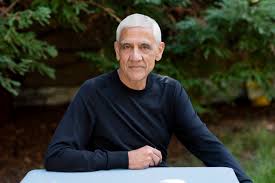
About Vinod Khosla
Vinod Khosla, founder of Khosla Ventures, has been discussing the transformative impact of artificial intelligence across multiple sectors. He described his 2019 investment in OpenAI as a contrarian bet, noting that he wrote a $50 million check and sent an apology letter to limited partners because the investment "doesn't make any logical sense" given the company was a nonprofit with no product or business plan. Khosla argued that AI will ultimately free humanity from what he called "servitude to survival," stating that jobs requiring assembly line work for eight hours a day for 40 years amount to "slavery." He said he believes 95% of the population will be better off by 2040 due to AI, despite acknowledging that technology has historically resulted in wealth concentration.
Khosla also addressed the future of education and healthcare. He said the primary reason to attend college is to learn how to learn and develop curiosity, and suggested universities should replace classrooms with meeting rooms where students can discuss topics. On healthcare, Khosla predicted that AI systems will be superior to the median doctor and oncologist, and estimated that by 2030, 80% of doctor roles could be replaced by AI. He criticized the American Medical Association for attempting to prevent AI from practicing medicine, citing a Nature Medicine paper that found AI therapy sessions were rated as if performed by the top 10% of human therapists. Khosla described himself as an independent who was a Republican for most of his life, and said he is not a member of the National Venture Capital Association because of its advocacy for special treatment of carried interest.
Source: AI-verified profile updated from Vinod Khosla's recent appearances.
Browse all interviews →
✨ AI-enhanced transcript with speaker attribution
I
Interviewer0:00
But I want to touch upon your investment in OpenAI in 2019. You have been known for contrarian bets, but this was way out there contrarian.
V
Vinod Khosla0:12
We wrote a $50 million check, and when we wrote the check, we also sent an apology letter to our LPs saying, 'Sorry, we're making this investment. It doesn't make any logical sense. It's a nonprofit. No product plan, no business plan.' I love making those plans.
I
Interviewer0:31
So freedom is the ultimate promise of AI, and just people free to live life and that becomes a new normal.
V
Vinod Khosla0:36
Who wants to work on an assembly line for 8 hours a day for 40 years? That to me is slavery. It's servitude to survival because you need a job. Those are not jobs with human dignity.
I
Interviewer0:50
But what does it mean for someone who is going to college now? Why go to college?
V
Vinod Khosla0:52
I think the only reason to go to college is...
I
Interviewer1:46
Vinod, welcome to Sparks. I've been waiting for this conversation for a long time. You may not recall, but I have been to this office a few times. I've met you in different contexts, and it was good to see you at the AKA event as well. I want to start with... I'm in the Valley for the last few days, and I come here often once or twice a year, but the pace seems very different now. There's so much action, and a lot of it seems to be concentrated in San Francisco. You've been in the Valley for the last 40 odd years. Does this feel different?
V
Vinod Khosla2:18
It definitely feels different. There's a lot of activity, a lot of genuinely good startups, but also a lot of money.
V
Vinod Khosla2:29
And that combination has resulted in velocities that are very, very high.
I
Interviewer2:36
Yeah. In one of your talks, you mentioned, and I think it's fairly obvious, there are only three or four very deep model companies now in the US, and maybe there are an equal number in China. Do you think most of the innovation is concentrated inside these companies, and there's a delta between what the companies outside these companies are able to do?
V
Vinod Khosla2:59
No, I think there's a lot of innovation outside these companies. A lot going on, at least in this area. Every day there's a new idea that's worth considering, if not funding. As a result, the best way to understand Silicon Valley today is: of all the unicorns, 91% are in the Bay Area. The rest of the world combined accounts for 9%. Which is pretty stunning.
I
Interviewer3:34
This is all unicorns, not AI unicorns?
V
Vinod Khosla3:40
I think it refers to AI unicorns, but the second highest is New York with 2%. So even the number two is largely irrelevant.
V
Vinod Khosla3:52
And so the action is here. Almost all the innovation is here. If you look at any AI company today, the engine of all AI companies is obviously the inferencing, which is powered by one of these companies. What is the nature of innovation outside?
I
Interviewer4:08
But I want to touch upon your investment in OpenAI in 2019. You have been known for contrarian bets, but this was way out there contrarian. If you recall your thinking and the discussion, what convinced you? It wasn't even clear where OpenAI was going to be a for-profit company or nonprofit, yet you wrote a pretty large check.
V
Vinod Khosla4:31
I wrote a check that was twice the size of the largest initial check I'd ever written, because I don't like writing huge checks. We like very small checks. So I'd never written in 40 years a check over $25 million initially. Later on, we added additional money. And we wrote a $50 million check. And when we wrote the check, we also sent an apology letter to our LPs saying, 'Sorry, we're making this investment. It doesn't make any logical sense. It's a nonprofit. No product plans, no business plan. It's just a technology effort.' But the idea was very simple. So today, that letter is sort of a funny thing. I should probably tweet it. It was so funny in retrospect. But what was very clear to me is when you get AI, it'll be very consequential. So it wasn't when we would get AI. It was when we get it, whenever that is, whether it happens in two years or 10 years, didn't matter. It would be very consequential. So the bet was very much on the very large upside if you were successful, and that's our kind of bet. I love making those bets.
I
Interviewer6:05
And then each bet has to be, I guess, two parts. One is you were convinced that AI, whenever it does happen, will be very consequential. But this particular company, because when you're dealing with so much uncertainty, almost no precedence, and almost no clarity about timelines, picking a team versus the other also has to have some method behind it.
V
Vinod Khosla6:26
Absolutely. You judge the team. I thought this was a very good team. We were very confident in the team. But there weren't a lot of companies. There was Google, OpenAI, and Baidu maybe as a Chinese company. So there wasn't a lot of AI efforts. It's not like today.
I
Interviewer6:50
And there's this whole thing about opportunity meeting a prepared mind. I know you've been talking about AI for a while, including I think 2012 you've been talking about AI doctors and so on. So is it almost a case of you were looking for something like this, and you happened to eventually...
V
Vinod Khosla7:05
I was absolutely looking for it. There are some important areas of technology that I tend to like to identify and say, 'We should, if we find a great startup, invest in it.' By the way, same year, it was 2018 that we committed to OpenAI. It closed in early 2019. But same year, we invested in fusion. Nobody was expecting fusion in the next 30 years. Yet we placed that bet, and I think it looks pretty good today. So I like unusual bets. We also placed a bet that year in public transit, which is also not considered a venture area. I think around then we also invested in hypersonic aircraft. That was also unusual for a startup to be doing hypersonic aircraft. So we're not afraid to place large bets. We tend to be cautious about how we guide them so they don't run out of money, because some of these areas become very difficult. But I'm always trying to say, 'What will be hugely disruptive 10 years from now that people aren't expecting?' If everybody's expecting it, then it's not interesting. But it has to be at the sweet spot of people are not expecting it, but it should at least, on average, become real in the next 10 years. Because if, let's say, OpenAI, I bet if you were to place the same bet in 2009, the story would not look that great because of finite lifetime.
I
Interviewer8:56
No, look, this is the hard part of venture investing: guessing when you will have breakthroughs, when large changes will happen.
V
Vinod Khosla9:04
So I'm always looking at everything between 2030 and 2035 and saying, 'What can be consequential?'
I
Interviewer9:14
And this philosophy as a venture capitalist, or I guess you would like to call it as a venture adviser, has been a work in progress. You've kind of honed it over a period of time by seeing a lot of different patterns. What is the backstory behind doing this way?
V
Vinod Khosla9:28
So I like to differentiate from people who are investors. They have to run spreadsheets. We never run a spreadsheet on rates of return. Rate of return calculations are just mostly misleading in our business for what we do. Most other investment firms use it. It's misleading because of the artificial mark-to-market that you...
I
Interviewer9:54
Well, it's not artificial mark-to-market. Mark-to-market in private markets is always artificial.
V
Vinod Khosla10:00
That's not the real issue. What the real issue is you can't predict these things. If I said to you OpenAI will have no revenue in January of '23, but January of '26 it'll have $20 billion, you'd say I'm crazy. So sometimes it's better to realize you can't forecast instead of trying to make a forecast and then using it as a basis for calculation.
I
Interviewer10:32
You just say it's not possible to forecast.
V
Vinod Khosla10:37
Today is obviously very impressive. It can do a lot of things, and one can also argue that we are not fully exploiting what's possible in AI even today. But a lot of the AI investment, there are now close to a trillion dollars of capex being spent this year and perhaps the next few years every year. This also assumes the scaling to continue for the next few years. Is it almost taken for granted now that we have hit an inflection point, the scaling will continue? Because it can also stop. The asymptote may play out, and this may have implications for the whole journey.
I
Interviewer11:13
If you look at the five-year journey, could you have 10 times the amount of inferencing? Absolutely. There's demand for that.
V
Vinod Khosla11:22
10 times more intelligent? What's the metric? 10 times more inferences than we do today. Could you see 100 times? Possibly. It depends on the price decline.
I
Interviewer11:35
And you're commenting on quantity of inference, not quality of inference.
V
Vinod Khosla11:38
No, just the number. Sort of measure it in tokens produced. Now the intelligence of each token will also go up, which is the quality aspect. So I suspect we'll see continuing increases in the number of tokens almost exponential. We'll keep seeing large but more modest increases in the intelligence per token, which is human intelligence delivered. And we'll see pretty rapidly declining costs per token. And if the cost declines, the demand will be there. I'm pretty confident about that.
I
Interviewer12:30
But is any of this contingent on newer breakthroughs?
V
Vinod Khosla12:36
I don't think so. There's a set of breakthroughs we can forecast pretty easily because we know how to get there. If we scale X or Y, we know scaling laws apply. We know certain cost curves of silicon and other things. Put all that together, I don't think any massive breakthroughs are needed. I consider things like memory in AI systems, continuous learning in AI systems as sort of routine things. Again, a question of when it'll come along, not if.
I
Interviewer13:14
Yeah. And the bigger question is when they come along, how good are they? How good is the continual learning? How good is memory? How well can it be utilized?
V
Vinod Khosla13:28
So I think those are predictable. I also expect we'll see unusual phenomena in AI progress that we aren't planning on. Unusual good, unusual bad, we can't say. I think mostly unusual good. There will be some bad things for sure.
I
Interviewer13:48
I want to bring the conversation to health. I think around 2016 you wrote this paper called something like '20% Doctor,' which was about the role of AI in medicine and ubiquitous world-class doctor available to everybody in their mobile phone. In fact, incidentally, 2016 was when I started my second company, and it was a health company. We wanted to solve for holistic lifestyle across everything from fitness, food, and marrying to primary care. Most of those things didn't work out. Fitness worked out very well. So today it's a very large fitness company. But the dream of that AI doctor was at least that we couldn't pursue. But fast forward 10 years from now, you think we are much closer to that vision of where everyone has...
V
Vinod Khosla14:26
There's no question. Even five years from now, you won't need a human doctor other than in interventional medicine, meaning surgery, heart surgery, burn victims, broken bones. I think five years from now, the expertise involved in a doctor is almost completely already in existence. I no longer consult doctors. I fractured my wrist last week. Got an X-ray, sent it to ChatGPT, and it told me what to do. Now, I had to have a real surgeon. I called the surgeon. Like any surgeon, he said, 'Can you come in for a consult?' I said, 'I don't think I need it. Here's what ChatGPT told me.' I sent him the exact comments from ChatGPT. He said, 'This is exactly what I'd tell you. So you don't need to consult. We'll go directly into...' The first time I met him was in the surgical theater. And it worked out. And since then, I consulted on every question: can I do this, can I do that, when will the cast come off, when can I put pressure? It's a much better... I would say it's at least as good a doctor and a much more accessible doctor. I can ask it a question at midnight and get an answer within five minutes, as opposed to waiting multiple weeks for an appointment. That's possible for every person in India today. And one of my pet projects is to get that going and deliverable in India as a nonprofit effort within the next two years.
I
Interviewer16:19
And why does it need to be a new effort? GPT already is available in India. They have pretty wide distribution, one of the largest user bases for GPT. I also consult GPT as my first protocol for any health issue, and I'm pretty happy with the outcome. Why does it require a separate effort at all?
V
Vinod Khosla16:36
I think this is misunderstood. The safety requirements for AI are much, much higher for some areas like health than in others. Today, if you consult ChatGPT, the general triage error rate will be 20 to 30%. That means you get the wrong answer 20 to 30% of the time. Now, humans are pretty bad at triage too, so you have to be careful. But when you add a health-specific system, and my son has a company that does that, they use GPT-5 but layer on things on top, the triage error rate goes to zero, much better than human beings. So I think in all these areas, if you're talking about national defense, healthcare, or financial trading, you want to use these large models. All of them are essential. They're necessary but not sufficient. You need additional things, various levels of insurance. So this is not about making AI better with further scaling. It's about building enough guardrails and checks and balances. Every domain is a little bit different. You need different things and different guardrails. But yes, we know AI systems hallucinate, and it's not been easy to reduce hallucination. If you're doing customer support and you hallucinate somebody's bank balance, that's a problem. So there are special systems that ensure the systems don't hallucinate and still use these systems but with the extra guardrails and safety. Whether it's financial, healthcare, or other critical areas.
I
Interviewer18:30
And these additional systems are more deterministic rules-based systems?
V
Vinod Khosla18:33
They're not rules-based systems. I think rules-based systems are too hard to do and manage. They're just better different techniques with different tradeoffs.
I
Interviewer18:45
Right. Got it. So maker-checker and probably multiple checks, but they're all inference-based systems that are layered together in some way.
V
Vinod Khosla18:53
So that's why there's opportunity in application areas too.
I
Interviewer18:56
Right. And this is... I'm just thinking about India healthcare since you mentioned. We have a massive public healthcare system. There are, if I'm not mistaken, hundreds of thousands of doctors working there. So one possibility is to co-opt them in some ways to be the human layer.
V
Vinod Khosla19:12
Yes. Whether you need a human layer or not, and for what, is an important question. I think each human being will make their own decision. Obviously, if an AI is going to tell me I have cancer, I might prefer a human being to tell me that rather than get a text message. But different people may prefer different things. Others may say, 'Hey, tell me as soon as possible. Text is fine. I don't want to wait one week for a doctor's appointment to learn that.' So different people will prefer different things, and I think human preference will become a big part of how we use AI systems.
I
Interviewer20:05
Yeah. What does education look like in this? It's a two-part question. For a grown-up person, someone in their 30s, 40s, 50s, probably people need to learn a lot of different things and perhaps unlearn. And a similar question for someone who is coming of age now: how should they think about education?
V
Vinod Khosla20:24
I spend most of my time today, at age 71, learning. I'm learning new subjects. If I'm interested in fusion, I learn about fusion. If I'm interested in biology, I learn about biology, cancer, drugs, whatever I need to learn, I can learn now. So the opportunity for 30- and 40-year-olds, and 50, 60, and 70-year-olds, is huge as far as learning, and it's almost all free. So that's the big advantage.
I
Interviewer20:57
And when you say learning now, it's mostly going to GPT and finding out the right resources from there and then following them?
V
Vinod Khosla21:03
Yep, that kind of thing. I often have long dialogues with GPT on a subject. Even a typical 'How do you design a much better drone motor?' I've not designed a motor in 50 years, but I can still design one with GPT and say, 'I understand the basic scientific principles and I know how to apply them, and I'll do these exercises.' I say, 'How would I design a cancer drug for this cancer?' All those are available and possible.
I
Interviewer21:36
And this is something you said one can do or one should do?
V
Vinod Khosla21:42
Well, that's each person's choice. To survive and thrive in this new world, you have to do it. If you don't want to keep up, that's fine. But I'll give you the best example. Most people in the software business know GitLab as a company. He was one of our founders. We invested when there were four people. It became a big company, a public company. Then the founder got cancer. If you look at his history, he basically decided very quickly he wouldn't talk to doctors. He would essentially design his own cancer treatment. He got deep in, learned everything from scratch as a software person, and did his own cancer vaccines, cancer drugs, custom drugs for each stage of his cancer. He wasn't given that long to live. He's alive and well and healthy now, and doing even more drugs for what he might need as cancer drugs in the future. So if a software engineer can do that, and you don't need a medical degree, that's the world we can live in. We can choose not to or choose to live there. I find it very inspiring.
I
Interviewer23:07
Yeah, this is an incredible example. Does he talk about this publicly?
V
Vinod Khosla23:10
Oh, he talks about it. In fact, he's given a couple of talks called 'Going Founder Mode on Cancer.' It's a beautiful talk.
I
Interviewer23:19
I'll ask you for an introduction. Try to invite him on this, because this is the ultimate example of what someone powered by AI and the right mindset, with no knowledge, can do. Just general intelligence. And you don't have to have a degree to have general intelligence. But what does it mean for someone who is going to college now? Why go to college?
V
Vinod Khosla23:42
I think the only reason to go to college is to learn how to learn, to learn curiosity. Why do I work 80 hours a week? Because I have curiosity about so many things. I asked ChatGPT, 'What do you think of all my searches over the last couple of years?' It freaks out because it says you've been all over the map. You're learning about cancer, fusion, designing motors, various AI algorithms, everything. Even gardening. I learned so much from ChatGPT about my own garden. So you go because you learn how to learn. You go because you learn curiosity. And by being active and online, this may be the single most important thing: you get agency. You feel like you can do things. I think that's the difference between founders and non-founders. Founders have agency. Instead of looking at a problem and saying 'they should do this,' which everyone says, founders say, 'Oh, there's a problem. I'll do it. I'll solve it.' So that's founder mode. It doesn't matter if I know about it or not. I'm just going to go start learning and attacking the problem. So agency becomes very important to learn for both a 5-year-old and a 25-year-old.
I
Interviewer25:20
So perhaps it has huge implications for how schools and colleges cultivate this curiosity and agency, because a lot of it is about teaching you what's in textbooks and being able to repeat it back in exams, and that's how the whole system works. People become very good at it, but that's not exactly fostering curiosity and agency.
V
Vinod Khosla25:41
No. And I think universities need to change. I was at IIT Delhi in February. Myself and Sam gave a talk, and then I was talking to the director. He was saying, 'We're going to expand the university. This is what we're going to do with classrooms.' And my answer was completely irrelevant. 'Do you think any of the students in our audience today will know more than the AI in their area of specialty?' The answer is obviously not. So what should you do with IIT Delhi? I said, 'Open more dome rooms to have more students.'
I
Interviewer26:16
Have more meeting rooms, not classrooms. Have places where people can gather and discuss things and debate things and do the learning at home and come back and discuss topics.
I
Interviewer26:29
So there is a role for universities, but it's not the old role. It's not lecturing out of textbooks. Those can all be thrown away. They're all obsolete anyway because the world keeps changing, especially in technology areas like engineering.
V
Vinod Khosla26:45
Every day. You can say how do I design a new magnet without railroads, right? You're not going to find it in a textbook. You're going to find it on chat and then pursue trails and build a little model and then experiment. We have people doing things like that.
V
Vinod Khosla27:03
You know the country doesn't have rare earths. Can we not depend on China? Do our own. The answer is probably a small group of people could solve that problem.
I
Interviewer27:14
That's called having agency if they choose to go do it.
V
Vinod Khosla27:18
Yeah. And I want to just underline that. I've very often noticed that sometimes I stop myself from asking the question. But if I do ask a question and engage with any of the AI models, it leads to a totally new trail and you didn't realize it's possible. So then having that agency and some courage to act on it, just you know, like this founder you mentioned, just trying to solve his own cancer situation with AI. Most people would not even attempt that. And a lot of this promise of AI we know today, everything is in some ways a digital medium, mostly text space, yes can process some images, etc., but the majority of both input and output is text with some translation. How where are you on the whole physical AI aspect?
Well, physical AI is coming in the next couple of years. We'll have the ChatGPT moment of physical AI. I've tweeted a bunch about it, so I don't think there'll be an issue with robotics in five years from now.
I
Interviewer28:22
Can you envision what does that moment look like? What are the possibilities where we say this becomes relevant to all of us?
V
Vinod Khosla28:29
You know, it's I think when you can put a robot in your home, it can cook your meals. That's a pretty stunning point.
V
Vinod Khosla28:39
Obviously, there's lots of industrial application, but a robot in your home.
I
Interviewer28:45
And these look like humanoid robot, not a specialized arm or what?
V
Vinod Khosla28:49
The most likely humanoid. I think there'll be multiple specialty form factors, but humanoids will be the largest form factor by a lot. And because they'll be the largest form factor, they'll have the most scaled manufacturing and they'll have the lowest cost. So you'll need auto manufacturing-like facilities to make large scale very low cost. But you know cars don't cost that much more than the cost of steel. If you look at it, because the value add is so automated and so scaled, it's very low overhead.
I
Interviewer29:27
And if you play out this exponential growth and impact of AI, then the world will be unrecognizable.
V
Vinod Khosla29:36
I think 15 years from now the world will be unrecognizable. A 5-year-old kid today will grow up in a very different world by the time they're 20 or 25.
I
Interviewer29:47
But it also has implications for our social, political, economic structures too. They can't just hold up the current because in some ways today if Anthropic has gone from nothing to a trillion dollar valuation in four years and it seems Google is now 5 trillion, probably most likely going to a $10 trillion company in the next few years, so it seems like the benefits today are getting highly concentrated while there's some innovation outside, but most of the benefits seem to be flowing in a very, very small area.
V
Vinod Khosla30:17
I disagree with that. I think the question to ask is: is 95% of the population better off? Not what's happening with the 5% who are making all the money. And that is happening. There's concentration of wealth. And technology has always resulted in a concentration of wealth and it'll be more nonlinear. But if you stop worrying about the few percent and say will 95% of the people be better off in 2040? Absolutely. No question. They will be better off because they are making more income in their jobs or they will require some redistribution where proactive.
I
Interviewer30:55
No, because they have access to services.
V
Vinod Khosla30:58
Yeah. If they need education, it's free. If they need health care, doctor, it's free. If they need legal services, it's free. If they need entertainment, it's near free. Hopefully even food and others will get cheaper because of robotics. So I don't need to make $100,000. Even if I make $50,000, I have a dramatically better lifestyle possibly. My bet is we'll have a very deflationary world before 2040 and prices will decline very dramatically for most goods. A few things that aren't done by robotics or have other physical constraints will be more expensive, but we'll have, for today's measure of GDP, which is defined as a basket of goods and services that we measure today, that basket will become much cheaper.
I
Interviewer31:52
Yeah. And I think some of the forums you know you have argued for that it will at some point require some government ownership for...
V
Vinod Khosla31:59
I think there's many different systems possible. Each country will adapt its own. Likely the US is very different than India, very different than Germany.
I
Interviewer32:12
Yeah. Some people will resist AI, some countries will and it depends on the politics in the country. So it's very important for a country like India to show the benefits of AI to people first.
V
Vinod Khosla32:26
Yeah. Free doctors, free teachers, free agronomists. So every small farmer can worry about it and the price of input goes down. And so they see the benefit.
I
Interviewer32:42
Mhm. They see the asymmetry so there will be more asymmetry. Yeah. And for India I guess there's additional challenge of figuring out that this whole IT service industry and BPO industry which is a huge source of foreign income for the country...
V
Vinod Khosla33:00
Business will be gone. There may be new opportunities in deploying AI to the planet. Because India has an advantage in learning how to deploy AI. Very few of the companies are doing it today. But if they do, they'll be in good shape. If they don't, they'll be in very bad shape.
I
Interviewer33:20
What are the examples of that? What can India develop at scale which can employ millions of people and participate heavily in the deployment of AI?
V
Vinod Khosla33:28
It's a complex area. I wrote a piece about it earlier this year for AI specific to India. So I'd refer you to that. It's about 20 pages long. It's a fairly detailed look at what we'll do. But you know the basic things people need. Health, education, entertainment, food, those should become much, much cheaper. Housing is the one area that's troubling because that needs to scale and still mostly depends on materials costs, not so much labor, right?
I
Interviewer34:18
Yeah. I guess if you have physical AI and really cheap humanoids, then probably...
V
Vinod Khosla34:23
Yeah. But cement will still cost like cement costs. Hopefully we can do something about scaling those things.
I
Interviewer34:32
Yes, cement also I guess is mostly energy cost at some level. So if energy becomes cheaper then I guess you'll have more options. And where in this whole quest for solving for energy for AI space has become a factor now and you have been investing in space as well with the rocket layer way back, I think 2012, 2013. Are you convinced that space has a role to play in these data centers to support massive compute infrastructure?
V
Vinod Khosla35:07
Look, I would say data centers in space don't make sense today. But there's certain cost parameters like transport cost to space for a kilogram of weight, things like that. It could make it more cost effective. Are factors of 10 possible in cost reduction? Yes. And if that happens then the equation might change. But with today's increase in costs and even normal declines, data centers in space haven't seemed to make sense. But I don't rule out larger decreases in cost. And if that happens then assumptions will change around data centers in space.
I
Interviewer36:07
If you apply your framework of what will be feasible by 2035, which side of the bet would you take? Space-based data centers a big part of our life or unlikely?
V
Vinod Khosla36:16
I would say unlikely, only because the cost on Earth will decline very rapidly. Once you have fusion, you don't have a power generation problem, for example, by 2035. So if power is dirt cheap on the planet, then why go up in space? Why get the inflexibility of fixed infrastructure that you can't change quite as easily as walking into a data center and changing a GPU that failed? Suddenly GPUs will have to be pretty different because the radiation is not healthy for semiconductors. Power generation in space is hard. Cooling in space is hard. Now, there's possible solutions to each of these problems. But if we're lucky enough to get improvement in all those dimensions much faster than cost decline on Earth, then space centers may make sense. Today I'd bet that data centers on Earth make more sense. They will decline rapidly in cost and power will not be an issue.
I
Interviewer37:32
Yeah. And hopefully I guess we'll start to get some data back as well in the next few years with all these plans of various companies to have at least some experiments going on. So maybe in two or three years we'll have some more evidence pile up as well. And what is the process of looking at it? And maybe we can discuss in the context of fusion because you know fusion even today most people don't believe is going to be realistic. The net gain from fusion over the next five years... This is an area I tried to study over the last couple of years. In fact, I was looking for a possible investment in India, we have a few fusion startups. And maybe I'm guilty of falling for consensus and not outlier belief, but pretty much anyone you talk to even today thinks it's not happening.
V
Vinod Khosla38:16
And that's the key. I don't talk to experts. You know, experts are experts in a previous version of the world, not the one you're trying to create. That's the key to remember. If I get three teams to look at fusion and all three agree, then it's probably not an unusual bet. It's consensus. If teams disagree, then it becomes more interesting. So it's hard to explain this process. I think we do a pretty good job of judging where technology is going, with probably 60-70% accuracy. And then we make a lot of mistakes but we're not afraid of those mistakes. So we've made our fair share and are never afraid to be mistaken. But you know, when you're mistaken and you make the wrong bet, you lose one times your money. But when you make the right bet, you make 100 times your money. Then it's worth placing the bet, right? And that's our paradigm. If OpenAI is successful, we should make more than 100 times, which we will. But that's always been my approach. Most people are afraid to fail. I like to say my willingness to fail is what gives me the ability to succeed. I'm not embarrassed when I fail. So I don't worry about it. If you write every investment off the day you make it, then you only have upside. Same is true of fusion. There's a trillion dollar company in fusion to be had. Most people don't agree it's feasible. I think at this point there's greater than 80% probability that in five years nobody will be debating that fusion works and works economically. My bet is in two years people will say fusion works and in five years people will say fusion works economically because you have to pass through both gates. And once it's economic, it's the source of energy for the whole planet. By the way, there's other sources. Super hot geothermal is another one I'm very excited about. I think it can be cheap, cheaper than natural gas and oil as a source of energy. Both fusion and super hot geothermal. That means geothermal above 400 degrees centigrade.
I
Interviewer40:51
Let's talk about both. But I want to double click on fusion. I'm trying to get to your process and way of thinking. Let's take fusion. There are two ways one can look at it. One is macro. We obviously know fusion works, we can look at the sun and know it works. But there are so many competing platforms and to really get into the nitty-gritty of fusion, different technologies and so on, you need to be fairly technical. Do you at Khosla Ventures employ consultants or maybe that goes against the philosophy of consulting? Is it like a macro bet or looking at technology has now reached these many gates and readiness, therefore it might be realistic in five years?
V
Vinod Khosla41:28
No, I think we take a fairly detailed look. Obviously we employ experts from time to time, but most of our gut call is ourselves. We are pretty technical. We can make these calls. So expert diligence is confirmation rather than decision. The question you have to ask in something like fusion is: why now? In 2018, what has changed that would say it's not possible before but now it might be possible? And that was high temperature superconductors. And that dramatically changes both the experiments you can run and the rate at which you can run them. And also the economics. If you can use high temperature superconductors, which was the big risk, to build a 20 Tesla magnet, if the magnet is four times more powerful than what was possible before, your reactor is going to be 1/250th the size. It suddenly becomes much more feasible to experiment, try things, build things. It doesn't take 30 years to build, it takes three years to build, and so everything becomes faster. And that was the bet we placed. And that's the kind of thing we look for. Every time there's something on the horizon that others don't believe, we have to believe and then find the right team. Finding the right team is very key. When I met Bob Mumgaard, he was a senior fellow at the MIT Plasma Fusion Lab. I was just visiting because I like techy, geeky places to visit. And he showed me this reactor where before I stepped on it, the temperature was a couple hundred million degrees 30 seconds before. And now you could step on it. Pretty cool. I like geeky things. We got talking and the more we talked, the better I liked him and what he was thinking, and said let's build a plan. So that's how that came to be.
I
Interviewer43:49
Got it. So a lot of it I guess in this case you bet on the person as well and...
V
Vinod Khosla43:55
Bet on the person for sure, bet on the technology direction, what is feasible, what's not. That's a risk assessment mostly. I will do my own risk assessments and other people in our firm are very good at it too, so together as a group we can do that.
I
Interviewer44:13
Yeah. One of the things when I try to study fusion, one thing keeps coming up: what about fission? We have not really exploited its full power. We have so much uranium, thorium, small modular reactors. Do you also look at this? The world needs a lot of nuclear energy. It would be great to have a lot of our energy, especially now with the power that AI needs, come from nuclear processes one way or another. Do you think about fission as well or is fusion something that once it's solved...
V
Vinod Khosla44:43
Once fusion is solved, there's no need for fission. And fission has a different problem, at least in the West: nobody wants a fission plant in their neighborhood. So fission technology is not hard, it's possible to do fission technologies like thorium reactors, which India has been working on, a very good idea. But my view is very simple: if after you decide to build a plant and have the technology, you're going to have 10 years of lawsuits, nothing's ever going to pencil out. So you have to spend a lot of money before you know somebody will let you build in that neighborhood. And if you're building 5,000 plants for the United States, it just doesn't become feasible. So you have to look at the world holistically and say the politics will not allow fission to have 5,000 reactors in the US or 5,000 in India. India will need more than 5,000.
I
Interviewer45:53
And is there a risk that same politics will also try to put some hurdles for this massive data centers which are going to be energy guzzlers and which are absolutely essential for this?
V
Vinod Khosla46:02
Yes and no. But there's solutions. A number of the data center providers are saying for everybody in the neighborhood of a data center, they'll pay free electricity for residential purpose. It's a small tax on their energy consumption. If they're doing a gigawatt, they give 50 megawatts of free electricity to neighborhoods, people are fine. So there are solutions. You can also develop your own reactors, whether they're super hot geothermal or fusion or nuclear, so you're not tapping into the grid. So there are solutions, but it is a political problem mostly because people haven't worried about the politics.
I
Interviewer46:55
And given the current conventional source of energy, the available next four or five years of AI acceleration, is energy likely to be a bottleneck or are we okay?
V
Vinod Khosla46:59
I think energy is likely to be a bottleneck the next four or five years. Why? Because four or five years ago we weren't thinking about the problem. Nobody thought it was a big problem, nobody believed AI would be a large consumer of electricity. And so nobody prepared for it. I think there's a lot of preparation for it now, so I think five years from now it'll become less of a problem. It takes five years to build a power plant, maybe longer. So in the early 2030s, enough power will come online, enough capacity, enough turbines, enough alternative sources of energy. It's a short-term problem, a five-year problem.
I
Interviewer47:48
Got it. I want to bring the conversation back to AI and what's possible with AI. That's the agency I guess you're talking about. This is the agency idea, right? Vinod, I think we're nearly out of time. On a closing note, I want to really zoom out and ask the big picture question about how all of this pans out in the longer term. One scenario is that the entire promise of AI is fulfilled, there is abundance. Where are you on this whole notion of singularity? I think you've been to one of Peter's events...
V
Vinod Khosla48:17
I take a practical view. If I look into the 2040s or 2050, it is possible, in fact very likely, if we have the right government policy, that the need to work to survive for a living will go away. People will still work, but work on things they want to work on, not things they have to work on because it's the only job they have. Who wants to work in a field doing farm work in 40 or 50 degree heat? Who wants to work on an assembly line for 8 hours a day for 40 years? That to me is slavery. It's servitude to survival because you need a job. Those are not jobs with human dignity. I think those jobs can disappear and people can work on what they want to work on, as they want to work, or get good at singing, arts, sports, competition, so many things to do. Freedom is the ultimate promise of AI: just people free to live life. That becomes the new normal. Hopefully whatever next for humanity, space or beyond, will play out. Let me say this: I wrote a piece two years ago, 'Will AI Lead to Dystopia or Utopia?' That was on AI in the Western world. I wrote a piece earlier this year for India. I believe AI will ultimately free humanity to be human beings, not servants to survival. Survival has been the goal of every species until now.
I
Interviewer50:05
That's an incredible message and something to really look forward to. Vinod, I want to thank you for taking the time for this podcast, as well as your incredible career and impact in the world through all your investments and inspiring so many VCs and entrepreneurs. You've had a very different way of doing things, but your track record speaks for itself. Talking to you is very inspiring. I hope our audience will be inspired and it will foster more agency and more people to really embrace the promise.
V
Vinod Khosla50:35
I hope so. I was inspired myself learning about a Hungarian immigrant coming to Silicon Valley to start Intel. That inspired me and got me on the entrepreneurial track. So I hope more people get inspired.
I
Interviewer50:48
Thank you, Vinod.
V
Vinod Khosla50:49
Thank you.
I
Interviewer50:58
At Sparks, we aim to bring to you stories of exponential impact. We share in-depth analysis of what goes behind success stories. If you find our conversations interesting, you can join us by subscribing to our YouTube channel. You can also listen to Sparks on Spotify, Apple Podcast, or any other audio platform of your choice. If you have any suggestions on who we should invite or what topics we need to cover, just let us know in the comments. We are always listening, looking for ways to improve, and keep getting better as we go along.