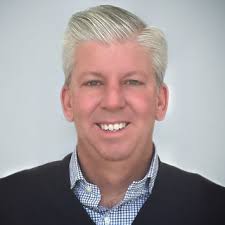
About Christopher Peterson
Christopher Peterson, president and CEO of Newell Brands, discussed the company’s use of artificial intelligence in a June 2026 podcast. Peterson said that since the release of ChatGPT in 2022, the pace of change in large language models has been “remarkable” and that AI will “fundamentally transform this entire industry.” He stated that Newell has deployed over 150 AI use cases, including digital consumer personas for concept testing and a “clean room” with a major retailer where data is shared to optimize logistics, with cost savings split 50/50. Peterson also said the company is modifying digital content to win with large language models rather than traditional search engines, and that Newell changed its hiring policy to require AI proficiency for new employees.
Speaking at a May 2026 conference, Peterson discussed Newell’s supply chain and tariff exposure. He said the company reduced its manufacturing exposure to China from 35% to 10% over five years, describing 35% as “too high.” Peterson noted that Newell invested $2 billion in U.S. manufacturing since 2017 and developed automated domestic plants that can compete globally on cost and productivity. He attributed the shift to tariffs imposed by the Trump administration that were maintained under Biden, stating that both parties appeared to want tariffs on China, and that he did not want to be “overly dependent on China” for manufacturing headed for U.S. consumption. Peterson also said the company has “tolerated lower returns” and learned from post-COVID supply chain disruptions.
Source: AI-verified profile updated from Christopher Peterson's recent appearances.
Browse all interviews →
✨ AI-enhanced transcript with speaker attribution
P
Peter Vsvon0:00
Hey CPG Guys listeners, PVSB here and we want to take a minute to tell you about something that Shri and I are genuinely proud to be a part of, and that's the Cornell OmniCommerce Leadership Program. An immersive on-campus executive education experience at Cornell University in beautiful Ithaca, New York happening July 27th through the 31st. This isn't a webinar. This isn't another online certificate you do in your pajamas. This is 5 days on the Cornell campus, surrounded by senior executives from retail, CPG, and adtech service providers, all wrestling with the same questions you are. How do I win the omni shopper? How do I navigate retail media? What does agentic commerce mean for my business? And the faculty lineup is extraordinary. We're talking Cornell professors alongside practitioners from Mars Snacking, Nestle, Walmart, Ahold, Delhaize, Dollar General, Monster Energy, Bayer Consumer Health, and yes, Shri and I will be right there in the room with you. You walk away with a Cornell SC Johnson College of Business certificate, 36 professional development hours, and more importantly, a concrete omnicommerce roadmap you can bring back to your organization on day one. Seats are very limited. The program is built for VPs, directors, and senior leaders who are serious about getting ahead of where commerce is going. Visit the link in our show notes to learn more and request information. Search online for Cornell OmniCommerce Leadership or find the direct link at cpgguys.com. We'll see you in Ithaca this July. Now, let's get into today's episode.
C
Christopher Peterson1:40
Hi, I'm Chris Peterson, president and CEO of Newell Brands, and welcome to the CPG Guys podcast.
S
Shri Raja Goplan2:07
Hello and welcome to this episode of the CPG Guys podcast. I'm of course Shri, your co-host and also CRO and co-founder at ThinkBlue Consulting, your trusted partner in your omni-channel development journey, where you can get in touch with me at
[email protected]. Please do listen to my older daughter's music at wwaraj.com and follow Lara Raj, my younger daughter, as a member of now the largest global girls band in the world called Cats Eye. They've just come off a clean sweep at the AMAs this weekend at Vegas. Of course, Papa Raj was around to see it right from front row. And I can't tell you folks how much what a special moment it is to see your offspring succeed. 3 a.m., my head is still spinning. Of course, I'm joined today by my co-host and co-founder of PVSB, who also moonlights as head of industry and client engagement at Flywheel, the commerce acceleration division of Omnicom, Peter. I know we're headed to Cannes very shortly in a week's time.
P
Peter Vsvon3:00
Oh, in partnership with our friends at the FMCG Guys, our European counterparts, we are hosting La Nce, which is a lovely venue across the Quai d'Orsay from Amazon Port, a block from the Palais. And we're going to be hosting panels, happy hours, evening celebrations. We've got things going on with Dollar General, CVS, we're doing something with eMarketer, even the Women in Commerce Media. So, it's going to be a pretty big event, Shri. And then, off the heels of that, we're heading to upstate New York. What do we got going on there, Shri?
S
Shri Raja Goplan3:36
Cooperstown. It's part of bucket list. As you all know, I'm a diehard Yankees fan, but I've never been to Cooperstown. We've created budgets to pick up stuff.
P
Peter Vsvon3:45
We negotiated with ourselves on the budget limit for how much we can spend on swag.
S
Shri Raja Goplan3:49
Actually, there is no limit because we need Cooperstown with the Cooperstown.
P
Peter Vsvon3:55
Much to our accountant's dismay. Peter's a diehard Dodgers fan, so I'm sure he's going to go straight for the Ohtani one.
S
Shri Raja Goplan4:03
Yes, of course. Make sure you are subscribing to our podcast on your preferred listening platform where you can get our latest episodes, go back and consume some of the 598 plus episodes we've had before this one that we've already published. And now let's get to the moment. We were at Kagny 2026 a few months ago and we're still buzzing from some of the incredible presentations we saw from CPG publicly traded, some of the largest Fortune 500 brands that exist on planet Earth. The CEO presentations. One of the presentations in particular floored us on the approach to AI. The conversation was so fantastic. We had to find a way to be here and record this episode with the CEO who made that presentation. So we made a conscious decision for this episode to step away from the earnings for share and P&L conversations which we're doing weekly on Tuesdays as it is every single week and we've covered that ad nauseam. So we're going to stay away from that entirely today. What we want to talk about today is the story of operational transformation and leadership. And at the 2026 Kagny conference, no one told that story better than the president and CEO of Newell Brands, Chris Peterson. He's been generous enough to make time for us in person. We're at Newell's headquarters in Atlanta, and he's going to help us uncover the reality of AI at the executive level in our industry. There's a lot of misconceptions in the industry about how executives think or don't think about AI. And today, Chris is going to solve that for us and inspire everybody at CPG and Retail. Chris, welcome to the CPG Guys, it's a pleasure to have you on.
C
Christopher Peterson5:32
I'm very excited to be here and excited to talk to you guys about AI and what we're doing at Newell.
S
Shri Raja Goplan5:37
In the digital miner notes of this episode, of course, we'll include links to Newell's company's corporate websites for our listeners to access and browse their products, of course, while we go on with our conversation. So, Chris, I'm going to jump right into it. The first word that came to my head, and I've been waiting to ask you this, is the word quantum leap.
C
Christopher Peterson5:54
Isn't that two words?
S
Shri Raja Goplan5:55
That's true.
P
Peter Vsvon5:56
Two words, Chris, my apologies. Quantum leap. It is at Kagny. You spoke pretty extensively about an enterprise AI program internally called Quantum Leap. You mentioned that in mid 2025 you shifted from isolated use cases into a very strong broader how work gets done. That people who are at Kagny, which is mostly the analyst is only three media houses, CPG Guys is one of those along with Wall Street Journal and I think who was it, Peter, New York Times. But we'd love to hear everything about Quantum Leap from you, how you moved into broader how work gets done at Newell. Can you talk about the genius of Quantum Leap and what it looks like today?
C
Christopher Peterson6:34
Yeah, happy to. It's been a passion of mine at Newell over the past couple of years. You know, when ChatGPT came out in the fall of 22, it was sort of like a starting gun going off. And at that point in time, the large language models had a lot of promise, but they didn't really quite deliver. But the pace of change in the large language models has been so remarkable that I believe AI is going to fundamentally transform this entire industry and really all parts of the industry. So we got started on AI in 2024 and when we started by putting a steering team together, we had a grassroots program. People that wanted to do AI across the company would come and say, 'Hey, I've got this idea. What can I do with it or not?' And we wanted to do that from a governance standpoint to make sure that we were number one ensuring security, but also number two, keeping track of what was going on. The big change happened toward the end of 24 and into 25 when there was a pivotal moment when the large language models crossed the threshold. We had gotten started with machine learning largely in the supply chain, largely in the SNOP process. But what we saw was the opportunity not just to do machine learning but to move into generative AI, particularly in the marketing space, and also move into agentic AI to better manage workflow management. And so we decided to make a strategic pivot and we kicked off this Quantum Leap program. And the Quantum Leap program was sort of designed with three pillars in mind. The first pillar was let's get the organization trained and equipped on personal productivity. So we rolled out ChatGPT, Copilot 365 to now the top 3,000 people in the company and we did a broad training.
P
Peter Vsvon8:20
Conscious choice.
C
Christopher Peterson8:21
Conscious choice top down. And we told everybody that they had to attend the training. We did hours of training so people could start to use it for their everyday use. They could use it for emails. They could use it for meeting assistance. They could use it for scheduling. Those types of things to drive individual productivity. That was the first pillar. The second pillar was we asked every function in the company to reimagine what that function looks like 5 years from now fully AI enabled. And it was important to sort of pick a 5-year out mark because if you do pick a 5-year out mark, you're not constrained on what you can do in the next three or six months, but you really start to reimagine how the function could operate with effectiveness. And so we did that and each of them have now come back with ideas of what that looks like and so forth. And then the third pillar is looking at multifunctional processes that are not within a function. These are generally harder processes that if we can crack them with AI. So it could be like the entire product development process.
P
Peter Vsvon10:33
Or the new item setup process is one that we're currently working on which is more complicated than a problem.
C
Christopher Peterson10:40
Yes. And so that's really the Quantum Leap program. And we've now created as part of that since Kagny, in fact, we've taken the next step which I mentioned the navigators, the 33 navigators. We've now created a term that we're using called voyagers. So within each function, the navigator is the leader but we have 10 voyagers on average that are helping the entire function move into the AI journey at pace.
P
Peter Vsvon11:11
Now with navigators and these journey folks, you got to have program management on top of it or is this more of a representative role?
C
Christopher Peterson11:18
We have program management. So we have a Quantum Leap steering team. We've developed a very strong center capability. And one of the things that was interesting is we made a choice early on that not very many people knew about AI and so we didn't want to go to the consulting firms because we thought we knew as much as they did.
P
Peter Vsvon11:41
Consulting firms are known for two things: one, listening to your people and telling you what they said, and number two, charging you a lot of money for that.
C
Christopher Peterson11:47
That's exactly right. I think in the AI space, I don't think there's the true expertise.
C
Christopher Peterson11:54
So we went directly to the tech companies. And so Salesforce, Microsoft, Google, Anthropic. And so we are partnering directly with the tech companies and we've now developed internal capability to do this. So you're not relying on any one LLM. You're relying on a multitude of them, all with different focuses, to create the tool set you need to get all of these different outputs and outcomes that you're looking for.
P
Peter Vsvon12:23
100%. And in fact, one of the more recent things that we've been doing, just to give you a little bit in the weeds on this, is we've been thinking about when should we use which LLM so that we maintain control of our token cost. Because some of how we're using AI across the company, and we've stood up now 150 plus AI use cases across the company and that number is accelerating, but some of the use cases don't require the most advanced Claude model from Anthropic which is very expensive. We're happy to be able to use a sort of a mid-tier or even in some cases a small language model that's much cheaper and much faster. I don't think enough people understand within each of these LLMs that there are different levels and what to use them for. So, I think that's very fiscally responsible that you've sat there and said, 'Okay, for lower grade requirements, there's no purpose to using the Cadillac when the Chevy will get us there exactly the way we want it to.'
C
Christopher Peterson13:21
That's right. But if we're trying to solve a very complicated scientific problem, then we're going to use the more advanced models. And we've brought in and have access now internally and experts on each of these models.
S
Shri Raja Goplan13:35
So, one of the questions I have for you, Chris, around this is, okay, you've got different user archetypes. You've got the navigators, the voyagers, you've got all of the employees. I don't think any of this happens unless it becomes a core component of how they perform. So, how do you think about building out KPIs that feed into the annual objectives of all these? So, it's not just a side of the desk, nice to do, but it's, hey, I've got a vested interest in learning how to do this.
C
Christopher Peterson14:07
When we put our priorities together for this year, we had five priorities as a company. Some of them are not surprising. We wanted to ignite topline growth. We wanted to continue to fuel the business through margin and overhead discipline. But we picked one of the five as driving AI and Quantum Leap. So it's one of the few initiatives that we've taken to the top of the company.
S
Shri Raja Goplan14:30
I do want to point out you're the first, and Peter and I are out and about in the industry talking to leadership every day. This is what we do for a living. You are the first CEO-level leader who has said I'm going to put it on the agenda of my top five priorities for the year and therefore we should be able to take advantage, leverage it.
C
Christopher Peterson14:48
And deliver all the other four against it. Exactly. And we're not doing AI for AI's sake. We're doing AI in service of the company strategy.
S
Shri Raja Goplan14:57
And we're being very outcome focused. Exactly. Chris, I want to double click down on the navigator aspect of what you shared because at your recent leadership summit 2026, you mentioned this in great detail. How much of a cultural shift to build AI fluency across the enterprise is it really to enable these navigators and how do they act as change agents to make that transformation occur?
C
Christopher Peterson15:23
It's a pretty big cultural shift. And one of the things that when we got started on the journey, there were some people that were afraid that AI is coming in and it's going to eliminate my job. And there's sort of the doomsday naysayers about AI. But the reason for that, Chris, we strongly believe is leaders in your position, you're an exception, we've already declared that, but most leaders in your position aren't exactly articulating AI the way you are to this level. This is the first. There were people on the stage at Kagny that were reading it off the slide and that was the extent. We could tell it was obvious who was and who could go one level down when asked during the follow-up.
S
Shri Raja Goplan16:07
So back to cultural influence.
C
Christopher Peterson16:10
We made a choice to say, and I've stood up in every town hall that I do. We've done this when we had our navigators meeting. We've done it when I go around to parts of the organization. And we've done it through the training that I mentioned. We're going to try to get people educated on AI. And we recognize that some people don't know anything and we've got to get them up to speed. Some people are very advanced and we want to take advantage of those people because they have a lot that they can contribute. And really what we've said is, hey, our job is to delight consumers with great products under our leading consumer brands. And if we can use AI to do that better and offer a better value product for consumer and become a better partner for retailers enabled by AI, I think that's the winning model. And so that's what we're trying to drive in the organization. So it's not about, hey, let's get rid of a bunch of people. It's about how can we speed up our development process? How can we get our marketing materials to be more compelling, more complete, and more timely? How can we improve our SNOP process so that our customer service levels and our inventory get optimized and those types of things. I can already see Newell being one of the first in the industry moving from joint business planning with retailers to joint value creation because you're putting the consumer at the center and that becomes who both retail and Newell will serve through the use of AI. Make the whole process better, more quality products, better outcomes, value all of the above.
P
Peter Vsvon17:46
So you mentioned ROI. In any large company, any company, ROI is important. So when you execute, you measure outcomes. So let's get into that a little bit. The tangible outputs. The numbers you shared at Kagny were actually pretty staggering.
S
Shri Raja Goplan18:01
Staggering is an understatement.
P
Peter Vsvon18:03
Like for example, you noted a 500% increase in AI enabled digital content creation creative in 2025 versus 2024.
S
Shri Raja Goplan18:11
Without additional investment if I may add.
P
Peter Vsvon18:14
Right. How has AI accelerated your innovation pipeline from concept to launch? So let's just get into innovation. We just talked about joint value creation.
C
Christopher Peterson18:23
Yeah. So let's sort of go through. There's two pieces to this. One is the innovation process which I'm very excited about. The other is the marketing development and activation. On the innovation process, if we start there, we have made a tremendous amount of progress on consumer insights. So we started with our brand strategies. In any good brand strategy, you do a consumer segmentation study and you pick which consumer segment are you trying to prioritize as part of your strategy for what you're trying to offer.
S
Shri Raja Goplan18:52
Your team is actually giving us a tour of Newell products and we will remember to ask them about the segmentation strategy.
C
Christopher Peterson18:58
Very good.
P
Peter Vsvon18:59
Pressure on your teams now.
C
Christopher Peterson19:00
Very good. And I expect them to be able to answer.
S
Shri Raja Goplan19:04
So we're not, that's off the record. That's just Peter and just.
C
Christopher Peterson19:06
Very good. So what we did next was we looked at these consumer segments and we said, hey, rather than going out and doing the old process of going out and getting a focus group of people you have to schedule, you got to hire, find the people, and then you go and test ideas with them. What if we could create digital personas with AI that were available 24 hours a day, 7 days a week that we could talk to and test our ideas immediately. And so we've now done that. So we've created digital personas that are based on the consumer segments and we've developed not just one of them but many of them. So we have now digital focus groups. And that enables us to fast cycle test concepts. We also did sort of a circle that we internally we've branded Innovate. So from that consumer understanding, we used to then have if we came up with a new idea, we would have a sketch artist that would develop a sketch and then we'd have to go hire a photo shoot. Well, we put another AI app in that says from the sketch we can go to a finished photograph in about 5 seconds as opposed to, and not just one photograph but many. We've then developed another AI app that can take the finished photograph and go to 3D CAD design work.
C
Christopher Peterson20:22
And we then stood up a rapid prototyping 3D printing to actually create a physical.
P
Peter Vsvon20:28
Wow. You can actually produce the physical item.
C
Christopher Peterson20:31
Correct. Exciting.
P
Peter Vsvon20:32
So that whole process from ideation to finished photography and a sample used to take four or five months. We can now do it in five days.
S
Shri Raja Goplan20:42
That's fascinating.
P
Peter Vsvon20:43
Retail is going to love that.
S
Shri Raja Goplan20:45
Chris, I have a follow question and I'll get to my main question, but with respect to the focus groups and the digital focus groups, like one of the biggest criticisms I hear about LLMs is they're way too agreeable. You give them an idea and they say, 'That's the best idea I've ever heard.' I have got to imagine that was in the back of your head and when you built these digital personas, you tried to make sure that didn't happen.
C
Christopher Peterson21:11
You're exactly right and it's a very good observation. Part of this you can manage through the prompt. So, you know, if you're ever using AI, one of the things I tell our people is you have to tell AI in the prompt to be tough on me. Don't be nice.
S
Shri Raja Goplan21:26
No more Mr. Nice. I love that.
C
Christopher Peterson21:28
And if you say that in the prompt, you'll get a little bit more dragon. We make sure we're clear about this innovation process.
S
Shri Raja Goplan21:34
Yeah.
P
Peter Vsvon21:35
So you can theoretically go from concept to some sort of a prototype, actual prototype in 5 days.
C
Christopher Peterson21:44
Yeah. Now the prototype, I don't want to overstate the prototype. It's a 3D printed.
P
Peter Vsvon21:48
It's a 3D printed digital classic, right?
C
Christopher Peterson21:51
But it's better than anything else that exists in the industry. Most people struggle with 6 months.
P
Peter Vsvon21:55
Yes. And have you put any of those in front of retail yet?
C
Christopher Peterson21:59
We have. Yes.
P
Peter Vsvon22:00
How's the feedback been?
C
Christopher Peterson22:03
Feedback has been phenomenal. So in fact, one of the things that's happening as we interact with our retail partners is we've made such advances in AI in certain parts. There's some parts of the company where we're still nascent and there's other parts where we're at the tip of the spear, I think. But what we're hearing from retailers is they're asking us, 'Hey, can you come in and teach us how to do this?'
P
Peter Vsvon22:28
Not surprised at all. You know, we think a lot, Shri and I talk about this and we talk about traditional retail and category management, right? That was very much about the physical store. I'm going to help you in product assortment. I'm going to do all these other things. In the digital world, category captaincy very much now incorporates this. It's about the consumer navigation. It's about the product innovation. They have really great data sets that you can use through clean rooms to help feed the LLMs and ultimately get better outcomes to develop products that are going to sell in their store. So to Shri's earlier point, this concept of moving to joint value creation seems to be so much more real than it ever has been.
C
Christopher Peterson23:14
Yes. Because of this 100%. And I'll give you a good example in a different area, but with one of our largest retail customers, I won't tell you which one. We've stood up a clean room and we are putting our data and cost into the clean room. They are putting their data and cost of logistics into the clean room and we have a large language model that's looking at that and saying how do I optimize the logistics chain between your company and our company to drive cost out and then we'll share it 50-50 type of thing.
S
Shri Raja Goplan23:46
Chris, I'm just listening to you speak and I've captured a whole bunch of notes. I think the management consulting companies might have to hire you.
P
Peter Vsvon23:53
Yeah, I think they need to tap into your capabilities. So, talking about clean rooms, you can't run advanced AI without really clean data. And you have done a massive amount of rationalization. You've cut your active SKUs by over 80%. You've rationalized a brand portfolio from 80 down to just 50 brands. And by this fall, 95% of your global sales will be supported by a single instance of SAP. Wow. How critical is that ERP integration to feeding the Quantum Leap program?
C
Christopher Peterson24:30
Absolutely critical. And it's funny, you know, when I started with Newell 7 years ago, we had at that time 35 ERP systems, if you can imagine, it was a real mess. And as you say, by the end of this year and really in about four or five months, we will be 95% on a single global instance.
S
Shri Raja Goplan24:50
I have four email addresses and that is too confusing for me. 35 ERPs. Wow. Congratulations on the consolidation.
C
Christopher Peterson24:57
But if you think about it, all of this work we're doing on AI, we're doing based on the core SAP ERP. So if there's a part of our business that isn't on that core SAP, they don't get access to any of the tools that we're building because we're not going to build duplicate versions of this.
P
Peter Vsvon25:13
That makes sense.
C
Christopher Peterson25:14
And your other point on data quality, absolutely critical. We have spent a lot of time particularly in our supply chain on data quality. We have now Databricks across the organization as sort of a base platform and that is proving to be, and I think for a lot of companies that's going to be the gating factor to how fast you can go with a lot of this AI momentum.
S
Shri Raja Goplan25:38
Brilliant. A reminder to our audience that we are speaking today with Chris Peterson, president and CEO at Newell Brands, and this is episode 599. Moving on, Chris, you know, let's get into the people aspects of this. You're driving a transformation of this magnitude. We've talked some technology. We just talked about the SAP consolidation which is a big deal and achievement for the company. It's about the people that actually have to go and execute this every day and live the true values of the company. We studied some of these values. Integrity, teamwork, passion for winning, ownership, leadership. As a CEO and the captain of the ship, how do you lean on these principles to guide your 24,000 teammates around the world through such a massive operational and cultural mindset shift?
C
Christopher Peterson26:21
It's interesting. When we started on the Quantum Leap program, we went out and started with the training and what we found was a lot of, particularly the younger generation, there's a narrative out there that maybe the younger generation is a little bit more scared about AI because they might be worried about their job being displaced. We found the opposite. So what we found was the younger people at Newell want to be trained on AI and they felt like, hey, if you're not going to give me access to tools or train me, I'm probably going to quit and go someplace that will. So it was not what we were expecting at all because I think what we're seeing is for our more junior and younger employees, they know that the world is going to become AI enabled and what they're looking for is a workplace that's going to train them so that they know how to leverage the skills so they become super employees because they're AI enabled. And so we've sort of flipped it on its head and said there's so much opportunity that we have to better serve consumers and retail customers and through our values that you mentioned, leadership, ownership, passion for winning, integrity, and teamwork. You know, we think that this is a way that both creates value for employees from a skill set development standpoint and creates value for consumers and retailers. The example that you mentioned on the marketing side where last year our digital content, our number of digital assets went up 500%. But we did that with the same number of people. So we could have chosen to reduce the number of people. We did not do that. We said no, we're going to keep the same number. We're just going to produce more content that's more compelling that creates a better experience for our consumers and for our retail partners.
S
Shri Raja Goplan28:08
In any transformation, Chris, there's always a 10% that's what the industry average is of people who always question the motives, the outcomes. How do you bring those people along on the journey? How do you inspire them? Are you having town halls every 6 months, quarterly where you're communicating? You seem to have a complete leadership mastery of AI, which is rare in the industry.
P
Peter Vsvon28:29
Do people get to hear it at this now?
S
Shri Raja Goplan28:31
They will on the podcast. Yes.
P
Peter Vsvon28:33
But do they get to hear this level of mastery?
C
Christopher Peterson28:37
Whenever you're in a large organization, we've got on the ground operations in 42 countries around the world. Communication becomes one of the key roles of particularly my role but not just my role but the entire leadership team's role. So I do a global quarterly town hall that's available to all employees including questions and we always talk AI as part of that every quarter. I also intentionally visit our top 10 geographies every year and I do a town hall when I'm there. So last week I was in Tokyo and Shanghai and I did a town hall in Tokyo with the Japan team and I did a town hall in Shanghai with our China team. Next week I'll be in France and Germany doing the same thing with our French and German team.
S
Shri Raja Goplan29:25
My daughter wants to go to Shanghai. She found out there's a Disney property there and that's one of the ones she hasn't been to.
P
Peter Vsvon29:31
One she hasn't been to.
S
Shri Raja Goplan29:32
That and there's one in Hong Kong and she's already gearing up for the one they're building in Abu Dhabi but I haven't been to the one in LA yet.
P
Peter Vsvon29:38
No, you have. You haven't been to Disneyland? Come on, Shri. I went there over Christmas. It was great. So, 15 years ago, I was here in Atlanta. I was calling on my client. It was another consumer packaged goods company, shall remain nameless, near the campus of Georgia Tech. We'll leave it at that. And I organized a meeting. I had seven people come into this meeting. They were from different operating groups, functional responsibilities, and I said, 'I bet you're all wondering why I've assembled you all here.' I said, 'Raise your hand if you're working on this.' And all the hands went up and they looked at each other and they're like, 'What?' I said, 'Okay, this is one of the benefits of being on the outside and not operating in a silo where you're very focused on your thing.' So, what I want to talk to you about is legacy silos. You've been driving a unified one Newell go to market model and consolidating what used to be five separate operating segments into now three. So my question is how does the value of teamwork which you define as succeeding together play into actually breaking down those silos so something like that doesn't occur that people aren't aware of there's work being done and probably a lot of it redundant throughout the organization.
C
Christopher Peterson30:46
What we did when I became the CEO three years ago, we started off with a broad capability assessment and we looked at the 11 capabilities that are required to win in consumer products broadly defined, things like consumer understanding, innovation, brand building, brand communication, go to market, supply chain, procurement, etc. And we evaluated where we stood as a company against those. And that then led to a deliberate strategy, a where to play, how to win strategy. And importantly from that we made a decision to change the operating model of the company. And what we did was we said there are some areas of the company where we need 100% dedication and there are other areas where we don't and we need scale as an enterprise. So, as an example, when we do brand management, we need 100% dedication. So, if we're working on the writing business, we want people that are working on the writing business that work every day on the writing business, and that's all they do. They know the writing business better than anybody else. And that leads to us having category knowledge, category expertise. We can come out with a Sharpie pen and Sharpie innovation that's better than anybody else in the world. And that's what we need to have in that area. If you look at an area like supply chain, running a manufacturing plant, running distribution across the world, that's an area where we actually can scale across all of our businesses and drive more value through scaling than being dedicated by business. We historically were dedicated by business. We had 23 supply chains in the US, which was crazy. So that meant 23 master vendor numbers with our large retailers, less than truckload shipments, 23 orders, 23 invoices. It was a lot of complexity. And what I heard from our retail partners was, 'Hey, we don't want to do this. We want to send you one order, get a full truck and one invoice.' And so we put that organization supply chain together and we've now consolidated and we have a single integrated supply chain around the world.
P
Peter Vsvon33:00
That is huge. Shri, it reminds me I was working with our operations team, Suzanne, two days ago putting together a list of supplies to bring to Kagny. You know what's the top of the list?
S
Shri Raja Goplan33:11
Sharpies.
P
Peter Vsvon33:11
Sharpies. Yeah. Many colors. Not just the black ones. We want the silver ones. We want lots of different ones. Different weights, too. The thin ones, the fat ones. We detailed the top of the list.
S
Shri Raja Goplan33:21
Here's a funny story about Sharpies and the functional use of it. So, I'm out and about at industry awards a lot because of my daughter and also at the concerts. We take people backstage and things of that nature. I always have a Sharpie because people want an autograph and they don't have a Sharpie, right? And you can't use anything but a Sharpie to actually make that autograph permanent.
P
Peter Vsvon33:42
Do you know where I keep them? What football players do? In my socks.
S
Shri Raja Goplan33:45
So, you can't keep Sharpies in your socks and awards.
P
Peter Vsvon33:48
I love that. It's good to know.
S
Shri Raja Goplan33:49
That's great. Yeah. So one thing as I was thinking through you speaking about the global how you reach your outreach globally to get conversations going. I did want to ask you if someone within the company irrespective of function because you brought a lot of stuff together whether it be supply chain, whether it be five to three operating units, things of that nature. If someone wants to make recommendations on how to leverage AI, productivity, something on the product, is there a mechanism how you collect feedback in?
C
Christopher Peterson34:20
There is, and that's where the navigators come into play. So the 33 navigators that are by function solicit ideas from their functions. We have a Quantum Leap steering committee that is operating and meets every week or every two weeks. I meet with that group once a month and we review both top down priorities and progress we're making, ROI, KPIs, but we also review bottom up and some of the bottom up stuff is pretty remarkable. And that's why that first plank of giving the AI tools to the organization was an important plank because often times a lot of what you can do with AI may be an individual that has a certain process that they can automate and make better that is never going to make it to the priority to-do list of the company. But the individual may have enough knowledge that we want to enable them to be able to do that by giving them the tools.
P
Peter Vsvon35:15
You've essentially empowered them to do their research and come up with ideas.
C
Christopher Peterson35:20
Exactly.
P
Peter Vsvon35:20
And then you have a process to qualify it which is terrific through the navigators and the steering committee.
C
Christopher Peterson35:24
Yep. And we keep track of it too. So, one of the other things I'll mention that we're doing on that is, and again, this is I think sort of a little bit more tip of the spear, but we're standing up a control tower. And so, we now have a software that we've implemented that keeps track of all of the agents across the company and monitors their performance because when you develop an agent and turn it on, it may not last forever. And so you've got to know, just like an employee, when is the agent's performance starting to wane or when do they require attention and maybe need a refresh type of thing.
S
Shri Raja Goplan36:02
I'm tempted to ask you where you picked up this mastery of AI. This is rare in the industry.
C
Christopher Peterson36:07
You know, I graduated from Cornell. You mentioned you were going to Ithaca. I spent four years there.
S
Shri Raja Goplan36:13
A big program with Cornell. This is our second year that we're doing the OmniCommerce Leadership Program. We've got, I think, about 80 students coming up this summer. It's going to be a full week of immersion.
C
Christopher Peterson36:27
So, I graduated with a degree in engineering from Cornell, although I never became an engineer, but I still think like an engineer a lot of the time. And I've always had an interest in technology and innovation and continuous improvement. And as I've gotten more exposed to AI, I just am very interested in it. And so I'm pretty connected in the tech world and try to talk and go to some of these tech forums directly to keep myself on the leading edge. And then equally as important, the team that we've developed in Quantum Leap, they can run circles around me. And so I try my best.
P
Peter Vsvon37:02
I can't imagine it's easy to listen.
S
Shri Raja Goplan37:04
Here's my big question, Chris. Is there any better ice cream than the dairy bar at Cornell? That stuff is good. And you've got to be careful about not overdoing it.
C
Christopher Peterson37:12
I know. I know.
S
Shri Raja Goplan37:13
Thinking about the industry, this is an important one. There's a lot of conversation about agentic AI impacting shopping.
C
Christopher Peterson37:21
Yes.
S
Shri Raja Goplan37:21
And early research that's come out from NielsenIQ, others in the industry indicates there's a lot of shopper distrust in AI overall, but they're using AI today to hunt for value.
C
Christopher Peterson37:33
Yes.
S
Shri Raja Goplan37:33
Give us some advice whether it be to the industry in general or to retail. How do you expect AI to impact shopping and agents to guide consumers? The early outreach says it's value. I think it's going to come probably faster than what we all think.
C
Christopher Peterson37:46
One of the things that we're doing is if you think about the whole digital path to purchase. Historically, one of the big areas that companies focused on and Newell focused on was search engine optimization. So you would go to Google, you would buy ad terms, you would try to make sure that if somebody searched for a certain topic, your brand and product came up. Search strategy.
S
Shri Raja Goplan38:12
Correct.
C
Christopher Peterson38:13
With agentic commerce, that is changing because now what's happening is you need to gear your content not to win with the search engines but to win with the large language models. And what's required from a digital content standpoint to win with the large language models is different than what is required to win with the search engines. And so one of the things that we're doing is we're starting to modify the digital content with the AI capability we've built in marketing to make sure that we're winning with the large language models. And so things like the Reddit lists, some of those things become much more important. Your own direct to consumer websites become much more important because the large language model can read all of that.
P
Peter Vsvon39:00
So your DTC website is not only you are concerned with the customer journey because you are selling directly on that site, but you're also recognizing that it has to be ready for the LLMs to be the primary source of data to fuel how they feed results to consumers doing contextual conversations.
C
Christopher Peterson39:23
100%.
C
Christopher Peterson39:26
Today it's Reddit. That's the way ChatGPT has shifted. But I would say today and tomorrow, the number one source is going to be brands' own website because it's easy for the AI engines to pick them up versus individual retailers which will have sponsored ads.
P
Peter Vsvon39:41
That's right. You're unique in that, well not unique, but you have a lot of DTC business. When I talk to manufacturers that don't have DTC that operate purely through retail, their shift on how they organize their brand websites has been dramatic. They have abandoned customer journey. They say why would I take them down a customer journey and then leave them at a point where they can't convert? My primary purpose for the brand website is purely as a repository for data for LLMs.
C
Christopher Peterson40:13
Yeah.
P
Peter Vsvon40:14
You can't quite do that because you're still doing the customer journey, it's important.
C
Christopher Peterson40:19
Yeah.
P
Peter Vsvon40:19
But you still recognize the LLM is a very important part of how you are structuring your business.
C
Christopher Peterson40:24
One of the things that we've done on our direct to consumer websites is we've gone through a pretty deliberate process to say there's really three types of websites that we have. There's fully commerce enabled which is to your point where yes we do need to make sure that we have a conversion for actual consumers who are buying through that and that's a meaningful business for us and there's a group that are in that direct to consumer where we do the full end to end journey. There's a second group that we call a catalog site which is not commerce enabled but enables people to get to a product and then connects them with an outside transaction agent usually one of our retail partners. And then there's a third group of websites that are marketing websites that are more in the category that you're talking about. And I think to your point on those marketing websites where we're not fully commerce enabled, increasingly those are going to be targeted to the large language model rather than to the consumer.
P
Peter Vsvon41:18
That makes sense.
S
Shri Raja Goplan41:19
Chris, I get to close this out. I know Shri agrees this has been an absolute master class in enterprise AI adoption and operational leadership. So thank you for that. So, you're home at night. You're sitting in the chair. You get on to your chat group of non-competing CEOs and one of them says to you, 'Chris, how do I get going on this journey?' What are you sharing with those people that are trying to figure out how they take their businesses to this kind of outcome success?
C
Christopher Peterson41:49
You know, one of the things that inspired me was I was in a meeting two years ago with Satya from Microsoft and somebody in the room asked him that exact same question and he said, which I then took back and replayed. So, I'm giving you what he said, not what I said, because I thought it was good enough that I would just repeat it. The way you get started is by getting started.
S
Shri Raja Goplan42:15
Most people.
C
Christopher Peterson42:15
You just got to step in and get started. And the key is you're going to learn along the way. And as long as you're learning, this space is moving so rapidly that it's hard to make a big mistake if you've got the governance and the security system set up.
P
Peter Vsvon42:32
Then you can adjust as you go along.
S
Shri Raja Goplan42:35
Well said indeed, Chris. You're not just learning, but you're also leading. I don't want to forget that aspect because you made it a priority in your top five priorities for outcomes. That's the key word that goes after priority. Let me remind our listeners, you can find all of our content by simply going to a web browser and typing cpgguys.com as the URL. If you or someone you know has something to contribute to this ongoing discussion on the CPG Guys, please send us an email at
[email protected]. That's a custom. To our audience, thank you for the clicks, likes, comments, direct messages, meeting us at trade shows, coming to our events, recording episodes with us, and to our sponsors. We're always grateful for you. The show doesn't exist without all of you. You work with us all year. Grateful to have you as your audience and partners. Thank you deeply from Peter and my heart. Chris, Peter, it's been a pleasure doing this episode with you coming down to Atlanta for this, doing a live interview. Big 599.
P
Peter Vsvon43:30
I've got to ask you, what are the big takeaways?
S
Shri Raja Goplan43:32
Not just one. My god. First of all, the journey requires a lot of participants. They have different roles. It requires a lot of leadership encouragement. You have to get your hands into the muck. It's the only way you're going to do it. And it has to be pervasive throughout the organization. It can't just be we're going to do one little department here, one little operating group there. It's got to be everyone. And they have to be inspired to want to figure out. I love the fact that Chris inspired everybody to look 5 years into the future and that gave you enough time to figure out how to get there with all of these tools, knowing that the step change rate of growth of these capabilities is going to carry you. If you can't envision right now how you're going to get there, trust me, in 6 months you're going to be a lot clearer on how you're going to get there. So that to me was incredible. Just the fact that the innovation process has been truncated so dramatically and you can actually have, call it a prototype, call it a minimum viable product, call it a replica of a product that you can sit there and have conversations with retailers, share data in a clean room and ultimately come up with better outcomes. This is the example that we point to going forward as a company that knows what it's doing right with AI. Doesn't have all the answers yet, but figures out how to create the framework for everybody to get engaged.
P
Peter Vsvon45:03
I got a few more to add if it's all right. So, I'm going to start with we've already said complete mastery of AI, but I'm going to say mastery of AI tech. And what do I mean by that? Details of an LLM. Again, you're the first senior leader to come on the show and get into details of knowing and being able to articulate the different LLMs and knowing that they have different, not only that but even within an LLM different levels within an LLM, saying no, that's too expensive for what we need to do, we can use an earlier generation. I mean, my goodness, pointing out three groups of websites, using clean rooms for data, to be able to bring data together, digital personas based on consumer segments, making AI deliver outcomes with a consumer backdrop. To me, it's a mastery of AI and focused on outcomes. Chris, it's an absolute pleasure to have met you here in person and record this live from the Newell world headquarters. Thank you for making time today.
C
Christopher Peterson45:57
I've enjoyed it a lot and great to be with you guys.
S
Shri Raja Goplan46:00
So, this is an inspirational episode. Thank you. That's a wrap of episode 599. See you soon on another episode of the CPG Guys.
N
Narrator46:18
The content in this podcast episode is provided for general informational purposes only. By listening to our episode, you understand that no information contained in this episode should be construed as advice from CPG Guys LLC or the individual author, hosts, or guests. Nor is it intended to be a substitute for research on any subject matter. Reference to any specific product or entity does not constitute an endorsement or recommendation by CPG Guys LLC. The views expressed by guests are their own and their appearance on the program does not imply an endorsement of them or any entity they represent. The views expressed by CPG Guys LLC do not represent the views of their employers or the entity they represent. CPG Guys LLC expressly disclaims any and all liability or responsibility for any direct, indirect, incidental, special, consequential, or other damages arising out of any individual's use of, reference to, or inability to use this podcast or the information we present in this podcast.