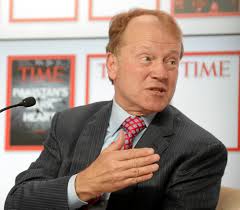
About John Chambers
John Chambers, founder and CEO of JC2 Ventures, has been speaking publicly about artificial intelligence, US-India economic ties, and energy infrastructure. In a March 2025 interview, Chambers described AI as "the biggest technology shift since the internet" and said the industry is only in the "second inning" of a "hundred inning baseball game." He predicted that the majority of AI startups will fail, adding that success will depend on execution and business models rather than technology alone. Chambers also stated that all 480 member companies of the US-India Strategic Partnership Forum are continuing to increase their investments in India, attributing this to "economic logic" and the country's scale and innovation ecosystem.
Chambers has also addressed challenges related to AI adoption, including energy constraints for data centers. He said the US energy grid cannot handle the demand and advocated for on-site power generation, citing Bloom Energy as an example. Chambers predicted 3 to 5 percent productivity growth in the US as a result of AI, and described Indian Prime Minister Narendra Modi as "one of the top three leaders of my lifetime." He expressed confidence that the US-India relationship will become "dramatically stronger" within three to five years, though he acknowledged the need for better public education about AI's impact on jobs and living standards.
Source: AI-verified profile updated from John Chambers's recent appearances.
Browse all interviews →
✨ AI-enhanced transcript with speaker attribution
S
Shireen0:15
We have some wonderful speakers here with us today. To kick things off is somebody that has been an old India friend, John Chambers. Thank you so much for being here. He needs no introduction but has seen many market transitions as the man who steered Cisco from a billion dollars to $50 billion with 180 plus acquisitions, and has been a big believer in the India story. He did the first GCC before it was even called that in Bengaluru. Thank you John for being a big supporter of India and of young Turks. We truly appreciate your time and friendship. Ladies and gentlemen, a big round of applause for John Chambers. May I request you to join me onstage. What's happened as far as SpaceX is concerned? Is this a tectonic shift, especially for the public markets? Are they pricing in risk differently? A $2 trillion market cap company at the end of day one for SpaceX. John, what do you make of it?
J
John Chambers1:18
I think it is great and I mean that way beyond just the transaction. The speed of innovation has never been faster, and with that innovation, the areas that cover not just satellites but strategic infrastructure for the future are where investments are going to occur. If you watch how quickly companies become a trillion dollars today, it's like the unicorns of old. Out of that group, you're going to see 10 trillion-dollar companies in my opinion. The challenge will be that these companies with trillion-dollar valuations have to move from being leading on technology to leading on execution, implementation, and efficient use of capital, which is why you see them going public. So this AI issue is not a bubble at all, Shireen — it is the future. It will get valuations that were the most valuable company in the world at Cisco at only 500 billion. However, the majority of AI startups will fail. And out of the magnificent 10 today that are trillion-dollar companies, a fair amount will not be in that mode three to five years from now. The speed of change and differentiation is there. Betting on one by itself is different, but I could not have been more excited about today. Elon Musk is clearly brilliant in the number of things he's able to do.
S
Shireen2:49
You know, the freshly minted trillionaire, the world's first trillionaire. But John, let's address the valuation question. A lot of debate has happened on whether these valuations are inspiring and jaw-dropping, but are they real? Do they really tell the story? And what does this set up for the likes of Anthropic and OpenAI as they head to the public markets? Does this open the doors and windows for them to extract these kinds of valuations as well?
J
John Chambers3:16
I always start at the big picture, taking a step back at 2025 and 2026. You and I talked about our predictions. We said 2025 would be the era when all enterprise companies started to move to AI. Most people did not agree with that in December 2024, and we said by the end of this calendar year most companies across all industries would be well into implementation at the employee level. It was going to drive stock market productivity and returns at a pace we've never seen before. That's what AI does so well — productivity of a nation probably 3 to 5% in the US, and nobody's talking about that. The great productivity of the internet was 2%, up from 1.4%. So you're going to see a series of major IPOs followed by a lot of M&A activity, because if you're not breaking away and you're a larger company without a crisp AI strategy, you better acquire quickly. Will all of them be successful? No. The ones that are successful will do it at tremendous returns. There's never been this amount of money at this speed. It's like a racetrack designed for 120 mph, but the cars are going 240 mph. All it takes is a slight miscalculation and they're off the track. When that happens, the market's going to panic, but it's inevitable in terms of AI and the leverage it'll have for the next 5 to 10 years. All 26 of my startups are AI startups — I focused on this eight or nine years ago when people couldn't spell it.
S
Shireen5:04
You did a good job of that.
But you know, let's address the concerns. You said you don't believe this is a bubble, and many question that we are probably heading into bubble territory if we're not there already. Why do you think this is not a bubble?
J
John Chambers5:20
When you really look at what a bubble is, it's a period when people had huge growth expectations and the market couldn't begin to meet those. The internet was talked about as a bubble from 1995 to 2000. The bubble happened because the implementation of the infrastructure for the internet — primarily service providers and then enterprise — didn't need as much capacity, so valuations had gotten high on multiples. Did the companies in that group continue to produce good profits? Cisco included. Yes. If you believe we're in the second inning, not of a nine-inning baseball game but a hundred-inning baseball game, the companies that come through this are going to do remarkably well. But it will first be on technology, then execution and implementation, then how well their competitors do. No sooner are you excited about two great companies like Anthropic and OpenAI, then they'll be competed aggressively with new startups and open models, putting huge pressure on their margins. I think that's extremely healthy. The speed of change is perhaps the major difference. With the internet, what took one year or five years, AI companies do in one. That ability to tie it to outcomes and results is key. I'm a portfolio player. I wish I could tell you all 26 of my companies will be successful; I know today two won't make it. But you are seeing speed of change like never before. You have to do a portfolio play. With the internet, the rising tide raised all boats. Now if you leave 5:1 ratios in speed, it says two years people can cycle in or out. What was the best capability two and a half years ago? OpenAI. Two years later, Gemini was the lead. A year later, Claude — and I use all three today depending on the vertical. So you're going to see tremendous valuations and returns, but it's about strategy, execution, efficient use of capital, and some train wrecks.
S
Shireen8:35
You know, we'll have to wait to see the train wrecks and where they'll come from and what will potentially trigger a train wreck. But let's talk about the infrastructure buildout and that super cycle charging on. Hundreds of billions of dollars individually by each company being spent on this infrastructure buildout. Do you still believe that demand is outstripping supply?
J
John Chambers9:00
Yes, I do. There's no better example than looking at the stages of infrastructure. You see huge pressure on semiconductors, data centers, and power generation. Bloom Energy is one of my companies and I have a lot of faith in the job KR is doing. If you look at the average enterprise, there was an active discussion just six months ago about whether most employees would be using AI by the end of the year. If your employees aren't already being trained on AI and differentiating, you're behind and just taking baby steps. So it's very early in the demand opportunity. I've seen this movie before. Many people say I've had front row seats; I say no, I was in the middle of the playing field — with mainframes, Wang, the internet with Cisco, the cloud with Cisco, and now the AI implementation. The two big transitions were the internet and then AI. Everything we do will be tied to AI three years from now. Every employee will begin using it almost without exceptions by the end of this year. Leadership on nation states will be based on how well they do their AI implementation. That's one reason I believe the US and India will inevitably come very tightly together, although we occasionally hit little bumps along the way. So it's early stage, and I'm betting more and more on how it evolves.

S
Shireen10:52
You want me to address that?
J
John Chambers11:02
Sure. I was going to put that to you, but since he's brought it up, let's go straight into the data center. You've got Erin Brockovich leading the charge in the US against data centers. India hopes to be a big beneficiary of the data center story. We rolled out a 20-year tax holiday. How significant is that going to be? I think your question was simpler for me to ask, and the answer is it's inevitable. If you're going to play in AI, you've got to play in data centers. But you have to address legitimate concerns. You can't power these data centers on the back of consumers and expect them to pay increased rates. It's not fair, and the grid will not handle it. The winner on power for data centers will be, in my opinion, power generation on site — like Bloom Energy — with almost no pollution and zero noise effect for the community. The industry has done a terrible job of dealing with this. The big semiconductor companies, model companies, and power companies need to come together to educate people and address legitimate concerns. But the answer is it will happen. We just have to put rules and guidelines in place as we're flying this airplane or rocket ship at tremendous speed.
S
Shireen12:52
Speaking of legitimate concerns, let's address the big concern around what happens to jobs. In the context of India, the fear is that we will see the Indian IT services sector disrupted like never before. That's been the big job creator and generator. Even here in the US, Dario from Anthropic is saying we need binding agreements and guard rails. CEOs are starting to walk back on how catastrophic this will be for the jobs market. Until three months ago, everyone was talking about a white collar catastrophe. So legitimate concerns on the jobs front. Can the government do anything? Can regulators step in? What should industry do?
J
John Chambers13:39
So about five questions — I'll break into pieces. We've been friends for so long. I think she is the best in the industry, not just in India or the US, but in the world. She makes me sweat with the toughness of her questions. When you get a very emotional question, you answer it with facts. So I'm going to answer this with facts. Do you know what the number one concern was about the internet? How many jobs it was going to destroy versus it created. Could we describe what those new jobs were? No, because they enabled new areas of movement. Did it destroy some jobs? Yes. Did it change the way we work, live, learn, and play? Entirely. So I think you are going to see a major productivity increase first — that's so important to stocks, standard of living, and inflation. But you are going to see a lag in job creation. Companies should be doing more. Companies can move at a pace government and education cannot. We need to train people, create an environment that encourages startups, and have companies develop their own people. It does no good to say it's going to destroy all jobs and we need guaranteed pay. Industry has done a terrible job. We led with the negative, which you never do. People have legitimate concerns. Many graduates booed speakers who mentioned AI on campus. We have not positioned what this really means. President Clinton taught me: realize your opposition has valid points and address them one at a time. The model is there with the internet. The difference is the speed of implementation is five times faster, meaning both positive results and challenges to jobs are amplified. Each company must be honest with employees about what this means. Well-run companies have already trained employees on AI and are looking at productivity first — like FedEx and Walmart. Then they look at creating new revenues. The majority of jobs 10 years from now — possibly 70 to 80% — don't exist today. Think back to internet jobs. That's absolutely true. You need a national program. If your country is not focused on AI, you're already in trouble. Prime Minister Modi has done an amazing job, and President Trump has done a good job on focus on AI. Some players in Europe said they were focused, but it's recent, which is why Europe is behind. Innovation wins here. You either disrupt or get disrupted, and it's going to be brutal.
S
Shireen18:20
We're living in a world where we don't know who your friends are, or the good thing is you probably don't have permanent enemies either, and certainly not permanent friends. What does that mean as a CEO weighing decisions on where to invest, how much to invest? At the end of the day, capital goes where it feels safe. How much is geopolitics going to weigh on investment decisions specifically related to AI?
J
John Chambers18:47
Anytime you invest, the more predictable the environment, the more comfort your investment opportunities. But of even more importance, the larger the opportunity, the more likely you are to invest. Here's where I transition from emotional to factual. There are 480 companies in the US-India strategic partnership. The majority are large companies. Out of those 480, how many are not continuing to increase and actually accelerate their investment in India? All of them. Are they saying that out loud? No, it's the right time to be low profile. But in the end, logic always wins — economic logic. The businesses have already voted. Startups, big companies, citizens — they want to hire and improve living, but not at the expense of losing jobs. If you begin to show job generation for each company that works together, jobs generated in both countries, then they see the outcomes. Innovation at scale — 1.4 billion people, 360 billion with capital — nobody's richer than the US. With democracies that believe in technology, with the internet, 92% of Americans believed it was in their best interest. We've done a terrible job of not just positioning, but actually saying how we'll address AI and why it matters to people in the heartland. Just going back to the US-India question, companies continue to be invested in the India story. But to your point, if you don't make the investments in AI today, you'll be left behind. India is making its play with data centers and semiconductor missions, but there is a fear that you're not really creating IP. India is the largest consumer base, but enterprise adoption is still lagging. So on the positive concerns and issues to address in India, I love the Prime Minister. He understood when he first came in about a digital India with 11 planks, and he understood that India had to be an AI country. There's no bigger data than 1.4 billion people, and no bigger source of capital and how to grow and scale companies than here. We just have to work through these issues together. There will be setbacks, like in any relationship. My best relationships with customers weren't the ones that went straight up and to the right; they were when we had setbacks and worked through them together. This relationship with India will take three to five years, and it will be dramatically stronger than ever. It's in both countries' interest. But we've got to educate people. We aren't going to take jobs from one country to another; we're going to increase the standard of living together. We'll probably add two percentage points to India's GDP and one to the US. We'll navigate through it. Will there be bumps? Oh, yeah. But I love disruption. This makes me uncomfortable — this is my world.
S
Shireen23:09
Disruption is clearly your world. Would you have liked to be back in the playing field? You're doing it through your startup, but would you have actively liked to be in the CEO's chair today?
J
John Chambers23:22
No. But not for the reason you may think. We all have different chapters in our lives. I have been in the most exciting company in the world and changed the world. We did things in innovation and culture and caring that no one has come close to. Not a day goes by that one or two people don't come up and say I made a difference in their lives. But I did that for 25 years. Now I'm ready to do what I really enjoy every bit or more — buying, growing, and scaling companies. We did an amazing job at Cisco; 40% of our growth was tied directly to acquisitions. Now I'm not a VC — they can find more money elsewhere. But I am their strategic partner. I help them navigate growth and challenges. I've messed everything up at least once, so I can usually help them well. I get very tight with the team. Two of the CEOs have asked me to marry him — well, asked me to officiate their wedding. That shows trust. What is a leader's currency? Track record, relationships, and trust. We have built two decades of great outcomes together, US and India. The relationships are strong at most business and government levels. We took a few hits on both sides, but we'll navigate through and have a better relationship or marriage because of that.