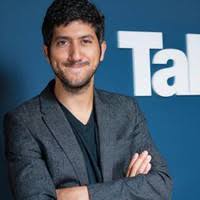
About Adam Singolda
Adam Singolda, CEO and founder of Taboola, discussed the company’s new AI-driven products at the Possible Miami marketing conference in April and June 2026. He introduced DeeperDive, a search and answer tool that allows users to ask questions in natural language on publisher sites, and Real Ads Plus (also referred to as Realize Plus), an agentic advertising platform that automates campaign creation and management. Singolda said DeeperDive increases user engagement and ad revenue for publishers, describing it as “our number one ad placement as a company.” He also announced a skill for Anthropic’s Claude that lets advertisers manage Taboola campaigns through the AI assistant.
Singolda expressed optimism about the adoption of AI in advertising, stating that within a year most of the internet would have an AI answer engine. He positioned Taboola’s tools as serving publishers, OEMs, and apps, in contrast to OpenAI’s ChatGPT and Google’s Gemini. He noted that Taboola pays publishers and partners approximately $1.5 billion annually, and argued that OpenAI would face challenges entering the advertising business due to the need for advertiser relationships and integrated workflows. In a podcast with Dan Nathan, Singolda said he evaluates AI investments by whether they accelerate growth or improve margins, rather than by productivity metrics alone.
Source: AI-verified profile updated from Adam Singolda's recent appearances.
Browse all interviews →
✨ AI-enhanced transcript with speaker attribution
A
Adam Singolda0:00
If you're not waking up in the morning and the first thing you do is take your coffee and go to your office or computer and see how the prompt from last night ended, you're missing out.
I
Interviewer0:19
We're here at Possible in Miami at the NYC Speakers Corner and I'm pleased to be joined by the CEO of Taboola, Adam Singolda. Adam, welcome.
A
Adam Singolda0:27
Thanks for having me. This is great to see you again. Yeah, great to see you here, especially in Miami.
I
Interviewer0:32
I know. What brings you to Possible?
A
Adam Singolda0:34
It's a lot of quality time with really senior people. We get to meet, socialize, and come up with ideas. I think the comparable is probably Cannes Lions, but it's a bigger schlep. I go to that too, but this is really effective, productive, and a lot of people are here. It's getting bigger. I don't know if it's getting too big. This hotel is mayhem. I tried to get an elevator, but it's really working. It's really good.
I
Interviewer1:04
And let's talk about the latest and greatest at Taboola. Obviously, generative AI when it comes to search and this new engine called Deeper Dive. What more can you share?
A
Adam Singolda1:13
It's interesting to see how there's so much change in an industry. It's almost hard to catch up because by the time you're catching up, something new has been introduced. Deeper Dive, which we launched in September of last year and it's growing really fast, is essentially our version of ChatGPT but for the open web. So if you know what you want and you go to ChatGPT, you can ask a question, but when you go to the open web, a lot of the time in the context of I'm trying to learn something, I want to take a trip with my family, or I want to buy a product, or I have a healthcare thing on my mind. ChatGPT is a good quickie: I ask a question, I get an answer, but it's not giving me the material I need to really be educated on the topic. So we launched Deeper Dive. So if you go to USA Today or Huffington Post or Nexstar, which is a huge broadcaster, and many of these great sites, you can ask a question in your own language. You get the short answer which you expect as a consumer, but then you get articles and videos to read that are relevant to what you just wanted to learn about, and through that you get educated. You can ask a follow-up question, and the performance is, I've been doing this for quite some time, I've never seen anything like that. Traditionally, people use web products about 1% of people, 2% are coming and trying things. This is one in six people. So 15 to 20% of people are using Deeper Dive. People love chatting and conversing with publishers. So I'm really excited. I think there's going to be a whole new revolution of how we consume the internet, which will be much more conversational and different than what we see from Gemini and the ChatGPTs, because consumers, when it comes to important decisions, they need journalism, the open web, they need what you do to really give a human point of view about something.
I
Interviewer3:04
How is Deeper Dive, for instance this generative AI search tool, different from the experience of going to a publisher for instance?
A
Adam Singolda3:10
So today, if you go to a publisher, the traditional experience is there's a homepage, I may click on something to read an article, I may read one more article, but that's what we've been doing for the last 30 years. We used to have a site search, it's still there, but it's not really being used. With Deeper Dive, I can ask any question in my own language. I don't have to be searching, I don't have to be discovering. I can ask it in any way that's on my mind. Let's take an example. I like the Knicks.
A
Adam Singolda3:39
There's a very important game tonight at 8:00 p.m. which we're obviously going to win.
A
Adam Singolda3:43
So, I can go to USA Today and say, "What are the chances the Knicks win the championship? There's a big game tonight. What do you think?" And then it will give me a very brief answer, but then it will say, "Here are seven things you should read about it." And the performance of that is just unbelievable. The chances I read one more thing is 10, 15, 20%. So people are really leaned in. And then for advertisers, we show an ad as part of the search results, like in kind of what Google does, and the performance for advertisers is just, it's our number one ad placement as a company, and is a two-plus billion dollar revenue company. So to see something that works so well for advertisers is exciting. And I think as we see here at Possible, the advertising community is eager to see AI monetization, what's going on, where is it going?
I
Interviewer4:38
Okay, so before we get to that, what's the feedback that you're getting from publishers on Deeper Dive?
A
Adam Singolda4:42
Everybody wants to talk about AI. AI is a real thing. No one is questioning whether something will happen. We're seeing some publishers that go all in with us. My career, the chairman and CEO of USA Today not only was the first one, but also spoke to investors about it. I was invited to all hands, 10,000 employees, and we talked about the AI revolution. So you're seeing executives that are very leaned in and saying we don't want to catch up. We want to be first. We want to make mistakes. We want to fix those. And I think that's really fun. But also that's how you innovate in a big way. And then I think others are trying to see and learn what others are doing. There's no, when we do this, hopefully you and I in a year from now, I'm pretty sure that most of the internet will have an AI engine, an answer engine that I can interact with. We hope that's going to be Deeper Dive, because while ChatGPT focuses on ChatGPT, Google focuses on Gemini, we want to focus on everybody else: OEMs, publishers, apps. And again, I think this is going to be not only great for consumers, but phenomenal for publishers and advertisers. And we need growth. We need all the growth we can get in times where search traffic is going down a little bit, too much change. This is to me a very optimistic view of the future.
I
Interviewer6:16
So, let's talk more about the future and what the agentic outlook looks like for advertisers.
A
Adam Singolda6:22
It's a very provocative area, I feel, because if you go to Claude Code now and say, "I'd like to buy search on Google. I'm trying to sell. My wife has a flower business. She says, 'I want to find clients.'" Historically, she would have to go open an account with Google, open an account with Facebook, open an account with Taboola, maybe open an account with some CTV company. And now with Claude, she can tell Claude what she's trying to do and Claude will do a lot of it on her behalf. So one, we launched a skill for Claude. So you don't have to, Claude doesn't have to go and open a browser and go to Taboola. You can just talk to Claude about your open web advertising goals and Claude will do it for you with Taboola. So that is incredible from your own computer. You talk to Claude, Claude's talking to Taboola, Taboola's talking to the rest of the internet, and you sell flowers. And the second thing we've done is we launched Realize Plus.
I
Interviewer7:20
And that is similar to what Google has which is called Performance Max or Facebook called Advantage Plus, and those products are essentially fully agentic in the way that before Realize Plus, if you wanted to work with us, you would have to somewhat understand what you're trying to do. You may say, "I want to find clients in the US, here's a campaign for that. I want to find clients in Europe, here's a new campaign for that. Mobile, global clients, desktop clients, different goals, different creatives." It can get complicated, which is fine if you have the in-house team and know how to do it, but what if you don't? So with Realize Plus, you can let our agent take over your objectives and we open and close campaigns for you. We generate creatives for you, videos, thumbnails, the whole thing. And you get to see how it's being done. It's magic. And so between that and the Claude skill that we launched just three days ago, I can't wait to see how clients are using it and more importantly how we can drive more revenue to the open web and quality journalism.
So obviously it sounds like you are very excited about this. I do think it begs a really big question about the industry because remember agencies and advertisers spend tens of billions of dollars a year buying programmatically. For those who listen to this and may not know, programmatic is essentially a simplified protocol that allows an agency or advertiser to buy on many, many types of companies without necessarily getting to know them. So it's an easy way to buy, and that protocol implemented by DSPs, and it's a whole industry. Tens of billions of dollars are being paid to other companies in the space. But if you can pay Claude $200 and do a lot of it instead of all this madness, what happens? And I think that those who thrive and survive are those who have data that Claude cannot get and supply distribution users Claude cannot get. If Claude can get to your users without you, or if Claude can get the work done without your data, I think you're going to be replaced. And that's a very interesting moment in time because maybe years ago changes of that kind would have taken time, but with generative AI and Claude Code, which is just beautiful, it's amazing. Things change much faster. People ask me, "Do you think by next year it's going to be like that?" and I'm like, "I'm not even sure if by then the way the answer looks like now will remain." So this is early days, but at the same time things are changing so fast you're always late, you're playing catchup all the time. So I think it's going to be fascinating because obviously as an industry, hundreds of billions of dollars are on the line, but Claude Code and Codex from OpenAI are doing such a good job building things.
Yeah. We've seen a lot of change really quickly happen here. I want to get your take on CTV, connected TV, and whether or not you see that as a performance play.
A
Adam Singolda10:43
TV is a great medium. Obviously, when I see you on TV and you speak about a topic, it means something. I'm a lean consumer. I'm not scrolling on a feed late into the night. I'm watching something I care about. I'm leaned in. That's why advertising on TV really works, because I'm not doing something else on the sofa waiting for the next game to come back.
A
Adam Singolda11:05
However, advertisers never historically knew if the ad really drove a sale or if it was something else I did at the same time. There's no clear connection. So a lot of case studies were done and attribution models, it's a complicated space. I put a lot of money on TV and I hope it's working. I hope this is why it's working, but you don't know. And Amazon has done a phenomenal job with Prime saying, "Well, you can give us the money. We'll put you on Yellowstone on TV on Prime, which we have a lot of inventory." And because Amazon is the same company, Amazon is Amazon. We know when you watch that on TV, we know you're the same person opening your app later. And we all buy on Amazon a lot. A lot of boxes outside my door. So now Amazon can advertise to me on my app. Amazon can show people like me the same ad and then when I click and buy it, Amazon gets to go to the advertiser and say, "You see, we're really good at this." Which created a lot of pressure for the industry because now other broadcasters are saying, "How can we do that too?" So we actually had a lot of broadcasters come to us and say, "Can you be our Amazon? Help us connect TV to performance. Show us. I see an ad on TV and then you see an ad on Taboola's side on a publisher side." And we worked on that for the first time. We got into the TV space. We announced it in June of last year with Paramount, which was amazing.
A
Adam Singolda12:42
And then we announced with LG, 250 million devices all around the world. So if you watch an ad on, we were in upfronts just now with LG, which was fun. But if you buy an ad from LG through this partnership, those consumers and people like them will see your ad around the web, they may click on it, buy the product, and we close the whole loop. So I think that's going to grow the TV market significantly, because if you know it's working, you're going to spend even more money. And we're humbled to work with Steve at Paramount, Serge at LG, and now we're here talking to many broadcasters and platforms. Christian joined us from Amazon. He built the advertising business, the TV ads business, and I've known him for 10 years from his NBC days. So he has a lot of TV in his nature, and so we're having a good time.
I
Interviewer13:36
Any other learnings that you can share with our audience, Adam?
A
Adam Singolda13:39
Build something on Claude. I mean, if you're watching this and it's been more than 20, if you're watching this and the first thing you, and I don't care what you do, you can be anyone. If you're not waking up in the morning and the first thing you do is take your coffee and go to your office or computer and see how the prompt from last night ended, you're missing out.
I
Interviewer14:06
So, build something.
A
Adam Singolda14:07
All right, Adam. Well, thank you so much for joining us here at the NYC Speakers Corner.
I
Interviewer14:11
Great. Until next time.
A
Adam Singolda14:12
Until next time. Go Knicks.
I
Interviewer14:14
Go Knicks. Yes.