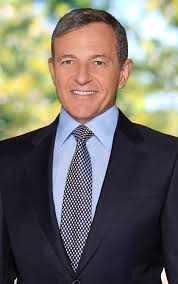
About Bob Iger
In a June 2026 interview with CNBC marking the 10th anniversary of Shanghai Disneyland, Bob Iger described the park as a career highlight and said he felt "filled with pride" about the project. Iger recalled that competitors in China had said the park "will never work," but he said he "could not wait to prove that they were wrong." He stated that Disney has "succeeded over the years in putting politics aside" and sticking to its mission of entertaining people globally, adding that "pretty much no matter what happens, Disney does just fine." Iger also said his own future involves "truly enjoying life after Disney" and that he felt "really good about handing the company over to Josh" (his successor, Josh D'Amaro).
In a 2020 interview on the Goop podcast, Iger discussed leadership and communication, saying he discovered that "being direct is far more efficient and effective." He noted that women are "held unfortunately to a different standard" regarding directness and may be "a little less direct for fear that it's going to affect people's perception of them." Iger also outlined his strategic priorities at Disney: spending capital on high-quality branded content, using technology to improve products and reach consumers directly, growing globally, and succeeding at diversity and inclusion, which he described as having "a great business case."
Source: AI-verified profile updated from Bob Iger's recent appearances.
Browse all interviews →
✨ AI-enhanced transcript with speaker attribution
N
Narrator0:00
Thank you for tuning into the Goop podcast. Today's episode is made possible by Polestar. Those who know me know my car is my mobile sanctuary. It's one of the few places in the day that can feel really calm and restorative. So, the space matters. That's why I love Polestar 3. It's an all-electric SUV with a kind of thoughtful innovation that I'm always drawn to. Things like massage seats, immersive 3D surround sound, and Google Gemini, which can answer questions, set reminders, and just make life feel a little more streamlined when I'm on the go. The technology is seamlessly integrated and complements the minimalist design. Everything feels intentional, clean, and beautifully considered. Whether I'm heading to a meeting or just taking a moment for myself in the car, Polestar 3 makes the drive feel like a sanctuary. Learn more and book your test drive at polestar.com.
T
Tyler Reddick0:57
Tyler Reddick here from 23XI Racing.
B
Bubba Wallace0:59
And Bubba Wallace.
N
Narrator1:01
You know what's the worst part of a race? A rain delay. Sitting around waiting for the track to dry is dull. But instead of waiting, we hang out with Chumba Casino. Social casino slots, bingo, solitaire, plenty of fun to keep us entertained. So, why let a rain delay slow you down? Play now at chumbacasino.com.
Let's Chumba. Sponsored by Chumba Casino. No purchase necessary. Void where prohibited by law. 21 plus. Terms and conditions apply.
Thanks for listening to the Goop podcast, made possible by our friends at Ketel One Botanical.
The past month or so, I spent a lot of time in the kitchen recipe testing and filming videos on everything from salads to cocktails. You can guess which was more fun. I have some tried and true cocktails that I make at home, but I like to take inspiration from the recipes our food editor Caitlin comes up with.
Over the years, she has made a bunch in partnership with Ketel One Botanical. Here's why this is very goopy. Ketel One Botanical is vodka distilled with real botanicals and made with non-GMO grain. There's no sugar and no artificial sweeteners or flavors.
You can mix with Fever-Tree Club Soda for a simple botanical spritz, or if you're looking for some custom cocktail ideas, you can find those on goop.com.
And to order Ketel One Botanical now, head to drizzly.com.
That's d r i z l y.com.
G
Gwyneth Paltrow2:37
When you are pioneering anything or introducing new ideas to the culture, you get criticized.
G
Gwyneth Paltrow2:44
Yeah. Did you hear about that?
I didn't find the one. I found someone I respected and we made it the one.
In the sort of longing kind of view of love, people understand each other as if by magic. Nothing itself is addictive on the one hand, on the other hand, everything could be addictive if there's an emptiness in that person that needs to be filled. I now know that nobody changes until they change their energy. And when you change your energy, you change your life.
I'm Gwyneth Paltrow. This is the Goop podcast, bringing together thought leaders, culture changers, creatives, founders and CEOs, scientists, doctors, healers and seekers here to start conversations. Because simply asking questions and listening has the power to change the way we see the world.
Here we go.
E
Elise Linnen3:35
Hi, Elise Linnen here, co-host with Gwyneth of the Goop podcast. Today is actually a Gwyneth episode, but since we're quarantined and I have the podcast kit, I get to introduce our guest, the one and only Bob Iger. Bob served as the CEO of The Walt Disney Company from 2005 to 2020. He recently announced his decision to step down as CEO, but due to the current situation with COVID-19, he has honorably taken the role of executive chairman. GP has learned so much from Bob over the years. He's someone she has personally reached out to for advice and mentorship. In their conversation, they get into on-the-job learning and finding the balance between leading with authority and recognizing when you don't have all the answers. They talk about the power of speaking straight, which is one of our core values here at the Goop offices. In Bob's new book, The Ride of a Lifetime, he explains the ways in which being direct has not only made him an effective leader, but a more efficient one. GP believes this book should be required reading.
He also shares his brilliant ideas on managing creativity, listening to your instincts, and knowing how to protect the essence of a brand while constantly pushing it forward. I think women are held, unfortunately, to a different standard in that regard. When women are direct, as you know, they're often branded for your you're a as if, for instance. And that's just really wrong, and I think sometimes women seem concerned about being branded that way. And so, it's they tend to be maybe at times, at least in work, they can be, for that reason, a little less direct for fear that it's going to affect people's perception of them. I'm not saying that's always the case. I certainly don't want to be guilty of a stereotype, but I do think women are held to a different standard in that regard.
Let's get to GP's chat with Bob Iger.
G
Gwyneth Paltrow5:30
So, as you know, I loved your book. Thank you.
And you know I follow you closely, and I was so excited when your book came out. And for anybody who's listening who hasn't read it yet, I highly, highly recommend it. It's not only an amazing story of leadership and strategy and boldness, but of real character and integrity, and it also is really entertaining. It's a really good story, starting with your childhood and the relationship with your parents, and watching the trajectory of your whole career, which has basically been at Disney, ABC for 30 years, is that right?
B
Bob Iger6:16
No, no, no, 45.
G
Gwyneth Paltrow6:18
45? Oh my gosh. See, you're too young. You're not capable of thinking in that many years.
B
Bob Iger6:24
That's very true. So, the first question I wanted to ask you is why now? What was the impetus to write the book? Well, the main impetus was to impart the lessons that I've learned from 45 years in this business, and in particular 15 years as the CEO of one of the largest, most complex, most well-known media and entertainment companies in the world. And over the years, so many people have come forward and asked for advice, you being one of them, actually.
G
Gwyneth Paltrow6:57
Sorry about that.
B
Bob Iger6:58
No, no, no, I find it actually flattering. First, I found it puzzling that people would be coming to me for advice, but I ultimately accepted the fact that because I've had this job, I am someone that many people could turn to or would turn to just to see or seek answers or direction or just some sort of help in helping them do whatever either they wanted to do or were doing. And I thought, well, one of the best ways to do that would be to write it in such a form that many people could read it. However, I was also very, very concerned that it would appear to be either self-congratulatory or just a giant ego trip. And I also was concerned that it would be boring. I've not read business books, really. I've tried a couple of times, but they're dry, most of them. I'm not necessarily saying all of them that I've either tried to read or been aware of. And so, I just asked myself, if I want to fulfill the mission, which is to essentially impart wisdom, can I do so in a way that is not self-congratulatory, and can I do so in an entertaining way, to the point you made? Can I tell great stories, since I'm in the business of telling great stories? After taking a stab at writing a chapter and giving it to friends and other folks that I knew in the publishing business, they came back just convinced that this is something that was doable. And thus, the book.
G
Gwyneth Paltrow8:31
I don't I mean, I suppose you could have framed it that it was self-congratulatory, but empirically, you are one of the most successful CEOs of all time. So, just if you look at what you've been able to achieve, I think just empirical facts make you look pretty good.
B
Bob Iger8:52
Yes, but you know, that's something that I tried to address in the book, too, is that I don't wake up every morning believing that I'm what you just described. In fact, I try not to wake up in the morning even aware that I'm the CEO of The Walt Disney Company. In fact, I wrote that if the moment you look in the mirror in the morning when you're getting ready to shave or brushing your teeth or whatever, and you see that title emblazoned on your forehead, or your reputation, in effect, stands out more than who you really are, both physically and otherwise, then you're in trouble. And so, I don't really want to project that in terms of who I actually am. I'm actually the same person, you know, that was born in Brooklyn in the early '50s, and that grew up in relatively modest circumstances in a suburb of New York, and that started low on the totem pole, so to speak, at an entry-level position, and through hard work and luck and a variety of other things, found myself getting promoted and promoted and promoted till I had this job. And then even when I got this job, while I recognized there was so much responsibility associated that I had to act like the CEO. I tried really hard with the help of friends and in particular my wife Willow just to keep my feet planted on the ground and to try not to be anything that I really wasn't. So, I think the CEO title is something that is branded almost on you. But it's external to who you are. It's not internal.
G
Gwyneth Paltrow10:22
But how do you manage to keep that perspective given that I don't know. I think you know, I'm a public person and so I mean I have friends and family who cuz it happens so incrementally, right? You accrue power, visibility in increments and sometimes it's really hard to discern like, oh, you know, people are relating to me differently because it's happening almost imperceptibly all the time. How do you do that given your professional stature at this point?
B
Bob Iger10:53
Imagine you can relate too because, you know, that person that most of the world knows is who you've become, of course, and who I guess through not only talent and your own will but rehearsing in a way and practicing, you know, you are to them. And yet deep down you're that same kid that grew up in a loving family and right?
G
Gwyneth Paltrow11:17
Yeah.
B
Bob Iger11:20
I think you just have to work at it. The world, by the way, doesn't make it easy and with more success comes more notoriety and with more notoriety comes I think the even greater challenge to remind yourself constantly of who you really are deep down. And also the fact that you won't necessarily always be this and not that your reputation doesn't stay with you forever, but I'm renting this job. I don't own it. You know, I'm passing through. I'm the sixth CEO in the history of the Walt Disney Company almost 100 years old the company and there'll be a seventh and an eighth and a ninth and we'll all be renting the title in the office. It's just reminding oneself of that. One day it will be gone and the benefits of it will have, you know, obviously stick with me for a long time in terms of the impact on my life. Yeah. And in some ways who I became, but what I learned. It's which it's work. I think a lot of it has to do with people you surround yourself with. Yeah, certainly.
G
Gwyneth Paltrow12:17
Too who see you as Dad. Yes, dad or son or brother or uncle, grandfather in my case. I have five grandchildren. They're kind of confused about what their grandfather does.
B
Bob Iger12:29
You know, they think I'm president of Disneyland. I'm sure. What a bonus for them. It's not bad being my grandchild. That's true.
G
Gwyneth Paltrow12:38
So, when you come up through a company through the ranks like you just said and you start entry level I imagine you're constantly learning what your role is while you're already in the role. And it's something that I wanted to ask you about only because I was sort of thrust into this role. Like I had no process. I never worked at another corporation. And so learning on the job is both the most exhilarating part and the scariest part. I think often because you don't know what you don't know when you're learning on the job. So, I wanted to ask you at every stage as you were learning on the job presumably, what were the most effective ways that you set yourself up for success when you were in a constant process of learning?
B
Bob Iger13:30
Well, it's very interesting and you're right that with every new job that I've had, there was always an element of some self-doubt which I think is healthy. I never entered any new job without realizing that one I had things to learn and two that I guess along the same lines, I didn't have the answers to everybody's questions. And I decided in all cases to accept the new responsibilities willingly without intimidation even though, you know, I had some inner anxiety. Without intimidation trying really hard to be real and authentic and honest and humble while at the same time exercising the level of authority that was given me with each new job that I got. And there's a very careful balance there. You you know, particularly when I became CEO all of a sudden I'm CEO of this gigantic company having never had the job before working closely with former CEO Michael Eisner and seeing how he did it, but I didn't have the job and everybody's turning to me for decisions and answers and direction and strategy and you name it. And it quickly became clear to me that I had to play that role because the company needed that from me. But I also couldn't fake anything. And so if I didn't know something I made it absolutely clear that I didn't and I was perfectly comfortable essentially showing that side of myself to others without fear. In other words, and it's again it's a difficult balance. On one hand you don't want to look stupid. You don't want to look like you're not ready. You don't look you don't want to look like you're a rookie who's incapable, you know, or but I think if you fake the fact that you're all-knowing, all-confident, all-powerful, all-everything from day one I think people will quickly see through that.
G
Gwyneth Paltrow15:25
Mhm. And I don't think that's healthy either. So, it's you know, it's it's feeling comfortable enough to tell people what you don't know, show people what you don't know and ask what you need to know and continue to learn while at the same time balancing that with the fact that you know, you're you're it. You're the authority as you discovered when you suddenly were you know, running your company.
B
Bob Iger15:47
And I've tried to teach that to others as well when they get new jobs and I tell them understand that it's important to be humble that you don't know everything particularly when you give someone a job that's somewhat far afield of where they've been. Mhm. You know, a really big promotion and we like to move people around different parts of our company. So, we'll put people in jobs and businesses that they just haven't worked in. But we believe in them. We bet on brains.
G
Gwyneth Paltrow16:12
Mhm. And in effect before experience.
B
Bob Iger16:15
And I tell them don't worry about showing your inexperience, but don't carry it so far that you're not acting as an authority figure exercising the responsibilities you've been given in the new position.
G
Gwyneth Paltrow16:29
And how does one cultivate that balance then between what you're essentially saying is vulnerability, right? Saying like I don't know this. Help me help me understand this. And authority.
B
Bob Iger16:43
Well, I think it's and I don't know that you can know this going in before you put someone in a role. As I look back on people that we've cultivated in terms of positions and authority and growth and opportunity in the company one of the most important traits is that ability to be humble even with a big title, even with authority, that ability to admit what you don't know. And in terms of how you cultivate it, I think it helps to have people that give you the confidence to be that way. It helps to work for people who actually say it's okay to not have all the answers. And it's more important that you be humble than showing to others that you know, that you know everything when you don't. Cuz again, I think that's just a recipe for failure and disaster. I just don't I think people will respect you a lot more. You expect the opposite. They think, well, the only way they can respect me is if I'm a know-it-all and I'm a do-it-all and you know, I'm in charge. When in reality the best way to I think to get respect from people is through honesty and authenticity.
G
Gwyneth Paltrow17:54
Mhm. And you bring me to a point reading this book as a female founder and really encouraging everybody who is an entrepreneur who listens to the podcast or is thinking about it especially women the way that you convey your directness and honesty is really inspiring. I think it's very difficult for women leaders especially directness. I think it's a quality that's difficult for us to incubate and cultivate. We are worried about hurting people's feelings. We're worried about being impolite. You know, we're peacemakers. And I don't think you can be and I'm sort of just coming to this now, but I know that you cannot be a really effective leader without having the balls to be completely direct. And it doesn't mean unkind, but it means exactly what it means and that really came through the pages of your book. I thought, my gosh, you know your ability to be honest and direct is really inspiring. And I wanted to ask if you have always been that way or is it something that you've had to cultivate as well?
B
Bob Iger19:04
I think I've gotten much better at it. I don't really remember my young self that well, but I think over the years maybe even right before I got this job I quickly discovered that being direct is far more efficient and effective. It's not only more effective, it's more efficient. You can just get things done quicker. And not basically I like going in a straight line to things instead of you know, making left and making right and making a left. It's just it takes less time. You know, when you discover that and maybe part of it had to do with just the need for me to balance my or to manage my time that the more efficient I was, the better off I was and in order to be efficient, I had just had to be effective in communicating you know, what I wanted, what I wanted done, what I expected of people, what standards I demanded, all of those things. And I think in the end, people appreciate that more. Sometimes when they hear something faster, it seems more harsh to them. But I think over time, they come to appreciate that first of all, there's a real credibility to what you're saying. You're not saying something cuz you mean something else. You're saying something cuz you really mean it. And when people absorb that, when people appreciate that, they tend to react to it quicker, too. And it just is a just a better way to be. I think the point you made about women is actually an interesting one. I think women are held unfortunately to a different standard in that regard. When women are direct, as you know, you know, often they're branded for your you're a
G
Gwyneth Paltrow20:44
Yeah. As a for instance. And that's just really wrong. And I think sometimes women seem concerned about being branded that way.
B
Bob Iger20:53
And so, it's they tend to be maybe at times, at least in work, they can they can be
G
Gwyneth Paltrow20:59
Yeah.
B
Bob Iger20:59
for that reason a little less direct for fear that it's going to affect people's perception of them. I'm not saying that's always the case. I certainly don't want to be guilty of a stereotype, but I do think women are held to a different standard in that regard.
G
Gwyneth Paltrow21:11
Absolutely absolutely agree. And I think also we haven't had a lot of models of women in leadership. We haven't had a lot of exposure or not a ton of Fortune 500 women CEOs that we can study and watch how they interact. And I probably can bet you that they're direct in the way that they communicate. But I think as as the paradigm continues to emerge about what a woman leader can can look like, I think that's a really important piece of it, you know, being able to being able to cultivate that. And also I I wondered, too, as I was musing on it, you know, there are aspects of us that are unresolved or that we're not totally comfortable with or if we have lingering shame or whatever, like whatever our shadow self is, you know, the more that we resolve that, the the closer to that that we get to ourselves, that we're able to fully embody who we are. And then if directness is can be a byproduct of that.
B
Bob Iger22:10
Yes, I would I would imagine that it would be a byproduct of that. Being more in touch with who you are, more comfortable in your own skin, of course.
G
Gwyneth Paltrow22:19
Just okay, feeling comfortable expressing yourself in an honest and direct manner without fear of being judged for doing that. Right.
B
Bob Iger22:30
You know, is I think that's very that's very powerful. And again, I think in my case, I don't I don't think it's a that the ability to be direct is some great leadership trait. Well, I think it's an important quality in a leader. Mhm. But I don't think it's the necessarily something that people are born with and that then enables greatness. I think at least in my case, I don't think I was. I think it's just something I learned and it really was the result of my figuring out early on that it's just a much faster way to get from one place to another, to communicate one point to somebody. And I think in the end, people actually appreciate that more, too.
G
Gwyneth Paltrow23:14
And I think probably means that the people around you end up being the kind of people who are okay with that. And that's actually probably a really healthy thing.
B
Bob Iger23:24
Absolutely. I think you can create a you can create an environment in an organization that accepts directness and encourages direct encourages and accepts directness. Yeah. Let's just be honest with one another. Let's say what what is on our minds. Let's And I look, I think that doesn't necessarily mean it's a license to be disrespectful to people. I think there's a careful balance there, too. For sure.
G
Gwyneth Paltrow23:46
you have to have empathy when you're direct and meaning you have to have some sense when you communicate something very directly to someone, particularly if it's particularly meaningful to them in their lives, something about their performance or whatever. That empathy goes a long way, too. You can be You can be direct and respectful at the same time.
B
Bob Iger24:04
Mhm. So, is that a tenant of the Disney culture then? Is that something that you model and you communicate?
Yes. You know, I usually I mean, I don't hand everybody a playbook that works for me. But if if if you work for me for any period of time, not particularly long, or you work for us, particularly at the senior management ranks, I think there's a very strong sense of the kind of things that we expect. Respect is definitely one. Honesty is another. Directness, not taking ourselves too seriously, being authentic, treating people fairly is really important as well, giving people second chances for making honest mistakes, really important. Not tolerating any significant lapses in judgment that in any way discredit a person or the company. Right.
G
Gwyneth Paltrow24:54
And we're pretty strict about such things.
Do you think that because the values of Disney and what Disney is as a brand are so clear that as a company you have to be extra diligent about that?
B
Bob Iger25:07
Yes, I actually like that. I think the bar is higher for Disney because of the brand and the values that are expected not just from the stories that we tell and the product that we make, but of the behavior of the company. I talk a lot about you know, wanted to wanting to be one of the most admired companies in the world. And they said, "Well, we're admired for what?" And I said, "Well, the quality and the integrity of our people and what we make." Mhm. And I think that's again, that's a high bar, but it's exactly what's expected of the Walt Disney company. You know, they expect what we make to be of high quality and they expect how we behave to each other and citizens of the world, you know, is expected to be exemplary. Mhm. So, it's that's a I like that. And it's actually makes our jobs as managers easier. Mhm. You know, cuz the rules are out there for us already. Yeah.
G
Gwyneth Paltrow25:59
In terms of the quality of the product, tell me a little bit about how you thought your way around the famous acquisitions that you've made, like Pixar, etc. Fox. I mean, are these acquisitions really about I know with Pixar in the book, you're pretty clear that it's about you didn't feel at time did that Disney animation could make products of that quality and that Pixar was doing it best in class. But it with an acquisition like Fox, is that just for scale and to acquire Sky and all of these other platforms and ways to reach customers?
B
Bob Iger26:35
Well, each each one had certain characteristics that were, I think, relevant to just, you know, those assets of that acquisition. But there was a commonality among all of them. And that was really what we call intellectual property, you know, storytelling telling capabilities and opportunities. And that started with my belief and it was very much part of the Pixar acquisition. Although you're right that the primary thrust behind buying Pixar was to right the ship that was Disney animation, which was which was listing or sinking through what had been an unfortunate almost decade of tries and misses movies and and and failures. It just It just just the way it was. And Disney animation is so important to the company and the perception. But what I was also thinking was as I thought about the job that I was walking into, 2005 CEO of the company, and I thought about the world that was starting to unfold with the changes that we were seeing in technology. What hit me was that if you had really high quality storytelling, which was really the heart and soul of our company, that's the product that we make the most of and is the most important. And particularly that was branded, that name Disney or the name Marvel or Star Wars or Pixar, that as the world changed, in particular in our world, the storytelling world, what we were seeing was the proliferation of more stories, meaning technology was enabling more people to tell stories and to tell them to more to more people and so on. But if we had high quality branded stories, that they would stand tall in a sea of tremendous choice and that that choice was only going to expand and expand and expand. Here we are today, 15 years later in we'll call it an a Netflix world where the amount of product that is being made in our core business is so enormous, beyond what we ever could have imagined.
G
Gwyneth Paltrow28:46
Yeah. You talk about 500 television series being made a year in the United States alone. And you know, back in my day when I ran ABC, when there were three networks, I don't know, there were probably I don't know, 50 or 60 television series being made at the time. And so, when you think about what has come to pass in terms of the product being made, I feel that what we've done with these acquisitions by buying first Pixar and then Marvel and then Luke Lucasfilm or Star Wars and then ultimately Fox, which had a number of stories to tell and I I wouldn't talk about those. Um that it was all about establishing ourselves in a or setting ourselves apart from kind of the rest of the the storytelling world.
B
Bob Iger29:31
Mhm. There were other elements, as I said. In Pixar's case, was to fix the animation. Marvel was a pure intellectual property play. Mhm. As was Star Wars. Right. Um Fox
G
Gwyneth Paltrow29:42
to hear that Steve Jobs hated Iron Man 2 so much. Yes, I
B
Bob Iger29:49
No, it's good. It's hilarious. good stories. There were a couple of cases where I couldn't avoid that. By the way, Iron Man 2 did just fine, since we're on the subject. When I was considering buying Marvel, Steve at that point was our largest shareholder and a member of the board. Although he hated when I referred to him as that as either one of those. He said, "No, I'm I'm just your friend. Just I'm here for advice." Which was a great And that's how he behaved, really. And I went up to see him at Apple to talk about the possibility of buying Marvel. And he first question he asked is, "Is it another Pixar?" And I explained what Marvel was, all the characters, thousands of superhero characters. And at that point there had been one movie, which was the first Iron Man movie really that Marvel had produced. And he kind of looked at me somewhat skeptically because he said he didn't really like comic books. He didn't like video games and he didn't like comic books. I got a sense that perhaps his parents were strict about that. By the way, mine were too. I wasn't allowed to read comic books. Really? Yeah. I don't know if that's boy, that's something I probably never admitted. Anyway, uh he called me one day and we bought Marvel and the rest is history and turned out to be one of the greatest acquisitions we've ever made.
G
Gwyneth Paltrow31:00
So, even though Steve was somewhat skeptical, he did think In the end he said, "If this is what you think is right, go ahead and do it." But then the first film that we released after we owned Marvel was Iron Man 2. And it came out, I think, on a Friday or Thursday night and Sunday he called me at home. He used to call me on weekends often, just to talk. And he said, "Ah, but I went to see Iron Man 2 last night with my son Reed, who was then a I think a young teenager. And I was kind of waiting." I could kind of tell the way he started there there was no there wasn't much spring in his step.
B
Bob Iger31:38
And he said, "I went there I went to see it and it sucked."
G
Gwyneth Paltrow31:42
And of course, even though he always reminded me that he wasn't to be thought of by me as our largest shareholder or member of the board, it was hard at that moment not to think of him that way.
We got past it.
N
Narrator31:57
We'll get back to today's chat in a minute.
Bar carts are one of our passions at goop.
In our shop, we have a particularly beautiful custom bar cart that's built in Los Angeles at designer Chris Earl's home studio. It's made of gorgeous ebenized oak wood with glass paneling and brass hardware.
Equally important is what goes on top of the bar cart. And if it's a goop party, then there's a definitely Ketel One Botanical included.
Ketel One Botanical is vodka distilled with real botanicals. What sets it apart is that there's no sugar and no artificial flavors or sweeteners.
Ketel One Botanical comes in three varietals: cucumber and mint, grapefruit and rose, and peach and orange blossom. And they all make for fresh-tasting goopy cocktails. For recipe ideas, head to goop.com.
And to order Ketel One Botanical now, head to drizzly.com. That's d r i z l y.com.
G
Gwyneth Paltrow33:07
Okay, let's get back to the conversation. So, how do you go about when you have all of these amazing characters and stories and you've aggregated all this amazing content and IP and libraries, how do you set about prioritizing which ones you're going to turn into lines of business or amplify?
B
Bob Iger33:27
Well, we're feeding a number of beasts, so to speak, in terms of making product for to basically enable our businesses to thrive, whether it's television channels or now direct-to-consumer businesses like Disney Plus, you know, or the movie pipeline. And so, we know that a certain level of production or of or volume is necessary to keep those businesses going. ESPN's another one. You know, they they have to have enough sports to cover really to support the ESPN business. But fortunately for us, we have so much to choose from. And we typically choose things that we believe will we will resonate with an audience, often a global audience. We We choose things because of the a talent that's behind them, the directors and the writers and the actors, the you know, all those all the critical contributors to telling great stories. Sometimes we choose things simply because they excite us and they are they feel innovative to us. They're not the same thing.
G
Gwyneth Paltrow34:33
So, mostly instinctual, not so data-driven?
B
Bob Iger34:37
We try Well, it's interesting as we enter an era where we're collecting vast amounts of data that can be used for all kinds of purposes, good and bad. It will be interesting to see how we use that data in making creative choices. And I my my hope is that we don't. But so far, at least during my tenure, we have rarely, if ever, used data to determine what we make. We really, in all directions, go on instinct. And we're fortunate as a company to have you know, working for us, you know, some you know, great creative managers, meaning people who help manage creativity. Don't create anything, really. Although many do. Sure, Alan Horn at the studio and Kevin Feige at Marvel. You know, Kathy Kennedy at at Lucas Film and and and now the infusion of people from 20th Century Fox, you know, Peter Rice and and Dana Walden and and great people at National Geographic. You know, we're we're we're really lucky in that regard. And they really are the ones that manage their relationships with creative communities and the storytelling that's being done for them. And I think in all cases, we try to put people in those jobs that have the so they have real belief in their own instincts and and give them the room to exercise their instincts. I think that I think in the end that's such much more valuable in terms of to managing creativity than anything else. Maybe I'm being really conservative, almost to the point of being of another era, but I don't really I don't see a time when machines have all the answers in terms of what to create. Can you imagine data being fed to, you know, a computer that, because of what's going on with machine learning and and artificial intelligence, will be able to crunch that massive amounts of data at very, very high speeds, you know, you know, in fact, very quickly. Could we ask them, you know, what what painting should Picasso paint next? I that would be that would sound blasphemous, right? And I don't think there's much of a difference. I I think to ask should we ask, you know, I don't know, pick a good director or a good writer what they should do next versus their own instincts. I don't I just don't see that happening. I don't think it's a it it might be a path to less failure, but in a way, more homogeneity, more mediocrity. I I don't I don't think it'll be I don't think it'll be a path to much more success.
G
Gwyneth Paltrow37:18
I wonder because, you know, in my business, for example, the intersection of data and instinct is a really interesting place to live and to examine. Obviously, my business is different, but I just I wondered if, especially now with Disney Plus, and you have, I'm sure, really sophisticated systems to collect people's data. And are you There must be teams or are there teams who are in using data to understand what the customer wants from Disney across all the various channels. You know, if they go to Epcot and they're doing that special tour and they have the bracelet. Like, are you are you using are you aggregating all of that data across all the channels to at least understand the customer better?
B
Bob Iger38:04
We are. We are. And and we're doing so and look, in some cases, at theme parks, we've been collecting data for quite a while. Now that we're in the business of of of selling content more directly to consumers with Disney Plus, we're collecting much more data about consumption of television shows and movies. And you don't foresee a future where you could see look at that data, for example, at from Disney Plus and see, "Okay, it it really seems that this demographic wants more content in this" I think look, if you're using it to measure consumption levels of a certain product, then that should be, I think, a tool to be used or to answer the question, "Should we make more of this specific product?" But that's not that different than television ratings in the past. If a if a show is working because a lot of people are watching it, you should make another season and another season.
G
Gwyneth Paltrow38:55
That I So, I think we'll continue to use data for that reason. But if we're if we're seeing we see data on consumption of a show called The Mandalorian, which is a a Star Wars derivative show that Jon Favreau created, I've heard about it. I don't think it's Thank goodness for The Mandalorian.
B
Bob Iger39:17
I don't I don't We're not now and nor do I foresee us using that data to determine whether we make another Star Wars series that's sort of similar in nature or whatever. I I I think if we have an idea that makes sense to us and it can be executed by creators that are really great at what they do, that we have a great confidence in, then then we should make it. But I know. But there are other ways data can be used both to enhance our business but also to enhance the customer experience. So, if as a for instance, if we run a a program a Marvel program that a number of people that increases subscriptions tremendously and a number of people download and we're running another Marvel show sometime later, we now have ability to tell those people that consumed the first one that another one is coming. So, I think we can get much more efficient and much more effective and smarter at marketing. And interesting people often look at marketing as one way a one-way street meaning value for us, but it's also value to the customer. If you know, if you've bought you know, a Goop product regularly, I think you would probably want to know what Goop product is coming up that you might be excited about. That's a service for the customer. It's also obviously a service for Goop. Right.
So, I think we'll use data a lot more for that for cross marketing purposes to create a more intimate relationship with our customer. Yeah. Because for many of our businesses, we've never had the direct relationship.
G
Gwyneth Paltrow40:45
Yeah.
And it's and Disney has such an incredible opportunity and it's why I model my very small business compared to your business off of Disney, but the idea that content and storytelling is inside the nucleus of what you do and then you are able to create all of these incredible lines of business coming out of them.
B
Bob Iger41:04
Yes, leverage you can leverage a brand. Yeah.
As long as the products all the products that you're putting that brand name on embody the the brand characteristics or traits of the original product itself. You know, when we put the name Disney on something we do so with great care and very purposely because we know that that product has the same characteristics and we also know when not to. It's not that we haven't made mistakes, but we talk about this by the way almost every day. Could this be Disney? Should this be Disney? That's incredible. It is it's incredible. It's a 100-year-old brand. It's you know, in this day and age where they where you have so much you know, everything is so digital and people are talking about, you know, what is the experiential component of this brand? It's like Disney is this incredible 360 experiential content. You know, you guys do everything in a way that feels really modern. You're able to constantly deepen your experience with the brand by going to a park or seeing a movie or you know, any of those things and it it's that to me is is so important to maintain, right? And to keep in mind while you're scaling. One of the great achievements of the Walt Disney Company over generations of leadership, not just through my generation but starting with Walton and Michael Eisner and and and through my tenure is continuing to be relevant in a world that does not look anything like the world that existed
G
Gwyneth Paltrow42:41
Yeah, it's amazing.
B
Bob Iger42:42
company was founded or when the brand was first created. And I think that's not by accident. It's by a lot of hard work and a significant amount of talent by a number of people. But when you think look if the company was founded in 1923 and it you could do some work thanks to the internet on what were the most popular brands in the country or the world at that time and you would be hard-pressed to find any that were popular or relevant then that are today. There might only be one that would interestingly enough would be Coca-Cola. Mhm. But not
G
Gwyneth Paltrow43:16
to do that?
B
Bob Iger43:18
Well, I think there are a couple of ways. One is those brand characteristics that were infused in the brand back at the beginning are still there. Right. And what's interesting about that is a lot of people who are managing brands believe that the only way to keep them relevant is to stray from the original values and at at some form or another adapt to or adopt new values because the values seem more relevant or more modern. In reality it's not about straying from or abandoning core values. It's about presenting it all in a very different more relevant way. And there are countless examples of that. So, for instance, let's just look at animation. Animation originally was hand-drawn 2D animation worked for decades. And well, we can talk about Mickey Mouse, which is another great example of this. And then suddenly the computer came around and created the ability for animators to create animation art that looked much more of today's era.
G
Gwyneth Paltrow44:21
Pixar did it brilliantly really did it first in many ways.
B
Bob Iger44:27
And in if you look at the Pixar stories, they had some of the same characteristics and values as some of the original 2D animated features that Walt Disney made, but presented in a way that looked very fresh, very modern particularly for younger generations. Yeah. Older generations who grew up on the old were less probably either aware or in need of something that looked more fresh, but to to get younger people in, you have to create something that really looks of to be of their age. So, I've talked often about how to how do you be relevant in it's in in a changed world and it's keep the same values, but present them in more modern ways. Another thing that has helped a lot technologically is just the delivery mechanism. The fact that you can deliver a Mickey Mouse short to someone's mobile device in high quality color with pretty decent sound makes that short seem a lot more relevant to to kids for instance because of how they're watching them. So, we've tried really hard with really all of these key brands is to focus on okay, what's the what were their essence back when and let's protect that essence. And it's actually interesting too. I talk about this a lot. It's not about being reverential to what they were. It's being respectful Mhm. to what they were. Meaning in being respectful understand all the components all the value and move that forward, but when you revere something and you make then you really work hard not to change anything, you might as well put it in a museum case best case and not touch it not change it.
G
Gwyneth Paltrow46:02
When you talk about you know, 15 years ago you're in in the book you talk about when you started you had to really distill down your three key priorities for Disney. Do you mind just repeating what they are and are they still your priorities?
B
Bob Iger46:21
Yes, first of all, what you're referring to are the priorities that I articulated to the board when they were considering me for this job. I obviously needed to sell myself to them, but it wasn't just about who I was as a person as what was my vision for the company. I decided that having strategic priorities would be a great way for me to describe to them what my vision was. And they were the following. One was to spend most of our capital on high quality branded content. The beauty of that is that that's what can create those that was the that was the road map to buy Pixar and Marvel and Star Wars for instance. The second was use technology in the following ways. One to make your product better, more compelling and to keep it more relevant. Pixar is a great example of that. And also to reach more people directly Disney Plus. And the third was to grow globally. We were a company and a brand that was known worldwide, but our position in most markets was relatively superficial except for some. We had a theme park in Tokyo. So, we were we had penetrated Japan deeply, but most other markets we were known but we weren't we weren't necessarily loved and we weren't part of people's lives the way we are in the United States. So, growing globally became a real priority right from the beginning. It's what led to the construction and the opening of Shanghai Disneyland.
G
Gwyneth Paltrow47:53
And would you say that those priorities remain intact today?
B
Bob Iger47:59
Yes, I'm I'm going to add one which I articulate all the time at the company and I will articulate more publicly and that is really succeeding at diversity and inclusion. Mhm. And I raise that because in today's world in particular and given who we are as a company and what we're trying to accomplish, there's a great business case for that. We always know there's an ethical case for it. But there's a business case for it. And the business case is the following. One the more diverse and inclusive we are, the more it will be reflected in our product, the more our product will reflect the world that we're doing business in. Yeah. You know, it's really important for our product to resonate Yeah. and in in every market we want to penetrate to talk about the priority earlier of being global. The second, which is not something I appreciated as much although maybe I should have until fairly recently is and that is in this ultra-competitive world we're not only competing for customers, we're competing for talent. And the talent pool is you you you you your your talent pool is much larger the more inclusive the more diverse you are. You're you're recruiting from you know, much broader base of of people with all differences and the better you can be at that, the more access you have to great talent. And then on top of that, you have to create the environment that attracts diverse people and retains them and and one way you do this provide opportunities, but in a very conscious way.
G
Gwyneth Paltrow49:28
It's been interesting to watch that evolution within big heritage American corporations and you guys have really taken a strong position there and a lead. It's really inspiring to see.
B
Bob Iger49:42
Well, in many ways it's reflected in our content. Yes, absolutely.
G
Gwyneth Paltrow49:46
Which is something we're proud of. It needs to be reflected in our employee base just as much.
B
Bob Iger49:50
Right. And that's an active Very active, very aggressive, very purposeful.
G
Gwyneth Paltrow49:56
Do you have women on the board at Disney?
B
Bob Iger49:57
We've one of the most diverse, if not the most diverse board of any large company in America. Of the nine people that are on our board, we have four women, which is a large percentage for an American corporation. But interestingly enough, of those nine people, only three are white men. All right.
G
Gwyneth Paltrow50:19
so I guess you could say I'm a minority on on our board of board of directors. And that's unusual, too.
And what about at the executive level at Disney?
B
Bob Iger50:30
We have of my direct reports, I have four women, but we have more work to do in terms of those running our businesses and and people of color at the highest levels of the company as a for instance. That's where we really need to make more progress.
G
Gwyneth Paltrow50:48
I'm going to ask you a question that I don't know if many male CEOs get asked this question, but women do. So you have this incredibly I mean, the the degree of your responsibility is like mind-bending to me. I can't even
I can't even fathom it.
How did you balance this career with being a dad and a husband?
B
Bob Iger51:11
Well, I I'm not in any way going to profess profess to having been perfect at this. And as I reflect back on both 45 years and particularly 15 years in this job with all this responsibility, I think there is if I could do things differently, I probably would spend more time with my family. But I'm also proud of where I am in that regard as well. And what I mean by that is I've been very conscious of the need for me to balance, you know, my work life with my home life. I I'm married to a woman who has a full-time job, and there are are sacrifices that we each have to make in that regard. Her job to her is as important as my job is to me. And I have to respect that. And that means that there are things that I I must do when she's working and vice versa. I've tried really hard that when I'm home to be home, to be with my family. That's taken particularly with the ubiquity of I know. of technology, that's taken a lot of work. Even more so now than ever before.
G
Gwyneth Paltrow52:33
Right. You know, it's not taking your mobile device to the table with you. It's and now my my my kids are older, but it's not sitting on the floor playing blocks with your kid doing email to you know, to people that you that work for you. It's really trying to put it away long enough to be in the moment with the people that matter the most to you.
B
Bob Iger52:54
So I I you know, I've it's been an ongoing process. It's something I'm quite conscious of. I'm guess I'm fortunate in this job that while I have so much responsibility, I certainly have a lot more control over my schedule and my time.
G
Gwyneth Paltrow53:09
Right. A lot more authority.
B
Bob Iger53:11
I try by the way in that regard to talk about this a lot with people who work for me and to lead by example. So if I if I decide to leave early on a a certain day to go see a school play or a basketball game in my kids' case, I don't try to hide that. I I show that everybody that I'm doing that. I don't try to sneak out. And I actually say to them, it's okay for you, too. Mhm. And of course, you know, they say, "Well, sure, well, you're doing it. That's easy." But you know, I have a boss and he has a boss etc. and so on. And I said, "Well, tell tell your boss that the boss does it, you know, the the big boss. It's really important." And look, in today's world, we can get so much done in other places that it gives us the ability to be a little bit more flexible and to tolerate others being more flexible as a company. Mhm. But it's leading by example. It's really important. And talking about it a lot.
I've recently started a dialogue among a group of the senior most women at the company, probably about 20 women. I sent them an email and an article recently about just how challenging it can be. And I think again, I think there's a double standard for women. There's a societal expectation as well of women that doesn't exist of men. If a kid gets sick, I think society probably expects that the mother's going to take the kid to the doctor or stay home with a child the child can't go to school or go to the school play. Well, really shouldn't be that way, you know, it should be is something that's shared among couples, men and women. Mhm. I think that it's it's it's important to create a sense of the company that that's okay. Mhm.
G
Gwyneth Paltrow54:55
Are you a person who gets a lot of nourishment from the most important personal relationships in your life?
B
Bob Iger55:02
Yes, absolutely. You know, I'm asked a lot, "Who's your best friend? Who's your most trusted advisor? You know, who's the most important person in your life?" And you know, my wife Willow clearly is that and I have four kids, grown daughters who have kids of their own and two sons. One's in college and one's in high school. And there's no one more important to me than they are. Uh Willow in particular because of you know, the it is lonely at the top really in many respects. And if there's one person that I can turn to for all sorts of things, encouragement, nourishment, just kind of making it all feel okay after a a long hard day, being still, very, very important. I think that the the need for the human being to put everything aside and just be still for some even brief period of time is vital. Yeah. I don't think we realize that. I fortunately have someone that encourages that and enables it as well.
G
Gwyneth Paltrow56:03
Yeah, she's I'm fortunate enough to know her a bit and uh she's an incredible woman. And as someone who's, you know, I'm pretty much a newlywed at this point.
Tell me about what goes into having a successful collaborative long marriage.
B
Bob Iger56:22
W- Willow and I have kind of decided, not to rebuff your question, but we're we'll be married 25 years this year. And we have I think couples have their own secret sauce. I don't know if it's the same for everybody, but we have a chemistry and a way of being with one another that is I think very unique to us Mhm. and something that we've chosen to keep in a very intimate place since it isn't it is intimate to us. And so I I don't really have that much to say to describe it because I just think one of the reasons why our relationship is so successful is we have a very special private part of our lives that is the connection that the both both of us have made.
G
Gwyneth Paltrow57:09
That's so nice. That makes me want to know even more.
B
Bob Iger57:12
Well, but without getting it without violating what I just said, simply put, you know, there are certain things that are vital. It's to love and I think you know, mutual respect and understanding and appreciation and patience and those are all incredibly important.
G
Gwyneth Paltrow57:27
I did just want to ask, even though it's sort of cheesy, like as you look to the horizon and putting down this job, what do you think you will walk away feeling that you have accomplished that you will feel really good about?
B
Bob Iger57:46
Well, it is my hope when I when I leave this job that one, I will have left Disney in really good hands, a leadership team that I respect, that respects the company and its people, and is fully capable of taking it leading it into the future. I love the fact that I have participated in keeping this great global brand alive, you know, almost 100 years after it was born. That's a great accomplishment. I love the fact that you know, we've expanded our ranks significantly to the point where we're over 225,000 people and so we've created a lot of jobs. We've we've given a lot of people opportunities. And then of course, on top of all of that, it's just the place that we've occupied in the world. In today's world with so much change happening so fast and so much anxiety that's created from all of that change, all that disruption, I think the job that we do as a company, which is essentially manufacturing entertainment, making people happy, has never been more important.
G
Gwyneth Paltrow58:54
Mhm.
B
Bob Iger58:54
And the fact that we've continued to be I use the word producer, but such a such a great global storyteller to a world that needs our stories more than ever before is just feels to me like a great personal accomplishment and a great accomplishment of the company. It's not really not singular. It's not just me.
G
Gwyneth Paltrow59:15
That's a very humble answer, but I'll take it.
Well, thank you. You're a huge inspiration and a total true idol to me and so many of us. So thank you so much.
N
Narrator59:31
Thank you for tuning in to GP's conversation with Bob Iger. If you haven't read his book yet, now is the time to snag a copy of The Ride of a Lifetime. It's an incredible resource and guide to developing yourself into a more thoughtful leader. That's it for today's episode. If you have a chance, please rate and review. Hit subscribe to keep up with new episodes and pass it along to a friend.
Thanks again for joining. I hope you'll come back for more. And in the meantime, you can check out goop.com/thepodcast.