Back
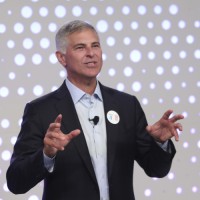
Christopher Nassetta
President, Chief Executive Officer & Director, Hilton Hotels Corporation Common Stock

In Partnership With Chris Nassetta, Hilton CEO | American Express

🎥 Jun 18, 2026 📺 American Express ⏱ 30m 👁 78 views
The conversation is part of American Express' “In Partnership With” series, where Chief Partner Officer, Glenda McNeal, discusses modern leadership topics with executives from the company’s expansive roster of strategic partners. » Subscribe to the Amex YouTube Channel: http://bit.ly/SubscribeAMEX About: American Express is a global service company, providing customers with exceptional access to charge and credit cards, insights and experiences that enrich lives and build business success. Get up close to the passionate lives of rising artists, a new wave of entrepreneurs, and everyday peop...
Watch on YouTube

About Christopher Nassetta

In the first quarter of 2026, Nassetta described an improving demand environment, noting that Hilton expected RevPAR strength to "continue moving downstream from luxury and upper upscale toward a more balanced convergence." He attributed this trend to supportive U.S. tax and regulatory policy, lower expected interest rates, and increased private sector investment in AI. On the company's earnings call, he said that while the Middle East conflict was impacting about 3% of Hilton's business, 75% of its business was still driven out of the U.S., where he said the company had seen "a really nice uptick in performance driven by a really nice uptick in demand across all segments." In several public appearances, Nassetta discussed Hilton's expansion from eight to 24 brands and emphasized the company's focus on using AI and data to enable "mass customization" of guest experiences. He stated that Hilton is "a people business and always will be a business of people serving people." On the topic of over-tourism, he said he did not believe it was a broad global issue, but rather a problem in certain destinations that should be addressed through public-private partnerships to distribute tourism more widely. Nassetta also described his philosophy as "you do well by doing good" and reflected on transforming Hilton's relationship with American Express from a "transactional relationship" into a partnership.

Source: AI-verified profile updated from Christopher Nassetta's recent appearances. Browse all interviews →

Transcript (84 segments)
✨ AI-enhanced transcript with speaker attribution
G
Glenda McNeal0:04
So, let's get started. I wanted to start off with some rapid fire questions. Are you ready?
C
Christopher Nassetta0:08
I'm ready. You know I don't do anything rapid, but let's do it. We'll try.
G
Glenda McNeal0:11
What book is on your nightstand?
C
Christopher Nassetta0:13
Moonshot by Albert Bourla. He sent it to me and, you know, it's a great story. I'm not done with it. I've been getting through it, but it's just an amazing story of innovation, how they totally reinvented the process of how they make a vaccine from a process that could take 5 or 10 years to a matter of months. That's really inspiring.
G
Glenda McNeal0:36
It's great. What travel destination never gets old for you?
C
Christopher Nassetta0:40
Bahamas. We have a place there and I have a lot of good memories there and I think it's one of the most beautiful places on earth. If you like water, sand, all the sun, all those fun things, which my family does and I do. It's a beautiful place.
G
Glenda McNeal0:57
That's wonderful. How many years have you been going?
C
Christopher Nassetta0:59
Oh, since I was a little kid. My father loved to fish. When I was a kid, the fishing in the Bahamas is some of the best in the world. So, he would take my brothers and I down to fish. Probably been going since I was five, but I'm not going to tell you how many years that is because then they could calculate how old I am.
G
Glenda McNeal1:20
But you know what? They'd never believe you. What was the last hotel you stayed in?
C
Christopher Nassetta1:26
The Hyatt Regency in Nice. I know that's a surprising answer.
G
Glenda McNeal1:31
It is a surprising answer.
C
Christopher Nassetta1:33
In the Mediterranean for a family holiday to celebrate the graduation from high school of my youngest of six daughters. So, we did a big trip all of us together with my mother and father-in-law. The trip started in Nice and we have a great hotel under development, but it is not open. So we stayed at the Hyatt Regency, which was nice.
G
Glenda McNeal1:53
It's nice to see how others live.
C
Christopher Nassetta1:55
Yeah, we like to check the competition and I'm quite good friends with Mark Obermeier as you know on the side too.
G
Glenda McNeal2:06
All right. So, can I do a lightning round with you?
C
Christopher Nassetta2:09
Absolutely.
G
Glenda McNeal2:09
All right. TV shows you binge and if you do, what are you binging now?
C
Christopher Nassetta2:14
I don't normally binge, but I did binge Ted Lasso.
G
Glenda McNeal2:18
Ted Lasso's amazing. We need another season by the way.
C
Christopher Nassetta2:21
Oh, yes. I think there's going to be another season.
G
Glenda McNeal2:23
I would give for another season.
C
Christopher Nassetta2:24
And I think there's going to be another season.
G
Glenda McNeal2:25
It's been like 2 years. Your first job?
C
Christopher Nassetta2:28
My first job was as an auditor for Arthur Andersen in Houston, Texas auditing oil and gas companies.
G
Glenda McNeal2:36
Wow. What an interesting first job.
C
Christopher Nassetta2:40
Exactly. Me neither.
G
Glenda McNeal2:40
So, what is the most surprising thing you learned about yourself during COVID?
C
Christopher Nassetta2:48
That I should focus more time doing the things I love.
G
Glenda McNeal2:54
Okay. I think we probably all say something like that. All right, this is really important as a hotelier, what's your favorite thing about the mini bar if we have one in the room?
C
Christopher Nassetta3:08
Mixed nuts. It's my go-to. It's a nice snack.
G
Glenda McNeal3:11
We have that in common. Yeah, that's good at the end of a long day if you're hungry.
C
Christopher Nassetta3:14
Yeah, it's a nice snack.
G
Glenda McNeal3:16
That's better for you than the Pringles, for sure.
C
Christopher Nassetta3:18
I think so. Nothing against Pringles so anybody's watching.
G
Glenda McNeal3:21
Before we talk about your life as CEO, it'd be great to learn a little bit about your personal background. So, you grew up in this area, right?
C
Christopher Nassetta3:30
I did. I grew up in Arlington, Virginia right outside of Washington, D.C. I was born and raised here. I was a very industrious person. When I was a kid I had paper routes and lawn mowing businesses, snow plowing business, painting business. I always had something going on. My parents are fabulous. They're both still alive and they instilled in me what their parents instilled in them, which is hard work. You get what you work for and they were very disciplined about having us understand that we needed to be out there and doing things. So, I was always active and always had an interest in business generally and those were little entrepreneurial micro businesses. As I grew up my father was in the real estate development business. So, I went to University of Virginia, got a degree in finance, got out, got into the real estate development business working for a very large local company, Oliver Carr. Then I got in the private equity business with a partner during the S&L crisis, which was an amazing five-year jaunt in my career of learning and opportunity given all the dislocation that came out of the S&L crisis. Then my partner and I got recruited during that to go to a company called Host Marriott, now Host Hotels, the largest public owner of hotels in the world. We thought, we have this great thing going, why would we do that? But it was a really interesting time to get into the hotel business. I had had some history in it when we were in our private equity business. We had done work in the hotel area. I had worked in the back of house in summers as a kid in the hotel business and we both said, why not? This is a really interesting time given the dislocation and we went to Host and took what was then part of the breaking apart of the Marriott company, sort of good co bad co. We were the bad co part, but we thought this will be a real opportunity, a challenge and an opportunity. I was there ultimately with him as CEO, then myself as CEO after he retired after 4 years. We built that company with a lot of help, with a lot of hearts and souls. Fabulous company, Fortune 500, S&P 500 company, real leader in that segment of the industry then and to this day. Throughout my career I worked in and did lots of different ways. When I was in private equity, my own private equity shop, I did some work with Blackstone. When I was at Host, we bought and sold and did a big merger deal with them where they ended up as our largest shareholder and were involved in the board. When they bought Hilton, they knocked on my door and said, 'Hey, we think you've been training your whole life to do this. You've got experience on the branding and the real estate and finance, you should do this.' I said, 'That's an interesting idea. I don't know. I've got a wife, six little kids, they weren't all in school and the idea of moving to LA and pulling them all out of a very comfortable ecosystem seemed a little bit crazy.' But the more I thought about it, the more I talked to my wife, the more I realized this is an opportunity of a lifetime. So we took it and here we are. My roots in hospitality, I cared a lot. I started in the toilet because if you go way back, when I was working summers in high school and college, I worked in the back of house of hotels. I say my career started in the toilet because when I first started out, like most jobs, I was basically the lowest person on the totem pole in the engineering department. That meant you got all the worst jobs in the beginning. So I got a lot of plunging of toilet jobs. But it was a fabulous way for a young person that was interested in the business, didn't really understand it or the whole ecosystem of what goes on in a hotel. As a customer, you see a hotel and hopefully we make it really lovely and a great experience. I know we're not perfect. We do a pretty darn good job. But there's a lot of stuff going on behind those walls. There's a village of people, a family back there that are together morning, noon, and night and weekends and holidays. Until you've been back behind the walls and lived it and breathed it with people, you don't understand it. So it was a fabulous way as a young person interested in the industry to get a real sense of what makes it work. It was unbelievably eye-opening. When I started I was 16 or 17 years old, very impressionable. There's a lot of stuff that goes on behind those walls. As a young person it was eye-opening, but it really opened my eyes to the opportunity of just how complex and interesting and intellectually stimulating making all this come together really was. If I hadn't done that, I'd never truly have appreciated coming at it from a finance and development perspective.
G
Glenda McNeal9:15
Well, we'll come back to when you first became CEO in a couple of questions. But first, you mentioned you have six daughters. You mentioned your last one graduated. And so you're going to be empty nesters.
C
Christopher Nassetta9:31
We did. Yeah. So I'll let you ask the question.
G
Glenda McNeal9:34
What is your next chapter? How are you thinking about what you do as an empty nester and any advice?
C
Christopher Nassetta9:41
You're an empty nester.
G
Glenda McNeal9:42
I'm an empty nester.
C
Christopher Nassetta9:43
I am a very newbie empty nester. When I say newbie, it was last Sunday I dropped my daughter off. She's an athlete. She's going to College of Charleston. She plays soccer, so they go very early. I think the short answer is you'll have to give me some help on this. For us, we have six children. So, it's been 30 years. We started this journey with our oldest who's just about 30 between pregnancy and all the way through the last going to college has been a little over 30 years. So, we're going to kind of figure it out. My wife and I have been talking about it. She's got lots of interests and things going on and obviously I run a big business and it's a travel business. So, I travel a lot. I hope the next chapter she can join me in more of that. Certainly my family's been traveling together all over the place, but not particularly frequently just because the kids still responsibility and Paige was very committed to those children. So, I'm hoping that the next chapter she can join me and enjoy some of the unbelievable places and things I do and people I meet around the world.
G
Glenda McNeal11:05
Do you have a bucket list destination?
C
Christopher Nassetta11:09
It's funny. I travel a lot. So, there's not many places I haven't been. It's not a bucket list, but the last trip that I was supposed to take when everything shut down in the world pre-COVID in March of 2020 was our brand new Waldorf Astoria in the Maldives. It was literally our president of Asia Pacific Alan Watts. We were holding on it was on the calendar and we both eventually said there's no way you can go. You'll never get back and they're going to close all borders. It had been recently opened. It is one of the top, I think it is the number one resort in all of Asia Pacific. It was rated by Travel and Leisure I think top three in the world. It's extraordinary and I've seen a million pictures of it. I've been to the Maldives a couple of times but not when this was done. So I don't know if it's bucket list but I'm dying to see it.
G
Glenda McNeal12:05
Well, it's my bucket list. In fact in 2017 we'll come to that when we were renegotiating the deal. And Mark Weinstein who is now your CMO.
C
Christopher Nassetta12:14
Yeah Mark's fabulous.
G
Glenda McNeal12:14
We used to tease about going on a big trip to celebrate.
C
Christopher Nassetta12:19
Why don't you don't forget to invite me. Yeah and Mark if you're watching this which I hope you are, don't forget. I always say that to my team when I'm in travel business. We have all these fun events like they forget to invite me. They just send me out to do all the work and then all the fun events somehow I get left off the invitation list. So Mark, Maldives if you guys do a big celebration, make it happen. I want to be there.
G
Glenda McNeal12:45
So let's talk about our partnership.
C
Christopher Nassetta12:47
Yeah, would love to. Nothing would make me happier.
G
Glenda McNeal12:50
I mentioned our relationship goes back 67 years when Hilton began accepting the American Express card and then you became our first ever co-brand partner which as you can imagine changed a lot about how we do business, being kind of at the forefront of that. I mentioned 2017 in the renegotiations, right? That was a big moment for us because we convinced you to go to a single issuer. You guys are very tough negotiators.
C
Christopher Nassetta13:21
No, we're easy. We're pushovers.
G
Glenda McNeal13:23
I think the Hilton Honors co-brand cards have been very successful. Really well. So, we're all happy about that. When you look back at that time and in those conversations, negotiations, what stands out for you?
C
Christopher Nassetta13:42
It's exactly what you would want to happen in a partnership in the sense that we transformed what had been a good relationship, a very long relationship, but I would argue not a partnership. I would argue maybe before my time, maybe before I was born, it was viewed as a real partnership. I think there are a lot of reasons behind it. We had two sort of dual programs which made it hard for anybody to fully commit. But my strong impression was it was a transactional relationship. It wasn't a partnership. And I think in the end that's less fun. It's less rewarding for both sides because nobody's fully committed. So, my objective with Mark leading the charge was we worked for a number of years to get ourselves in a position where those two relationships were co-terminous. That was always the problem is we couldn't go to sole source. So, 2017 was the year after a decade of managing that situation where we could go from two to one. We weren't sure we wanted to as you know. But what stood out in the process and it started with Ken Chenault when he was CEO and it moved to Steve Squeri who's an amazing leader and a great friend, both great leaders and friends. We had a chance dinner where I was seated next to Ken and we were talking. We said, 'You're the two of the most iconic brands. We've been partners forever. You go back to the '60s, the top three brands in the world at that time were Coca-Cola, American Express, and Hilton.' And yet, we have this relationship which is decent size, but we're really not maximizing it. So I said, 'Listen, we have an opportunity to do something different.' So, to his credit, to your credit, and because you were deep in the middle of it, you were on the tip of the spear the whole time, and a lot of other folks on your team, including Steve behind the scenes before he was CEO, he was very involved. And an incredible team on my side. We said, 'All right, how do we make 1+1=3?' I would say 1+1 was equaling 1 and 1/2 in our prior relationship. So, it was a hard negotiation because we had to get ourselves to a place where we would believe. Going sole source is wonderful if everybody's committed. Going sole source and not having any diversification when you don't feel comfortable like commitment is a very dangerous thing. It took a long time because we had to convince ourselves after years of being disappointed, probably both ways, in what the relationship was versus what it could be, that we really that all of us on all sides, not just you guys, but Hilton as well, would be really committed to making it a partnership. The good news is, we did it. What better brand to work with in the travel space, forget co-brand, just the broader travel space, than American Express. We think the same for you on our side. We've really taken what was a transactional kind of relationship and made it a partnership. I think testament to that is during COVID, which our business was beat up a little, ours was bludgeoned. We went to nearly zero revenues. And yet we figured out a way to lean in and the relationship that was outside the boundaries of the technical contractual relationship because we were partners and we made the right investments during COVID, and now look at what's happening. This thing is performing, I don't want to speak for Steve, he did tell me it's one of the best performing, if not the best growth rate of all your cards. I hope that's right. I'm sorry, Steve, if it's not, but anyway, it's performing really well for both of us. From our point of view, it's great for our system because it's profitable, but most importantly, and that's the reason we did it, our customers love it. The reason to do a co-brand, of course, in the end you want to be able to make money doing things, but the real reason we wanted to go to sole source was to create a value proposition for our customer that they'd want to sign up. And when they ended up with that card in their hand, it was a value proposition they loved, and as a result, they would give us more share of wallet. That's exactly what's happening, which is the reason we're both benefiting is because more people want it, more people are staying with us, they're spending more money. It's working fabulously well in that regard.
G
Glenda McNeal18:52
And I think the partnership piece that you mentioned about really moving from a transactional relationship to partnership was partly pushing. You guys did a great job pushing to help us kind of redefine how we would enter into these kinds of relationships. You were looking for an enterprise-wide relationship. You wanted to really think about or have us think about the value that we could deliver based on all the assets we had across the enterprise. A contract that had some safeguards in it both ways. The nice thing, and I get back to the COVID example, we didn't really need it. The real testament to a great partnership is, yeah, there's an agreement and there were safeguards that protected us if you guys weren't committed and vice versa, but the reality is we didn't need any of that really. And the other thing to be said, which is obvious, is it's people.
C
Christopher Nassetta19:48
And I want to give you credit because you have been on the tip of the spear with our teams, with me, and being a voice for us and an advocate for us. And I want to give a ton of credit to Steve because it is about people. In the end to have great partnerships, it's really hard to do without great personal relationships. The business relationship is great. The personal relationships are like they've never been. And maybe again before I was alive in the beginning maybe it was like that, but it hasn't been like that for decades and decades. So when you do have a problem, you have somebody to call that, each way, where you have a real relationship that matters. That's how, you know, contracts are great, we have them, we fight over them, but in the end you got to have trust. Things go wrong like they are now, but things go wrong like they did in 2020. When things go wrong, we have to be able to come to the center of the table and really have a conversation about it. So we've had a long relationship. We look ahead and business is all about evolving. Partnerships are about what we can do not only today, but as we think about what the customer demands are in the future. When you think about the relationship with American Express and you look ahead, what do you see as opportunities for continued growth in our partnership?
G
Glenda McNeal21:09
I mean, it relates back to what I said before. We're just trying to do things for our customers so that they want to spend more time with us. So, I think what we do together in terms of the value proposition of the cards to continue to push to evolve it so that it's relevant to their needs so that they want one, but again, it isn't just about getting them to hold a card and spend money on the card. It's to get them to have a real affinity for it where they really love it and when they spend it, they feel like it's engagement. It reminds them of American Express and Hilton in ways when they think about traveling again, they want to stay with us. And of course, you guys have it, we both have very, we have close to 150 million Honors members, big base, you have a big base. We don't have 100% overlap, so it's always about both ways us trying to figure out how do we get access to more of your customer base, particularly we're focused on small businesses. You guys have a huge business in that regard which we work well together on, but more to do there. And then vice versa, not all 150 million and growing, you know, will have hundreds of millions of Honors members over the next three to five years and they're not all Amex card holders. So, it's a symbiotic relationship in that regard. But I think it all starts with making sure we get to the people in the right way so they know what the value proposition is. But I think it starts with the value proposition. Something that really resonates with customers that's unique and it's different enough where they say, 'Yeah, I want to hold this.' And then by holding this, I feel better about both Amex and Hilton and I'm going to centralize more of my spending on this and with Amex and I'm going to centralize more of stay occasions with Hilton.
That's right. And you know, Amex, yes, we're a credit card company, but we're an experiential brand.
C
Christopher Nassetta23:06
More than anybody.
G
Glenda McNeal23:07
That's right. And so, I think
C
Christopher Nassetta23:08
You are the original experiential brand in the space, and in the end, I've said this to you and Steve. Economically, it was hard in 2017. There were a lot of people who wanted to pick us to go sole source with them. And I'll tell you, I made the decision that in the end, it's all the travel assets, and it is the experiential side. It is that you all are very much a travel company. And those assets and that history, properly tapped into, I thought was super powerful.
G
Glenda McNeal23:54
Leadership is not just about driving business. It's also about what you do in the community. And you've been a leader in that, not only in your own industry, but I think in many industries. We've been fortunate to partner with you on a couple of those occasions. One was during the pandemic. You guys did Hotels for Heroes. Million free rooms. And then now with what's happening in Ukraine, you did something very similar. What drives you to do that? And what is the message that you bring?
C
Christopher Nassetta24:27
It's not proper to say you, we. American Express and Hilton did that together.
G
Glenda McNeal24:33
That's right.
C
Christopher Nassetta24:34
What drives me is my philosophy in life has always been you do well by doing good. And it's a cop-out to think that you shouldn't do both, and that they're not both inexorably linked to one another. Think about it. As a hotel business, we have 7,000-plus hotels. That means we are at the epicenter in 7,000 plus different communities. Hotels are generally at the center of most communities in the sense of what happens. People, it's part of the supply chain, labor chain, it's where all the events and where people come to laugh and cry. So we believe as part of our founding purpose that we have an incredible responsibility to do the right thing in our communities. And by the way, everyone that works for us in those communities is part of that community. So it empowers them, it unites them, and it inspires them the more that we do good things in the community. Probably one of the proudest moments I've had here was what we have done together twice, which I think is a great story. We were getting crushed in March of 2020. Our business was almost 100% down in revenue. It was 90-something down. Effectively, we were shut down. I was reading the paper one Saturday morning digitally, it was talking about all the first responders all over the country and this piece was in New York and they were sleeping in their cars so they didn't want to go home and infect their family. I thought this is crazy. We're getting our teeth kicked in, but the one thing we have is a lot of hotel rooms. I said we need to do it. Now, we don't own them, we're a capital light business, so we can't just give away things that we don't own. So literally that morning I called Steve Squeri and I said I have a crazy idea. I called him before I even called my team, which made them mad. I said I want to give away a million rooms. He said, 'That's interesting. How would it work?' Within 5 minutes, Steve called me back and said, 'We're in. Split it with you.' I called my team and they said, 'Oh my god, we're dying. We can't.' I said, 'I want to do it Monday. It's Saturday.' They said, 'We can't.' I said, 'We're going to do it.' They said, 'We're getting crushed.' I said, 'This is the thing about leadership and a value system. We have to be part of the solution here. There's nothing we can do about the fact that we're empty. There's no demand for us to go get. So, let's put our time into doing something that makes a difference. All these first responders need us. Let's house them and let's feed them.' The team said, 'Okay, let's go do it.' Monday morning or Tuesday, we launched it. We did the same thing, similar story.
G
Glenda McNeal27:48
Except Mark said it back. He said, the partnership is really defined, right? And you know it has arrived when you can send a text.
C
Christopher Nassetta27:56
And do it by text. Yeah, to you.
G
Glenda McNeal27:58
And I can 5 minutes. We texted back.
C
Christopher Nassetta28:00
Wouldn't believe it. I sent a text to Glenda and they're in. I said, that's great again. Again, we had millions of refugees leaving the Ukraine. We have a big business in Europe. We have capacity.
G
Glenda McNeal28:12
Well, part of partnership is shared values, right? And we have that.
C
Christopher Nassetta28:16
Well said.
G
Glenda McNeal28:16
Speaking of the community work that we all have to do. I think it was Martin Luther King who said, the most persistent and urgent question we have to ask ourselves is, what will we do for others?
C
Christopher Nassetta28:26
Yeah.
G
Glenda McNeal28:26
And I think that's a perfect example of how our partnership came together for that.
C
Christopher Nassetta28:30
Do well by doing good.
G
Glenda McNeal28:31
I love that. Yeah.
C
Christopher Nassetta28:32
And that's how I live my life. And that's how I want our company to think about everything. We have shareholders. We should make sure we're attentive, we're fiduciary, it's returns to all the pensioners and everybody that invests in this company, but the best way to do it is by doing good.
G
Glenda McNeal28:52
I think we both would agree that good, strong partners, trusting partners are core to our lives. Who other than American Express would you say is a critical partner in your life?
C
Christopher Nassetta29:07
There's only one partner that I'd put above you. And I'm going to have to put her above you and that's my wife. I will get choked up so I won't do it. She and I met when we were 16.
G
Glenda McNeal29:19
Oh my goodness, I didn't know that.
C
Christopher Nassetta29:21
We met in high school. She moved here in my junior year and we started dating, we went to college, sort of went different ways for a while, came back together. So we've been together for a long, long time. We had six beautiful, intelligent, strong daughters together. And I would not be the person I am without her.
G
Glenda McNeal29:49
Well, that's beautiful. I don't think there's a better way to end that and I think you both are lucky to have each other. And with that, Amex is very lucky to have Hilton as a partner and I appreciate it and I look forward to the next decade of our partnership. Hopefully it's longer than that.
C
Christopher Nassetta30:04
Oh, absolutely. We love you guys. You're the best. Thanks, Glenda.
G
Glenda McNeal30:08
Thank you so much, Chris.
