Back
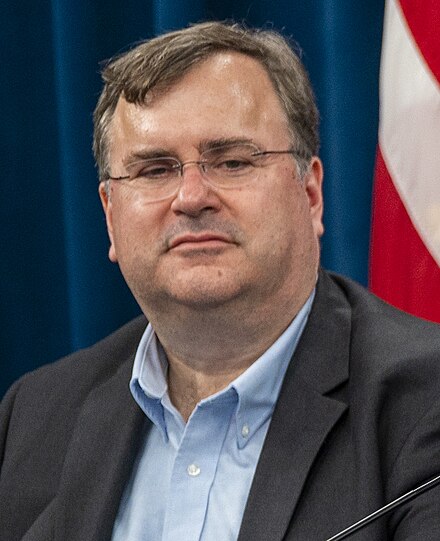
Reid Hoffman
Co-Founder, LinkedIn

The Future of Work Is Here: The AI Optimist Makes His Case With Reid Hoffman

🎥 Jun 18, 2026 📺 This is Gavin Newsom and Reid Hoffman ⏱ 110m 👁 3804 views
Right now it seems like everyone’s afraid of AI. Whether its worries over job loss, wealth concentration, or lack of regulation, anxiety around artificial intelligence is real. Here to make a case for why we shouldn’t be so afraid, is Reid Hoffman, AI optimist and someone who has thought about the way artificial intelligence can lead to positive outcomes more than practically anyone. Hoffman sits down to talk about why we’re not powerless in how AI impacts our lives, and how to best incorporate it without losing your identity or job. 00:00 Intro 00:23 Is Artificial Intelligence Going To K...
Watch on YouTube

About Reid Hoffman

Reid Hoffman, co-founder of LinkedIn and a partner at Greylock, has been making a series of public appearances discussing artificial intelligence, crypto, and the future of work. At the Consensus 2026 conference, Hoffman stated that he bought his first Bitcoin in 2014 and has not sold any since, calling himself "a believer in all crypto." He argued that as AI agents outnumber people on the internet, crypto becomes necessary for trust and identity. In a conversation with California Governor Gavin Newsom, Hoffman described the current era as "the greatest kleptocracy" of their lifetimes, adding that "someone gets you a billion dollars in crypto, you're bought." Hoffman has continued to advocate for AI optimism. At WIRED Health, he asserted that "AI has the best shot in human history of curing all cancer" and said that patients and doctors not using frontier models as a second opinion for serious conditions are "bordering on committing malpractice." On the Village Global podcast, he noted that incumbent enterprise software companies like SAP have grown larger despite the rise of cloud computing, calling it a "sustaining innovation for the incumbent." Hoffman also said that in the future, "no one should really be an individual contributor" and that workers will instead become "managers of agents."

Source: AI-verified profile updated from Reid Hoffman's recent appearances. Browse all interviews →

Transcript (443 segments)
✨ AI-enhanced transcript with speaker attribution
G
Gavin Newsom0:00
Corruption.
Yeah, we're living in the greatest kleptocracy of your in my lifetimes. Someone gets you a billion dollars in crypto, you're bought. Period. So, the question is, where do they go as they get more power? And the answer is Elon became a narcissist. This is Gavin Newsom and this is Reed Hoffman.
R
Reid Hoffman0:23
Well, welcome. My pleasure to be here. First time in the governor's mansion.
G
Gavin Newsom0:27
It is not bad, right?
R
Reid Hoffman0:28
Yes. Not bad. I mean, it's, you know, it's, you know, not I don't know. It's not, but it's, you know, we're blessed to be here.
G
Gavin Newsom0:34
But I'm blessed to be here. Look, was how many books you written? Six.
R
Reid Hoffman0:37
Six.
G
Gavin Newsom0:38
Bestselling books.
R
Reid Hoffman0:39
Yeah.
G
Gavin Newsom0:39
Two podcasts.
R
Reid Hoffman0:40
Yep.
G
Gavin Newsom0:41
One's not enough.
R
Reid Hoffman0:42
Yes. Well, you know, everyone, it was getting to the point where everyone had a podcast. So, I had two.
G
Gavin Newsom0:47
You had to have two. The most, you know, I mean, you've been around sort of OG, started a few companies. You're part of this mafia, this mob.
R
Reid Hoffman0:58
Called PayPal.
G
Gavin Newsom0:59
Yes. Although I try, you know, everyone likes the mafia kind of thing of it. We didn't do anything criminal. It's PayPal Network.
Did you? Well, I'll get to I want to get to, you know, you guys obviously have embraced that a little bit. And you know, we'll also talk about, you know, it's kind of broken apart a little bit. Yes. The old the PayPal version.
R
Reid Hoffman1:16
Of the mafia.
G
Gavin Newsom1:18
Yeah. PayPal started this company LinkedIn.
R
Reid Hoffman1:22
Yeah.
G
Gavin Newsom1:22
And you currently though not maybe for long we'll talk about that on the Microsoft board and you've got a number of AI companies that you've started up and you also have invested seems like everywhere in the AI space and you're doing a lot of angel investing so all of that.
R
Reid Hoffman1:38
And you haven't even turned 60 years old coming up but not quite.
G
Gavin Newsom1:43
It's not quite. But I really wanted to get you to talk about AI in the broadest sense because we've look we're just everybody's wringing their hands, the doomers, the gloomers. It's going to take our jobs. The anxiety is boiling. You're seeing it represented in polls and just anecdotal feelings. People are angry about data centers. People are furious that their kid who went to Stanford and got this unbelievable degree is not getting as many interviews as mom and dad expected their perfect child to get. But you have a different take on all this. You're a little bit more optimistic about this. So I mean first you got to acknowledge people are in pain having difficulties right I mean and yes there's difficulties with entry-level jobs and if you listen to the press including by the way a bunch of the AI people who make foolish statements like white collar bloodbath and other kinds of things they go well it's AI's fault and it's like actually if you actually look at it thus far it's not AI's fault doesn't mean there won't be an impact from AI and all that stuff in entry-level jobs.
R
Reid Hoffman2:49
But the pain that's being felt right now is overhiring from COVID, is tariffs, you know, screwing our economy and business planning. And when all of that kind of stuff happens, businesses go, I'm going to do no hiring until I figure out what's going on.
G
Gavin Newsom3:05
Right. So, you're saying some of those big headlines that we saw, Box and others, that somehow suggested or at least added in the press release maybe a number of factors including AI and then the mainstream press runs with AI. Overhyped.
R
Reid Hoffman3:21
Yeah. Well, overhyped, but it's a natural reason for a CEO to say that because if I was like, "Oh, I overhired and I mismanaged. It's my fault." No, no, I'm strong. I'm taking advantage of AI. AI is replacing jobs. I am just being a really good CEO and manager of my shareholder capital. CEOs are smart people. Pick which one do you want door A or door B? It's like I'll take door B. Thank you very much.
G
Gavin Newsom3:51
So what do you make then of the college graduate and the unemployment rates legitimately at least numerically statistically? What's the causation of that? What would you what's the factor that how would you factor AI in that respect or what do you think more broadly is the reason that those numbers are higher?
R
Reid Hoffman4:05
Well, I think what is factually the case is that a wide range of businesses are like, we don't know if we should be hiring new entry-level people right now. Some of it's like, well, we're doing layoffs because we hired too many people during the pandemic and then did this whole remote work thing, which is not really working out, and we're refactoring it. And then there's, oh, and now we've got a trade war going on with global tariffs, which are increasing cost to consumers, cost to businesses, and we got volatility central like, hey, it's July, why are we starting a new war? So in all those cases what businesses do the very first thing they do is let's not incur any new expenses. Let's not hire any new people except the very clear people we need. Entry levels are usually like oh these are people we need five years from now. Well we don't know what we need five years from now so let's not do that. It's also let's not do a new lease. Let's just chill. So that's the primary driving actual factor. Now that being said, and by the way there are a few places which are AI related like for example the Meta layoffs are we need to free up cost for spending on compute and so we're going to do so it's not that there's zero it's just that the broad brush college grad is not actually in fact yet. If it's a percentage from AI it's like five, it's not 30 or 50.
G
Gavin Newsom5:46
So you talk about some that have used some pretty aggressive language about a white collar bloodbath. But I mean you and I don't know if Dario said that or not but I mean it was not surprising on the basis of the question I'll ask which is I mean obviously he's because of his emphasis and he put a numeric about 50% of white collar jobs be eliminated at least new white collar jobs in the next well five years less than five years by 2030 again hyperbole from your perspective and you're a guy who's you know you're a fan of Dario.
R
Reid Hoffman6:15
Yes, I'm a huge fan of Dario and look, Garland gets criticized that he's doing it for like kind of promoting his own technology and this is how important my technology is and no Dario is very principled right he's like look I think that there's a real worry here and it's not on like society should be ready I'm trying to help society figure out getting ready so I appreciate Dario's principle his motivation etc. Now after he said that I called Dario and I said look what you said is not heard the way you think it's heard. Right? Because what people hear is, well, if that's going to create a huge bloodbath and that's the outcome, why are you building AI so fast? Why are you doing all this stuff? Right? Is it just to make yourself rich, right? Because what they hear is they hear the, "Hey everyone, I have this really great technology that's going to like ruin half of your lives and good for me and sucks to be you, right?" That's what they hear. That's not what you meant to say, but that's what they hear. And so I was like look I think the I said Dario the better thing to say is we're going to have a lot of job transition and there's a lot of uncertainty what's going on and it could have a really quick massive impact and we should be figuring out what to do on it.
G
Gavin Newsom7:35
Right. And is that so I mean you've talked about it in the terms of a cognitive industrial revolution and you talked about not being Poland rather be England take advantage of this and that's and you've done that in the context of making the case that we you know we should be accelerationist though probably with the notion of a steer yes so you're not naive.
R
Reid Hoffman7:55
Sometimes you slow down on the curve.
G
Gavin Newsom7:57
And slow down on the curve but vehemently opposed to the sort of precautionary principle framework this notion of this is you know we've just got to put a damn pause on all of this.
R
Reid Hoffman8:07
Yes. So, so let's start with the pause because it's simple, which is say you issue a call for a pause and you have two groups of people. The group of people who pause and the group of people who don't pause. The group of people pause go, "Oh, I hear you. The humanist stuff really matters and I care." So, all pause, right? And then the people who go, "I don't give a shit." And they keep going. So, then what kind of AI is built, right? Not good. It's actually has a negative impact, right? That's the reason why I'm vehemently opposed to this kind of pause and things and it's like well what if we can get everyone to pause like well what's your plan to get everyone to pause including China and everyone like is this at all realistic? So my strategy tends to be how do we keep like you want the good guys to win, the things that are pro-humanist, keeping human beings at the center, keeping a notion of what is a positive to society. By the way, positive societies over years, that doesn't mean that there won't be massive transformation things that will be painful and difficult to get through, but it's like having this is how society's better with this as where we're going.
G
Gavin Newsom9:17
So when people hear that, I mean the good guys, I mean tech is getting slaughtered in the context of public opinion. People just don't trust anybody. Whole issue of truth and trust obviously has been accelerated social media but now obviously with AI deep fake this deep fake that voice and we can get to even your own interesting avatar in that space. But this notion of trust and you know someone may be listening go okay yeah Reed this is easy for you to say you know sitting on the Microsoft board and obviously investing in all these places you got two of your own AI companies you know come on man.
R
Reid Hoffman9:53
So I am not of the view that like frequently what it is is like just trust us right like you know it's like look we're in a very low trust environment overall, right? Low trust of almost every institution, even mixed trust of historically great trust institutions, doctors and so forth. So it's like there's an overall thing. So they just trust us. But then you have to say is like okay well you have to prove my trust before you do anything. Well that doesn't really work and it doesn't work in any of these places, right? So the notion is to say well do the things that ultimately are building trust over time and then when people really investigate like ah you're doing something that's fairly trustworthy. So like we were talking about Dario. One of the things that Dario did is they said okay we're going to build AI with a kind of a constitution. I actually don't think they should have used that word, but like you know it could be a set of principles.
G
Gavin Newsom10:59
What offends you about constitution, sir?
R
Reid Hoffman11:02
Well I for one am a huge believer in the American constitution right it is our thing.
G
Gavin Newsom11:08
I'm a little old school like you. I appreciate that. We'll get to that a little bit later.
R
Reid Hoffman11:12
Look that is our religion is the constitution. Right. So like we stay with that and it's a little bit of saying oh implying that this is a constitution is not really that like a constitution is a sacred document for me. So it's more simple as that.
G
Gavin Newsom11:26
Yes.
R
Reid Hoffman11:27
And so the but here's how we're going to build trust is here is the document that is central to all of our training of our AIs. Right? So you can read it, you can comment on it to us, you can suggest changes, you can understand where we're going, what we're trying to do. That's the kind of thing that I think, you know, needs to be there.
G
Gavin Newsom11:52
Transparency.
R
Reid Hoffman11:53
Yes. That's the beginning.
G
Gavin Newsom11:54
And that's along the lines I mean you and I have had these conversations over the years and California's regulatory framework SB53 which we advanced was around this issue of transparency for frontier models, these large language models. What about this? You know, I think from your perspective it'd be interesting to hear your perspective about some of those contours. I mean, we talk about Dario as the, you know, the good guy and for a lot of folks that's through purely political lens because of some of the issues he had with Palantir and the Department of Defense, issues around mythos, which I'm interested in your take on mythos and the fact that he pulled that back, what that means or what that suggests. But it also has the origin story that played out very publicly with Sam Altman with Elon Musk all those origin stories of which you had a front seat sir.
R
Reid Hoffman12:42
Front seat front seat and participation in some of.
G
Gavin Newsom12:45
An actual board seat as it relates to OpenAI.
R
Reid Hoffman12:48
Exactly. So look most of the people creating AI are like kind of unique human beings.
G
Gavin Newsom13:01
Yes.
R
Reid Hoffman13:02
So you know and part of it is because by the way geniuses frequently are.
G
Gavin Newsom13:08
Right. And so with folks who it's pretty easy to attack anybody. I mean you've had that experience. I've had the experience of it's like an attack by a negative person who is willing to invent shit or build on what is a small thing to make it into a huge thing is one of the things that kind of flows. Now, I have the fortune of knowing all of the heads, like every head of all these labs, and so I have a pretty good sense of what their actual moral characters are and what the things are. And many of them are good human beings. That doesn't mean they're perfect, right? But they're good human.
But it's a I mean, I want to pause on that because I mean, objectively from your perspective, many are good human beings.
R
Reid Hoffman13:56
Yes.
G
Gavin Newsom13:57
Because they've been I mean, these guys really have been vilified across the spectrum. Yes. And perhaps more so even today with the first trillionaire being minted etc and all that issue which I want.
R
Reid Hoffman14:08
On that I didn't say all were good human beings.
G
Gavin Newsom14:10
Well we'll get maybe go specifically to that human being but this notion that most are good human beings but they're also trapped by incentives right I mean we're all creatures of incentives and this notion the incentive as you suggest to accelerate at peril if it's not us it will be someone else would you rather the American stack in the context of what Jensen talks about in Nvidia, this notion of the American stack with the American values to the extent possible. But what I mean those incentives aren't necessarily even good people for good behavior.
R
Reid Hoffman14:42
Yeah. So in any incentive system you will get some good effects of it and some bad effects. No incentive system is only good effects.
G
Gavin Newsom14:50
Right.
R
Reid Hoffman14:51
Right. So for example you have an incentive system to try to make more money. Well, you try like it creates jobs and productivity, but you also do a whole bunch of other things like so it's a blend, right? And you get people selling cigarettes and other kinds of things. So, I think the incentive system, what you have to do is say how do we tune the incentive system so that the major incentives mostly align with good outcomes. Now, part of the reason why is you already noted the England versus Poland and the industrial revolution. If we are the society that kind of has the primary pole position in how AI does this next industrial revolution which I think is going to be bigger than the previous industrial revolution and where this then we can sort out how the economics and society works. Like if you say well we have the massive economic benefit occurs to our society and like well but it's only these seven companies. Well, we're in a society. We can broaden that out some. You say, "Well, any company that has profitability of above X per employee now has an extra tax that's used to pay for all the rest of society." And if you own that industry, you can do that. If you don't own that industry, it's a little bit like when people say, "Hey, I hate these social networks." And by the way, there's some real social network issues. Although I always, to my own defense, point to LinkedIn. One of the few, if not the only social network that actually had no I mean, right? Yeah.
G
Gavin Newsom16:25
I mean, kids are doing fine on LinkedIn if they're on that.
R
Reid Hoffman16:28
Yes. Exactly. Like LinkedIn works just fine. So, it's doable. But if you said, "Hey, we ban social networks." Even ignoring the LinkedIn question, it's like, well, would you want it to be only Chinese social networks? No. No. You'd rather have the social networks here and have our ability to shape them. Now, of course, we need to. There's the political melee around it and all the rest, right? But you want it to be a US property that you're shaping. And the same thing with AI. And that's part of the reason I'm an accelerationist. It's like one of the things I was saying a couple years ago is we want AI to be American intelligence, right? So it matters, right? And that doesn't mean at any cost. Nothing is at any cost, right? Like if you said, well, it would destroy an entire generation of children, that that's a horrific like can we avoid that and still be accelerationist the answer is I think yes but it's like okay what are the things we do in order to do that.
G
Gavin Newsom17:22
Now I do want to wrap back to one of the things before because I think this is very important given you know we've seen American college students going I hate AI right booing I mean have you given a did you do a commencement you probably smart enough not to do one this year who needs that.
R
Reid Hoffman17:41
Yes well because you're showing up to try to offer something to help them.
G
Gavin Newsom17:45
Yeah.
R
Reid Hoffman17:45
Right. Like the usual protest and commencement speech is sleeping. You sleep.
G
Gavin Newsom17:51
That's.
R
Reid Hoffman17:52
But what do you mean? What do you mean? But it reinforces the anxiety.
G
Gavin Newsom17:55
Yes. No. No. And I get it.
R
Reid Hoffman17:57
Highly educated people that have played by the rules.
G
Gavin Newsom17:59
Yeah. And I feel I look I understand I feel the pain. Right. So, but the question is, and this is why I think it's so important is look, it is completely legitimate for college graduates to be going, you know, hey, the older generations, the boomers, etc., you've really fucked it over for us. We got all this shit going on and this is on your watch.
R
Reid Hoffman18:25
Yeah.
G
Gavin Newsom18:25
And you suck. I get it. And I think it's a legitimate gripe, right? Like but in crisis, this is the thing I really want the kids to hear or you know the college kids. Crisis is opportunity. And by the way, you can be the AI generation. You should be using it. You should be going, "Hey, company X, you need people to help you like AI your company. I can be the person doing it." You shouldn't be trying to opt out. It's a disaster for you, right? And I'm saying it for them. Like I don't have any stake in them. Like the entire current graduating class could all say we refuse to use AI. It makes no difference to me, but it will be terrible for their lives, right? And so it's like, look, embrace and figure out how to make it useful to you and then have that help amplify your career and life path.
And you continue to make that point. It's about amplification. It's about having a co-pilot, but this notion back to turbulence.
R
Reid Hoffman19:27
Yeah.
G
Gavin Newsom19:28
This idea that the transition. So talk about the transition in the context. Look, if Dario is overrating the short term, are we understating the long term or is it just modest fits and starts a scale scope speed? Where are you in all that? How do you calibrate all that? If you're a policy maker sitting in this seat, how do you begin to anticipate where that stress, where that friction, where the real turbulence is going to come?
R
Reid Hoffman19:57
Well, some of what I thought you guys did that was really smart with SB53 was get data, start monitoring, start asking questions like because it's like, okay, what's really happening here? Not, oh, I watched a journalist wrote a story about one case, you know, blah blah blah blah. That's not the way to do it. That's like the dumb, oh my god, we should restrict airplane travel because it's unsafe. It's like, no, no, no. It's the drive to the airport that's unsafe, right? The plane is actually so much safer, right? Per mile, per minute, everything else just like no, the plane is much better. So, it's like look, making policy decisions based on data and we should be getting the actual data, not the hysteric kind of responses and start there is actually really important. Now that being said, you know, as a rough template, we want to be thinking about, okay, AI is this transformative tsunami that's coming and within a small number of years, there will be a large number of jobs that will be completely transformed. Some of those jobs will be they're just all done by AI. Some of them will now be clerical jobs.
G
Gavin Newsom21:14
What kind of jobs? I mean people have their theories of this and of course Anthropic puts out literally the pie chart of what kind of jobs are most likely to be impacted. What's your theory of that case?
R
Reid Hoffman21:24
So those pie charts are usually limited in that they say if the tasks of doing the jobs are only the ones today and that there aren't new tasks this is what it look like there will be new tasks. Amen. Now that being said, for example, I think that there's a relatively small number of years before a customer service person, a customer calling customer service says, "Please put the AI on." It's a lot more helpful, right? Because you have a human being trying to follow a robotic script by looking at the screen or the AI is going to do that so much better. There's just like there there's rules for human beings, but they're like looking at what's going on with the pattern of AIs and trying to reimagine. That's not the bulk customer service jobs. So like that's one. I think there's a lot of like there's whole classes of sales jobs that I think will be much more AI and you begin to get to this weird sci-fi story where the AI salesperson, the sales agent calls the company AI agent to listen to the AI sales agent and there's a whole thing that kind of navigates through. It's a whole weird universe that will happen, right? It will happen.
G
Gavin Newsom22:36
Yeah. N years and not three, maybe 10, like not 20. Right.
R
Reid Hoffman22:44
Right. And so, those will be like kind of swaths of jobs. But here's the thing, and it's that new task thing I was mentioning earlier, which is, basically there will no longer be, there will be very few human jobs that are just humans by themselves. We will all have teams of agents that are working with us and doing. But actually in fact what you can see from the pattern of already looking at it is you actually get to some pretty incredible increases in performance where the human brings in the things that the AIs don't have and look one of the question is will the AIs not have those for a long time? Will they get them quickly? We don't know. It's all coming right. My bet would be we're very adaptive. Like this whole like human beings will be replaced and we'll have our cognitive faculties goes all the way back to the printing press and writing. Like I actually think there's areas of where we make good judgment. Like people say, "Oh my god, look at Claude code." Like there's no need for engineers anymore. Well, actually I talked to a whole bunch of people who use Claude code and I've used it myself intensively and I've used codex and OpenAI and I've used Microsoft Copilot and by the way some of it is just amazing like amazing like if you had told me like you would asked me even like say five to eight years ago would I be seeing this I would said no no no that not yet like yes here it is that's amazing.
G
Gavin Newsom24:12
On the other hand it breaks on weird shit. Right.
R
Reid Hoffman24:16
And so part of the human thing is like orchestration. It's like, okay, like for example, how does coding work at OpenAI? Well, they have a big screen and they have multiple agents working and they're like, oh, oh, that one's stuck. We got to get that one unstuck, right? Okay, this and and it makes them hugely more productive. Now, if you thought, well, it makes them hugely more productive. They're just doing all the work. We don't need anyone else doing all the work. It's like, look, there's infinite work. It's like now maybe there will be say for example tech companies may more naturally be at you know call it 50% of the current engineering crew that doesn't mean that those engineers it's like other engineering firms start more competitors etc etc it's just the productivity of how you operate it's like the humans aren't replaced in all cases by AI they're replaced by humans using AI and so you want to be the humans using AI and this gets back to I think is a central point is like well what's the thing you should be thinking about is one is monitoring and then the other one is how do we help AI be part of the solution because the thing that's driving it at scale and speed is AI the we need solutions that work on the same capability set so for example okay how do I help AI how do I have AI helping people make job transitions I want to be seeing that. Right. So like one of the things you could do right here at the mansion is you could say hey great you know California is the center of the AI revolution in the world. It's part of the reason why 53 mattered. Hey I want you guys to all come by and tell me about how AI could be useful in helping people all ranges. I want to hear about blue collar white collar multiple industries. How does that help those people, find the right work, do the right work, have pride in their work, we're going to have a day here in the mansion. You're going to come talk to us about it because I want to hear you thinking about it.
G
Gavin Newsom26:26
Mhm.
R
Reid Hoffman26:27
Right. Yeah. Because by the way ultimately if you're not delivering on this then I have to apply more pressure because like my responsibility is to the citizens of the state and look I'm very happy that we have the AI revolution and the economics flowing in from that and all the rest but I care about all my citizens.
G
Gavin Newsom26:50
Yeah. So tell me what you can do for them.
R
Reid Hoffman26:52
Yeah. Interesting. I mean, this notion of using AI, the thing that has displaced that worker to help find and place that worker exactly in a new opportunity, a new career that's not just training per se and the old sort of black and white movie community college construct.
G
Gavin Newsom27:08
Yes. But I want if I could I want to get back there's so many areas on compute and issues limiting issues in that space and what's going on with data centers etc. and where we are in terms of the competitive landscape. You I didn't know this. You were at Stanford back in the black and talk about black and white movie. Wasn't that it wasn't just a couple years ago, but way back when.
R
Reid Hoffman27:32
Yes.
G
Gavin Newsom27:33
And you were studying what was simplistic solution. What the hell is this?
R
Reid Hoffman27:37
Solutions. Symbolic systems.
G
Gavin Newsom27:38
Yeah. What the hell is this?
R
Reid Hoffman27:40
Well, it's artificial intelligence.
G
Gavin Newsom27:42
So I was part of as an undergraduate I had an AI degree.
You had an AI degree?
R
Reid Hoffman27:47
Yes.
G
Gavin Newsom27:47
When no one had ever heard of this nonsense. Well, not no one.
R
Reid Hoffman27:51
I mean, most of folks never heard of it.
G
Gavin Newsom27:53
Yes.
R
Reid Hoffman27:53
Even though we started realizing we all had it and we've all been using it for decades, but this notion of Gen AI became the thing that we kind of conflated.
G
Gavin Newsom28:01
That was new.
R
Reid Hoffman28:02
Yes.
G
Gavin Newsom28:03
And so you was it just a natural inclination? I mean, did you see the future then? I mean, was it just a major that started to present itself? No one else was in the class and you figured, yeah, I couldn't get in the class. I get an A on this one.
R
Reid Hoffman28:15
No it was so what people assume people in my kind of role and many people in my kind of role are fascinated by technology I'm not I'm fascinated by human beings.
G
Gavin Newsom28:26
Okay.
R
Reid Hoffman28:26
Right and so what I was interested in was human thought and human language and so how do we understand ourselves how do we understand each other how do we communicate how do we get to a better understanding talking to each other etc etc and that was what most interested me and so like I looked at you know do I do anthropology or psychology like I was looking at the whole range but I was like what's the thing that in doing this I could actually make the most interesting things and I've always had a belief that we evolve ourselves through technology like this is a you know these glasses these are a piece of technology these podcast like and that's actually how we evolve our state as human beings and who we are and so forth right and so I was like okay this AI thing that's interesting right so I'll go do that and I did it symbolic system is a multi-disciplinary major. So it included psychology, included linguistics, included philosophy. So you know, did all of that as part of it.
G
Gavin Newsom29:21
And you went to Oxford and got it in philosophy as well.
R
Reid Hoffman29:23
Yes. Because well, what I concluded at Stanford was none of us understood what thinking and speaking was, right? So here we are trying to build AI and we have no sense of what that is. Maybe philosophers did. Went to Oxford included philosophers didn't either.
G
Gavin Newsom29:36
And so give me I mean this is what year were you studying this stuff? What roughly?
R
Reid Hoffman29:40
1985 to 1993.
G
Gavin Newsom29:43
To 1993 in both Oxford and Stanford.
And so AI as we know it today in the context of the vernacular of this sort of notion of Gen AI etc. I mean the origin story they tend to lazily go back. It's sort of like the beginning of biotech may have been 79 with Genentech or something. There's a lazy punditry to that. But is that punditry accurate to suggest somehow in the minds DeepMind of Google that sort of the origin stories started to take shape early 2013 14 range or how would you describe what we are addressing or dealing with today in the context of that origin story? Where to really begin at a scale that we're now more accustomed to.
R
Reid Hoffman30:23
Well, so by the way, like many technological revolutions, including modern ones, there have been multiple like, oh, in five years we'll be having AI invent new science and that goes all the way back to the 80s.
G
Gavin Newsom30:38
Goes back to the 80s.
R
Reid Hoffman30:39
80s. Yeah. So then here we are, we're there because what happens is some achievement happens and then people go aha. So like we beat human grandmaster at chess.
G
Gavin Newsom30:50
Yeah.
R
Reid Hoffman30:51
That was the hard problem and now it'll be inventing physics and you're like not so much.
G
Gavin Newsom30:57
Yeah.
R
Reid Hoffman30:58
And so it's like cycling through it. And that was actually part of my conclusion at Stanford was like none of these current technical approaches will work. So what's the thing that got me back in AI was a three-hour meeting with Demis the CEO and co-founder of DeepMind.
G
Gavin Newsom31:16
Yeah.
R
Reid Hoffman31:16
And what I realized that he had that he had like he is the I think the he and his co-founder is the original kickoff of DeepMind and it's not I mean again it's not Microsoft it's not Anthropic OpenAI it's not SpaceX's I mean that's the I mean if you really want to start to understand and unlock an understanding what Demis realized was we have scale compute and with scale compute we can create scale intelligence now his original idea has been less of the important thing which is self-play. So we had pong and go and it plays against each other. But the answer was we can apply a lot of compute to evolve a competent machine with cognitive capabilities and I was like you're right we now have scale compute and what's more we have scale data and we have scale engagement you know through internet and mobile. The revolution, a revolution, a massive revolution is here. Now, did I know when I walked out of that meeting, you know, and at King's Cross that I was like, "Oh, actually, it won't be the self-play. It'll actually be these things called transformers, these large language models that read the trillion and a half words on the internet and use that as a learning basis to create something." No, I didn't know that. But what I did know is this is now a revolution. And so it's like, okay, how do I help? And you know, for me, I'm not adverse to doing stuff commercially. Obviously, I've done a whole bunch of stuff commercially, but for me, I look across the whole spectrum. I go, okay, what's the stuff that I should do as a founder, as investor? What's the stuff that I should do as a content provider and author? What's the stuff that I should do? Talking to you know people who care about society like you and others and what to do like how do I go from humanity society industry and that's the order in which I care about them right humanity first society second industry third.
G
Gavin Newsom33:20
Industry can be very useful for society and humanity.
R
Reid Hoffman33:23
But you like part of the like when you were talking about that earlier steering and shaping well we want to steer and shape industry to go it should be on average massively positive for society over time right and if that's not the trajectory then it needs to be fixed.
G
Gavin Newsom33:38
Yeah.
R
Reid Hoffman33:39
Right now over time, not this year necessarily right. There's always costs of transformation and all the rest now. And so I went that's the revolution we're in. And so for me, I think that's 2013 or 2014.
G
Gavin Newsom33:56
Right.
R
Reid Hoffman33:56
Right. And it's and that's why when like Sam called me and said, "Hey, I'm thinking pulling this thing together with, you know, for AI for humanity, will you help?" The answer was yes, right? It was one of the things where I had just gotten my partners at Greylock really focused on crypto. And I was like, "Oh, I'm going to stop doing this crypto thing because this AI thing is coming." And they're like, "What AI thing?" I'm like, "Oh, it's coming." And actually, you know, I think my partners at Greylock were the first venture partnership that saw GPT-4 because I got Sam's permission. I was on the board of OpenAI to say, "Hey, come in and demo this and show this because there was a six-month period where GPT-4 was not public because we're like, "Oh, is it safe enough?" and all the rest. And you know, they were doing it. I was like, "Okay, look, I think it's safe enough. Is it okay to show the partnership?" And Sam's like, "Yeah, yeah. This since you're serving on a 501(c)(3) board of OpenAI trying to do this, this is the least we could do. Yes, you could go show them, you know, what's coming."
G
Gavin Newsom34:59
Google, there's or there's some interesting and I don't, you know, I don't want to get into gossip, but I think it's interesting because it's instructive to a lot of people and it's also I think connects a lot of your own personal relationships and dots. So, you you know, you were notoriously, as we were alluding to earlier, part of the PayPal Mafia. And those are the, you know, brand names today. Elon Musk, obviously, Peter Thiel, David Sacks, less of a brand name, but increasingly trying to be one. And in terms of his association with the Trump administration, Musk allegedly and Larry Page, co-founder of Google, had a conversation that as least Musk's telling goes, Musk was concerned that Larry wasn't taking this Gen AI seriously enough in terms of its downside risks. And decided to go off on his own. Made the same contacts you made with Sam Altman and others and went down this path of a 501(c)(3) and tried to birth OpenAI.
R
Reid Hoffman36:04
Yes.
G
Gavin Newsom36:05
Is that reasonably accurate?
R
Reid Hoffman36:07
That is reasonably accurate. I think it was a conversation I think was you know Larry was kind of saying was you know kind of it's probably too simplistic but you know kind of articulating a transhumanist perspective to Elon that you know naturally freaks someone out because it is the rational response to that is it's a little strange right and so got very concerned about it now you know in Elon's case in particular it's the you know Elon has the definition of a messiah complex. So it's like no no I have to be the one building AI not anyone else. So there's a little bit of the I'm worried about it generally but it's also the I'm worried it's you not me. I think that's sort of proven itself a little bit.
G
Gavin Newsom36:52
This sort of notion of going back even when you said the glasses which is interesting technology right can see better. We've been aided and embedded and as a human that technology it's not just you know ones and zeros. Yes. Though you know now the or now they're becoming ones and zeros as Meta and others I think and now Apple's coming out with their own version but what this this notion of technology trans I mean you remind when with what what allegedly Larry said to Elon that freaked Elon out is what guys like Peter Thiel couldn't even answer you know I think it was a 17-second pause in an interview about you know human beings and technology. But when you you sort of invited that in with the glasses. I mean, what what is all that? I mean, for folks that may not be familiar with some of this, but maybe familiar with the anxiety that some of these conversations have induced more broadly. What is the suggestion? Is this are we just all in a simulation or something? Is that the point? There's that kind of.
R
Reid Hoffman37:55
You've been in a few of those conversations. A number of them. Yes. It's like actually I was sitting with two of my friends at the time. Elon was one of them, right? And they're like, "Oh yeah, everyone smart I know is living in a simulation." And I was like, "Am I smart?" And they're like, "Yes." I'm like, "Well, then not everyone."
G
Gavin Newsom38:23
Yeah.
R
Reid Hoffman38:24
So, and it wasn't I remember the origin that we had Second Life. We had some of these virtual realities. Maybe they were alluding to a version of playing around with that, but they mean quite literally we're in a simulation.
G
Gavin Newsom38:34
Yes.
R
Reid Hoffman38:34
And so, I think simulation is the kind of classic theory that gets people to like, the kind of Christian theory of intelligent design about how we get created or the Fermi paradox like we have questions we don't know the answers to. Therefore, right, simulation and you're like, "No, no, we have questions we don't have answers to. Stop right like we will try to figure out the answers to those questions." Like the simulation theory stuff is like, "Sure, there's unknowns." Like for example, the classic one that's usually used to argue with this is we don't have signals that there's other intelligent life in the universe. And so you know like with radio waves and statistics and all the rest we should have that well okay that's an interesting puzzle that's an interesting question why do we not have that and but like and therefore we're in a simulation is like that's a lot of cognitive theoretical infrastructure to explain this a similar way like the hey we have an unknown about the complexity about how human brains evolved and what the intermediate steps looked like. Well, therefore, there must be a creator. Like, well, there's a lot of it's an unknown. And by the way, therefore, there must be a creator and therefore by the way, the creator must be my religion, not any of the other 20s. Like, it's like what? Like, it's like no, no, pause on the mystery, right? And then go, okay, we have an unknown to answer. So, there's a whole bunch of craziness. But I think coming back to your the first part of your question I think is very important because I think this like I've been giving some speeches in Italy like I gave one at Bologna and Perugia because I wanted Silicon Valley to remember some of the important humanist nature of the Renaissance which is what is it to really be a humanist when you're thinking about this technology and it's not just self-declaration. I am humanist you're like no that that that's nice. It's better than I'm not. Yep. Right. But it's like what is it to be humanist to say look I have a theory about why the work I'm doing will cause a much better result for call it at least 80% of humanity. Then the next thing is and I'm transparent about it. I'm talking about it. I'm giving you a chance to critique me, dialogue with me, etc., etc. And then this is a super important thing is I'm not like a narcissist about it. I don't come to my theory of humanity because I go, "Well, this is good for me, right?" Or I'm the most genius person in the world. Everyone else's theory of humanity is bad. Mine is the good one. But no, no. Engage in dialogue, get critique, understand kind of what's going on for this. That's what being a humanist for technology is, right? And we have some, right? Great. It doesn't mean that they don't make mistakes, Dario, Sam, etc. But they're actually in fact they are committed. And you can tell they're committed because they do things that are not in their own economic self-interest and they invest in it in order to try to make it work. Doesn't mean they're perfect. Doesn't mean it's not worth speaking up and say, "Hey, do X do also more of X or less of Y. Perfectly good thing to do." It's part of the reason why we have the dialogue about it to say, "Hey, the way that we try to make decisions about because the short answer is these technologies will be built by small groups of people, right? and will have humanity level impact and you're like okay you can't then say hey we're going to have UN global voting day that's not the way it's going to work so the dialogue and bringing up the concerns about what it is is that iteration is the way that we get to being more broadly humanist.
G
Gavin Newsom42:42
One of the great anxieties and you triggered it this notion that it's a handful of people and you know We talked about the American version and at least having a chance at regulating something within our quote unquote jurisdiction, but regulatory capture is real. You have just massive obscene off-the-charts wealth.
R
Reid Hoffman43:04
Yeah.
G
Gavin Newsom43:04
Comes with massive obscene influence to write the rules and regulations to and the incumbency protection racket. To lock everything out and lock everybody out.
R
Reid Hoffman43:13
Yeah.
G
Gavin Newsom43:14
To buy politicians.
R
Reid Hoffman43:16
Yes. I mean you know so how does that play in I mean that certainly plays that is playing into people's anxiety in a profound and outsized way how do we address both end so when you have a kind of a tsunami like this and this is to some degree talking to you talking to the Dems on this who tend to be the oh fight all the wealthy power and you're like you need capital on your side too.
G
Gavin Newsom43:42
Right politically right so have that as a good theory of the game, right?
R
Reid Hoffman43:47
So, the issue is say and like for example, and I'll come back to AI, but this is like the mistake the Dems made with crypto, which is like there's a huge amount of crypto wealth. If we just go attack it and go, "Hey, we're just going to try to kill all of you." They go, "You're trying to kill us. Okay, we're going to vote the other way with not just our votes, but our dollars and all the rest." And it's like, okay, that's really painful and causes a whole bunch of bad outcomes for society. Yeah. So, again, you go, well, how do we shape it? It's like, look, we're not trying to like extinguish all of you. We're trying to make sure that crypto has the right positive function in society. And they said, well, I can't envision anything. It's like, well, I come call me. I can envision things, right? There's payments, there's much cheaper banking systems, there's all kinds of things. Let's just shape it that direction. Yeah, I get it. You don't like because who does like terrorist ransom coin, right? Like you know, like there's a bunch of bad shit. We should do bad shit about that. Or the question of well it's this random speculation. And it's like, well, look, we do allow betting in various ways. Let's try to contain it and make sure it's not too bad. You know, same reason why we go, you know, alcohol has a bunch of bad outcomes, but it's better for society if we go, sure, it's okay if when you get to age, you drink, don't drive. But it's like that kind of stuff. You have to shape it, right? Because there's certain ways. Now, you get to AI and you say, "All right, an AI wealth generation." And it's like this is creating a massive amount of economics that will have massive impact politically. And by the way what's shared across all this economics is a interest in not having the economics of the AI industry like trimmed right and by the way some of that trimming is a terrible idea which is let's just reduce our own American wealth. Some of it like taxation for helping the rest of society can be a good idea, right? So, it's, and you know, getting it right is hard, but I think it's doable. And it's like, well, then you go to, well, who are the people who would be with me on, hey, we should tax AI in some good ways, robot tax, whatever else in order make it happen. What are the ways we do that? So, we take off some of the AI wealth that fights on our side for helping society and we fight against the other AI wealth that's like, "No, no, no. I should take my trillion dollars and be able to do whatever the hell I want."
G
Gavin Newsom46:18
So, easier said than done. I mean, this gets to and we talk about that turbulence and we talk about the transition and using your vernacular and you've there's a lot of conversations about all right if if this does have a more pronounced impact sooner than we anticipated and we don't have the answer to what to do about that and we don't have the AI solution to address the AI problem in terms of that transition this notion of universal basic income versus universal basic capital this notion of equity this notion of ownership have broadly shared so that we can address some of that anxiety. We all have a stake in the game. You tend to be on the UBC side of this equation. But the question I have for you is not where you are on that simple question, the binary, at least in that context, which is hardly the binary, but the question I posed is how the hell you do it? Who's going to do it? You think Sam's gonna He says two and a half percent. You know what? They're about to go public. We've called for it in California. Why doesn't he do it here in California? Let's we'll happily take two and a half percent a year in this his home state that help birth this damn industry. Think he's going to pick up the phone after hearing this?
R
Reid Hoffman47:27
He might. I like Sam cares about this stuff.
G
Gavin Newsom47:30
To his credit, he put out.
R
Reid Hoffman47:32
Exactly.
G
Gavin Newsom47:33
And to his credit.
R
Reid Hoffman47:34
Yes.
G
Gavin Newsom47:34
He put that out.
R
Reid Hoffman47:35
Yes, he put that out. He's been running universal basic income experiments funding it himself in Oakland. Like he's.
G
Gavin Newsom47:44
But here's the moment.
R
Reid Hoffman47:45
Yeah.
G
Gavin Newsom47:46
This is the moment with all these IPOs coming Dario, here's the moment.
R
Reid Hoffman47:50
Yes. No. So like I think that's a great call to ask right now. I actually believe of all of the OpenAI folks and all of the Anthropic folks, they are very philanthropically minded.
G
Gavin Newsom48:04
So I think like I.
Well the foundation I mean objectively you can you can dismiss these I get the populist these guys.
R
Reid Hoffman48:10
Yeah.
G
Gavin Newsom48:12
But they did put a foundation with the largest in the world.
R
Reid Hoffman48:16
Yes. Exactly.
G
Gavin Newsom48:16
That they set up that exists.
R
Reid Hoffman48:18
Yes.
G
Gavin Newsom48:19
And has tens of over hundred billion dollars of capital today.
R
Reid Hoffman48:23
Yes. Exactly. And so and what I think is unlike for example take the OpenAI Foundation. I don't think they're going to be sitting on their hands, right? Right. And I actually think one of the things that you know you should do and I think California should do you know it should be is hey you guys you know were only possible because of California right like we provided the platform by which you guys could do this could you guys you know disproportionately focus on helping our state and doing stuff we'd love to talk to you.
G
Gavin Newsom48:55
Supposed to take your capital gains to Texas.
R
Reid Hoffman48:57
Yes.
G
Gavin Newsom48:58
Texas Florida etc. It's like.
R
Reid Hoffman49:00
Like you couldn't have made this without us.
G
Gavin Newsom49:03
Correct.
R
Reid Hoffman49:04
So.
G
Gavin Newsom49:04
Fact.
R
Reid Hoffman49:05
So please contribute back.
G
Gavin Newsom49:06
Yeah. Or or contribute back without the please.
R
Reid Hoffman49:09
Yes. We're grateful for the job creation, the innovation. We're grateful for all the energy and daring. We're very very proud of your success and please.
G
Gavin Newsom49:17
Yes. And time to Yes. Yes.
R
Reid Hoffman49:19
Right. Because like for example, you know, SpaceX forward impossible without this state.
G
Gavin Newsom49:23
Yeah. Tesla wouldn't exist without the regulations.
R
Reid Hoffman49:25
Period.
G
Gavin Newsom49:25
Impossible without this state. Thank you. Right. So it's like.
R
Reid Hoffman49:28
You're welcome Elon and thank you for your innovation in Darian as well.
G
Gavin Newsom49:32
Yes. Like by the way extremely important like absolutely.
R
Reid Hoffman49:37
I'm pretty sure you're gonna ask me a question where I'm about to dump on Elon but.
G
Gavin Newsom49:41
You for good reason. But this is amazing.
R
Reid Hoffman49:43
Reason for me to have to ask.
G
Gavin Newsom49:44
Yes. But why isn't I mean so let's you open that door. Why isn't he feel this way?
R
Reid Hoffman49:50
I mean honestly.
G
Gavin Newsom49:51
Well because.
R
Reid Hoffman49:52
I mean what what what is it? You know I I remember there was a different guy though. I was with someone the other day. I said, "No, he was always this guy." And I said, "Well, he didn't appear that way in the 15 interactions I had. You know him better than anybody." So, look, people are dynamic. So, the question is, where do they go as they get more power, more sycophants around them and so forth? And the answer is Elon became a narcissist who he wasn't a narcissist. I think he was a small narcissist and now he's a big narcissist.
G
Gavin Newsom50:22
Yeah.
R
Reid Hoffman50:23
Right. And like he lies through his teeth constantly. I don't know if he tells himself stories about it like and it basically like the whole pitiful OpenAI lawsuit.
G
Gavin Newsom50:37
Was it pathetic and courts agreed.
R
Reid Hoffman50:41
Yes. Well and it's pathetic written out large for everyone to see.
G
Gavin Newsom50:46
Yeah. That's that too, right? It's like it's a court of law with truth in documents, depositions, etc. It's just pathetic. It's like the no no like I'm trying to do anything possible to argue that you guys are wrong and I was right. And it was like no, they were right and you were wrong.
R
Reid Hoffman51:06
Yeah. But it's just I mean it so it just I mean I guess it I mean it's just a classic clinical definition of narcissism.
G
Gavin Newsom51:16
Yeah.
R
Reid Hoffman51:17
And and like for example he goes I like for example he helps found OpenAI as like we need to have AI for the benefit of humanity not just Google.
G
Gavin Newsom51:27
Yeah.
R
Reid Hoffman51:27
Okay. Then he goes oh shit I should have my own.
G
Gavin Newsom51:30
So he gets xAI started.
R
Reid Hoffman51:33
And in a desperate bid for market share he's like oh yeah that's fine if we create a whole bunch of like pornographic images some of which are children. You know, journalists have been reporting on this, etc. And that's because it's more important that I have this AI thing than this damage that we're doing to children and all the rest of stuff. It's like it's crazy.
G
Gavin Newsom51:59
So how do I mean when by the way just I mean accelerating and fast forwarding I mean space is a pretty remarkable company on the basis of the facts and evidence Starlink in particular but from a sort of cash flow perspective an ROI perspective.
R
Reid Hoffman52:13
And a goodness for society perspective.
G
Gavin Newsom52:15
Yeah and and by the way I've seen that firsthand in the middle of the Amazon which actually really inspired and surprised me to to be that in fact universally awkwardly connected in the middle of the rainforest. Even more so than frankly out here in Silicon Valley. But I was curious just you know with SP with regard to SpaceX in the IPO. I mean there's other component parts of that that are a little more dubious and questionable. There are folks out there deeply more cynical than I am that just call it a damn Ponzi scheme. Period. Full stop where you are in for example.
R
Reid Hoffman52:46
Yes.
G
Gavin Newsom52:46
Look I so I'm a small investor. But I think it's nuts, right? I think it's nuts, right? I mean it's like look for example you look at the you just look at the perspectives and the the the biggest part of it is payments from Anthropic for these data centers that are horrific for the environment are badly set up in their networking equipment that nominally he's trying to restart xAI for the third time by cursor to go somewhere by cursor $60 billion San Francisco based company that five years ago didn't exist.
R
Reid Hoffman53:25
Yes. and and it's like okay and I'm glad he's buying cursor you know great you know hopefully something will come of it.
G
Gavin Newsom53:30
What are they a vibe what what is vibe coding sorry to go down this rabbit hole no worries.
R
Reid Hoffman53:35
But it's a vibe coding company.
G
Gavin Newsom53:36
Well it's one of the early revolutionaries of how do you have AI accelerate your coding and vibe coding is a part of that it's not the whole thing it's like you know basically anyone who is coding who's not using AI right now or not everyone call it 90 plus%. If you're coding and not using AI, you're making a mistake, right? So, and it's only getting better, right? And both Claude codex sorry Claude code, OpenAI codex, I think Microsoft Copilot I think we'll have a good entry here. are all like I think like the fundamental way has changed the entire world in terms of how we operate. So Anthropic's willing to buy the revenue but like that is your primary revenue thing in the thing that you're going public on like this is.
And the government.
R
Reid Hoffman54:37
Yes. Well and then you're like oh the DOJ is saying they've got to drop the lawsuit because this is part of our national security defense. Like, well, that's none of that's in their prospectus. And by the way, the entire xAI thing, Elon himself said, it's a complete train wreck. We're rebuilding it. I was like, well, you know, if you had like honor integrity, you'd say, well, we'll hand back those government contracts because we just said our product was a complete train wreck, right? It's like, you know, so just it's all corruption.
G
Gavin Newsom55:07
I mean, corruption.
R
Reid Hoffman55:08
Yeah.
G
Gavin Newsom55:08
I mean, you just call it.
R
Reid Hoffman55:10
Yeah. Call what it is.
G
Gavin Newsom55:12
Call it what it is.
R
Reid Hoffman55:13
Yeah. We're living in the greatest kleptocracy of your in my lifetimes.
G
Gavin Newsom55:18
And it's I want to circle back on that. Stay tuned for those that are tuning in on that because that deserves some attention. But as we we sort of bounce back and forth, the Anthropic data center point you made and this notion of compute and you made the point the biggest limiting factor in terms of the acceleration is less the chips as important and profound as they are. It's really about the compute. And so it gets to the question of data centers and all the anxiety in data centers which has actually been sort of a leading indicator of one of the reasons people have such animus towards AI because they connect the dots and there's been a few studies DC Maryland that 60% of the growth of those retail or rather residential utility bills have been attached to the issue of data center growth. So where are you in all that? I know you've said we blamed AI for everything but the issue of utility costs which have been growing.
R
Reid Hoffman56:08
Yep. separate from AI certainly haven't been benefited from centers. Look, I think that the clear thing for you and other folks to do is say, look, we want to enable data centers that are net very positive contributors to communities. So, for example, a very easy one is to say, hey, if you're building a massive data center, you have to provision power at like 130%. Right? And that 30% is that's amongst the things that you're contributing back, right? And so by the way, who should benefit from that? Well, the local residents who should have a choice of whether or not they want that or not, you know, their power bills go down, right, as part of that. I mean, the irony is the data centers are getting subsidies on their bills.
G
Gavin Newsom57:03
Yeah. And we're socializing an increase on everybody else's.
R
Reid Hoffman57:06
No. And so what it should be is like no, you should contribute. Look, we will help you because by the way, look knowing from the inside Microsoft board and other things.

G
Gavin Newsom57:14
Yeah.
R
Reid Hoffman57:15
Here you are walking conflict.
G
Gavin Newsom57:17
Yeah.
R
Reid Hoffman57:18
I don't know that's a conflict but I information informed. Look what do these hyperscalers care about? They care about reliability. Ability to construct the thing, ability to deploy it, ability to manage it the right way, etc. Like if you said you have to have like your cost structure will increase because you have to have a 130% contribution for the power stuff they would sign that deal in a heartbeat if you gave the like if you said hey and and and by the way they do more. It's like, well, what are you going to do for local community in terms of jobs, right? We want to see something serious here. Look, it should it's a simple kind of like simple set of asks and in the absence of that they'll take what you're giving because people chasing for these damn things. Virginia gets 25% all their base load now is data centers which is off the charts insane.
G
Gavin Newsom58:09
Yeah. And so you should it should be an ask for we will help you do this stuff.
R
Reid Hoffman58:14
These are the things you need to do. And by the way, if someone else will give you a better deal, fine. Go with the someone else.
G
Gavin Newsom58:19
This notion of jobs though, I mean, the construction jobs are legit and we should celebrate that and these are good, high paying jobs and careers and people bounce around even if they're temporary and get the benefit of that. But there not a lot of jobs on the permanent side of this.
R
Reid Hoffman58:34
No. Although for example, when you're going to hyperscalers, let's take Microsoft, the thing I would ask if I was a local area is I'd say, I want you to open up a Microsoft Office here.
G
Gavin Newsom58:43
Now you're talking.
R
Reid Hoffman58:44
Yeah. just open up a Microsoft app.
G
Gavin Newsom58:45
So, we need to be better damn negotiators.
R
Reid Hoffman58:47
Yes.
G
Gavin Newsom58:48
Whereas, I mean, we just Yeah.
R
Reid Hoffman58:50
Okay. I mean, that's I'm having a hard time arguing with these deeper points. What about this notion of these things being what is it? The GPUs don't last very long, right?
G
Gavin Newsom59:01
Yeah.
R
Reid Hoffman59:01
They're just a few years.
G
Gavin Newsom59:03
Well, because the next ones are so much better, right?
R
Reid Hoffman59:05
Yeah.
G
Gavin Newsom59:06
So, is this I mean, back to froth. Even KKR. Yes. Big promoter in the future. I mean saying a little little froth here. Sam said bubble mark you know all these guys. I mean you know the Zuckerbergs of the world you're like ah yeah.
R
Reid Hoffman59:22
I mean so this no where are you in the bubble matrix on the sort of frothy bubble side of this and the capex in this space and that the ROI is you know or is it it's electricity to you? So I think it's ultimately electricity where we're getting intelligence at the cost and scale of electricity and that's just great and so for example it's one of the reasons why a lot of the challenges are just wrong like they say well you know climate impact and you're like well actually let's just make sure that AI is applying some to grid analysis and power running and so forth. You say, "Hey, if all of a sudden all of the HVACs and laundry machines and all the rest were intelligent devices that ran when it was cheap on the grid and all the rest and was doing power management net very positive benefit and we've already seen Google do that with their own data centers and all the rest like it's a whole bunch of stuff there." And I think the same thing in terms of ultimately that doesn't mean that there won't be some things that are Ponzi schemes and some things that are major economic losses. But a bubble is oh this isn't sustainable. It all just kind of falls down and it has domino effects to other things. Right? The short answer is like Anthropic's revenue is limited by its compute. It has more demand than it can provide right now. And so that like this isn't like oh no one wants this. It's no no this intelligence at the scale and cost of electricity is massively useful, massively wanted. So doesn't mean you say well maybe we built that data center for 50 billion and it actually ends up being worth 40 billion and we got some operating losses but by the way in operating it it operates profitably and all the rest and we just have to take a charge down. That's not a bubble. That's volatility in a market.
G
Gavin Newsom1:01:24
Yeah. What do you make of a market which is so fierce in the competition? This notion that of super intelligence, this race to this holy grail and then I shut every competitor down and I quite literally talk about the messiah complex. I own the world. Yes. in my palm of my hand maybe literally that a company like Google and Gemini are uniquely positioned against an Anthropic against OpenAI and others just on the token question that they can sort of do what companies Amazon infamously many other companies do and that's just gut their competition and price them out by lowering the cost below their actual cost and have tokens as loss leaders until they bleed out their competition.
R
Reid Hoffman1:02:12
Well, they definitely are the cheapest priced tokens of the major stuff today and it's not having that much of an impact.
G
Gavin Newsom1:02:20
Interesting.
R
Reid Hoffman1:02:21
Right. So, as relates to the.
G
Gavin Newsom1:02:23
Right. So it isn't to say it's an it's a not an issue to pay attention to.
R
Reid Hoffman1:02:27
But like for example when people kind of check token cost across call it you know OpenAI, Anthropic and Google's by far and away the cheapest but the heat and usage is still in OpenAI and Anthropic and by the way within the enterprise context Microsoft.
G
Gavin Newsom1:02:49
Yes.
R
Reid Hoffman1:02:49
Right and so so yes that's a worry but it's not really playing out that way. Now, some of it is, you know, for example, you know, Google missed the curve on the coding agent thing, right? Some of it's, you know, kind of other things Google. And look, I'll just to so I'm just doesn't look like I'm Microsoft, you know, dumping on Google. Like Google missed a bunch of different productization things. So did Microsoft, right? So Microsoft.
G
Gavin Newsom1:03:17
So it's like, you know, there's a bunch of stuff.
R
Reid Hoffman1:03:19
And so did OpenAI. I mean, is they're investing in Sora. Yes. versus, you know, and I what is it? What was it? Banana something. I like it.
G
Gavin Newsom1:03:25
Nano Google.
R
Reid Hoffman1:03:26
Nano Google. Meanwhile, Anthropic sort of plugging along.
G
Gavin Newsom1:03:30
Yeah. No, last year and this year of Anthropic, right?
R
Reid Hoffman1:03:34
Right.
G
Gavin Newsom1:03:35
What happened with Mythos? What did it mean to you? Was it overhyped? Was it a Dario once again? Doom. Oh, yeah. Here. I was I mean, is it, you know, was it just the friction of just anyone's sort of pushing back against Palantir and Trump and so they need to be banished? Is it Elon making the calls in this competition in Sacks saying we want these sons of bitches shut down? What is what does Mythos represent to you?
R
Reid Hoffman1:03:58
So Mythos is I think both real and overhyped, right? It's a weird I don't think I've ever said that sentence before. And it's real because they tuned they had a coding sharp lead. They tuned it to cyber. That was a genius and genius for both. And they did the responsible thing of saying hey let's try to allow a bunch of different places which are critical infrastructure which are both within the kind of public sphere and also private sphere banking etc. Let's make sure that all of that is hardened early before this stuff is not and we're doing a very responsible roll out for all that. And that's the real and then the overhyped is, you know, like, you know, it would be the end of the, you know, it would just be catastrophe if it came out. And you're like, I don't think it's quite that. I just think it's like more train wrecks, right? Like there would be some real costs, but I don't think it would be the, you know, end of civilization or anything else. Now, what I think that happened is because you know Anthropic trying to be responsible we is as far as I understand from the outside looking at the administration there's a lot of different people jockeying for control in the AI sphere. There's people who are like oh we hate all tech we hate big tech let's just close all this AI stuff down that's like Bannon etc. There's people who are like, "Oh, this is a commercial thing. I should own it. It's like Bessent, etc." There's, you know, Sacks going, "There should be no controls here. The only way that AI becomes American intelligence is there's zero control, you know, and so like there's a melee within the White House which tends to really only the the factions that tend to ultimately win is, you know, is there a big payoff for someone in kleptocracy, right? So I think and they don't like Anthropic because they also like to be the big swinging you know things right in this and we don't like that they're not rolling over and going you know yes sir you're my master and they're like they're principled and by the way we live in a country by which individuals citizens organizations companies must follow the law but the laws is not I do whatever the fuck you tell me to do.
G
Gavin Newsom1:06:22
Right.
R
Reid Hoffman1:06:22
Right. It's we follow the law.
G
Gavin Newsom1:06:24
Yes.
R
Reid Hoffman1:06:25
Right.
G
Gavin Newsom1:06:25
Both and.
R
Reid Hoffman1:06:26
Yes. And the rule of law.
G
Gavin Newsom1:06:29
Well, we'll get to the rule of God later, but.
R
Reid Hoffman1:06:30
Yes. Exactly. And so, so their principle about that and that's what they were trying to hold up to and what they were doing and it was like no no you must do what we tell you to do. It's like no not necessarily right you know and so so it's like ah we have an option to show them who's boss.
G
Gavin Newsom1:06:47
Right.
R
Reid Hoffman1:06:48
Right. and you're like, "Ah, I don't think that's that." By the way, frankly, I think that's un-American. We should be celebrating achievements of Americans of things that we do and so forth. And it's like to say, "No, no, you must be following our leaders' commands. Whoever the leader is, whether it's a left-wing version, right-wing version, whatever it is, it's like, no, no, no. It's like we follow a rule of law together."
G
Gavin Newsom1:07:14
There you go. So, Sam took advantage of this from a competitive perspective at OpenAI and said, "We're good."
R
Reid Hoffman1:07:22
Yeah.
G
Gavin Newsom1:07:23
What do you make of that?
R
Reid Hoffman1:07:24
I wish he'd called me beforehand.
G
Gavin Newsom1:07:27
Yes.
R
Reid Hoffman1:07:28
It was a mistake.
G
Gavin Newsom1:07:29
Yeah. It didn't go over well.
R
Reid Hoffman1:07:31
Yeah. Well, so.
G
Gavin Newsom1:07:33
Maybe Trump folks it did.
R
Reid Hoffman1:07:35
I haven't talked to Sam about this yet. Partially because it all happened very quickly and then it was like and then it happened at that point. Showing up and saying I wouldn't have done this is like not very constructive and helpful. I undoubtedly part of what Sam's trying to do is say, look, if the good principled people like, you know, Anthropic and OpenAI bow out, then it's only left to the unprincipled people like xAI, I get it. It's a challenging issue. It's not straightforward.
G
Gavin Newsom1:08:01
Okay.
R
Reid Hoffman1:08:02
But this would be would have been a very good chance to say no, no, all of us principled companies should stand together and we should sort this out all together, right? And so we're like, we're not going to jump in. We also think these principles. And what happened is he quickly deluded himself that it's like, oh, this is solvable technically. It's like, no, the Anthropic people are good technically, too. There's from OpenAI. And he was like, oh shit that doesn't work. You're like, yeah, that's the reason why Anthropic was going, we're not going to do it this way, right? And so it's like and you know the part of what happens is the competition gets so ferocious that it's like the oh I'm just come it's like no no no there's some places you put the competition aside and when it's humanity and society you put the competition aside.
G
Gavin Newsom1:08:51
Amen. What they're not putting aside at OpenAI is this notion of AI into the physical space. They're actually trying to lean into that partnerships with Jony Ive and others. And that gets even to what Elon's doing and dexterity, robots, the robots are coming, physical AI, we're seeing it manifest in, you know, driverless cars, driverless planes or pilotless planes shortly. Or at least flying cars in the vernacular of the Jetsons. Which is interesting. They're doing a reboot of the Jetson. seems to make some sense in this world that we're living in.
R
Reid Hoffman1:09:28
But what is a.
G
Gavin Newsom1:09:29
I suspect it'll be a little bit more mixed than the Jetson just on current cultural context.
R
Reid Hoffman1:09:35
I suggest you're right or believe you're right. What so where is the physical AI? I mean, we could talk about robots as a separate thing, but what do you think what I mean, I don't know what what do you think where Sam's going with OpenAI and the partners with Jony Ive and others in terms of designing some really revolutionary there's sort of an Apple-esque, you know, Steve Jobs, Jony sort of this is, you know, imagining the future without the constraints of what you already know. Erase everything, forget what you already know. Design a product for the AI age that's not constrained by the thinking of the past. So just like within a small number of years none of us will be doing anything that's like knowledge or information work without having multiple AI agents that we are managing a workflow and so doing and that's small n five maybe right like you know there's no longer such a thing as a human individual contributor there's a human manager of agents maybe working on a team with other humans managing agents and all the rest and all the you know in terms of what's happening that's an amazing transformation. There will be within a small number of years some amazing AI bringing into the workplace. Will it be the kind of Jony reimagination of the phone etc kind of thing? Will it be the rebirth of manufacturing in America through robotics and all the rest? Will it be autonomous vehicles which will bring enormous health savings you know deaths other kinds of things enormous and by the way there's obviously job transitions although by the way like we're short a lot of truck drivers.
G
Gavin Newsom1:11:29
Yeah which is remarkably because it hasn't come yet at scale but it's coming right.
R
Reid Hoffman1:11:35
Yes. Yeah. But but by the way, even if all truck manufacturers started manufacturing only autonomous trucks today, it's at least 10 years before there's over half of the trucks on the road are autonomous trucks. Interesting point, right? So it's like so there's an adjustment, right? And so all this stuff and we want it, right? I get it. It's like people say, "Well, I don't want disruption. I want disruption of what I want. I want robots. I want my humanoid robot." I do. Yes, you do. I actually do.
G
Gavin Newsom1:12:01
You do, right? It doesn't mean you want every different version of them, right? But like for example, like take autonomous vehicles like we have over 40,000 deaths per year. That doesn't count injuries, maiming, etc., etc. Great, right? Like that's a cost in human lives. What's more, you go, well, you care about environment. Well, if you can actually in fact have the grid manage all the more efficiently, massive environmental impact, right? So, you want all that. And it's like, yes. And by the way, you said, "Well, what happens to truck drivers?" Like, well, one, not a lot of people are doing them. They hate the shit jobs. And then two, yes, the central thing we should be doing in this age of AI revolution is how do we help figure out large swaths of people like get new kinds of jobs? Whether it's entrepreneurial new starts, whether it's things that we're doing with society, whether it's like all of that stuff we need to lean in heavily to because the jobs will be changing. And most people say legitimately, I like my job. I don't want it to change. And you're like, yeah, it happens. Right. And we'll help, right? But that's I think how it.
So much of the focus and and you as you're speaking got me thinking about you mean your two AI companies that you've founded, co-founded.
R
Reid Hoffman1:13:22
Yeah.
G
Gavin Newsom1:13:22
Not all those others. I think everyone we've named you've invested in.
R
Reid Hoffman1:13:28
Yes.
G
Gavin Newsom1:13:28
We can get to that in a minute, but this so much of our time and energy. I was talking to Ezra Klein about this back east a week or two ago and he said it'd be good to mix in I'm paraphrasing him and I don't want to talk out of school. Some of the good stuff.
R
Reid Hoffman1:13:45
Yeah.
G
Gavin Newsom1:13:45
Along the lines of what you now are sprinkling in and you're investing very directly just in the area that we you talked about 20 30 years ago people were focused on the issue of breakthroughs in medicine.
R
Reid Hoffman1:13:56
Yes, breakthroughs. I mean, I can live longer, healthier life.
G
Gavin Newsom1:14:01
So, I mean, where are we? Let's talk. Let's now paint a more positive picture of what AI can do for good, for society, not just for Elon. So, he's worth $6 trillion by the time my daughter graduates college.
R
Reid Hoffman1:14:15
Yes, exactly. So Manas AI, Siddhartha Mukherjee, UVA Singh and I have co-founded and the idea is to create a drug discovery factory with AI and it's the best shot I think we have seen ever in human history for doing a lot of cancer curing and a bunch of other things too because AI it's like a search problem. Biology is more complicated than all of this other shit, right? It's like like he's like, well, you know, there's more moves in Go than there's atoms in the universe. And yeah, Go's a child's simplicity tool relative to biology. But now that we got scale compute, it's like, okay, what's the thing that is going wrong with leukemia? Can we find something that allows us to monitor stuff early, allows us to figure out what might be going wrong and something that might be an easy therapeutic that might be as simple as an injection or a pill because you create a small molecule, an antibody, a protein, etc. that combined with the thing that's going wrong and disable the bad thing and not have serious toxic side effects. That's a difficult search problem. And right now what we have is we have and by the way I think we'll continue to have genius clinician PhDs researchers doing stuff. I don't think it takes away their job, but we have them like it's like they're doing all the computation by hand and they're trying to be brilliant and figure out something. So like figuring this out takes them a decade to have a maybe. I've got I spent a decade and I got one maybe. Right? Well, AI can now go all right here are like I did today's compute I generated a hundred maybe let's sort through which of these things might be worth looking at more which I should generate more etc and how do we run that through the entire process by which we do of course we want to do safety checking and so forth and is our theory that it is non-toxic okay we've included that in our search and how the AI works, but let's test it, right? And let's run through it. Like, we should have that because that's part of what makes our medicine system like we have the envy of the world in the pre-RFK Jr. FDA, you know, kind of like of gold-plated medicine, right? So, we're reason like if you're if it's accepted here, it's accepted everywhere, right? and let's keep our rigorous standards. Maybe we could figure out how to make it more efficient in various ways. I think that's a good thing to do. But then deliver more medicines. And by the way, this is part of like the AI for humanity is if you said like an you know I don't know like what I will categorically assert is AI has the best shot in human history of curing all cancer, right? Like if we could deliver even on a percentage of that, right? That's huge.
G
Gavin Newsom1:17:28
Have we though? I mean, we've been saying this for a few years and there's exponent. I mean, I feel like AI's exponent. Are you I mean, I know we're always just right around the corner. Here we are just fusion's just a few weeks. It's like, you know, it's like the Iranians are just, you know, they're right there with fusion just in a couple weeks away. Yeah. Whatever. So, where are we?
R
Reid Hoffman1:17:50
So at Manas AI we have some of the world's brightest computational chemists and some of the chemistry that the AI has been saying how about this they're like that's really interesting that might work I've never seen that before and that gets exciting.
G
Gavin Newsom1:18:09
Yeah.
R
Reid Hoffman1:18:09
And we're calling this the move 37 of AlphaGo of we're getting maybe move 37 chemistry right so it's a very interesting like it's.
G
Gavin Newsom1:18:20
That's interesting. And how do we socialize it? I mean, that was the point Ezra was making to me. It's one thing again just in the in the hands of you, sir. God bless you. I'd rather you than these others. But the point being, how does, you know, it's, you know, the UC system and the CSUs and for 40 million Americans in California, for 350 million Americans, for society at large.
R
Reid Hoffman1:18:46
So, so.
G
Gavin Newsom1:18:47
It's not about monetization. It's not just about the commercialization in the context of an ROI that is numeric. And I know there's the sort of free enterprise case that that is, you know, we don't even get into the larger philosophical point.
R
Reid Hoffman1:19:03
Well, one of the things I think it's important for everyone to think about is we don't have the AI revolution except through the commercial sector. The capabilities of doing it in any other sector than the commercial sector do not exist because what you need is you need to be able to apply scale teams with scale resources and by scale teams I mean thousands of people tens of thousands of people scale resources billions to hundreds of billions in risk environment where a lot of this will fail as you're going.
G
Gavin Newsom1:19:36
That's right.
R
Reid Hoffman1:19:36
No other sector other than the commercial sector can do it and and that's because people go, "Well, sure, I'll build a billion dollars here that I might lose, right? Because I'm not going to then be castigated for it or else because it's like, look, it's my billion dollars. I'm trying to do it, etc." And that's part of what gets to the scale compute, scale data centers, and all the rest. Now, so what we when we think about this is we say, "Oh, well, how do we shape it?" Now, back to some of your earlier questions about like, well, what should you know, folks in your chair be doing? Like what we want and in your conversation with Ezra, what we want in short order is at minimum three assistants given to every citizen, state, country, etc., one medical, one legal, one educational. And we want them to be very competent and we want them to be essentially equivalently free. Doesn't matter like if it's like a low cost, doesn't matter if it's like ad subsidized, doesn't matter like whatever. And it can be done without the state paying anything because if you go to say Google, Microsoft, OpenAI, Anthropic and you say look if you're willing to build this on what you're doing, what would you want from us that would make it worth your while to do it? Because by the way, the money you get from us, you don't care about relative all the ranking you're getting, like just being paid. You don't have to spend public money on this. What do you want from us? They might say, "Well, you know, we got like we've got some permitting problems in these three data centers." Well, as long as you clear with the local community, jobs, electricity, so we'll help you with your permitting problems if you do this, right? like or oh well look we would love to be in the healthcare business but like the medical liability stuff is so intense. Could you give us a channel of safe harbor that could be by an independent review committee that you set up from your the amazing hospital system in California and say hey give us parameters of safe harbor to operate and if you give that then we'll be learning and we'll be building an industry off this great and then we will provide a medical assistant that's 24/7 available to every citizen of California or maybe every I prefer the US but we're here sitting here in California. Fine. Anything of that because then by the way I have access to this kind of medical thing of 24/7 I can call a doctor and get an answer for something I need. Very few people have that.
G
Gavin Newsom1:22:14
Right.
R
Reid Hoffman1:22:14
Right. I would love it if every single person had it for their kids, for their partners, for their grandparents, for their family members, for their friends, etc. And by the way, these things can give really good medical advice. No medical advice is perfect, but they can give really good medical advice. So there's medical advice. And so it's like take the kind of medical thing that only the ultra wealthy have access to and make it democratically available like every citizen. Legal assistant, right? Okay. Currently like law is expensive, right? And so currently like when a guy when a person's kind of going into like signing a rental contract or an employment contract or anything else most people can't afford lawyers, right? And like I trust that it probably works out. It's okay, etc. Right? Well, legal assistant like it will help you with your rights, with what goes on, with how to interface this. like that's why we have these laws to help protect you. Now we have an agent that can help navigate that and say we want to make sure that's provided to every citizen.
G
Gavin Newsom1:23:29
Nice.
R
Reid Hoffman1:23:30
Right. And then education, same thing. And the same thing with education. So we talk about democratization and you know I've had the strong theory that it's the same fight that in order to save democracy which I've been particularly passionate about Prop 50 redistricting and pushing back against what's happening in Washington DC that we have to democratize the economy.
G
Gavin Newsom1:23:51
Yeah.
R
Reid Hoffman1:23:51
That this notion again of just concentrated wealth. I'm joking about the six billion trillion dollars. I think it's realistic.
G
Gavin Newsom1:23:58
Yeah. you know, maybe not my oldest daughter's graduation, but certainly my youngest son will see that. You already have 10% of people own two-thirds of the wealth. You have a 30-year-old that's not doing better than his or her parents for the first time in American history. There's just growing anxiety between the imbalance between the rich and the poor. You've got 20 states that's still $7.25 minimum wage, people working full-time and ending up on welfare. Talk about corporate subsidies for those corporations are getting the benefit of that. You talked in terms you used the word kleptocracy that a lot of people are using right now and I talked about regulatory capture and I talked about that concentration of wealth ultimately becomes concentration of political power etc. What do you make of the world we're living in today? What do you make of the state of our union in relationship to all of this?
R
Reid Hoffman1:24:51
Well, you know, I always when a new administration kind of comes into power, even when I disagree intensely campaigning kinds, I'm quiet initially because I want them to be successful.
G
Gavin Newsom1:25:06
We want.
R
Reid Hoffman1:25:07
I agree.
G
Gavin Newsom1:25:08
Right. It's like we want for society for the citizens.
R
Reid Hoffman1:25:11
100%.
And it's just like the level of like call it Chernobyl squared catastrophe is just huge. It's like no one has a theory that tariffs lead to better economics for your average citizen.
G
Gavin Newsom1:25:32
Bannon does. Well, yeah. Maybe he doesn't buy eggs and gasoline, you know.
R
Reid Hoffman1:25:40
And so you know, no one who understands how economics and economies work.
G
Gavin Newsom1:25:44
Yes.
R
Reid Hoffman1:25:45
Right. And so, and it just goes down the list. And then you get to the absurdity of like the iconic one is, you know, when Trump's being given the plane, even Laura Loomer leaves the plane, leaves the boat. Like, no, no, don't accept that. By the way, we are a huge investor in that plane. Not just the $400 million the Qatari government gave to Trump. But the 900 almost billion dollar in the Pentagon budget to retrofit it.
G
Gavin Newsom1:26:19
Yes.
R
Reid Hoffman1:26:19
Was also appropriated. And that is a plane he will take with him.
G
Gavin Newsom1:26:24
Yes. To the foundation. He will take with him.
R
Reid Hoffman1:26:26
Yes.
G
Gavin Newsom1:26:27
Exactly. So like it just like it's it's it's not just I think frankly illegal but it's gross and un-American, right? I mean, it's not it's like what we stand for is not the rip off everything that you can out of the public coffers to benefit yourselves.
R
Reid Hoffman1:26:48
But that's happening. And these are your old friends. Some of these were my old friends.
G
Gavin Newsom1:26:52
Yeah.
R
Reid Hoffman1:26:52
I mean, I knew some of these guys when they seem to be completely indulgent in this.
G
Gavin Newsom1:26:58
It's not just showing up. It's they're the beneficiaries of this. Like is the thing I mentioned earlier is like you know Elon acknowledges that the xAI stuff is a complete train wreck catastrophe and you're like okay well hand back your government contracts that would be the honorable thing to do and by the way I'm you know that's against my own you know very small shareholder interest but small with large is not small to the rest of us but I appreciate your point.
R
Reid Hoffman1:27:24
Yes. But why the hell are they doing? I mean, seriously, it's not just Elon. It's all these I mean, I've got knee pads right there for sale on my Patriot site for a damn reason. I had to go.
G
Gavin Newsom1:27:34
I dropped you a note. I love this.
R
Reid Hoffman1:27:35
God bless you, man. I mean, not everyone does. But it wasn't just for these CEOs and these brand names, but it's for, you know, law firms talking about law. It's about the universities that were selling out. It's about, you know, all these, you know, folks that you used to count on.
G
Gavin Newsom1:27:49
Yeah.
R
Reid Hoffman1:27:50
Selling their soul to get the deal.
G
Gavin Newsom1:27:52
Yeah. I don't know how these people look at themselves in the mirror. I mean, it's like, look, it's what's the price of your honor, your integrity, your ethics. This is crazy, right? Like, and look, if you're a citizen that has any, you know, power, which basically is all of these people, including myself, no, no, stay to your principles.
R
Reid Hoffman1:28:12
Some of the most powerful people in the world.
G
Gavin Newsom1:28:15
Yeah.
R
Reid Hoffman1:28:15
And they're falling prey to this shit.
G
Gavin Newsom1:28:18
Yeah. And it's they're bending down and they're rationalizing it. Oh, the Dems would be worse. And you're like, "In what planet, right?" Like, like is the sky purple where you live? I mean, what's going on? It's probably red. The you know, and so it's kind of the question of like how do you defend this stuff? I mean it's like for example the Iranian war will have massive impact on your average American citizen. You know even as Hormuz opens the the ships haven't been going for you know months.
R
Reid Hoffman1:29:01
We're not like I I appreciate the fact that the market's like oh we're really hopeful it's back and we're going to lower the price of oil futures. This will work through.
G
Gavin Newsom1:29:10
Yeah. I mean, well, there's some estimates over you, you look at the total cost over a trillion dollars, not the 50 billion. That's the direct cost, the costs that have been borne.
R
Reid Hoffman1:29:19
Yes.
G
Gavin Newsom1:29:19
Globally to all the rest of us.
R
Reid Hoffman1:29:21
And that's to every American citizen.
G
Gavin Newsom1:29:23
Yeah.
R
Reid Hoffman1:29:24
Right. And then the notion of Oh, well, because like the classic one is a all apologies accepted because I know this is not true of you. And actually many politicians, but they all politicians are corrupt. Trump's just more straightforward, right? And you're like, "No, he's going to he does it openly."
G
Gavin Newsom1:29:46
Yes. Yeah. At least he's a man that's he's the most transparent president in history.
R
Reid Hoffman1:29:51
Everyone was getting planes. He's just the first one who's acknowledging it. It's like, "No, that's not the case."
G
Gavin Newsom1:29:56
Not the case, right?
R
Reid Hoffman1:29:57
Not the case. And so, and by the way, you know, someone who says, "Hey, you like whatever politician acts, oh, you misreported that you probably should have said, hey, this weekend was a gift." Okay, small dollars. What do you think that corruption like like people think about it? Would you have been bought off by that? Nick, no. It was a mistake. Okay, these things can happen. Someone gets you a billion dollars in crypto.
G
Gavin Newsom1:30:29
Yeah.
R
Reid Hoffman1:30:30
Yes.
G
Gavin Newsom1:30:31
You're bought.
R
Reid Hoffman1:30:32
Period.
G
Gavin Newsom1:30:32
Yeah.
R
Reid Hoffman1:30:32
Yeah. Well, we get to the UAE and then the fact they got high value chips in return, things that were denied in the previous administration that only after World Liberty financial deal.
G
Gavin Newsom1:30:42
Yes.
R
Reid Hoffman1:30:42
And all that and how well I can go down a litany of list including just the USC fight and how it was paid bonuses were paid in the Trump backed crypto. So, exactly.
G
Gavin Newsom1:30:51
Can't make this stuff up. is also you can't make up the fact that you you know you must have tell me the truth did you feel an inclination at first you're like all right I'm going to turn the page a lot of my friends are going to the inaugural you know even if I'm not invited you know we wish this guy success maybe he's different this time maybe he learned his lesson after all you know being on the receiving end of you know so much stress during the Biden years.
R
Reid Hoffman1:31:22
Yes.
G
Gavin Newsom1:31:22
You must have gotten calls from friends of yours that did go was like, Reed, brother, I'm just doing this because it's the right thing to do for my company. I'm a fiduciary. What I mean, what how did you you chose not to do any of that? You're paying a price for that. I want to talk about that briefly, but you chose not to.
R
Reid Hoffman1:31:42
Most folks chose to.
G
Gavin Newsom1:31:43
Yeah. So look, I think the important thing is to say look and and people may not realize it's like people can see that you're what's the price that you're putting on your own honesty and frankly the only kind of price I'd accept from my honesty is saving millions of children. If there was something where I were where you say, "Okay, this would save millions of children. You're not going to be dishonest." Okay, I would take that trade.
Contrast that to Doge and USAID cuts.
R
Reid Hoffman1:32:19
Yeah. 500,000 children.
G
Gavin Newsom1:32:22
Probably dead.
R
Reid Hoffman1:32:24
Because of that.
G
Gavin Newsom1:32:25
Yeah.
R
Reid Hoffman1:32:26
Right.
G
Gavin Newsom1:32:26
Great job, Elon, on your IPO.
R
Reid Hoffman1:32:28
Yeah. I'm the defender of children. Well, I see lots of corpses, right? And so, the look, the exhortation is look at yourself in the mirror and see it. And by the way, if the person goes, I look at myself in the mirror, I'm just fine because I don't care. Then we have to speak about it. And that's part of the reason I wouldn't go. That's part of the reason I don't like, you know, I got these funny phone calls from people saying, "Hey, you know, for $20 million to the right thing, I can make your Trump problems go away."
G
Gavin Newsom1:33:04
And you literally got to call like donate to this or that. The equivalent of a ballroom at the time.
R
Reid Hoffman1:33:09
Yes. Exactly. And it's like, I can make your things. I mean, it's just sick. This is happening. It happens.
G
Gavin Newsom1:33:15
Yes. It's it's it it is like like that is un-American, right? I stand for what the country aspires to be and should be. This is corrupt. This is shit. No possibility.
R
Reid Hoffman1:33:28
And you and I share something sadly in common which is just the elephant in the room. So which would be not either of us. We can act like it didn't exist. We can edit it and say but the Department of Justice.
G
Gavin Newsom1:33:41
Yes. which is being instrumented as a personal and corruption corrupted to a personal attack vehicle for President Trump. In your case, it's political opponents, right? which is no our whole point from George Washington's seeding of power and the and what this country stands for is we do not allow the instrument of state to try to corrupt the political process for people running for office. Oh no, no, I'm going to I'm going to stand up because like what's the basis of your Department of Justice investigation? Like do you have any evidence? Do you have anything? No, no, no. We'll just harass him. We'll just we're going to look for something and we're not going to look for something in red states. We're not going to look for something. We're going to look for something and oh, who are the people who might be running, you know, for office? Let's look for them, right? That are running against us.
R
Reid Hoffman1:34:37
Right.
G
Gavin Newsom1:34:37
Or those that donate.
R
Reid Hoffman1:34:38
Yes.
G
Gavin Newsom1:34:39
To the other team.
R
Reid Hoffman1:34:40
Yeah. Well, this one is crazy. So, look, I have the honor of being called out three times by, you know, Trump for an Trump administration. actually twice by Trump and once most recently kind of indirectly for like investigation. The first one was Antifa which is like an organization that they can't name a member of an activity of a leader of an attributable action etc. But whatever that is maybe I've been financing it. You're like what are you talking about?
G
Gavin Newsom1:35:14
So you've been doing how many years you've been financing Antifa?
R
Reid Hoffman1:35:17
Yeah. Well like and can you point it out to me? I would love to see it. Oh well, I will like as far as I know, I have never financed anything even remotely in the same universe, right? But whatever. So now most recently, you know, some lawyers for E. Jean Carroll came to me and said, "We have a woman who is the victim of sexual assault who is being slandered and attacked and wants to go to court and would you like make a $50 donation?" By the way, totally legal to finance legal cases. By the way, it would even been financeable legal cases to say, "Hey, I get a percentage of the proceeds." That's actually illegal. It's like, no, no, no. I think what's important here is that a survivor of sexual assault can have her day in court with an American jury who makes the decision. Yes, I will I will that that is an important thing as being Americans. I will finance that, right? Versus financing a ballroom.
G
Gavin Newsom1:36:21
Yes. Versus financing ballroom. And I have no economics. It was literally like like if economics come back from it, she is the survivor. She should get that right. I like I am just helping her have her, you know, kind of ability to speak her truth in court. 12 jurors, probably at least three of them were Trump voters, right? You know, twice demonstrated is nope. Quick universal, you know, like you like kind of like the entire journey went, "Yep, this is bad." And now because it's like well you know so now the DOJ should be investigating this. First they started with we'll in we'll we'll investigate E. Jean Carroll right and you're like so wait you're investigating the victim the survivor and the victim of sexual assault which an American jury has found in favor of.
R
Reid Hoffman1:37:17
Mhm. So you as the DOJ are investigating her and then no no we're investigating the funder like well for what? Right? Like you know I was like and by the way would I do it again? Yes. Like a woman who has been assaulted by a very powerful rich man. She should have her ability to speak her truth through jury.
G
Gavin Newsom1:37:45
And so I love the clarity. I would even do it again. I mean, you've been defiant. You said quote unquote, "I will not bend the knee." Your lawyers may have said, "Hey, Reed, why don't we just simmer it down a little bit here and see if we can work something out?" Why you feel you need to be so clear and defiant and respect?
R
Reid Hoffman1:38:04
Look, my lawyers, who are extremely good, said, "You have the following risks, but one of the things I love about my lawyers, they said, and we admire the fact that you're doing the right thing." that period. And that's part of the reason that they like to work.
G
Gavin Newsom1:38:18
God damn right. God damn right.
R
Reid Hoffman1:38:19
Yeah.
G
Gavin Newsom1:38:20
And this thing's playing out in real time. This is just a few weeks ago they got after you.
R
Reid Hoffman1:38:24
Exactly.
G
Gavin Newsom1:38:25
Yeah. And so and as you know, like maybe it's still going, maybe it's not. Who knows?
R
Reid Hoffman1:38:30
Who knows?
G
Gavin Newsom1:38:33
Reed, a hell of a journey this conversation's been.
R
Reid Hoffman1:38:38
Yeah.
G
Gavin Newsom1:38:39
Around the globe. And I'd be remiss if I didn't just circle back on one final thing and that is you're over underassessment. You've been a lifelong Democrat. You've been trying to sort of work with the party from within trying to sort of strengthen our muscles, strengthen our approach and tactically and substantively and policy and also just in terms of you know how we're successful and just building coalitions etc. What's your make of the just overview of this whole autopsy and where we are and the lessons we learned or didn't learn from the last election and where we stand as a party, the Democratic party today?
R
Reid Hoffman1:39:18
Well, one major mistake we made in the last election that the next election we simply won't, which is most the American people think DC is broken and want to change. And the problem is like you know Kamala's chance was to say I'm different than Biden right and like yes he was a necessary stabilization for the catastrophe that was Trump one and there'll be a necessary stabilization for the infinite catastrophe that is Trump 2. But like I'm hearing that people feel pain and feel that there needs to be a change and DC is broken. That's going to be important.
G
Gavin Newsom1:39:57
Yep.
R
Reid Hoffman1:39:59
And it's, you know, including like, hey, until we figured out what's going on for us, could we like really limit and slow down what's going on with migration? Because like I don't know how migration's better for me.
G
Gavin Newsom1:40:13
Mhm.
R
Reid Hoffman1:40:14
Right. So, you know, that kind of stuff. But I think probably the most central thing is there's a lot of Democrats who don't understand why business is so important. They don't understand. It pays for everything. It pays for the Medicare. It pays for social security. It pays for jobs. It's like really important. You got to be the I'm pro business, right? It just got to be.
G
Gavin Newsom1:40:39
You can't be pro job and anti-business.
R
Reid Hoffman1:40:41
Yes. Exactly. So, it's like stop being anti-business rhetoric because people go, "Wait, that's totally broken, right?" Then that's what part of what this like socialist means, right? Right? It's like so be pro business. Now you may say, well, I want business to contribute more. Okay, be more specific about what that is and then go on that as part of what you're doing. It's like look, I'm very pro business and I think business can contribute more in the following ways. I want business to succeed and I think we should get business like it's the I want business to succeed. Of course you do. It's what gives us jobs and everything else. And so being pro business in that regard and I think that's part of the thing where there is like I just don't think it works to say the real problem is in early elections we weren't anti-power enough where anti-power means anti-business. And so it's like no look we do look all societies have pillars of power. They have pillars of power in politics. They have pillars of power in business. They have pillars of power in celebrity. They have pillars of power. And what you really want is a distribution of power. Now, when you get to a trillionaire, you go, "Hey, he should be limited about how he can buy elections and do other kinds of shit, right? Like that's important because that's a corruption on that kind of power."
G
Gavin Newsom1:42:10
Mhm.
R
Reid Hoffman1:42:10
But by the way, part of the reason why like I have not been worried about the scaling tech companies is because if we were, this is one thing I said like eight plus years ago. If we were five to seven scale tech companies heading to three, I'd have a concern. If we're five to seven heading to 15, they compete with each other and they're balancing out their power and all the rest. And by the way, I'm right. Right. NVIDIA, OpenAI, Anthropic, it's more and more competing with each other and that competition is part of how we govern the system, right? In terms of how we're doing it. So being more business intelligent and pro business generally and the thought shouldn't be how do we limit business. The thought should be how do we shape business to help society.
G
Gavin Newsom1:42:59
And so this I mean so at the it's interesting just at the core and I think it goes to you know you had some issues with Lina Khan at the FTC in the context and then the brand of Biden sort of took a shape in a completely different direction including by the way in the crypto space as you were implying earlier that there was an opportunity there.
R
Reid Hoffman1:43:17
Yes.
G
Gavin Newsom1:43:17
And they just turned their back because of the excesses but without looking at the baseline benefits of blockchain or democratizing access to banking and not having the friction and the capture of the banking system and the fee structures and the rest.
R
Reid Hoffman1:43:34
Yeah. Exactly. So, what we want is we want Democrats to say, "Well, we're business intelligent and we're proposing things that shape it to the better benefit of the working class." Great. All for it.
G
Gavin Newsom1:43:49
And you are where on the billionaire's tax, sir. Reed, where are you on the billionaire's tax? you know my position as a state level, but what about that debate broadly and how does that play in to your broader point?
R
Reid Hoffman1:44:03
So, I'm not at all opposed to increasing progressive taxation, right?
G
Gavin Newsom1:44:09
You and I have talked about the income taxes here before.
R
Reid Hoffman1:44:11
California is a perfect example of that, right?
G
Gavin Newsom1:44:13
Now.
R
Reid Hoffman1:44:16
But the way that it's proposed and implemented is a disaster, right? I mean it's the, you know, it's kind of like the, "Hey, fuck you. We hate you guys. We're going to take money from you." Well, a lot of them respond to that very rationally and say, "Great, we're going to another state."
G
Gavin Newsom1:44:36
Yes.
R
Reid Hoffman1:44:36
Right. And by the way, not only do they take the they reduce the prospective billionaire's tax, the annual income tax that we were otherwise enjoying is no longer with us.
G
Gavin Newsom1:44:46
Yes. It's a disaster.
R
Reid Hoffman1:44:48
As this state has discovered, it's not anecdotal. I mean, people say, "Oh, it's bullshit." No, it's not shit. And we have actual names, real people, and then we have dozens of people they don't know about because they don't want to make a big deal about it.
G
Gavin Newsom1:45:00
Exactly. I personally know 15 people have moved.
R
Reid Hoffman1:45:03
Yeah. Don't say that. Yeah. Because I'm at 12. So, let's compare the list.
G
Gavin Newsom1:45:08
Yes. So, so it's a disaster. Now, part of by the way, and and someone watching this may be like rolling their eyes. Of course, Reed, Mr. Billionaire saying this. Newsom's captured by these guys as well. You know, that's why there this is a chummy conversation. But the notion of the California billionaire's tax at a state level, this is a real thing. I mean, just by the way, it's why the teachers opposed it. That's why the firefighters opposed it. That's why vast majority of organized labor opposes the California billionaire's tax, which I think is an incredibly important point to make. It's not just you saying it to me who's well known in my opposition. That said, it's at a federal level. This notion of again, you say progressive tax system, but this notion of a tax system that does what? Inheritance needs to be reformed. Does it stepped up basis need to be reformed?
R
Reid Hoffman1:46:05
Look, I think it's good to do all of these things, right? Look, it's good to say, look, we are not in a place where roughly speaking, progressive taxation, e.g. as you make more money, you pay a higher percentage of tax, not just a higher number, but a higher percentage.
G
Gavin Newsom1:46:21
Correct.
R
Reid Hoffman1:46:21
Not to infinite. I actually think roughly when you get to 50, you start getting weird perverse incentives like you go to I'm now charging a 70% tax. The answer is, oh, I'm now going to work more on how do I not pay the 70% tax than earn the next dollar, right? roughly at 50/50. Many, not all, but many people go, I'll just earn the next dollar.
G
Gavin Newsom1:46:41
Right.
R
Reid Hoffman1:46:42
Right. I'll I'm fine. Now, but the problem is the net effective rate for wealthy people is well below 50 because it's not on their income. It's on the corpus. It's on the capital. It's the benefits that accrue then to having a lower tax rate.
G
Gavin Newsom1:46:57
Yeah. So, for capital gains.
R
Reid Hoffman1:46:58
Yeah. So, this we should be fixing. And by the way, we already have versions of wealth tax like property tax a good way. I actually like the whole pier tax. I think it's a small thing, but I think it's a good thing to do.
G
Gavin Newsom1:47:10
Exist in in Miami obviously popularized it, but it's happened in many other cities, including San Francisco at a version. It's in litigation in other parts of the globe have been doing it for years.
R
Reid Hoffman1:47:19
Yeah. But I think it's a like it's a small one, but it's an example of this is a good one, right? And so what are the ones that we can do that are healthy in the system and also don't have weird kind of massive double tax kind of things and are coherent across it and so forth but progressive tax is good and of course the incentive is to try to avoid tax right I mean that's a natural incentive everyone has that incentive right but let's try to make it so that it's that you're like, "Okay, because this is the thing I like when people call me to ask me about the California wealth tax," I say, "Look, here is how I would try to introduce new taxes in California, whether it's raising income or else." I would say, "Hey, okay, we're going to tax very much disproportionately from the wealthy. The wealthy have had a huge benefit of being in California because that's how they've made all their wealth and all the rest. So yes, we wish that they would just go along with it, but of course everyone wants to avoid tax, but like pitch it to them in terms where you're like, I'm fixing the problem, right? Like, hey, we're creating a sovereign wealth fund for being able to fund ongoing, you know, kind of prosperity of California. It's like, okay, then like, okay, I like I'm I still would rather not pay more tax, right? But it makes sense to me."
G
Gavin Newsom1:48:46
Well, that opens the door. By the way, so many of the conversations we've had with many of the people, including a number of people that have left, are in those lines where they would they they have publicly stated, not just privately stated, they would support something along those lines.
R
Reid Hoffman1:48:58
So, because because it makes economic rationality because because in addition to first saying, you know, fuck you wealthy people, we're gonna just charge you for this. And it's like, well, were you charging me for what? Oh, the huge shortfall from Trump's, you know, a big, you know, beautiful betrayal bill. Yes. Big cuts to Medicaid, which we have these huge costs cutting Medicaid. So, we're going to charge you for that. It's like, well, that's not a one-off issue.
G
Gavin Newsom1:49:28
Yeah.
R
Reid Hoffman1:49:29
That's going to continue. And you're telling me this is one-off? I don't believe you.
G
Gavin Newsom1:49:33
Don't buy that.
R
Reid Hoffman1:49:35
Amen. Well, I I I appreciate that sentiment and obviously believe very strongly we're going to have to address the tax code federally in a profound way and California in many ways has some clues. It has some models and I mean compare California most progressive tax rate states like New York as well to the most regressive states like Texas and Florida that tax their low wage earners more than we tax our high wage earners. So the question objectively is who is the high tax state? Yes, we have the highest tax rate for the 1%. 99% don't live in the 1%. And so this but this notion that there's a tonality here. There's a sentiment around begrudging success. There's aspects of this that I think there's nuance in what you're saying that I think is important as a Democrat. I certainly share. Thanks for sharing all this time. It's been a lot of fun. and thanks for coming to you know Governor Reagan's mansion who I think had 70% tax rates when he was president.
Yes.
G
Gavin Newsom1:50:35
Well, and I think that's one of the reason it was unwound is like it just creates a huge incentive to try to do something about it. But it's a pleasure and I look forward to our next.