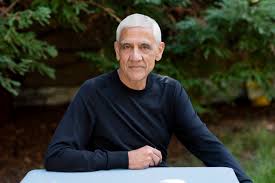
About Vinod Khosla
Vinod Khosla, founder of Khosla Ventures, has been discussing the transformative impact of artificial intelligence across multiple sectors. He described his 2019 investment in OpenAI as a contrarian bet, noting that he wrote a $50 million check and sent an apology letter to limited partners because the investment "doesn't make any logical sense" given the company was a nonprofit with no product or business plan. Khosla argued that AI will ultimately free humanity from what he called "servitude to survival," stating that jobs requiring assembly line work for eight hours a day for 40 years amount to "slavery." He said he believes 95% of the population will be better off by 2040 due to AI, despite acknowledging that technology has historically resulted in wealth concentration.
Khosla also addressed the future of education and healthcare. He said the primary reason to attend college is to learn how to learn and develop curiosity, and suggested universities should replace classrooms with meeting rooms where students can discuss topics. On healthcare, Khosla predicted that AI systems will be superior to the median doctor and oncologist, and estimated that by 2030, 80% of doctor roles could be replaced by AI. He criticized the American Medical Association for attempting to prevent AI from practicing medicine, citing a Nature Medicine paper that found AI therapy sessions were rated as if performed by the top 10% of human therapists. Khosla described himself as an independent who was a Republican for most of his life, and said he is not a member of the National Venture Capital Association because of its advocacy for special treatment of carried interest.
Source: AI-verified profile updated from Vinod Khosla's recent appearances.
Browse all interviews →
✨ AI-enhanced transcript with speaker attribution
A
Akshat Rathi0:00
Welcome to Zero. I am Akshat Rathi. This week, the billionaire taking on Elon Musk. Vinod Khosla is the definition of a Silicon Valley veteran. In the 1980s he started Sun Microsystems, which was later acquired by Oracle in 2010 for $7.4 billion. And in the decade since, his influence in the tech world has only grown. After his stint at Sun he became an investor, starting with Kleiner Perkins. In 2004 he founded Khosla Ventures, which has backed big tech success stories like DoorDash, Stripe, and Instacart. Khosla Ventures now has $15 billion in assets under management, including more than 400 companies in the portfolio. Things like plant-based burger replacement company Impossible Foods and Lanza, which turns pollution into sustainable fuel. At the moment he's especially focused on artificial intelligence, and it's an obsession he shares with another tech billionaire founder, Elon Musk. Recently Vinod and Elon have been locked in a pointed debate on X, not just about AI but also things like beachfront property and immigration, and the big one: politics. With just weeks to go till the US election, I wanted to ask Vinod what he thinks the titans of the tech industry get right and wrong about politics and climate change. I had fun in this conversation, and as you'll hear, Vinod did too. He also had strong opinions.
Welcome to the show, Vinod.
V
Vinod Khosla2:08
Great to be here.
A
Akshat Rathi2:10
Now you've seen it all in the climate tech space. You've been investing in this space for more than 20 years, and you still invest in climate startups even today. There have been some real success stories like Fortera, which makes low-carbon cement, which had a big round raised recently. There's also Lanza, which turns pollution into sustainable fuel. And there have been failures too. But as you look at the technology set today, apart from AI, what do you think is still missing from the climate tech space?
V
Vinod Khosla2:41
So I do think there's a complement to fusion that's very, very important. So far geothermal has mostly been about low-temperature geothermal. So whether you're talking about Eavor or Fervo, they're doing a good job. They improve the economics of geothermal but don't increase capacity 50-fold. I'm interested in technologies that operate at 450 degrees centigrade, not 250 degrees centigrade or 300 degrees centigrade. And you're going to do that because you will drill deeper, and accessing these hotter areas, you are going to increase the temperature by 50% but power output by a lot more than 50%. That will 10x the amount of power produced from the same well. So one, you can get 10x the amount of power and be a much bigger play. But more importantly, it can really work in many more locations. At 450 degrees, if we solve one problem that we don't understand how to solve today—and we are working on actively—which is how do you drill at 450 degrees, because metal drills don't work. That's been the technical problem. If we solve that—and we have two separate efforts to do that—geothermal can be a very large percentage of US electricity. Most of the western United States, we can access 450-degree heat if we get a couple of technologies right, and that's where technology risk is needed. Today geothermal is 4% of US electricity, and we've seen Google sign some deals and others. Those are incremental technologies in my view. But if you want to go from 4% to 10% or 20% or more of US electricity, you need 450-degree geothermal. And I think we are well on our way.
A
Akshat Rathi4:47
And then one thing that has happened recently with the AI boom is the requirement for energy has gone up a lot. You've seen tech companies recently start to invest in small modular reactors. Microsoft has a deal, Google has a deal, Amazon has a deal. What do you think about the future of nuclear fission through small modular reactors? Is this just a new hype cycle, or are we entering a new phase of growth for nuclear fission?
V
Vinod Khosla5:12
I think the people who are doing SMRs and other versions of fission, like TerraPower, are doing a good job of developing the technology. I'm a huge fan of more nuclear fission deployment, so I'm a real fan if he can make it happen. Unfortunately, I think the problem is a social one. NIMBYism and lawsuits against fission projects will cause 10-year-plus, maybe 15-year delays in even finding a site that's approved, that the community has gone through, community has approved. Nobody wants a nuclear plant, a fission plant, anywhere near their neighborhood. So I think the fundamental problem is not the technology. And I wish there was a dictator who would dictate, say you are going to get a nuclear fission plant. But fission is so much more possible now. I do think five, six years from now we won't be talking about fusion because fusion will be real.
A
Akshat Rathi6:24
Now talking about dictators, the US election is coming up, and you've made it clear who you support. You tweeted: 'It's hard for me to support someone with no values who lies, cheats, rapes, demeans women, hates immigrants like me. He may cut my taxes or reduce some regulations, but that is no reason to accept depravity in his personal values.' Putting aside the question of personal values, I want to ask you how you feel about the two candidates when you think about it as a tech investor. What changes in terms of our technological future under Trump versus under Harris?
V
Vinod Khosla7:08
I don't think there'll be any difference in policy between the two when it comes to tech. Trump has historically traded in benefit of traditional players instead of new players. So his instincts during his last administration was the incumbents get the benefit of the doubt as opposed to the technologists get the benefit of the doubt. I don't think he had very friendly policies to tech last time around. And clearly the Biden administration listens a lot more. The executive order on AI was a really balanced approach to AI regulation. Clearly there were a huge number of Republicans and Democrats supporting that executive order, and I agree with many of them that was balanced policy. What I would say is Trump tends to do more knee-jerk things based on who he's talked to most recently, than a thoughtful 10, 20-year policy. So I'm very afraid of random things Trump might do.
A
Akshat Rathi8:19
So I know you've been thinking a lot about this election. I these days don't spend that much time on X, but every so often when I'm there I have seen this exchange you've had with Elon about Trump. Now Elon Musk is one of the biggest donors to the Trump campaign, according to the New York Times, he's given $75 million in this quarter. And you called Musk's interview of Trump dumb, and then he responded by calling you dumb. And this back and forth has been going on for quite some time. You've argued about immigration, about OpenAI, about climate change. And I don't want to disturb our lovely conversation by recapping all the things that happened on X, but I do want to get into some of these exchanges because I think they're not just internet spats. There are some substantive discussions here about climate. People have thought Elon Musk was a climate guy, but now he's backing Trump who likes to riff on the green new scam. So what are you doing outside of X to change Elon's mind on climate change? Have you reached out to his inner circle? Have you talked to board members at SpaceX and Tesla, who I presume you have connections to?
V
Vinod Khosla9:30
So let me first address my conversation with Elon, because it's mostly been civilized, logical back and forth. When I first called the conversation around climate dumb—which was very specifically saying his climate policy assertions are dumb—Elon responded and we had a back and forth, and I think it was a civilized back and forth. I think Elon didn't want to address the climate issue, which is fine, but I responded by saying my priorities for a president are: values first, climate second, economics third. On all three, Kamala Harris wins. On values, nobody can have as bad a set of values as Trump has shown. But on climate, he's been very clear his policy is 'drill baby drill,' and he dances to that tune. But on economics, 16 Nobel Prize economists have said high tariffs and taking 10 million farm workers or immigrant workers and deporting them will be an economic disaster. These are Nobel Prize-winning economists who say inflation will get through the roof, and tariffs will of course raise prices. So the consequences of his economic policy are horrendously bad if he goes through with them, which he probably will. And he said he will go through with it. In a recent interview with John Micklethwait, who's Bloomberg News's editor-in-chief, he said he's sticking with tariffs even though economists clearly say it's going to hurt the US economy.
A
Akshat Rathi11:29
But going back to Elon, if you think you're having a logical conversation with him and you think you have these strong set of arguments on all these things, these three points, why is Elon still supporting Trump? Why aren't you able to convince him to change his mind if you are having a logical conversation?
V
Vinod Khosla11:48
Well, so first let me say, the logical conversation—I pressed him a couple of times to say, was the last election stolen? And his answer, in the end, after avoiding it for a bit, was no, it wasn't stolen. Which is a rational answer, probably the only correct answer that everybody would say except Trump. It's a new test for loyalty. It's my test for MAGA extremism—if you believe the election was stolen, I don't want to talk to you.
A
Akshat Rathi12:22
Well, Elon is now one of the richest people, if not the richest person in the world. And you've also clashed with him on the role of government in supporting innovation. You've made it clear, which is factually true, that both Tesla and SpaceX wouldn't have become the companies they have without US government subsidies. But Elon thinks otherwise. Why is that the case if that again is a factually true, logical argument?
V
Vinod Khosla12:49
Well, I'm a huge admirer of Elon. He was an instigator of the change to electric, and without him it wouldn't have happened. He's been hugely successful with SpaceX. So you have to give him credit—he's a great entrepreneur, and he's done a lot of good for the world. Now, I don't believe Tesla would have survived without the early subsidies. The first couple of billion dollars of subsidies for Tesla allowed him to survive. Now, Elon's a daring entrepreneur, and he almost went bankrupt a couple of times, but every time he was willing to push his personal wealth, put it at risk. And risk-takers I hugely admire, for the cause he was after. So same thing with SpaceX—I think it was phenomenal, catching essentially the equivalent of a falling building with chopsticks. It's a little bit of an analogy, but it is stunning engineering. So I'm a huge fan of what he's done in space and electric cars and a couple of other things. He's driven the world for great innovation. Having said that, I do think Elon has focused on one issue that he's dealt with, which is too much regulation. And I don't think regulation is a top three issue. I think economics, values, and climate are the top three issues. And I would like to see less regulation, but there are times when regulation does make sense, like the FDA regulating what drug is approved.
A
Akshat Rathi14:32
And so that's why you think he's supporting Trump now, because if Trump comes in he's going to take away electric car subsidies?
V
Vinod Khosla14:37
I don't think that's his motivation. It will help him if he takes away electric car subsidies. I think his motivation is less regulation—not his interest in Tesla or SpaceX or anything else.
A
Akshat Rathi14:54
After the break, more from my conversation with Silicon Valley veteran Vinod Khosla. By the way, if you've been enjoying this episode, please take a moment to share it with a friend.
Now let's take the longer view, outside of Elon and your spat. If you just look at Silicon Valley—and you spent the majority of your career there—these are people who are facts-driven, they care about innovation, they want the numbers to add up. Recently that's shown up in them caring about climate change. We've seen a number of these billionaires investing in climate tech innovation, not just you. But when we look at the moment in the election today, there is a very loud, influential tech billionaire crowd—Elon Musk being one of them—but he's got others like Peter Thiel and Marc Andreessen who are pushing for a Trump election that, according to you, will affect these three things: values, climate, and economy. So have you felt pressured in this moment to be a more vocal person with your views to counter the narrative? Because Silicon Valley in a way is starting to show this seam and show this divide.
V
Vinod Khosla16:13
So let me be clear. A survey was done recently and said 72% support for Kamala Harris over Trump in Silicon Valley. I think the narrative of people in Silicon Valley supporting Trump has been amplified because it's news. If Silicon Valley is a cultural attitude—which I also think it is—then they're only partially Silicon Valley and partially subscribe to, as Marc says, techno-optimism. I'm a big fan of techno-optimism; in fact I've been using that phrase. But I add two words to techno-optimism that Marc misses: techno-optimism with care. And caring means safety and regulatory, like on AI. But there's a balance to be achieved, because capitalism is by permission of democracy. And if we don't have permission for capitalism, I think it'll be reined in.
A
Akshat Rathi17:18
So in a way we're talking about regulations as this big dividing line. There's the people on the right who are supporting Trump who don't want regulations, and then there are people on the left who want regulations because they think they need this care, because technology is a difficult double-edged sword and you need—
V
Vinod Khosla17:36
But let me be clear, I think we have too much regulation. I'm saying some regulation is needed, a lot of regulation is not needed.
A
Akshat Rathi17:46
Let me be clear—say Kamala Harris wins, what would be your dream role in a Harris administration to address the too-much-regulation point?
V
Vinod Khosla17:55
No role. I never want to do anything in any administration—Republican, Democratic. I'm a registered Independent, by the way. I used to be a Republican and changed to Independent after the Republicans stopped supporting climate issues. Let's be clear: Bush supported climate. Many people like Lindsey Graham and others, Republican senators, supported climate. But now it's become unacceptable to support climate if you're a Republican. I think that's unfortunate, and that's when I registered to be an independent. But I'll never have a role in any administration, no matter what the role.
A
Akshat Rathi18:42
I'm just saying if you want to address this issue of too much regulation, what should the administration be doing even if you don't take a role in it?
V
Vinod Khosla18:52
I think we have to systematically look at all areas with both the administration, the Senate, and the House, and start to reduce overhead for getting things done quickly.
A
Akshat Rathi19:06
Are there too many regulations in the climate space? You mentioned a little bit about permitting issues, etc., but anything else?
V
Vinod Khosla19:13
Generally, California has bad policy when it comes to implementing climate projects. So our cement plant in Northern California for Fortera was delayed significantly, and frankly cost so much more because of some frog. So that does happen in California, and California needs to fix that.
A
Akshat Rathi19:44
So given disagreements—but you're also a fan of Elon—Kamala Harris has promised that she will put a Republican in her cabinet if she's elected. Would you support Elon getting that Republican seat?
V
Vinod Khosla20:02
Oh, I won't speak for Kamala. Of course I'd be supportive depending upon what that is. There's something—this is on the deregulation, right? He wants to bring in efficiency in government and wants to deregulate. I think he could do that job pretty well. My bet is he'd get frustrated with all the processes and procedures, but I'd be supportive of that, absolutely.
A
Akshat Rathi20:20
And given there is a real chance that Donald Trump is going to win the election, have you reached out to his team to try and change their mind on climate, given how much of an impact that could have in your view?
V
Vinod Khosla20:34
Well, I'm hoping if they do win—which I hope won't happen—Elon would be that advocate for a better approach to climate. Look at it this way, and I think many people would agree with me: we do have $34 trillion in economic debt, has to be addressed. But we have much larger climate debt we are accumulating, and climate debt is much harder to pay off than economic debt. Take a simple example: the 20-year forecast for the amount of wealth transfer from rich people to their kids is about $80 trillion over the next 20 years. Taxing that at 25, 30% would pay off most of our debt. There's other inflationary strategies to pay off debt. I do believe economic debt is easier to pay off than climate debt, and so climate debt should be our great priority.
A
Akshat Rathi21:36
Now one thing that you have cared about a lot, given you moved to Silicon Valley from India, and how much climate change is going to affect developing countries, especially India—one way in which America can contribute to the world is through technology leadership, through ensuring that these green technologies are cheaper and widely accessible. Right now that is not what America is doing. It is China that is making these green technologies cheaper and more available to developing countries. What do you think America needs to do to actually play the role of realizing the costs and making these technologies really affordable?
V
Vinod Khosla22:17
Look, America doesn't own any of the climate technologies—private companies do. So if we have a new fusion technology, it'll depend on that company to decide where they deploy it, not depend on the US government. Now, China paid attention to solar, and solar is now a half-a-trillion-dollar market annually, and we lost the lead in manufacturing. A couple of countries—Europe—is a hopeless case when it comes to regulation. The US should try and develop battery technology, but it looks like the Chinese companies will own battery technology manufacturing at the lowest cost unless we have breakthroughs, which we are trying. So QuantumScape is a great example of a technology that can win against the Chinese. So we have to win at these. There are new areas—obviously fusion would be one of those massive areas, steel could be one of those areas, though there's very little steel business in the US. Cement is clearly an area where the US could lead. So there are very, very large markets the US could win at, and US companies would then deploy them and not transfer them to China. So I'm very much a China hawk and do feel like we should be very aggressive with China, but I do think it'll depend on innovators to develop new technologies, not try and address lost markets.
A
Akshat Rathi23:53
But aren't you contradicting yourself when you say that it's only companies that choose and decide which countries they build their technology in, while also saying you see the role of how government subsidies have been important in certain types of early-stage technologies and early companies to actually take off? Tesla—could it have happened in Europe, according to you? Why did it happen in America if they didn't have the early subsidies for electric cars?
V
Vinod Khosla24:25
I don't believe—it'd be hard to build that company. I won't say impossible, but very hard to build a company on strict economics, because there was a huge cost when the volumes were low. But we did get Tesla going, and we lost the battery market. We might have said, for example, that you don't get subsidies if you're importing your batteries from China, for example.
A
Akshat Rathi24:52
But if that is the case, then you are saying that the government does play a role. So is it just companies that are going to build this technology? Does it not matter what governments are doing to enable these technologies to be built out?
V
Vinod Khosla25:05
So climate technologies need both breakthrough innovation and good policy. And good policy means kickstart those innovations, because day one they can't compete with, say, oil and gas. And oil and gas have huge subsidies. I mean, we've spent trillions of dollars defending the oil lanes in the Middle East—those are subsidies, because without those defense spending costs, oil and gas would be way more expensive. That's an example. You have tax policy like MLPs, master limited partnerships, that are subsidies to the oil and gas industry. So we have subsidies and industrial policy everywhere, whether we like it or not. But good policy can encourage climate technologies. But the core of climate technologies is going to be innovation, at which America is best.
A
Akshat Rathi26:10
One last question for you: what should India be doing right now in trying to fight climate change?
V
Vinod Khosla26:16
Well, first, India can much less afford some of this, especially when they're at higher cost than fossil competitors. I call any technology as important if it'll eventually get to the Chindia price, where it'll be adopted in India or China irrespective of climate or not. Solar has reached that, and India is deploying solar very heavily, and that's a great thing. But could India afford technologies today that cost more than their fossil competitors, or afford to subsidize them? No. And I do think the West won't transfer billions of dollars or hundreds of billions of dollars a year to the developing world. But they can get technologies going in their own countries and win the manufacturing battles, so they get benefit from these new climate technologies when they get to unsubsidized cost competitiveness, and then deploy them all over the world.
A
Akshat Rathi27:23
Great. Thank you, Vinod. Thank you.
Thank you for listening to Zero. And now for the sound of the week. We can see those chopsticks now in here. That's the sound of the SpaceX Starship rocket's upper stage being caught midair. If you like this episode, please take a moment to rate and review the show on Apple Podcasts and Spotify. Share this episode with a friend or with someone who is still on X. You can get in touch at
[email protected]. Zero's producer is ML. This episode was mixed by Blake Maples. Bloomberg's head of podcasts is Sage Bowman, and head of talk is Brendan Newnham. Our theme music is composed by Wonderly. Special thanks to Shaan Wagner, Jessica Beck, Ethan Steinberg, Monique Mulima, Angel Risuccio, Michelle Ma, and Bis Carson. I am Akshat Rathi. Back soon.
V
Vinod Khosla28:41
Oh, I think they were great questions, and I think I had good answers. Sometimes I get a little too excitable about these things.