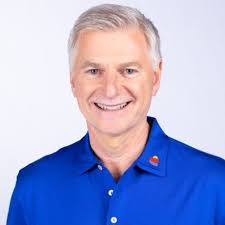
About Robert Jordan
Southwest Airlines CEO Bob Jordan described the first quarter of 2026 as a milestone he characterized as a "fundamental transformation" of the airline's business model. He cited strong customer demand, strong financial results, and margin expansion, stating the carrier had a "stellar first quarter." Jordan noted the airline achieved an eight-point year-over-year increase in operating margin and $1.4 billion in operating cash flow. He attributed the performance to cost discipline, network optimization, and the implementation of previously announced initiatives, including assigned and extra-legroom seating, from which the company expects to deliver more than $1 billion of incremental EBIT in 2026. Jordan also noted that the revenue contribution from bag fees had exceeded expectations.
On fuel costs, Jordan stated that Southwest had discontinued its fuel hedging program, explaining that hedging had become too expensive at about $150 million a year. He said the airline was planning for higher jet fuel prices for the remainder of the year and that sustained higher prices would require higher ticket prices to offset. Despite the "geopolitical upheaval" and higher fuel costs, Jordan said demand remained "very strong" across all sectors, including business travel, with March business revenues up 25%. He also stated that Southwest was not seeking government fuel aid and had no interest in acquiring Spirit Airlines, adding that his focus was entirely on Southwest's performance.
Source: AI-verified profile updated from Robert Jordan's recent appearances.
Browse all interviews →
✨ AI-enhanced transcript with speaker attribution
I
Interviewer0:00
Well, speaking of instantaneous feedback, one thing I know is that Southwest has always touted bags fly free. What made you take that away, and what have you learned from that experience?
R
Robert Jordan0:11
Well, we've announced all kinds of changes, and we by far still have the best offering of policies, the most flexible policies in the industry. But you also have to look at what your customers want to buy. And it's very clear that our customers want what we call a basic or basic economy kind of very no-frills product that you see others selling, and we can't compete with that today very easily because we don't offer that. Our base fare kind of comes with everything. So you've got to make the right level of profits. I mean we're a for-profit business, and if we aren't profitable to the right level, we can't offer low fares. And at the same time, you've got to meet your customers where they are. So, we know there's a desire for that. What we've done is ensure that our most loyal customers, this is a good change for them as well. If you've got the Southwest credit card in your wallet, you're going to have free check bags. If you're a tier with Southwest Airlines, you're going to have free check bags. So, all you got to do is engage with us, and that policy does not apply. But no, we've certainly got a lot of customer feedback that we're taking into account. You know, I saw a video of you in November assuring that bags fly free wasn't going away.
I
Interviewer1:27
There's been a lot of discussion of bags fly free, and Southwest Airlines bags fly free are not going away.
Come on. Thank you.
And you know, we all say things as leaders where we go public and make statements, and then we reverse that public position to a certain extent. Although you just mentioned that if you deal with Southwest Airlines, you can basically get back bags fly free. But you know, social media, everybody, they'll come at you that way. What have you learned about going public on something and then having to go back? Because as leaders, a lot of times you have to change your mind.
R
Robert Jordan2:04
Well, and some of that came from you, we went into the meta search engines. So we went into Google flights and online travel platforms like Expedia, and what became very clear was that we weren't getting share. While people love bags fly free, we weren't getting share for that. So people love the bags fly free but it wasn't bringing us a ton of extra business because we had to match up on price. But to your question, I think at the end of the day, you've got to be willing. You can't have ego about these things. You've got to be willing to change your mind. You've got to be willing to tell the truth. And rather than hide it in all these sort of obtuse reasons, just say we were wrong. We changed our minds. You know, we had some operational difficulties at the end of 2022. They were tough on our customers and tough over the Christmas holidays, and I chose in terms of how we're going to communicate and what we're going to say, basically rather than get all wound up in all the reasons, to come out and say hey we screwed up, we messed up, and we messed up a lot of our customers' travel. And if you're going to blame somebody, be mad at Bob Jordan. But we're going to do right by our customers and take care of them, and then we're going to go to work in technology and processes and fix those so this never ever happens again. You look today, we're the number one operator, best on-time performance, lowest cancel flights, but the best operation in the business. But you've got to be willing to say we made a mistake and we've changed our minds, and this is what we're going to do because people see it anyway. So, you might as well be truthful. I had a good friend one time here at Southwest who said, you know, when in doubt, tell the truth because it's the one thing that's not going to get you in trouble.
I
Interviewer4:04
No doubt about that. Yeah.