Back
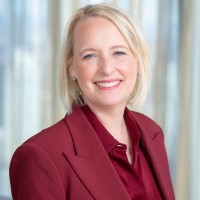
Julie Sweet
CEO & Chairman, Accenture Plc

Accenture Q3 2026 Earnings Call |Mid-Market Edge Launch Outlined as AI Tailwinds Drive 9% EPS Growth

🎥 Jun 18, 2026 📺 Investing 101 ⏱ 59m 👁 173 views
Accenture Q3 2026 Earnings Conference Call. Twitter -   / i101in   If you find our work useful, please support us by purchasing a Super Thanks— it truly helps us a lot. #earningscall #StockMarketNews #conferenceCall Earnings Call | Earnings Conference Call | Earnings concall | concall | quarterly results | Stock News | Full Year results | Fiscal Year results | investment news | stock latest news | Annual Meeting of Shareholders | Annual Meeting of Unitholders | Special and Annual Meeting of Shareholders | AGM | Annual General Meeting If you want us to remove your company's earnings call...
Watch on YouTube

About Julie Sweet

Julie Sweet, chair and CEO of Accenture, announced on the company's Q3 2026 earnings call on June 18, 2026, that Accenture is launching a new business called Accenture Edge, targeting the mid-market. Sweet described the mid-market as companies with between $300 million and $3 billion in revenue, calling it a $240 billion addressable market growing at high single digits. She stated that AI is a "tailwind" for the company and industry, describing it as a "catalyst for reinvention" creating new opportunities for growth and efficiency. On the Q2 2026 earnings call in March 2026, Sweet disclosed that she had been diagnosed with breast cancer, stating that her treatment is on track and her prognosis is excellent. She also discussed the impact of the new U.S. administration, noting that procurement actions have slowed and that the General Services Administration instructed federal agencies to review contracts with the top 10 highest paid consulting firms, including Accenture Federal Services. Sweet said the company is raising its free cash flow guidance by $1 billion and expects to return at least $9.3 billion to shareholders through dividends and share repurchases. She also highlighted a joint venture with Telstra to accelerate its data and AI roadmap.

Source: AI-verified profile updated from Julie Sweet's recent appearances. Browse all interviews →

Transcript (60 segments)
✨ AI-enhanced transcript with speaker attribution
O
Operator0:00
Good day and welcome to Accenture's third quarter fiscal 2026 earnings conference call. All participants will be in listen-only mode. Should you need assistance, please signal a conference specialist by pressing the star key followed by zero. After today's presentation, there will be an opportunity to ask questions. To ask a question, you may press star then one on your telephone keypad, and to rejoin your question, please press star then two. Please note today's event is being recorded. I'd now like to turn the conference over to Lexi Quadrani, executive director and head of investor relations. Please go ahead.
L
Lexi Quadrani0:42
Thank you, operator, and thanks everyone for joining us today on our third quarter 2026 earnings announcement. As the operator just mentioned, I'm Lexi Quadrani, executive director, head of investor relations. On today's call, you will hear from Julie Sweet, our chair and chief executive officer, and Angie Park, our chief financial officer. We hope you've had an opportunity to review the earnings release which we issued a short time ago. Let me quickly outline the agenda for today's call. Julie will begin with an overview of our results. Angie will take you through the financial details including the income statement and balance sheet along with some key operational metrics for the third quarter. Julie will then provide a brief update on the market positioning before Angie provides our business outlook for the fourth quarter and full year fiscal 2026. We will then take your questions before Julie provides a wrap-up at the end of the call. We're also pleased to announce that we will host our investor day in New York City on October 14th. More details to come. Some of the matters we'll discuss on this call, including our business outlook, are forward-looking and as such are subject to known and unknown risks and uncertainties. During our call today, we will reference certain non-GAAP financial measures, which we believe provide useful information for investors. As always, Accenture assumes no obligation to update the information provided on this conference call. Now, let me turn the call over to Julie.
J
Julie Sweet2:47
Thank you, Alexia, and everyone joining us this morning. And thank you to our more than 798,000 people for your extraordinary work. Before Angie takes you through the detailed numbers, I will give you some color on the quarter and on the progress we're making on our growth strategy. In Q3, we delivered strong results with broad-based revenue growth across geographic markets, industry groups, and types of work, and once again took significant market share, underscoring the relevance of our services and our strong competitive position. To put our performance in context, we added approximately $1 billion in revenue in Q3 over FY25 and $3.4 billion year-to-date over the same period last year. We also delivered strong margin expansion, EPS growth, and free cash flow, while continuing to invest in our business and our people. This quarter, we had 30 clients with quarterly bookings over $100 million, bringing us to 104 of such bookings year-to-date, a 13% increase over the same period last year. This is one of the best indicators of the depth of our client relationships and the scale of the reinvention programs we are helping deliver. I also want to give you context on two factors that impacted our results this quarter. First, we were impacted by the conflict in the Middle East. We saw revenue impact of approximately $100 million compared to our expectations, which is all consulting type of work, split evenly between the direct impact on our Middle East business and indirect effects outside of the region. In the last few weeks of the quarter, we saw this indirect impact globally in products and to a lesser degree in resources, mostly in discretionary spend. In addition, sales in the Middle East were impacted by approximately $400 million and also in EMEA due to longer decision-making. Second, a couple of our large managed services opportunities moved into FY27 for company-specific reasons. Now, on acquisitions, because of the exciting OT cybersecurity acquisitions we announced today, which I'll talk about in a moment, we now expect to deploy approximately $9 billion of capital this year based on the anticipated closing dates of the acquisitions. We are also adding important capabilities in other strategic areas of growth, including our recently announced acquisitions of Elf Health, a service-led digital health platform in Italy, and Wailer, a leading creator and social agency in the Americas. I am also thrilled to congratulate our approximately 124,000 people who were promoted this fiscal year, a 30% increase over last year, including more than 900 who were promoted to managing director. Our people make the difference in our ability to deliver our results and value to our clients. All in all, we are pleased with how we're executing in this environment. Now, let's turn to how we're executing our growth strategy to be the reinvention partner of choice for our clients and the leader in the widespread adoption of AI. We believe that AI will be a tailwind for us and our industry as it scales because it is a catalyst for reinvention and is creating new opportunities for growth and efficiency for our clients and for us. We are building a stronger foundation every quarter for us to win as AI adoption scales. We're starting to see clients with more advanced digital cores move to larger AI transformation programs. You can see this demand in several significant AI-focused wins across multiple industries and markets, which we publicly announced with companies like British Telecom Group, Mitsubishi Chemical, NSK, Perios, Stellantis, Tepco, Vodafone, and the Women's Tennis Association. The major theme of all of these programs is that we are moving clients from using AI to running on AI. We're also seeing more clients move from pilots to production. This quarter we saw another 100 clients initiate advanced AI projects with us. We have announced a number of expansions of partnerships with our top 10 ecosystem partners in AI and data, and our revenue growth from these partners continues to outpace our overall growth. We are also on track to more than double our bookings from our key emerging AI and data partners compared with FY25, including Anthropic, Databricks, Gemini, Mistral AI, Nvidia, OpenAI, Palantir, and Snowflake. We are deepening these partnerships around specific areas of opportunity where we can combine their technology with Accenture's industry, functional, and delivery expertise. Now, let's talk about our big move in OT security to create a platform-led growth business with a non-FTE commercial model. We are acquiring a majority stake in Dragos, a leading platform for operational technology or OT cybersecurity, along with RunZero, a leading vulnerability and exposure assessment firm, and NetRise, a leader in device security. Together, these acquisitions will create a first-of-its-kind OT security platform that lets clients see threats, find vulnerabilities, and fix them before it becomes a crisis. Cyber is a key enabler for AI. We cannot have an AI revolution without critical infrastructure, and you cannot have those without OT security, which is where today the world is most vulnerable. The urgency is real. AI and geopolitical risk are accelerating the need for cybersecurity adoption for the operational technology that underpins critical infrastructure and industrial operations, such as power grids, pipelines, manufacturing distribution facilities, and data centers. Dragos, which is the anchor of our strategy, has strong ecosystem relationships with our top ecosystem partners, including AWS, CrowdStrike, Microsoft, Palo Alto, and ServiceNow, which we will leverage to scale. Our expansion into the OT cyber platform business builds on our strong foundation of cybersecurity services, including OT. We have grown our services organically and inorganically over the last decade from roughly $700 million in FY16 to $10 billion in fiscal 2025, a 35% CAGR over the period, four times that of Accenture's over the same period. This investment more than triples our total addressable market in OT security, which is growing double digit. We're also expanding our total addressable market by going after a new exciting customer segment, the mid-market. We estimate that the mid-market, which we look at as companies with between $300 million and $3 billion of revenue, is a $240 billion addressable market for us, growing high single digits. That is why we are launching a new business next week called Accenture Edge. This business will embed Accenture's large enterprise expertise and ecosystem relationships and business solutions designed specifically for the mid-market. We see that companies in this segment face many of the same technology, data, AI, cybersecurity, and productivity challenges as large enterprises. But they often need solutions that are faster to deploy, more repeatable, and right-sized for their scale. This segment is also an important priority for our ecosystem partners, which see strong demand and want to partner with us because we can bring scale, consistency, and delivery quality to a fragmented services market. Accenture Edge will also include seamless integration with Accenture's joint venture with Microsoft, Avanade. Avanade will continue to serve as the provider of Microsoft platform services to mid-market clients. Together, these actions show how we are building a strong foundation for us to win in AI, expanding our addressable market across new growth areas and client segments, and evolving towards more non-FTE revenue over time. We believe this positions Accenture well for our next phase of growth. Over to you, Angie.
A
Angie Park11:42
Thank you, Julie, and thanks to all of you for taking the time to join us on today's call. We are pleased with our third-quarter results with revenue above the midpoint of our guided range with strong profitability and robust free cash flow. We delivered these results while continuing to invest in long-term market leadership and returning significant cash to shareholders. Based upon these results, we are on track to deliver or exceed all aspects of our guidance provided in September. Revenues grew 3% in local currency with growth across geographic markets, industry groups, and types of work. Excluding the 1% impact from our federal business, revenues grew about 4%. And we continue to take significant market share on a rolling four-quarter basis against our basket of our closest global publicly traded competitors. Operating margin expanded 20 basis points to 17% compared to Q3 results last year. This was achieved while making significant investments in our people and our business. EPS grew 9% in the quarter to $3.80. Finally, we delivered free cash flow of $3.6 billion and returned $2.2 billion to shareholders through repurchases and dividends. Nine months into the fiscal year, we invested $3 billion primarily in 13 acquisitions. New bookings were $19.3 billion for the quarter, a 2% decrease in US dollars and 3% in local currency with an overall book to bill of 1.0. Consulting bookings were $10.3 billion with a book to bill of 1.1, and managed services bookings were $9.1 billion with a book to bill of 1.0. Revenues for the quarter were $18.7 billion, a 6% increase in US dollars and 3% in local currency. Consulting revenues were $9.3 billion, up 4% in US dollars and 1% in local currency. Managed services revenues were $9.4 billion, up 8% in US dollars and 5% in local currency, driven by mid-single-digit growth in technology managed services and high-single-digit growth in operations. In the Americas, revenues grew 1% in local currency, led by software and platforms, high tech, and industrials, partially offset by a decline in public service. Excluding the about 1.5% impact from our federal business, Americas grew approximately 3%. In EMEA, we delivered 4% growth in local currency, led by public service and software and platforms. Revenue growth was driven by the United Kingdom and Italy, partially offset by declines in Germany and the Middle East. In Asia Pacific, revenue grew 8% in local currency, driven by public service, banking and capital markets, and insurance. Operating income was $3.2 billion in the third quarter reflecting a 17% operating margin, a 20 basis point increase. Our effective tax rate for the quarter was 24.2%. Diluted earnings per share grew 9% to $3.80. Day sales outstanding were 48 days compared to 46 days last quarter and 47 days in the third quarter of last year. Free cash flow for the quarter was $3.6 billion resulting from cash generated by operating activities of $3.8 billion net of property and equipment additions of $186 million. Our cash balance at May 31st was $10.2 billion. In the third quarter, we repurchased or redeemed 6 million shares for $1.2 billion at an average price of $198.84 per share. As of May 31st, we had approximately $3.2 billion of share repurchase authority remaining. In May, we paid a quarterly cash dividend of $1.63 per share for a total of $1 billion, representing a 10% increase over last year. And our board of directors declared a quarterly cash dividend of $1.63 per share to be paid on August 14th, a 10% increase over last year. Year-to-date, we have returned $8.2 billion in cash to shareholders, which is $1.3 billion more than the same time last year. In closing, we remain focused on executing our business and capturing new opportunities for growth while continuing to invest to strengthen our relevance in the age of AI for long-term market leadership. And now, let me turn it back to Julie.
J
Julie Sweet17:56
Thank you, Angie. When I look at the breadth of work we signed just this quarter across industries and parts of the enterprise, it is staggering. The reason is that we are truly the only company that can cover at scale everything from the AI and technology foundation to reinventing nearly every part of the enterprise. We bring a track record of delivering results for decades and deep, trusted relationships, as seen in the fact that 195 of our top 200 clients have been clients for more than 10 years. We are working with McDonald's, one of the world's most iconic restaurant brands, serving more than 70 million customers every day, as we support key elements of their ongoing transformation. Together, we've partnered across the enterprise with a particular focus on finance and people modernization and customer loyalty. This foundation is helping McDonald's become faster, more innovative, and efficient as they continue to grow and stay competitive. Stay tuned for the next Reinvented with Accenture episode on CNBC in the coming weeks featuring McDonald's Chairman and CEO Chris Kempczinski. Now, let's double-click on demand in the quarter. Clients continue to invest in the foundations needed to scale AI. This includes strengthening their digital core through cloud, data, security, and operating model transformation. A lot of our reinvention work today is helping clients get ready for AI, and data remains a critical enabler with at least one out of every two advanced AI projects continuing to lead to a data project. Second, clients continue to look to reinvent faster, leverage our proprietary platforms and expertise, and achieve greater efficiencies and growth, including through managed services across the enterprise. We're seeing the nature of these programs with managed services evolve, with clients asking for more consulting and AI expertise within them. Exactly the shift we've been positioning for. Bath and Body Works is a great example of our work in managed services. We're expanding our partnership, consolidating fragmented processes across critical business functions into a unified managed services model with GenAI embedded throughout and humans in the lead. The result is automation replacing manual effort, faster speed to market, and significant cost savings and productivity gains that Bath and Body Works can reinvest directly into growth. Another area of strong demand are the AI enablers we've been investing in, from capital projects to data centers to cybersecurity, one of our largest AI enablers. As I mentioned earlier, OT security is one of the hottest areas driven by AI, cyber threats, and geopolitical risk. We are seeing net demand in our services business as clients look to protect the physical infrastructure that keeps their operations and communities running. For example, we're helping one of the largest electric utilities in North America secure its electrical grid, protecting power infrastructure that serves more than 10 million people. Building on a decade-long cybersecurity partnership, we are extending our work beyond traditional IT into the physical infrastructure. Finally, clients with more advanced digital cores are starting to take on larger AI programs, exciting green shoots. A great example is BT Group, one of our UK clients where our long-standing relationship is expanding into a new AI partnership for BT Business. We're embedding AI directly into the core of how they operate. AIOps capabilities with autonomous agents will detect, route, and resolve incidents with self-healing that accelerates how quickly issues are resolved. The result will be fewer disruptions, faster resolution, and a more resilient network. As we look at the opportunity to scale AI, we're a partner of choice because we're delivering tangible results. For example, Cox Communications, the largest private broadband company in the United States, worked with us to drive growth and efficiency across marketing, sales, and service. Together, we built an AI engine that validates and enriches leads, generates personalized campaign content, and automates brand and legal validations. Lead accuracy jumped from 13% to 97%. Campaign speed to market improved by 55% and marketing content teams are 40% more productive. This is what AI ROI looks like in practice, not a pilot, but a production-grade commercial engine delivering results at scale. Banco Bradesco, one of Brazil's largest financial institutions, is another great example. Together, we built a single unified platform that orchestrates the entire journey from dealer portal and customer origination through government database checks, credit validation, and loan processing. Bradesco grew its vehicle financing portfolio 7.3% quarter over quarter with the unified platform a key enabler of that performance. With that, over to you, Angie.
A
Angie Park25:58
Thanks, Julie. Now, let me turn to our business outlook. Given the macro uncertainty, we expect more of the guided range to be in play for Q4. For the fourth quarter of fiscal '26, we expect revenues to be in the range of $17.75 billion to $18.4 billion. This assumes the impact of FX will be approximately -0.5% compared to the fourth quarter of fiscal '25 and reflects an estimated 1 to 5% growth in local currency. And as it relates to our settled business, we expect to anniversary the headwind and get back to growth in the fourth quarter. Moving to full fiscal year '26, based upon how the rates have been trending over the last few weeks, we assume the impact of FX on our results in US dollars will be positive 2% compared to fiscal '25. For the full fiscal '26, we now expect our revenue to be in the range of 3% to 4% growth in local currency over fiscal '25, including an estimated 1% impact from our federal business. Excluding the impact of federal, our revenue is expected to be an estimated 4% to 5%. We continue to expect an inorganic contribution of about 1.5%. With our exciting announcement to expand into the OT security software market, assuming those transactions close this fiscal year, we now expect to invest approximately $9 billion in acquisitions this fiscal year, and we continue to have a pipeline of attractive acquisitions for FY27. For adjusted operating margin, we now expect fiscal year 26 to be 15.8%, a 20 basis point expansion over adjusted fiscal 25 results. We now expect our annual adjusted effective tax rate to be in the range of 24% to 25%. We now expect our full year diluted adjusted earnings per share for fiscal 26 to be in the range of $13.78 to $13.90, or 7% to 8% growth over adjusted fiscal 25 results. For the full fiscal 26, we continue to expect operating cash flow to be in the range of $11.5 to $12.2 billion. Property and equipment additions to be approximately $700 million, and free cash flow to be in the range of $10.8 to $11.5 billion. We now expect to return at least $9.5 billion through dividends and share repurchases. Finally, as part of our routine review of our capital structure, including taking into account our elevated D&A outlook for FY26, we expect to access the long-term debt market to increase our liquidity for D&A spend and general corporate purposes as we look to optimize our capital structure and reduce our cost of capital. In connection with that, we expect to maintain a strong investment grade credit rating with a low net leverage ratio. With that, let's open it up so that we can take your questions. Alexia.
L
Lexi Quadrani29:23
Thanks, Sanjay. I would ask that each of you keep one question and a follow-up to allow as many participants as possible to ask the question. Operator, will you provide instructions for those on the call, please?
O
Operator29:35
Yes, ma'am. To ask a question, you may press star then one on your telephone keypad. If you're using a speakerphone, we ask that you please pick up your handset before pressing the keys. If at any time your question has been addressed and you'd like to withdraw your question, please press star then two. Today's first question comes from Brian Keen at Citi. Please go ahead.
B
Brian Keen29:58
Hi guys, good morning. Thanks for taking the questions. It looks like the Middle East conflict should be alleviating given the recent agreement with Iran and the US. How does that impact, you think, the Middle East weakness you saw, the $100 million in weakness you saw this quarter as we get into the fourth quarter? Because you guys are still highlighting some macro uncertainty in the guide.
J
Julie Sweet30:23
Yeah, thanks, Brian. Because the indirect impact really started in the last few weeks and mostly in discretionary spend, we do think that there will be more impact in Q4, which is why we're saying that more of the range is in play. In these areas, it's not clear how fast things will change, particularly because some of the industries are dealing with longer-term issues. So, think about automotive, where we have a large presence. They were already challenged, and now with the higher gas prices, that's added to it. So it's difficult, of course, to predict and even exactly how it's all going to play out. But because we started seeing it really in the last few weeks on the indirect impact, we do think that's more in the range of play. The impact in the Middle East, again, it just depends on how quickly people start to focus on growing. So Q4, that's how we're seeing Q4.
B
Brian Keen31:24
Got it. And then the push out on managed services, on our calculation was a little over $2 billion lower than we expected. Does that bump Q4 totals? Do you get that? Has that already been signed? Does that bump Q4 totals by an additional $2.2 billion or so? Just trying to quantify the impact there.
A
Angie Park31:46
Sure. No, so what we saw was a couple of deals pushing out to FY27, but that's not into Q4. So, we did see some slippage overall in EMEA that we're going to try to make up for in Q4, but the bigger deals, and remember, managed services, like when you're doing a deal at say $300, $400, $500 million, it can have a big swing. And so we've seen a couple of the bigger lumpy ones move out for company-specific reasons to FY27. So, I wouldn't think about it as massively increasing Q4 at all, because it's pushed farther out.
B
Brian Keen32:31
Got it. Got it. Thanks, that's all the questions.
J
Julie Sweet32:34
Thanks.
L
Lexi Quadrani32:35
Thank you. Our next question comes from Pin-Jen Wong with J.P. Morgan. Please go ahead.
P
Pin-Jen Wong32:43
I think a lot of you already spoke to something, can you give us a little bit more on the thesis of acquiring these three OT security assets? I understand they're great growth spaces within security, but there's a lot of layers to this. Sounds like you're adding more non-FTE content. But is there above average risk here because you're stitching together the three assets and it sounds like there's going to be some initial dilution. So, I just want to better understand the risk there. And then finally, just why prioritize security as an enabler for AI versus other areas? We're just trying to better understand because this seems more strategic than about adding revenue per se.
J
Julie Sweet33:26
Thanks, Pin-Jen. Exactly. This is about long-term growth and it's really a massive market when you start to think about how everything's going to the physical world. Physical AI is coming. Everything's going to be connected. And so, you can't have an AI revolution unless you have critical infrastructure and unless you secure when you start moving into physical AI. And you can't have that without OT security. 95% of spend in the past has been about IT security and OT security is a much bigger market and critical need. And we're starting from a $10 billion cybersecurity services business that we've built over the last 10 years organically and inorganically, a 35% CAGR. And we've been in OT security all along. In terms of the platform itself, Dragos has an excellent platform. The addition of NetRise and RunZero is just enhancing an already strong platform. And what companies today do is they have a bunch of fragmented contracts. They have to contract here and contract there and stitch it together. So, day one, just the first thing is it's one contract. And then we'll enhance the platform, which Dragos has a ton of experience because they've been building that platform. So, we don't see risk at all in terms of stitching it. And day one, we're already making companies a lot happier because they can have one buy, not three. This is what we view as really a massive opportunity because it's meeting such a critical need. And it is simply you cannot succeed in AI unless you've got security.
P
Pin-Jen Wong35:25
Got it. Interesting. I'd love to learn more about it. That's why I wanted to ask. This is my follow-up then, maybe for Angie. Just thinking if the entire range is in play, during Brian's question there, just trying to think about the bottom line visibility there. What are you doing to protect the bottom line to the extent that you see the if you guys start to lean more towards the bottom end of the range, for example, what are you doing to protect the bottom line? Is there flexibility there, given all the investments that are going on?
A
Angie Park35:56
Yeah, and I think for us, we did because of the uncertainty that we experienced, particularly in the last few weeks of the quarter, we did want to make sure that you understood that more of the range is in play. Pin-Jen, I think one of the things that you're trying to get underneath is really around our exit rate and what that looks like going forward. So I wanted to make sure that I get a few points out for you to consider because this is what we're thinking about as well. So, as you think about the acquisitions that we have announced today and the expected closing, we do expect to enter FY27 slightly below 2% of inorganic growth. Secondly, our federal headwind will sunset this quarter and we expect that it will return to growth this quarter. The third is related to the managed services opportunities that Julie mentioned, and those actually close in '27. And then of course this conflict that Julie already mentioned in discussing with Brian, that's a variable and we'll see how that evolves. But at the same time we are executing in new areas including demand in AI and expanding our TAM. So, these are the elements as we think about in terms of how we look forward into '27. And importantly, within our range for revenue of 1 to 5 for the quarter, margin and EPS, we expect strong overall margin and EPS expansion for the year.
P
Pin-Jen Wong37:42
That's great. Thank you.
L
Lexi Quadrani37:45
Thank you. And our next question today comes from Jason Kupferberg with Wells Fargo. Please go ahead.
J
Jason Kupferberg37:52
Good morning, guys. Thanks. So, the consulting bookings growth was actually pretty strong in the quarter and even on an LTM basis it's pretty solid, but the constant currency revenue growth in consulting has obviously been a bit more tepid. So, I'm curious what may be causing a bit of that disconnect. Are there issues with backlog conversion? Has the mix of renewals increased? Other factors? I mean, obviously you talked about the Middle East but not sure whether that would necessarily be affecting the revenues more than the bookings in this quarter specifically. And again if we look at it on an LTM basis, it just seems like there's a little bit of a disconnect there. So we'd love any thoughts.
A
Angie Park38:33
Yes. Hi Jason, good morning. Let me just give you a little bit of context here. So in terms of consulting types of work, we did see it tick down and it was the result of the indirect and the direct impact of the Middle East. The $100 million that we called out was all in consulting type of work. We do expect in Q4 moving forward into Q4, federal will return to growth and we do expect a tick up which is comprised of both the federal returning to growth as well as we've had four consecutive quarters as you call out of consulting bookings growth.
J
Julie Sweet39:10
Yeah, and Jason, the consulting bookings growth is very much driven towards the fundamentals that we continue to see, which is clients saying we really actually have to reinvent, meaning we're not just in our managed services deals looking for just efficiencies. We've seen a three-quarter trend now of more consulting work in those large programs for managed services because our clients are asking us to help them use AI and change the processes, to do more change management, to really embed new ways of working. And so we're seeing that consulting grow in a lot of these larger deals that also include managed services, and it's a direct result of our strategy that says this is not a technology play, it's a business play.
J
Jason Kupferberg40:03
Understood. Okay. I mean just to follow up on Q4, so at the midpoint of the 1 to 5 range, are you assuming a similar $100 million headwind as you saw in Q3? And if you can just parse out your expectations on consulting versus managed services growth for Q4, that would be great.
A
Angie Park40:23
Hey Jason, so overall, the impact that we saw was really at the latter part, the last few weeks of the quarter, and so we expect that to continue for the full of Q4. So, that is factored into what we expect, and then overall for the year, we expect consulting to be in the low single digits, and managed services to continue to be in the mid-single digits.
L
Lexi Quadrani40:53
Operator, next question, please.
O
Operator40:55
Yes, ma'am, and our next question comes from Kevin McVeigh at UBS. Please go ahead.
K
Kevin McVeigh40:59
Great, thanks so much. Hey, with the $9 billion M&A, that's obviously up from $5 billion. Is there any way to think about how that settles in 2027 in terms of the dollar contribution of that, and then what type of growth is associated with those acquisitions?
A
Angie Park41:19
Hi Kevin, good morning. So, overall with the $9 billion of acquisition spend, as we look forward into '27, based upon the timing of when these close and the profile of acquisitions themselves, we look to enter FY '27 with slightly under 2% of inorganic contribution from these deals.
J
Julie Sweet41:45
Yeah, and Kevin, in terms of just the profile of that revenue, what you're seeing is that we are moving into higher growth areas. So, we're really excited about the cybersecurity acquisitions that we just announced. That's $208 million ARR growing at 48%. So, that's just an example of how we're using the acquisitions to move into higher growth areas, and they have a different profile in terms of their commercial model. One of the things that I've said consistently is that in things that our clients have been buying in services for a long time, it's going to take a while to change the buying patterns, which is why we're making these acquisitions. But it's much easier to go into new categories or to provide new kinds of value and switch to non-FTE models. And so, you've seen that with what we just did with cybersecurity. You saw that with Ookla. We announced Elf Health this week in Italy. That's also a services and platform combination. And so, we're going to continue to move ourselves into non-FTE in part by these acquisitions that will then drive organic growth.
K
Kevin McVeigh43:00
That's helpful. And then, I guess with the shift to Accenture Edge, any thoughts as to go to market? Is it similar to kind of the traditional? Should we say like some similar mix of consulting versus managed services? And does that impact the Microsoft relationship at all?
J
Julie Sweet43:18
No, in fact, it should amplify that because we're really going to go after, you know, we've done a great job with Microsoft, and we now are even putting more resources into focusing on the mid-market. And so, there's going to be a lot of pull-through across the board. Avanade has been super successful. We have been making some acquisitions in this area. The way we go to market there is really ecosystem-led, but what we can now do is say we're in with one ecosystem partner, and there's another opportunity, it's much easier to pull them in, which is why we think it'll amplify what we're doing with Avanade. And there's a seamless integration to make sure that that's what we're doing, but we're also doing it in a much more efficient and focused way because our clients in the mid-market don't need the same client coverage model that we use for larger enterprises. And that's what's really exciting about this. And when you think about it, the industry has had this challenge now for a few years on discretionary spend, which is really smaller deals. And going into the mid-market in a big way is going to allow us to structurally offset the challenge on the discretionary spend for large enterprises through this. So, we're really excited. It's obviously early days, but we've got a great track record with Avanade, and we think it'll amplify Microsoft and the other ecosystem partners that the mid-market needs.
K
Kevin McVeigh44:52
Great. Thank you.
L
Lexi Quadrani44:55
And our next question today comes from Jim Schneider at Goldman Sachs. Please go ahead.
J
Jim Schneider45:03
Good morning. Thanks for taking my question. I wanted to maybe comment broadly on the client budgetary impact you're seeing from AI infrastructure spending and token spending specifically in terms of upward pressure on their budgets. And what impact are you seeing on sort of what you view as to be your addressable TAM in terms of services and even software? And are you seeing any kind of change that would derive some motivation in that infrastructure spending to benefit you in the coming quarters?
J
Julie Sweet45:40
Yes, so Jim, one of the things we're clearly seeing, in fact, we have a whole practice that we're starting to grow now, is on how to help clients optimize their use of tokens. It feels a lot like the cloud scenarios that we remember when people were moving to the cloud and then they were like, oh wait a minute, we're spending a lot more on the cloud than we thought, and we built a whole FinOps practice on helping optimize cloud. So, we definitely think that we're seeing that with the clients and they're coming to us because we're doing a really good job ourselves of being able to know how you use the tokens, which models you use for which problems. And that's something we've been focused on since the very beginning. It's also helping because we have delivered real ROI and our clients are seeing the spend but they're struggling with the ROI. And so it's helping us there. And at the same time there's a certain amount of spending that's going to happen and so we're not seeing it be material to impact the spend on services today. And if anything, we think it's going to drive more to use services. And that's how we're seeing it develop. And one of the things that we're really focused on is expanding our TAM in other ways. Because the budgets haven't been, even with the AI, they're spending it differently but they haven't been increasing, and that's why moving into cyber security platform business more than triples our total addressable market in OT security. The mid-market is a massive TAM that we're now going to, and that's not been a focus of ours other than generally. So we are really focused on expanding our TAM while we're capturing more of the AI spend.
J
Jim Schneider47:35
That's helpful. And then maybe just as a follow-up, in terms of M&A strategy, clearly you've been pivoting towards more product-based acquisitions both with the cyber assets you just announced today as well as Ookla. Would you expect, given software valuations are where they are today, you'd be more aggressive going into fiscal '27 and then be even harder toward software acquisitions the next two quarters?
J
Julie Sweet48:02
Yes, so we are definitely seeing at our clients this convergence between services and software and specifically areas where it requires domain knowledge, requires deep understanding of the enterprise. And so OT security is perfect. We integrate with all of our other tech ecosystem partners, but it really requires supply chain and engineering and so many skills beyond security. So, we are going to continue to look at those opportunities because particularly as the technology and AI changes so much, clients are looking for more and more opportunities to not have to build things, to not have to try to figure it out themselves. And these are areas where we're embedding expertise and data. And that's kind of like our focus with that real expertise. And so in addition to looking at it for acquisitions, we're also going to be building more and more and we've already started with our ecosystem partners where we're basically going to have IP together that creates solutions that also drives our services. And we're building them ourselves. Like for example, our tokenomics platform internally we're now taking to clients and that's a platform we built to optimize tokens. So, the strategy is around acquiring and partnering and building. And you should expect that because those are the opportunities we see in the market for growth that we'll continue to focus there. As well as AI enablers, right? So, cybersecurity, capital projects, data centers.
J
Jim Schneider49:48
Thank you.
L
Lexi Quadrani49:50
Thank you. And our next question today comes from Dave Cunnion at Baird. Please go ahead.
D
Dave Cunnion49:56
Yeah, hey guys. Thanks so much. And maybe just, there's so many cross currents right now, macro, AI, just AI impacts, etc. When you kind of strip everything out around macro, etc., are you seeing do you believe that there's actually underlying kind of fundamental building of the AI demand? And would you expect even though we see numbers decelerating a bit, that the actual underlying demand for newer activity is building and can drive acceleration in coming quarters and years?
J
Julie Sweet50:30
Absolutely, David. And we see that building every quarter. So, think about our clients with $100 million of bookings or more, it's 104 nine months in, that's 13% more than last year at this time. We called out that we're starting to see the AI large enterprise programs where they're not just use cases, but really embedding it, and British Telecom Group is a great example. Stellantis is a great example. Stellantis is across their manufacturing. British Telecom is across their operations. And when we look at the AI projects themselves, while still small, it's been a steady increase in the average size. So, you're seeing that and you're seeing that we're starting to have those green shoots of where clients have much more mature digital cores where we've helped them, then the next step of these bigger AI programs. And that fundamental building of every quarter is continuing. The demand is the same, right? It's getting ready for AI and then deploying AI. So, we're really optimistic because we believe AI is going to be a tailwind as it scales for us and the industry.
D
Dave Cunnion51:48
Thank you. And one just numbers question for Angie. Fiscal '27 margins, should we expect anything different than normal 10 to 30 basis points? I know with the new acquisitions coming out and investments, etc., but is the underlying margin expansion still expected to be about the same as normal?
A
Angie Park52:06
Yeah, and David, we'll give you updates on our overall FY '27 outlook, but our goal is always to continue to drive improved gross margins, improved SG&A, while we invest significantly in our business.
D
Dave Cunnion52:21
Great. Thanks, guys.
J
Julie Sweet52:23
Thank you.
L
Lexi Quadrani52:25
Thank you. And our next question today comes from James Faucett with Morgan Stanley. Please go ahead.
J
James Faucett52:31
I wanted to just spend a moment to sensitize us to the fourth quarter. I hear you very loud and clear that there's a wider potential range. At the same time, we're getting almost 2% of inorganic contribution plus a recovery in federal services. So, should I interpret perhaps at the low end of your range ongoing deterioration that you seem to have indicated started to materialize in the latter part of the quarter, versus to get the upper part of the range, it would be some improvement there and maybe middle is stabilization? I'm just trying to understand the scenario that you're trying to sensitize us to for the fourth quarter.
A
Angie Park53:18
James, yes, that's correct.
J
James Faucett53:22
Okay. And then turning to the acquisitions, really intriguing and obviously a lot of questions on that this morning. I'm wondering how we should think about this type of product-driven acquisitions. Is this really where we should think about Accenture being focused on a go-forward basis and what are the implications that we should have in our minds about the impact to long-term margins, margin trajectory, etc.?
J
Julie Sweet53:59
Hey James. So first of all, our acquisitions are going to continue to be a mix of services, services and products, and products. We are skewing however toward where we see the demand, which is in areas where we uniquely have the domain expertise the clients need. It's usually triggered by AI, and that's what we're seeing. So we're skewing our acquisitions to where we see the biggest growth opportunities right now, and where we see the biggest growth opportunities on the product side are in these areas that are being triggered by AI. We're also continuing to do services acquisitions, but again in the higher growth areas, and we have seen higher valuations even for the services acquisitions like the data centers. But it's also paying off for growth. So if you think about what we did with DLB Associates, that acquisition they're growing very high double digits. So think about our acquisitions as getting into higher growth areas meeting where the biggest opportunity is and shifting us to more non-FTE. So the valuations on the services we're seeing are kicking up because they're in demand, and then we have different valuations for software and products. And we're being very transparent so that you can understand. And by the way, Angie never gives you something early for '27, and we wanted to give you that on the acquisitions to kind of help you think about the impact.
L
Lexi Quadrani55:37
All right operator, we have time for one more question and Julie will wrap up the call.
O
Operator55:41
Yes ma'am, our final question comes from Jamie Friedman with Susquehanna. Please go ahead.
J
Jamie Friedman55:47
Hi, good morning and thank you for the additional disclosures here, especially around security. I had a question about consulting. The consulting book to bill was solid again. It was over 1.1 this quarter. It was 1.3 last quarter. I know there could be some FX in there, but that's despite some of the headwinds you called out, Angie. So I was wondering if you could unpack some of the consulting by type of work. For example, technology consulting, strategy consulting. You mentioned change management, Julie. Yeah, and it must be a dynamic time to be a consultant. So I was wondering what parts of consulting you're seeing particular demand for.
J
Julie Sweet56:31
Sure, Jamie. So, first of all, our clients really do buy solutions, and so we don't think of it as like strategy or this kind of thing. But I think what you're getting at is sort of like what are the types of areas? So, for example, digital manufacturing, cybersecurity, change management embedded in bigger programs, marketing because it's driving growth. And so, think about what's driving this is where clients can get more growth and or efficiency. So, of course, consulting's also going up like how do you look across the enterprise. So, it's pretty broad-based in terms of the functions, but it's all places where you can really get an ROI. Clients are very focused on whatever the kind of work, whether it's AI or not, in tangible results. And that's why clients come to us, right? When you have clients doing $100 million worth of things, you don't sign those kinds of deals unless you have confidence that you're going to get results. And that's a real theme in our competitive differentiation and why we're taking market share is across the board clients are focused whatever kind of work on clear ROI.
J
Jamie Friedman57:52
Thank you. And then for my follow-up, last quarter Q2 you had a disclosure about 2025 fixed price at 60% of work. Can you talk about the evolution of fixed price? Is that type of work in particular demand and how the margin characteristics of fixed price may compare to the other dimensions of the company?
A
Angie Park58:22
Hey Jamie, let me take that. We continue to see our fixed price work be over 60% and continuing to increase. There's no real difference if we look at it by type of work, it's in the similar zone for both consulting as well as managed services and obviously you see that play out in our margins overall as well. So margins not a big difference that I would call out relative to fixed price versus the other commercial construct. But it is embedded in our 20 basis points of expansion for the year.
J
Julie Sweet58:56
So thank you everyone. In closing, I want to thank all of our shareholders for your continued trust and support. And I want to thank all of our reinventors for everything you do every day for our clients and our communities. We'll talk to you next quarter.
O
Operator59:09
Thank you. That concludes today's conference call. We thank you all for attending today's presentation. You may now disconnect your lines and have a wonderful day.