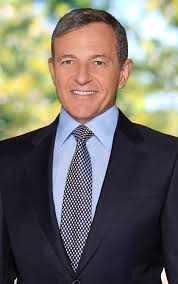
Bob Iger0:00
Penguin Random House Audio presents The Ride of a Lifetime: Lessons Learned from 15 Years as CEO of the Walt Disney Company by Robert Iger. Read for you by Robert Iger and Jim Franion.
Prologue. In June 2016, I made my 40th trip to China in 18 years, my 11th in the past 6 months. I was there to oversee the final preparations before the opening of Shanghai Disneyland. I'd been CEO of the Walt Disney Company for 11 years at that point, and my plan was to open Shanghai and then retire.
It had been a thrilling run, and the creation of this park was the biggest accomplishment of my career. It felt like the right time to move on. But life doesn't always go the way you expect it will. Things happen that you can't possibly anticipate. The fact that I'm still running the company as I write this is a testament to that. Much more profoundly, so are the events of that week in Shanghai.
We are opening the park on Thursday, June 16th. That Monday, the first wave of VIPs was scheduled to arrive — Disney board members and key executives and their families, creative partners, investors, and Wall Street analysts. There was a huge international media contingent already there and more coming in. I'd been in Shanghai for 2 weeks and was running on adrenaline. Since my first location scouting trip to China in 1998, I was the only person who had been involved in the project from day one, and I couldn't wait to show it to the world.
In the 61 years since Walt Disney built Disneyland in Anaheim, California, we'd opened parks in Orlando and Paris and Tokyo and Hong Kong. Disney World in Orlando remains our largest, but Shanghai was of a different order than all the others. It was one of the biggest investments in the history of the company. Numbers don't really do the park justice, but here are a few to give some sense of its scope. Shanghai Disneyland cost about 6 billion to build. It is 963 acres, about 11 times the size of Disneyland.
At various stages of its construction, as many as 14,000 workers lived on the property. We held casting calls in six cities in China to discover the thousands of singers, dancers, and actors who perform in our stage and street shows. Over the 18 years it took to complete the park, I met with three presidents of China, five mayors of Shanghai, and more party secretaries than I can remember, one of whom was arrested for corruption and banished to northern China in the middle of our negotiations, setting the project back nearly two years.
We had endless negotiations over land deals and partnership splits and management roles and considered things as significant as the safety and comfort of Chinese workers and as tiny as whether we could cut a ribbon on opening day. The creation of the park was an education in geopolitics and a constant balancing act between the possibilities of global expansion and the perils of cultural imperialism.
The overwhelming challenge, which I repeated to our team so often it became a mantra for everyone working on the project, was to create an experience that was authentically Disney and distinctly Chinese.
In the early evening on Sunday, June 12th, I and the rest of my team in Shanghai received news of a mass shooting at the Pulse nightclub in Orlando, 15 miles from Disney World. We have more than 70,000 employees in Orlando and we waited in horror for confirmation that some of them were at the club that night. Our head of security, Ron Iden, was with us in Shanghai and he immediately began calling his network of security contacts in the States. It was 12 hours earlier, just before dawn in Orlando, when we first heard the news. Ron told me he'd have more information when I got up in the morning.
My first event the next day was a presentation to investors over breakfast. Then I had to shoot a long interview with Robin Roberts of Good Morning America, which included touring the park and riding attractions with Robin and her crew. Then there was a meeting with Chinese officials about protocol for the opening ceremonies, a dinner with members of our board and senior executives, and finally a rehearsal for the opening night concert that I was hosting. Ron periodically gave me updates as I moved through the day.
We knew that more than 50 people had been killed and nearly as many injured, and that the shooter was a man named Omar Mateen. Ron's security team ran Mateen's name through our database and found that he'd visited the Magic Kingdom a couple of months before the shooting, then again the weekend before. There was closed-circuit television footage of him on that last visit, pacing outside a park entrance near the House of Blues in Downtown Disney.
What we learned next shook me in a way few things have over the course of my career. It wouldn't be made public until nearly two years later during the trial of Mateen's wife as an accomplice to the murders. She was later acquitted, but federal investigators informed Ron that they believed Disney World had been Mateen's primary target. They found his phone at the scene of the shooting and determined it had been pinging off one of our cell towers earlier that night.
They studied the CCTV footage and saw him again walking back and forth in front of the entrance near the House of Blues. There was a heavy metal concert there that night, which meant extra security — five armed police officers — and after a few minutes of casing the area, Mateen could be seen walking back to his car.
Security cameras picked up two weapons in Mateen's possession: a semi-automatic rifle and a semi-automatic pistol hidden inside a child's stroller along with a baby blanket that hadn't yet been taken out of its packaging. Investigators suspected that his plan was to cover his weapons with a blanket and wheel them up to the entrance before pulling them out.
Our head of parks and resorts, Bob Chapek, was also in Shanghai, and he and I consulted throughout the day as Ron passed on more news. We were still anxiously waiting to hear if any of our people had been at the nightclub, and now we were concerned that the news of our being a target would soon be leaked. It would be a big story and would take a difficult emotional toll on the community there. The bond you form in high-stress moments like this, when you're sharing information that you can't discuss with anyone else, is a powerful one. In every emergency I've encountered as CEO, I've been grateful for the competence and cool heads and humanity of the team around me. Bob's first move was to send the head of Walt Disney World, George Kalogridis, back to Orlando from Shanghai to give his people on the ground more executive support.
The data on Mateen's phone showed that once he got back to his car, he typed in a search for nightclubs in Orlando. He drove to the first club that came up, but there was construction going on in front of the entrance and traffic was backed up. The second result was Pulse, where he ultimately committed his massacre. As the details of the investigation trickled in, I felt a sickening "there but for the grace of God" relief that he'd been deterred by the security we had in place. But I also couldn't shake the image of him carrying out his plan in Downtown Disney.
I'm often asked what aspect of the job most keeps me up at night. The honest answer is that I don't agonize over the work very much. I don't know if it's a quirk of brain chemistry or a defense mechanism I developed in reaction to some family chaos in my youth or the result of years of discipline — some combination of all those things, I suppose. But I tend not to feel much anxiety when things go awry, and I tend to approach bad news as a problem that can be worked through and solved, something I have control over rather than something happening to me. But I'm also all too aware of the symbolic power of Disney as a target, and the one thing that weighs heavily on me is the knowledge that no matter how vigilant we are, we can't prepare for everything.
When the unexpected does happen, a kind of instinctive triage kicks in. You have to rely on your own internal threat scale. There are drop-everything events and there are others when you say to yourself, "This is serious. I need to be engaged right now, but I also need to extricate myself and focus on other things and return to this later." Sometimes, even though you're in charge, you need to be aware that in the moment, you might have nothing to add. And so, you don't weigh in. You trust your people to do their jobs and focus your energies on some other pressing issue.
That's what I was telling myself in Shanghai, half a world away from Orlando. This was the most momentous thing the company had embarked on since Disney World opened in 1971. We had never invested so much in something with so much potential for success or failure in our nearly...