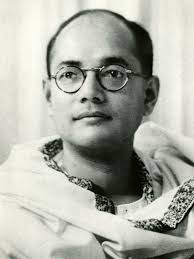
About Subhash Chandra
Dr. Subhash Chandra, chairman of Zee Entertainment, has continued hosting his motivational talk show "SACH," where he has addressed topics including relationships, self-coaching, and the role of religion in society. In a June 2026 episode recorded at Zakir Husain Delhi College, Chandra discussed relationship-building, stating that "relationships are built without any give-and-take and such relationships last long." He also said that to build a relationship with someone, one must "come to their level" and cited the example of communicating with a driver in simple language. In other episodes, Chandra distinguished between "action" (goal-oriented, thoughtful work) and "activity" (routine existence), and argued that talent is inborn and cannot be transferred, contrary to what some coaching programs claim. He defined a good coach as someone who "only brings out what is inside you" rather than teaching new knowledge.
Chandra also expressed views on religion, stating that "humanity is being divided by the narrow thinking of religion" and that most killings worldwide have religion as a basic factor. He described Hinduism, Islam, and Christianity as "ideologies or ways of worship, not dharma," asserting that "dharma is universal." On political matters, Chandra criticized opposition to the Char Dham Yatra in Uttarakhand, saying that while he accepts opposition to his government or party, "do not oppose the Char Dham Yatra," calling it a matter of dharma, the state's prosperity, and employment. He also encouraged service to the poor, suggesting that donating a percentage of one's income leads to household happiness and positive energy.
Source: AI-verified profile updated from Subhash Chandra's recent appearances.
Browse all interviews →
✨ AI-enhanced transcript with speaker attribution
A
Audience Member0:14
We intend to use newspaper reading for news rather than spending time on something else. So what is your say about this? As a reader, do you find it frustrating that in the newspaper also there are more advertising and entertainment than news?
S
Subhash Chandra0:31
But on the other hand, a newspaper in India is the cheapest newspaper. There's nowhere in the world that you get such a newspaper in two rupees or three rupees. In our neighboring country Pakistan, a newspaper which is 12 pages, very bad paper quality, is being sold at 20 rupees, 30 rupees.
A
Audience Member2:01
These days a lot of news channels run 24/7, not just Zee but any other channel. In that context, a lot of news are being repeated over and over again. How much credibility does news lose because they have to fill in some news at some time? Do the news channels struggle, and is that also a cause of media losing credibility?
S
Subhash Chandra2:27
Yeah, there is a problem. A lot of repetition of the same news does cause questioning on the credibility. They don't lose it, but people question. It is also slowly becoming democratic in that sense that nobody can force you to watch my news.
A
Audience Member2:57
We talked about credible media, we talked about responsible media, but there's another angle—sensitive media. Somewhere I think in this massification of the industry and the business of media, we seem to have lost that human touch. Even when not so good stories are being covered, media should be sensitive enough. We saw a good example in Nepal post the earthquake where we saw insensitive media.
S
Subhash Chandra3:34
You're right. We have many, many examples where media has behaved very insensitively. As Dr. Narang said, 26/11 happening at the Bombay Taj Hotel was one such case. There are hundreds and hundreds of cases. We will discuss this insensitivity of the media.
A
Audience Member4:00
In print media, actually what is happening is to reach the main page it takes three pages because a lot of advertisements are coming up. If you open the paper there are five pamphlets falling down about advertisements, and if you see in some leading newspapers, the entertainment section of the page is much thicker than the normal main page. So when people want to spend 15-20 minutes every day to read a newspaper, most of the time is getting used by this.
S
Subhash Chandra4:27
These are both ways you can answer this question. As a reader you find it frustrating that in the newspaper also there are more advertising and entertainment than news. But on the other hand, a newspaper in India is the cheapest newspaper. There's nowhere in the world that you get such a newspaper in two rupees or three rupees. In our neighboring country Pakistan, a newspaper which is 12 pages, very bad paper quality, is being sold at 20 rupees, 30 rupees.
You go to London, you want to pick up any tabloid or any newspaper, it costs you one pound, even more sometimes—one and a half pounds. Because of the historical fact that the newsprint media started because of the Freedom Movement and at that time the thing was being circulated free of cost for that purpose, that legacy has continued. In print media particularly, the power is still in few hands in this country despite there being 10,000-12,000 newspapers. They certainly do not want competition to come up, so they have naturally kept the cover price of the newspaper very, very low so that there should not be competition to them. No new newspaper has succeeded in last 30 years. Can you imagine, at national level, no newspaper in 30 years has made success.
A
Audience Member6:19
Indian media is considered as the fourth pillar of democracy. So don't you think this pillar has been shaken with the rise of social media like Facebook and more specifically Twitter? Social media has earned the trust and credibility within a short period of time as compared to the conventional media.
S
Subhash Chandra6:42
It is correct. One of the editors of a large print media said that my job is the second most important job in the country after the Prime Minister. He said that openly. That was the mindset of the editors. Today they can't say that. Today they are worried what will people say on social media about me. So I would say the social media is helping the news media to stay honest, and more and more you will see that happening.
A
Audience Member7:21
Sir, right now every media channel has an anchor who has a very vibrant personality and is visibly outspoken about polarizing issues. So do you think that during these shows the actual news takes a back seat when four or five people are debating on this?
S
Subhash Chandra7:40
I had written in one of the things—people have rejected that. People don't want that fighting match on the screen anymore, screaming, shouting. They don't like it. One of our editors was also going in the same direction. I said this is what people are saying, let's not do it.
A
Audience Member8:00
I would like to ask—the essence of media is passion to deliver unbiased news. So how do you qualify the top line management, the people who can deliver you numbers, or do you really search for real passion?
S
Subhash Chandra8:14
See, my personal belief is that if you are honest and you listen to the people what they want, then the numbers will also follow. It's a matter of time. At least we are making an honest effort in our news media to try and do that. But it is difficult to change the mindset because the editors, the journalists, they also come from a set mindset. Today what is happening is people are really anxious—what gives them the top line, what gives them the rating, what gives them more readership. Things are driven by that. I think if we change it to what people want and we respond honestly, I think we will meet both objectives.
A
Audience Member9:03
I strongly feel that we have moved from information scarcity to information overload. As an end user, even though people resort to selective reading, there is way too much of content to assimilate. So you as an inducer, what is your take on that?
S
Subhash Chandra9:22
Well, nowadays the technology enables you to pick up, select what information you want to take. So that is one way to do it. There are websites, there are apps which are available that you punch the subjects which you are interested in and you will get news only on those subjects. Soon you will see even in mass media what is going to happen is that at the connected TV at your home, you don't have to watch all the news whatever is being shown at whatever time. There will not be any prime time. You watch whichever news you want to watch at whatever time you want to watch. That's coming soon.
There may be over information which is available. We believe that whatever is written on Google is the truth. It is not. My granddaughter was one day—she came to me and said she had to write an essay on Lal Bahadur Shastri. I gave her some information, whatever I knew. After half an hour, she comes and says he was a militant Hindu leader. Can you believe that Lal Bahadur Shastri was a militant? I don't think so. This is where many of our reporters and journalists go wrong. They trust Google. That is also one source where we lose our credibility.
A
Audience Member11:38
Though we are discussing about news media losing its credibility, I would like to put forward a different viewpoint. Nowadays news channels like to put forward the news in a very descriptive manner—they would like to get more information about every single topic rather than before, and they would like to give the news much earlier than other competitors. So the benefit people are getting is better information about every topic and news much faster than earlier days.
S
Subhash Chandra12:19
Yeah, both things are happening. But many times, in anxiety to give the news in advance from others, sometimes they make a mistake also. But certainly that is the positive of our news media and India. Today there is a fear in the minds of the legislature, the executives, even to some extent in the courts that when something comes on the media—whether it is on social media, mass media, print, electronics—they are careful. They don't take things for granted as they used to.
I remember 1970s. There was the famous Nagarwala murder case in Delhi. This gentleman was murdered in Delhi in daylight robbery. One day only some news came in the newspaper, next day onwards blacked out. Nobody talked about it—why he was murdered and who murdered him. Case in point. During Emergency, the government could censor the newspapers. At that time, conveniently, it's a different thing that they lost the election because of the censoring of the news—they didn't know what's really happening on the ground, that resulted in loss of election. But they could censor. Can any government censor today, even if they apply emergency rules? I don't think so.
A
Audience Member14:11
There's so much happening—so many social media, print media, TV stations—that nobody can censor today. It's impossible. But I find in China media is completely censored. You can't access Facebook.
S
Subhash Chandra14:26
That is different, sir. That country is not a democratic country.
A
Audience Member14:29
That's fine, but even here we can do that if the government wants to do it. They can do it.
S
Subhash Chandra14:34
No sir, in a democracy you cannot do it. People will—this is a whole new subject altogether.
A
Audience Member14:45
I will tend to disagree, sir.
S
Subhash Chandra14:47
I would say that we have got political freedom in this country, but we have not got social and economic freedom even today after 70 years of our existence. And political freedom, democracy, or whatever you call it—today it is impossible. They tried UPA 2, the then INB Minister. We heard for 3-4 days it was news in the media when they said we are going to stop this social media, we're going to censor. But there was so much hue and cry that they had to back off second, third day. Today it's not possible. We are seeing these days so many actions being taken in a hurry by the executives or legislative people, and all of a sudden four days, five days they withdraw. A recent case of how you file your income tax return—that form was almost 20 pages. They wanted you to fill up every single foreign trip, where did you go, how much money did you spend. Social media went berserk and they had to withdraw that form. So it's not easy, sir.
Today China is continuing and they still have all media under government control. From day one they put a stop on internet—everything is censored. We run—we are the only Asian TV channel which is permitted or allowed. We have got license in China, but our entire programming goes through a check before it is put, though it is entertainment programming. And it is run about six minutes late. There are people sitting in our retransmission center in China. They go through every single frame.
A
Audience Member17:07
Sir, as you said, government cannot censor currently the media because of the power of the media. But there have been unfortunate cases like suspicious deaths of a journalist or even an IT technician in Pune. Can we say that because of such events, out of fear, media is giving in and bringing down its credibility to big guns?
S
Subhash Chandra17:29
No, no, one stray case doesn't deter the people.
A
Audience Member17:36
I wanted to ask you, being the chairman of the Zee Group, you're coming and speaking in front of the public about media credibility—it takes courage. What I wanted to ask is, after this discussion, what more can be done to gain the credibility back? Is it just about discussing it, or what more can be done from the media side to gain the credibility back?
S
Subhash Chandra17:57
I believe that I have to first change myself. I have to change. If I control a news media, I should change first. And I believe that if we change it towards these directions—what we have found out from people ourselves—for the first time a media company's owners and the editors have gone out to talk to people one-to-one themselves. We know where we are heading, what people want from us. Let's see one or two changes what the people want.
A
Audience Member19:00
I have done my industrial and production engineering and I worked for Toyota for two and a half years, where I happened to meet this scientist. His name is Akira Miyawaki. I was very moved by the work which he does. In just a small period of one and a half years we made a forest of 30,000 trees in the Toyota factory premises. I volunteered with him, learned the methodology, and eventually it led me to leave my job to start a forest.
Like any other middle-class family, my family was a little reluctant in allowing me to go free and start the company. But the first thing I did was I made a forest in the backyard of my own house. My family, my neighbors, my relatives, my friends—they all participated in planting this forest. Eventually when they saw it grow, I think that gave them a lot of confidence that what I'm doing is of really high importance and it's really beautiful.
S
Subhash Chandra20:36
When you are ready to give your whole life for one single cause, I think then the problem is really going to be solved.
These are certain stories which people are doing in their areas. I think we all have to—many times we ask questions what concerns us, but we find what is wrong being done by others, whether it is media, the government, anybody else. But we sometimes forget that we need to do something ourselves also.
A
Audience Member21:32
Sir, the entire issue that has been circulated today regarding media credibility—I believe there is one important aspect: the willingness of the TV news channel. There's a trade-off between TRP or viewership and actual news reality. How do you perceive this trade-off shifting in the coming years? But keep in mind that people have opposing views about each and everything being telecasted on news channels. If they go with the very truth and not openers, each news channel will have the same content. So with competition rising day by day in terms of number of news channels, how will that landscape come up?
S
Subhash Chandra22:17
Yeah, you're right. Very good question. I must compliment you on that. See, it's a dilemma many times one faces. Sometimes, an opinion or a stand taken—if it is an honest stand, and if you come up and say yes, I do stand for this—then rest is up to the people whether they accept it or not. But if I use that opinion, push that opinion for my personal gain, then probably it is wrong. And it is only my own conscience which will help or not help. You generally have to see whether this news media brand is honest overall or not.
A
Audience Member23:09
Hello sir, my question is related to advertisement and promotion. As Zee Network has various channels and news channels also, if we compare, credibility towards the news channel is very good as compared to other TV channels. Do you have any selection criteria for what to promote or what to advertise on news channels compared to other TV channels? Because people will see your news channel with a very credible manner compared to other channels.
S
Subhash Chandra23:35
There are always financial pressures that do not allow us to reject certain advertisements. But we should be doing this particularly on news channels—we should not put advertisements which are misleading. We should do that. We have not done that so far, I must admit.
A
Audience Member23:58
We have already established in this forum that news channels have become a business. A business is essentially built up of its employees. I just want to know what level of priority you give to a person's integrity when you hire people at various levels. I just want to cite an example—there are news channels which say 'this XYZ News Channel' when the earthquake news is much more important, but people are more focused on saying 'channel.' So are there people who say such things? Do you prefer such people or do you discourage them from joining your company?
S
Subhash Chandra24:43
See, there are two aspects to the integrity of the journalist. One is that are they taking money and pushing a news, or are they taking money and removing a news—that we have zero tolerance. But still it happens, even in our company it happens. This is a question of ethics and the kind of reporting. I keep telling people in my company—a girl was raped in some village by some people. Girl is a girl. Why do you say that an Adivasi girl was raped or a Scheduled Caste girl was raped? Why do you sensationalize that by saying so? There are many such things which we need to be sensitive about. This is a question covered under media being insensitive. We have to do the checks and balances, including in our own network.
A
Audience Member25:42
I've seen particularly in this 2014 election, particular candidates have bought the local media very much. Those incidences do happen, and that's why particular media brands do lose their credibility. Certain independent individual reporters do lose their credibility. I don't know whether you have ever thought about it or not, but that is the major reason people these days are asking media these questions. Please take my comment—I'm not supporting any particular caste, creed, or religion, nor am I against any caste, creed, or religion. I'm telling you the facts, what people have told us. And it's sensitive, so please, if somebody feels offended, I would seek pardon in advance.
There was a time—I would say '70s, '80s—that it was fashionable to say in the media how best the socialistic pattern of governance is, why big moneyed people are thieves, why the market economy should not be supported. It was fashionable in the media to be known to be socialistic—whether I practice or not is a different thing. This was one thing which people are asking questions about. Second is, it was fashionable to talk against the majority community and in favor of the minority community. If you talked in favor of the majority, you are being termed as non-secular. This has been the scene of media and nobody questioned that. But these days people are asking those questions.
What should media be doing in these particular issues? In my mind, there is a very thin line between realistic news and opinionistic news. In this context, there have been a lot of opinions shared through the news forum, so that has to be taken into check. Because at the end of the day, we have come into such a position that we are influencing a lot of people through different mediums—be it print media, social media, or realistic news channels. How do we go about it is going to be a question ahead, because this has been going on for more than 20-25 years.
S
Subhash Chandra28:37
I think I'm more optimistic today than I used to be before. You asked a question that there is too much information. But many times when there is too much information, it creates competition amongst the people who are generating the information. And naturally you are forced to do better quality information. Like in any consumer products, you have 20 brands to choose from—every brand will have to improve and improve its quality and communication and everything, pricing, everything. So news is not different.
A
Audience Member29:22
Hello sir, there's a lot of satire websites that have come up for the news part. They are portraying the real news as if it is unreal news, and there was an incident where fake news was taken as original news and published on a lot of websites. So how do you take the unreal times or the satire website, the faking news part of the social media?
S
Subhash Chandra29:43
See, what has happened, unfortunately—the UPA 1 government, the then INB Minister who happened to be my friend, today unfortunately he's for last seven-eight years lying as a vegetable, Pranab Mukherjee—I told him, I said sir, please don't distribute the news channel licenses like you're distributing a paan shop license to open. This will boomerang on all of us and on this country. Today in India, out of 300 news channels, at least 150 channels are owned by vested interest people. Builders in Agra own a news channel because they want to keep the police away from them—already 20 cases against them registered.
I went to even Prime Minister Singh. I said sir, please don't do it. You should, like you're giving banking licenses, apply the same criteria when you give a news media license. Because news media is more dangerous than somebody doing something wrong in a bank, because here you change the opinion of the people for wrong things. But unfortunately, these days some people are talking about propagating that there should be no security requirement for a news media. I mentioned on my tweet—I said in that case, give D-Company also a license to run a TV channel.
A
Audience Member31:20
Sir, we have discussed many aspects as to whether media has lost its credibility or not. But I would like to throw a light on one aspect—I think media has really helped in changing the ideologies of Indian parents. Earlier, rape used to happen but we never used to get exposed to that information—in which village of India such things are happening. But now, as we saw in recent past in Delhi when the Nirbhaya case happened, all of us were sitting in front of TV channels and we watched that show with our parents, and our parents didn't shy away in discussing such things. So I think that is what media has contributed, and I can proudly say that today Indian parents have changed their ideologies just because of media.
S
Subhash Chandra32:14
Good, thank you. At least in the last one and a half hours I got one credit. But let me tell you one thing—I don't know whether you saw the analysis which we did. BBC came out and said Delhi is the rape capital of the world. Did you hear that? And we were the only channel which refuted that with facts and figures. UK has got eight times more rapes than India. USA has twenty times more rapes than India. And they couldn't answer any of our queries.
So with that I would say that I don't think we have concluded any which way. But certainly one thing comes very clearly—that we as news media, we need a lot of doing, a lot of work is required on our part to be done. For you and this august house to say no media is credible—and I assure you and my viewers that at least at Zee, we will try our best. With that, thank you very much for having this.