Nabil Bukhari on automation
From 2025 ZKast #190 - Extreme Networks' AI Vision: Beyond the Data Center with Nabil Bukhari · · Zeus Kerravala
“Automation has been around for a long time but it's been rule-based; we really want to bring it from the world of rules to the world of reasoning so your automation can be intelligent and include AI agents and integrations.”

On , Nabil Bukhari, Chief Product & Technology Officer and GM of Subscription Business at EXTREME NETWORKS INC, spoke about automation during 2025 ZKast #190 - Extreme Networks' AI Vision: Beyond the Data Center with Nabil Bukhari on Zeus Kerravala.
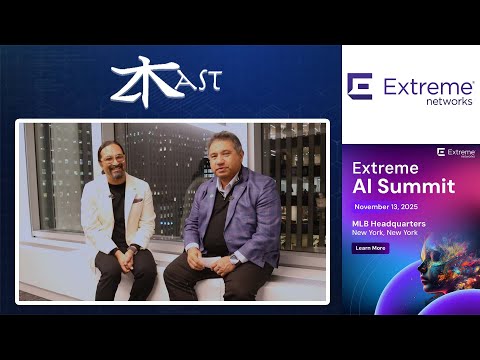
About Nabil Bukhari
Nabil Bukhari, Chief Product & Technology Officer and General Manager of the Subscription Business at Extreme Networks, has been a prominent voice in 2025 on the integration of AI into enterprise networking. He has emphasized that Extreme Networks views AI not as a standalone product but as a pervasive capability of its "Platform One," which integrates AI agents for tasks like automated troubleshooting and remediation. Bukhari stated that the company's goal is to move automation "from the world of rules to the world of reasoning," and that its "Extreme Exchange" serves as an app store for AI components and integrations. He also discussed the company's financial performance, noting that Extreme Networks "beat and raised" expectations and "pushed up the expectations for this year" following a strong quarter and investor day. Bukhari has also spoken extensively about the broader societal and organizational impacts of AI. He argued that "AI literacy in the C-suite is abysmal" and that executives must rethink organizational silos, as AI has technology, financial, and legal implications requiring cross-functional understanding. He described AI as "an inflection point for humankind" that will democratize capabilities but also increase competition, stating that "with AI, I can be in any industry in less than six weeks that I want." Bukhari cautioned against "AI washing" in the industry and stressed the importance of explainable AI and maintaining a "human in the loop" for enterprise systems, asserting that "the ability to audit AI and the ability to explain AI is absolutely critical."