Amit Paka on model operationalization
From Model Performance Monitoring and Why You Need it Yesterday // Amit Paka // MLOps Coffee Sessions #42 · · MLOpscommunity
“Before Fiddler I was working at Samsung; I was leading the product team on shopping apps and I was observing a lot of challenges that the data team was facing just operationalizing these models. Doing an A/B test on these models was incredibly hard — the way the team would run previous model for a week then a new model for a week and compare at the end — that's like an awful way to run it.”

On , Amit Paka, Cofounder at Fiddler AI, spoke about model operationalization during Model Performance Monitoring and Why You Need it Yesterday // Amit Paka // MLOps Coffee Sessions #42 on MLOpscommunity.
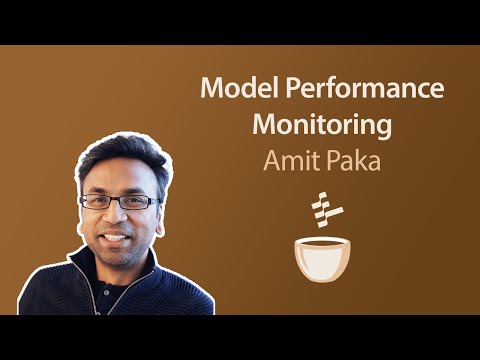
About Amit Paka
Amit Paka, cofounder of Fiddler AI, discussed model performance monitoring and the proposed EU artificial intelligence regulation during a June 2021 appearance on the MLOps Coffee Sessions podcast. Paka stated that before founding Fiddler, while leading the product team on shopping apps at Samsung, he observed challenges that data teams faced in operationalizing models, including difficulty running A/B tests. He said the lack of transparency in model decisioning "played a key role and it came up again and again," and that the Fiddler team aligned on a mission of "helping teams build trust with AI." Paka described the proposed EU regulation as aiming to help teams build "human-centric and trustful AI," classifying applications into categories including banned "unacceptable" uses and "high-risk" applications such as self-driving cars or credit scoring that would face new oversight. He argued that for high-risk applications, the law would require sufficient transparency for users to understand and control how models work, and that monitoring, record-keeping, and fairness validation are what the regulation is pushing toward. Paka also introduced the concept of "Model Performance Management" (MPM), which he described as a centralized framework powered by explainable AI that involves measuring, validating, monitoring, and analyzing model behavior across the lifecycle, with the ability to feed new data representations back into training.