William Hendricks on oil rig operations
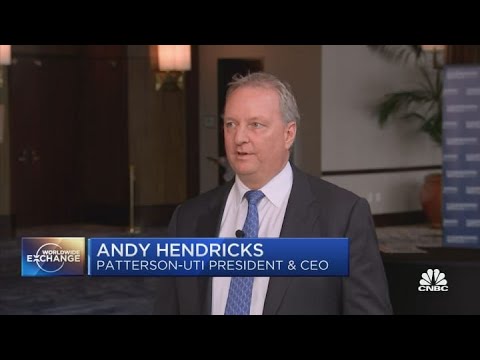
From Patterson-UTI CEO Andy Hendricks on oil rig operations over the past year · · CNBC Television
“During the COVID downturn, we went down to 34 operating rigs from 126, and now we're up to 73, showing a projection of growth with expectations to reach 80 by July.”

On , William Hendricks, President, Chief Executive Officer & Director at PATTERSON-UTI ENERGY INC, spoke about oil rig operations during Patterson-UTI CEO Andy Hendricks on oil rig operations over the past year on CNBC Television.
About William Hendricks
William Hendricks, CEO of Patterson-UTI, has discussed the company's operations and industry outlook in several CNBC interviews. In September 2021, he noted that during the COVID-19 downturn the company's operating rigs fell from 126 to 34, and had since recovered to 73, with expectations to reach 80 by July. Hendricks stated that even if WTI oil prices pulled back from $70 to the mid-to-low $60s, activity growth would continue, and he expressed encouragement from discussions with customers. He said the company could provide new engines that burn 100% natural gas and battery storage solutions to reduce emissions, and described sustainability and ESG as watchwords in the industry. Hendricks also said that capital discipline remained important to investors, with room to grow activity relative to budgets set at lower oil prices. In earlier appearances, Hendricks addressed the severe down cycle in oil and gas during 2020, stating that lower oil prices eventually cure low oil prices as customers shut in wells. He said that coordinating production throttling across states would be difficult and likely ineffective given the rapid drop in global demand. Hendricks emphasized that Patterson-UTI had strong liquidity, a good balance sheet, and low debt, positioning the company to survive the cycle and potentially gain market share. In 2018, Executive Chairman Mark Siegel discussed the company's acquisition of MMS Energy, a directional drilling firm, and noted that the U.S. had become the world's marginal producer of oil and gas. Siegel said the company emphasized a strong balance sheet and that fewer rigs could achieve more due to efficiency gains.