Satya Nadella on AI ecosystem
From Microsoft Build 2026 | 開場主題演講 · · Will 保哥
“How do you all participate fully in this frontier intelligence ecosystem? Right? It's not about any one piece of technology that you'll hear about or even the platform itself. It's about the value that you can build, you can compound, you can create on top of the platform.”
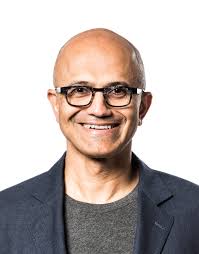
On , Satya Nadella, Chairman & Chief Executive Officer at Microsoft, spoke about AI ecosystem during Microsoft Build 2026 | 開場主題演講 on Will 保哥.

About Satya Nadella
At Microsoft Build 2026, Satya Nadella announced the Majorana 2 quantum processor, describing it as implementing a next-generation material stack that provides a qubit mean lifetime of 20 seconds, which he said is a thousand times higher than Majorana 1. He stated that the company is moving from foundational physics to engineering scale. Nadella also introduced the Surface Ultra laptop and the Surface RTX Spark Dev Box, powered by Nvidia's RTX Spark system-on-chip, and referred to Nvidia's Windows DGX Station as a "desktop data center" capable of running a one trillion parameter model locally. In conversations with Nvidia CEO Jensen Huang and Qualcomm CEO Cristiano Amon, Nadella discussed the shift toward agentic AI and the need for an open ecosystem where devices are designed for autonomous AI assistants rather than traditional apps. During the conference and in subsequent interviews, Nadella emphasized that the key shift in the AI industry is moving from consuming a single frontier model to participating in a "frontier intelligence ecosystem," where any company can build its own AI using models, tools, data, and a harness. He argued that the value creation opportunity in the agent world is ten times greater than in previous platform shifts. On the Microsoft Q3 FY26 earnings call, Nadella discussed the company's pricing model for AI, describing a direction where base usage rights are bundled into seats or agents, with overages moving to pure consumption. He also stated that the company's driving equation remains "tokens per dollar per watt" and that earning permission from communities where data centers are built is a key design criteria, citing principles around not increasing electricity prices and replenishing water use.