Sergey Brin on artificial intelligence
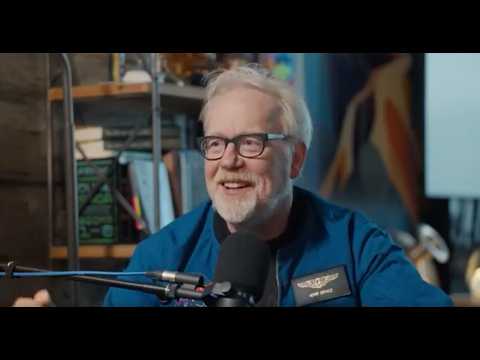
From The Moonshot Mindset with Adam Savage and Sergey Brin: The Moonshot Podcast · · X, The Moonshot Factory
“I think we're going to have to adjust to adjusting. And by that I mean, a lot of times people say, OK, oh, look, there's this new model and it can do x, y and z. And therefore OK, I'm going to do customer support on that. And that's all going to change. But of course, like the issue with thinking about it in those terms is that it's a moving target. Because the thing that the AI model is going to do the next year is going to be that much greater. So if you just redesign the world based on today's AI capabilities, if you were to just freeze AI progress all of a sudden, OK, this is good. It's good. Yeah, the world will still change a lot, but you can basically do that for any specific level of AI. You could imagine the world that gives. I think the hard thing to do is to figure out, well, what's going to happen if the AI continues to develop at the rate that it has been and doesn't freeze. And that's a very complicated treadmill to think through.”

On , Sergey Brin, Co-Founder & Director at Google, spoke about artificial intelligence during The Moonshot Mindset with Adam Savage and Sergey Brin: The Moonshot Podcast on X, The Moonshot Factory.
About Sergey Brin
Sergey Brin appeared at a Google DeepMind Build Day at AGI House in June 2026, where he discussed the convergence of specialized models into general ones, noting that Google's Gemini LLMs are increasingly state-of-the-art for math and scientific questions. He acknowledged that Google was "a little bit late" in focusing on coding but said the company is now "very much focused on code." Brin praised competitor GPT-5.5 for deep coding tasks while promoting Gemini 3.5 Flash for speed. He defined AGI as the idea that AI can improve itself, adding that to do anything a person can do, AI must understand and interact with the physical world. In a May 2026 episode of The Moonshot Podcast with Adam Savage and Astro Teller, Brin reflected on X's moonshot projects, saying the organization aims to be "the right amount too early" and that even premature products like Google Glass served as valuable learning platforms. He also discussed the concept of Von Neumann machines—self-replicating devices that could be sent to other planets. At the 2026 Breakthrough Prize Ceremony in April, Brin co-presented the mathematics prize to Frank Merle, describing Merle's work as seeking "hidden structure – and hidden beauty – within chaos."