Chris Malachowsky on education reform
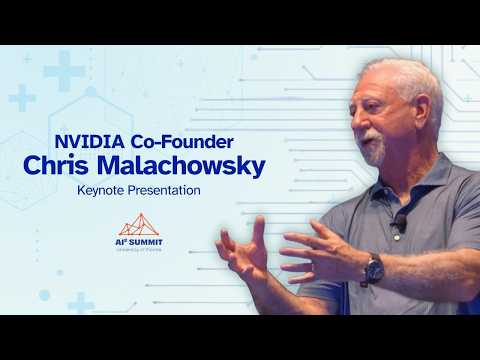
From NVIDIA co-founder Chris Malachowsky & UF Provost Dr. Joseph Glover fire-side chat · · University of Florida AI² Center
“I think you know the challenge for education and I as I've traveled around the country now uh promoting this um it's a mixed bag in that you're going to have to teach everything you've always taught and then you're going to have to teach some stuff on top of it or or re-emphasize things on top of it like critical thinking, judgment, uh you know, vetting inputs and managing agents.”

On , Chris Malachowsky, Co-Founder at Nvidia, spoke about education reform during NVIDIA co-founder Chris Malachowsky & UF Provost Dr. Joseph Glover fire-side chat on University of Florida AI² Center.
About Chris Malachowsky
Chris Malachowsky, co-founder of Nvidia and a University of Florida alumnus, delivered the keynote address at the university's spring 2026 commencement ceremony on May 2. In his speech, he encouraged graduates to embrace the AI era with confidence and to treat AI as a tool that can extend human ability rather than replace it. He stated that "AI does not replace your judgment. It doesn't replace your values. And it doesn't replace your taste." Malachowsky also shared his personal journey, noting that he had "no master plan, no straight line" and urged graduates to "care deeply and start moving." In April, Malachowsky participated in a fire-side chat with UF Provost Dr. Joseph Glover at the 2026 AI² Summit in Orlando, where he described AI as "a new kind of computing capability, one that can learn, reason, and do real work." He argued that computation should be considered infrastructure "like water and power" and that AI represents a "net gain of jobs" because it frees up capacity for new opportunities. In March, he joined U.S. Senator Mike Rounds (R-SD) at the SCSP AI + Education Summit, where he said that AI is "in the wild and out there" and that society can "only take advantage of it or get taken advantage of by it." He has also described the current AI infrastructure buildout as "the largest infrastructure buildout in human history."