Mario Harik on driver shortage
From 44th Annual William A. Patterson Distinguished Transportation Lecture: Mario Harik · · Northwestern Engineering
“I will start probably num number one would be what would happen with over historically the US had in short of truck drivers and you have more truck drivers who are retiring out of our industry than truck drivers who want to go into the industry and making sure that we stay ahead of that. So to give you an example, we have today 130 terminals where we run our own driver schools. And I'll tell you, I love this program because you can get somebody who has been a doc worker, a doc lead, somebody that comes out of a different industry, and they go to a seven-week training program where we pay for their wages as they're going through the program, and at the end of it, they can get their CDL license.”

On , Mario Harik, Chief Executive Officer & Director at XPO INC, spoke about driver shortage during 44th Annual William A. Patterson Distinguished Transportation Lecture: Mario Harik on Northwestern Engineering.
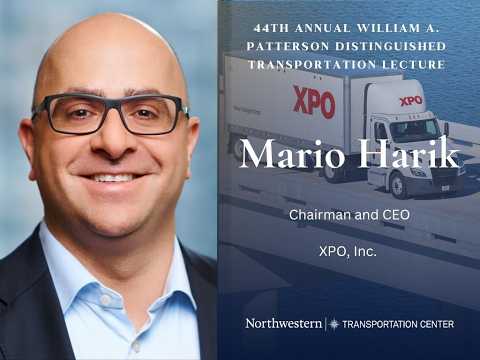
About Mario Harik
Mario Harik, chairman and CEO of XPO, delivered the 44th annual William A. Patterson Distinguished Transportation Lecture at Northwestern University on May 13, 2026. During the fireside chat, Harik discussed the company's use of artificial intelligence to improve service quality, describing a pilot program in which AI analyzes photos of loaded trailers to verify proper use of straps, safe stack bars, and airbags. He noted that the system can prevent a trailer from being marked as ready for dispatch if it does not meet standards. Harik also addressed industry challenges, including a three-year freight recession and a shortage of truck drivers, and said that XPO operates driver training schools at 130 terminals to address the labor gap. In a separate interview published in April 2026, Harik described his background as a software engineer and his approach to management, emphasizing data-driven decision-making and the importance of building cohesive teams. He stated that a CEO's primary goals are defining strategy and creating shareholder value, and he highlighted capital allocation and team composition as critical factors for success. Harik said that success for him involves helping others realize their full potential while also achieving personal emotional fulfillment.