Donald Trump on Iran
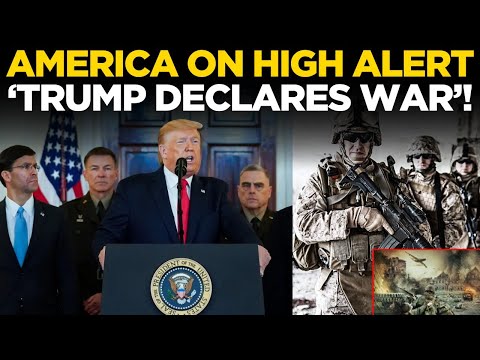
From Trump Speech LIVE | President Trump Declares War | National emergency at the U.S.-Mexico border · · MIRROR NOW
“I've made the statement very strongly that if they start killing people like they have in the past, we will get involved. We'll be hitting them very hard where it hurts. And that doesn't mean boots on the ground, but it means hitting them very, very hard where it hurts.”

On , Donald Trump, 45th and 47th U.S. President at US Executive Branch & The Trump Organization, spoke about Iran during Trump Speech LIVE | President Trump Declares War | National emergency at the U.S.-Mexico border on MIRROR NOW.
About Donald Trump
On June 11, 2026, President Donald Trump spoke to reporters in the Oval Office and announced that a settlement had been reached in the conflict with Iran, subject to finalization of documents, with a signing expected in Europe possibly over the weekend. Trump stated that Iran had agreed not to possess, purchase, or develop a nuclear weapon, and that the United States would lift a blockade as part of the deal. He said the stock market rose and oil prices dropped in response, and that he had spoken with leaders of Qatar, the UAE, Saudi Arabia, Bahrain, Kuwait, and Turkey, among others. Trump also described military operations against Iranian ships, stating that the U.S. had been taking out ships at night over the previous month, and that the Strait of Hormuz would open once the deal was signed. Earlier, on June 10, Trump signed the Secure America Act, which provided approximately $70 billion in funding for immigration enforcement and border security. During that event, he praised Republican congressional leaders and criticized Democratic politicians, calling some "radical left communists." In multiple Oval Office appearances, Trump discussed fishery management, voter identification, and crime reduction, claiming that Washington, D.C., Memphis, and New Orleans had seen significant drops in crime. He also stated that $18 trillion had been invested in the country in less than a year, and that he had provided $28 billion in aid to farmers during his first term, funded by tariffs on China.