Arvind Krishna on government equity stakes
From IBM CEO Arvind Krishna says Trump’s AI order hits the “Goldilocks spot” · · Axios Live and Axios
“Quite. First of all, it's not a brand new trend. Um, if you go back to what happened to Fanny May and Freddy Mack, I would say that was 20 years ago. uh if you look at different equity stakes that have been held over time that's quite there. The question becomes on is it an activist role that is being played or is the role more one-off. We'd like to get our money back if we're giving it to you. This is not meant to be a handout or or outright grant.”

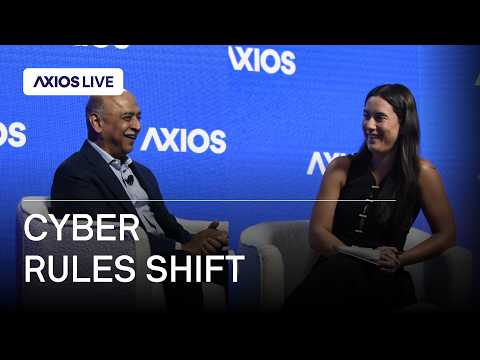
On , Arvind Krishna, CEO, President & Chairman at IBM Common Stock, spoke about government equity stakes during IBM CEO Arvind Krishna says Trump’s AI order hits the “Goldilocks spot” on Axios Live and Axios.
About Arvind Krishna
Arvind Krishna, chairman and CEO of IBM, said in June 2026 that the company is on track to achieve "quantum advantage" using its hardware by the end of the year, citing progress from partners such as the Cleveland Clinic and Oak Ridge National Laboratory. He stated that the U.S. is ahead of China in quantum computing by a couple of years, but added that he is "paid to be paranoid" and does not dismiss concerns about Chinese progress. Krishna compared the current state of quantum and cybersecurity technology to where GPUs were in 2015 and 2016, predicting "incredible returns" from these technologies within two to three years. He also noted that a $1 billion investment from the Trump administration will be used to build a quantum chip foundry in Albany that will be open to other U.S.-accepted companies. Regarding AI, Krishna described the Trump administration's AI executive order as hitting a "Goldilocks spot" by providing light regulation without creating a large bureaucracy. He advised companies to begin preparing for post-quantum encryption risks now, warning that it would be a mistake to assume quantum computers capable of breaking current encryption are more than five years away. On AI's return on investment, Krishna said that companies seeing the most value are not simply deploying more models, but finding ways to use existing models more effectively. He also mentioned that IBM tripled its hiring of recent college graduates in 2026, arguing that AI tools make new hires more productive more quickly, giving the company a cost advantage.