Jerry Yang on internet usage
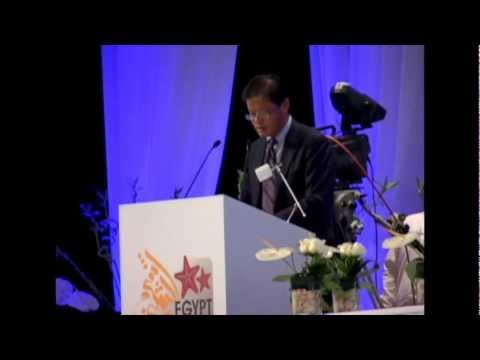
From IGF Egypt 2009: Jerry Yang · · Imagining the Digital Future Center
“The Internet isn't just about getting as many people online as possible but making sure that once they get online they have something productive to do something to gain and something meaningful to experience.”

On , Jerry Yang, Founding Partner of AME Cloud Ventures at AME Cloud Ventures, spoke about internet usage during IGF Egypt 2009: Jerry Yang on Imagining the Digital Future Center.
About Jerry Yang
Jerry Yang, co-founder of Yahoo and founding partner of AME Cloud Ventures, has been active in discussions on deep tech investing, US-China relations, and the AAPI community. Speaking at the 2025 Global Alternative Investment Conference (GAIC) in Seoul, Yang discussed the evolution of investment buzzwords from SaaS and fintech to large language models, AGI, and AI sovereignty. He argued that the perception of deep tech requiring excessive capital with lower returns is not necessarily accurate, citing a report that found its capital efficiency comparable to other sectors. Yang also highlighted Korea's potential for a deep tech ecosystem, noting that while Korean PhDs in Silicon Valley previously told him they could not create startups in Korea, he believes the country's world-class research institutes and talent pool could be unlocked with the right environment. In a February 2025 interview with Yahoo Finance, Yang discussed the current AI landscape, describing it as having a "build-out bubble" where capital is poured into infrastructure with a "build it and they will come" mentality. He advocated for a cautious approach to government regulation, suggesting that during rapid innovation, the government should "learn, observe and understand but not regulate," and only intervene when technology affects equity or access. Yang also reflected on his upbringing working in his family's Chinese American fast-food restaurant, stating that while he "hated it" at the time, he now values the time spent with his parents. He has continued his philanthropic work through The Asian American Foundation (TAAF), which he helped launch, emphasizing the need for data to address anti-Asian hate and the importance of translating data into action.