Mario Harik on shareholder value creation
From 44th Annual William A. Patterson Distinguished Transportation Lecture: Mario Harik · · Northwestern Engineering
“There are two primary levers to be able to improve the value of a company. one is growing earnings and number two is improving your multiple what shareholders believe the multiple of your of your stock should be. Now at the time before we got to becoming a standalone carrier. So the the the critical point there is that we had three businesses that effectively one was a warehousing business or distribution business one or warehouse outsourcing business one was an asset light transportation business and was was predominantly XPO which is a lessent truckload business. So at the time uh what what Brad uh saw is that when you look at the sum of the parts it was a much higher value than when you look at the overall value of the company because investors could not value the company based on having three different segments of business. So the first catalyst was separating the company into three pieces.”

On , Mario Harik, Chief Executive Officer & Director at XPO INC, spoke about shareholder value creation during 44th Annual William A. Patterson Distinguished Transportation Lecture: Mario Harik on Northwestern Engineering.
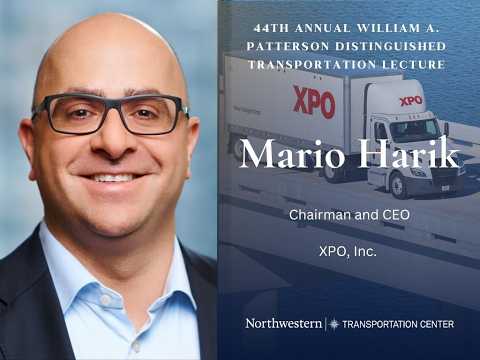
About Mario Harik
Mario Harik, chairman and CEO of XPO, delivered the 44th annual William A. Patterson Distinguished Transportation Lecture at Northwestern University on May 13, 2026. During the fireside chat, Harik discussed the company's use of artificial intelligence to improve service quality, describing a pilot program in which AI analyzes photos of loaded trailers to verify proper use of straps, safe stack bars, and airbags. He noted that the system can prevent a trailer from being marked as ready for dispatch if it does not meet standards. Harik also addressed industry challenges, including a three-year freight recession and a shortage of truck drivers, and said that XPO operates driver training schools at 130 terminals to address the labor gap. In a separate interview published in April 2026, Harik described his background as a software engineer and his approach to management, emphasizing data-driven decision-making and the importance of building cohesive teams. He stated that a CEO's primary goals are defining strategy and creating shareholder value, and he highlighted capital allocation and team composition as critical factors for success. Harik said that success for him involves helping others realize their full potential while also achieving personal emotional fulfillment.