Lowell Mcadam on digital inclusion
From 5G, Digital Inclusion and the Future of Communication - A Conversation with Lowell McAdam · · Worth Media
“We have literally hundreds of schools that we come in we give them the connectivity we give them the laptops and we give teachers the training on these agendas uh for and the curriculum for the school because we found that in the past just giving connectivity or just giving an iPad really doesn't help it's a different way of teaching in a digital environment as you probably know and and um so we work closely with the schools and we've seen significant 60% Improvement in scores and and uh comfort with the internet and their ability to excel in classes.”

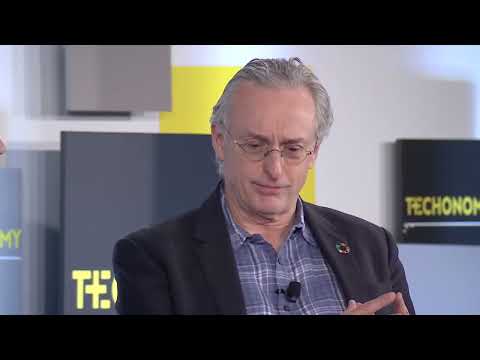
On , Lowell Mcadam, Former Chairman & Chief Executive Officer at Verizon, spoke about digital inclusion during 5G, Digital Inclusion and the Future of Communication - A Conversation with Lowell McAdam on Worth Media.
About Lowell Mcadam
In a 2017 conversation, Lowell McAdam discussed Verizon's strategy for 5G deployment, describing a plan to use fiber to a neighborhood node and then broadcast wirelessly to homes, which he said would be cheaper than running fiber directly to each residence. He also addressed the digital divide, stating that Verizon's Innovative Learning schools program provides connectivity, laptops, and teacher training, and he reported a 60% improvement in test scores at participating schools. McAdam expressed frustration with the economics of the telecom industry, noting that while Verizon invested in network infrastructure, companies like Google and Facebook profited. He said Verizon was investing in content assets such as Yahoo and AOL under the Oath brand to create alternatives. On regulation, he stated that he was not a fan of regulation but advocated for a level playing field where all internet ecosystem participants are regulated equally. He also discussed municipal fees for antenna placement, citing examples of cities that either made deployment unaffordable or worked collaboratively. For rural areas, he suggested a government-subsidized model where one carrier builds infrastructure for shared use.